


Blushwood berry and cancer
What is blushwood berry
Blushwood berry (Hylandia dockrillii) is a small, red berry-like fruit from a rare tree native to the rainforests of Far North Queensland, Australia [1, 3]. It has traditionally been used by the indigenous people of the area for medicinal purposes. In recent years, it has gained international attention in cancer research due to its unique anti-cancer properties [1, 2].
Mechanisms of action and potential
Blushwood berry contains bioactive compounds, most notably EBC-46 (also known as Tigilanol tiglate), which is considered the primary active component [1, 5, 8].
- EBC-46: This molecule works by inducing rapid tumor necrosis (cell death) and apoptosis in cancer cells, while simultaneously inhibiting angiogenesis (the formation of new blood vessels that supply tumors) [1, 5, 6, 8].
- Antioxidants: The berry also contains anthocyanins and ellagitannins, which possess anti-inflammatory and antioxidant properties [4].
Research shows that EBC-46 activates a protein called PKC delta, which triggers a localized immune response and direct destruction of the tumor tissue [6]. Unlike many other treatments, this process often occurs very rapidly [3].
Potential against multiple cancer types
Laboratory and animal studies have shown that blushwood berry extract has potential against various cancers, including melanoma, breast cancer, prostate cancer, lung cancer, and colon cancer [1, 6, 7].
While most research was initially limited to petri dishes and animals, human research is now advancing [5].
Clinical studies
For a long time, evidence was limited to veterinary use, where EBC-46 showed significant success in treating tumors in dogs and cats [1].
However, recent clinical progress includes Phase II human trials evaluating Tigilanol tiglate for solid tumors, focusing on safety and the ability to shrink tumors [5, 6, 7].
Safety
Blushwood berry is generally considered safe in moderate amounts, but information on long-term use is still limited [5, 7]. Possible side effects include:
Allergic reactions: Skin rash or swelling.
Gastrointestinal issues: Nausea, vomiting, and diarrhea.
Consult your practitioner
It is crucial to consult a healthcare professional before using blushwood berry, especially when undergoing other treatments [5]. Pregnant and breastfeeding women should avoid it due to a lack of safety data.
Advantages of blushwood berry
Scientific advancement:
- Recent breakthroughs have made it possible to synthesize the active compound in laboratories [2].
Targeted tumor destruction:
- EBC-46 can induce rapid necrosis in treated tumors [5, 6].
Inhibition of blood supply:
- It may prevent tumors from forming the vessels they need to grow [1].
Antioxidant support:
- Provides natural compounds that protect healthy cells [4].
Disadvantages and limitations
Rarity:
- The fruit is extremely rare and difficult to source in its natural form [1, 2].
Limited human data:
- While Phase II trials are underway, we still need more large-scale evidence [5].
Specific application:
- In many studies, the substance must be injected directly into the tumor to be effective [5].
Dispensing and application
Fresh fruit
- Blushwood berry can be eaten fresh, but is rarely available.
Extract
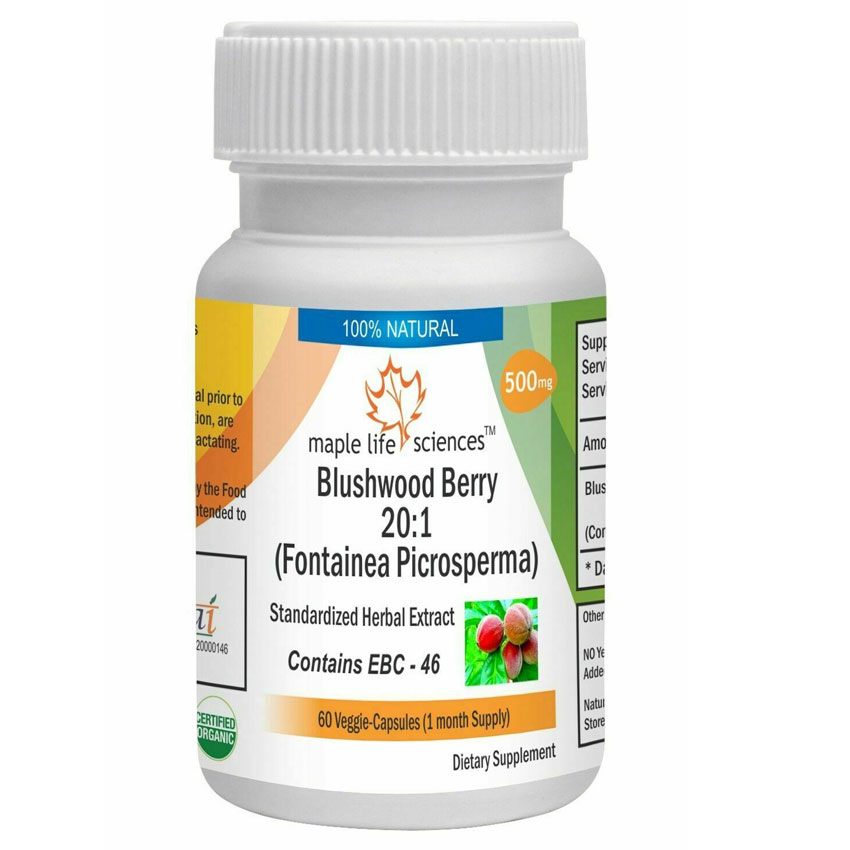
- Blushwood berry extract is available in capsule or powder form.
Juice
- Blushwood berry juice can be purchased from some manufacturers.
Conclusion
Blushwood berry represents a fascinating frontier in cancer research. Preclinical and early clinical trials have shown that its active component, EBC-46, can trigger rapid tumor destruction and stimulate the immune system [5, 6]. However, it is not a standalone cure and should only be used as a supplement under professional guidance. As synthesis methods improve and clinical trials progress, its role in modern oncology may become clearer [2, 5].
Back to Supplements
See also Minimize Side Effects – Chemo
Links
[1] Har australske forskere fundet en frugt, der dræber kræft på 24 timer? (Ålborg Universitet, 2023) (Danish Language)
- Content: An article describing the initial findings and the extensive media attention surrounding the berry’s active compound, EBC-46.
[2] Stanford-forskere opnår gennembrud i produktionen af lovende kræftmiddel (Sundhedspolitisk Tidsskrift, 2022) (Danish Language)
- Content: An article about how researchers have discovered a method to synthesize the active compound from the blushwood berry, potentially increasing its availability for future treatments.
[3] Video: Australian Cancer Cure – In 48 Hours – Blushwood Berry (Patrick Wanis, YouTube, 2018)
- Content: A video reviewing early stories and observations from Australia regarding the berry’s effect on tumors.
[4] Cancer Prevention with Freeze-dried Berries and Berry Components (PubMed, 2008)
- Content: A study investigating the general cancer-preventive properties of various berry types and their bioactive components.
[5] QBiotics reports 80% objective response rate in injected tumours in Stage 1 of Phase IIa clinical trial of tigilanol tiglate for Soft Tissue Sarcoma (QBiotics Group, 2025)
- Content: A non-randomized Phase IIa trial reporting that tigilanol tiglate met its primary and secondary endpoints with an 80% objective response rate in treated tumours.
[6] Tigilanol Tiglate Shows Early Efficacy in Soft Tissue Sarcoma (OncLive, 2025)
- Content: A non-randomized Phase IIa open-label clinical trial demonstrating an 81% response rate and 52% complete ablation in patients with advanced soft tissue sarcoma.
[7] Soft tissue sarcoma drug passes phase 2a trial (Oncology Republic, 2025)
- Content: A non-randomized Phase IIa open-label study evaluating the efficacy and safety of intratumoral tigilanol tiglate in patients with soft tissue sarcoma.
[8] Tigilanol tiglate is an oncolytic small molecule that induces immunogenic cell death and enhances the response of both target and non-injected tumors (, PubMed, Journal for ImmunoTherapy of Cancer, 2024)
- Content: A non-randomized study detailing the molecular mechanisms of tigilanol tiglate and its ability to induce immunogenic cell death in solid tumours.
Siden er oprettet:
d. 27.01.25
❤
Hvad du læser på Jeg har Kræft er ikke en anbefaling. Søg kompetent vejledning.
