


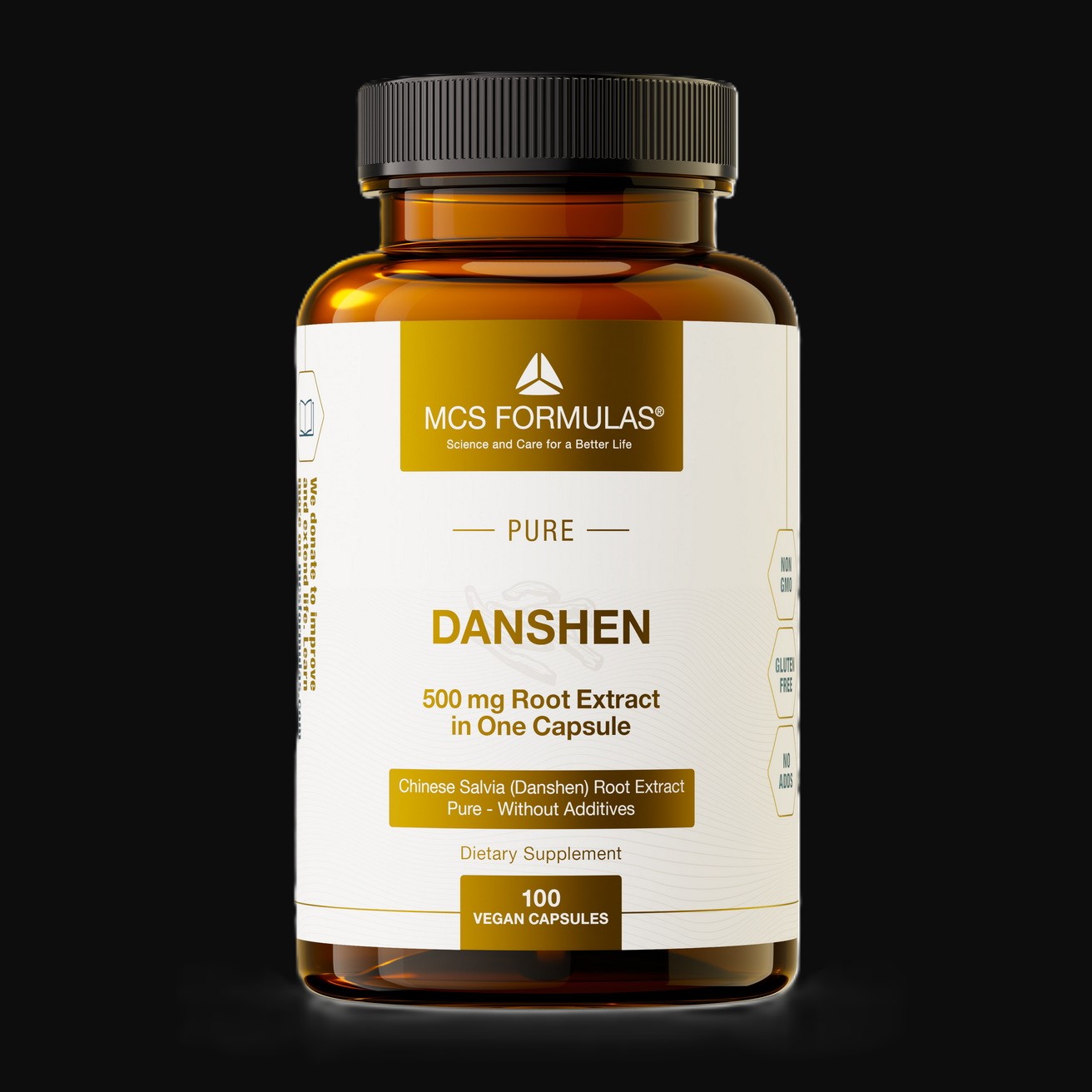
Danshen and cancer
What is danshen
Danshen, also known as red sage (Salvia miltiorrhiza or as Tanshinone IIA), is a medicinal plant that has been used in traditional Chinese medicine (TCM) for centuries. It is known for its heart-healthy properties and is frequently used in formulations to treat cardiovascular diseases. Danshen has become an integral part of traditional Chinese medicine, where it is considered to have the ability to improve blood circulation and reduce inflammation.
Mechanisms of action for danshen
The active components in danshen, primarily tanshinones (a group of chemical compounds), are believed to contribute to its various mechanisms of action. These mechanisms are complex and involve several biological processes [2]:
Improving blood circulation
Danshen can help dilate blood vessels (vasodilation), which can improve blood flow to various tissues and organs. This can be beneficial in conditions where reduced blood circulation plays a role.
Antioxidant effect
Danshen contains antioxidants that can help neutralize harmful free radicals in the body. Free radicals are unstable molecules that can cause cellular damage and contribute to the development of chronic diseases, including cancer.
Anti-inflammatory effect
Danshen has been shown to possess anti-inflammatory properties, meaning it can help reduce inflammation in the body. Chronic inflammation is linked to a range of diseases, including cancer.
Inhibition of platelet aggregation
Danshen can help prevent blood platelets from clumping together (aggregation) and forming blood clots. While beneficial for reducing the risk of thrombosis, it may also be significant for cancer, as some studies suggest that platelets can play a role in the spread of cancer cells (metastasis).
Effect on cancer cells
Non-randomized in vitro (in test tubes/petri dishes) studies have shown that danshen can have various effects on cancer cells, including inhibiting cell growth, inducing programmed cell death (apoptosis), and inhibiting the spread of cancer cells (seeding/metastasis) [3, 5].
Potential as supplementary treatment for cancer
Although there is limited clinical evidence for danshen’s effect as a standalone cancer treatment, some in vitro and in vivo (in living organisms) studies suggest it may have potential as a supplementary treatment in combination with conventional cancer therapy [1, 4].
Counteracting side effects of chemo
This is primarily due to its various mechanisms mentioned above. These mechanisms can attack cancer cells in several different ways and thus counteract some of the side effects associated with chemotherapy and radiation therapy [3, 7].
Quality of life
Danshen is further believed to contribute to improving the quality of life for cancer patients by alleviating some of the symptoms and side effects associated with cancer and cancer treatment. This may include reducing fatigue, improving sleep quality, and relieving pain.
However, more research is needed to confirm these potential benefits and determine the optimal use of danshen as part of an integrative cancer treatment plan.
Clinical studies
Some clinical studies have investigated the effect of danshen in patients with various forms of cancer:
- Research has shown that patients’ quality of life can be improved when danshen is used alongside conventional treatment [1].
- Studies have also reported reduced side effects of chemotherapy when danshen is part of the treatment regimen.
However, further randomized controlled trials are needed to confirm these results and establish optimal dosages.
Safety
Danshen is generally considered safe when used in recommended doses.
Interactions: However, it can interact with certain medications, including blood-thinning medication (anticoagulants), and should therefore be used with caution, especially in patients taking other forms of medication.
Pregnancy and breastfeeding: Pregnant and breastfeeding women should avoid using danshen, as there is insufficient information regarding its safety in these groups.
Seek guidance: It is always important to consult a qualified practitioner before beginning to use danshen as part of a cancer treatment plan.
Advantages of danshen
- Potential synergistic effects: Danshen may potentially have synergistic effects when combined with conventional cancer treatment, which could increase the effectiveness of the therapy [7, 8].
- Few side effects: Danshen is generally considered to have few side effects when used correctly.
- Easily accessible: Danshen is relatively easy to obtain and can be purchased in many health food stores and online.
- Traditional use: Danshen has a long history of traditional use in Chinese medicine, indicating it has been used safely for centuries.
- Potential to improve quality of life: Danshen can potentially contribute to improving the quality of life for cancer patients by alleviating symptoms and side effects [1].
Disadvantages and limitations
- Limited clinical evidence: There is limited clinical evidence for danshen’s effect as a standalone cancer treatment.
- Interactions with medication: Danshen can interact with certain drugs, including blood thinners.
- Lack of standardization: There can be variation in the quality and composition of danshen products, making it difficult to ensure a consistent dose.
- Pregnancy and breastfeeding: Pregnant and breastfeeding women should avoid using danshen.
Dispensing and application
Availability: Danshen is available in various forms, including dried roots, extracts, capsules, and tablets.
Tea: Dried danshen roots can be brewed as a tea. The recommended dose is often 3–9 g daily.
Capsules: Standardized extracts in capsule form can be taken with water, typically 1–2 capsules daily.
Tinctures: Liquid extracts can be taken in appropriate dosages as recommended by a competent practitioner.
Powder: Danshen can also be found in powder form for addition to smoothies or food.
General dosage: The recommended dose of danshen can vary depending on the specific product and the individual’s health status. It is important to follow the instructions on the product label or consult a qualified practitioner for guidance on the correct dose.
Application: Danshen can be taken orally with water or other liquids. It can also be consumed as part of an herbal tea or decoction.
Combination with other treatments: Danshen can potentially be combined with other forms of cancer treatment, but it is important to discuss this with a doctor or oncologist to ensure there are no interactions or contraindications.
Conclusion
Danshen presents a promising option as a supplementary treatment for cancer, thanks to its many mechanisms of action and potential benefits. Its ability to improve blood circulation, reduce inflammation, and protect against oxidative stress makes it a valuable addition to a holistic approach to cancer treatment.
Although there is limited clinical evidence for danshen’s effect as a standalone cancer treatment, some in vitro and in vivo studies suggest it may have the potential to improve the quality of life for cancer patients and potentially increase the effectiveness of conventional cancer treatment when used in combination with it [1, 6].
However, it is important to note that more high-quality research is needed to confirm these potential benefits and determine the optimal use of danshen as part of an integrative cancer treatment plan.
Back to Supplements
Links
[1] Danshen Improves Survival of Patients With Breast Cancer and Dihydroisotanshinone I Induces Ferroptosis and Apoptosis of Breast Cancer Cells (PubMed, 2019) Content: A study showing that danshen improves the survival of breast cancer patients and that its component, dihydroisotanshinone I, can induce cell death in breast cancer cells.
[2] Review of Danshen: From its metabolism to possible mechanisms of its biological activities (ScienceDirect, 2021) Content: A comprehensive review focusing on the metabolism of danshen and the various mechanisms behind its biological activities.
[3] Anti-cancer effect of danshen and dihydroisotanshinone I on prostate cancer: targeting the crosstalk between macrophages and cancer cells via inhibition of the STAT3/CCL2 signaling pathway (OncoTarget, 2017) Content: A non-randomized study investigating how danshen targets the communication between immune cells and cancer cells in prostate cancer.
[4] Isoferulic Acid Inhibits Proliferation and Migration of Pancreatic Cancer Cells, and Promotes the Apoptosis of Pancreatic Cancer Cells in a Mitochondria-Dependent Manner Through Inhibiting NF-κB Signalling Pathway (PubMed, 2025) Content: A non-randomized laboratory study showing that isoferulic acid from danshen inhibits the growth and migration of pancreatic cancer cells.
[5] Danshen improves survival of patients with colon cancer and dihydroisotanshinone I inhibit the proliferation of colon cancer cells via apoptosis and skp2 signaling pathway (ScienceDirect, 2017) Content: Research indicating that danshen improves survival in colon cancer patients and inhibits the division of colon cancer cells through specific signaling pathways.
[6] Tanshinone I reprograms glycolysis metabolism to regulate histone H3 lysine 18 lactylation (H3K18la) and inhibits cancer cell growth in ovarian cancer (PubMed, 2025) Content: A non-randomized study describing how tanshinone I can inhibit the growth of ovarian cancer cells by affecting their metabolism.
[7] Salvia miltiorrhiza inhibited lung cancer through aerobic glycolysis suppression (PubMed, 2024) Content: A study showing that Salvia miltiorrhiza (danshen) can inhibit lung cancer by suppressing the cancer cells’ energy production (glycolysis).
Page created: February 3, 2025. Latest revision: April 27, 2026.
❤
What you read on I Have Cancer is not a recommendation. Seek competent guidance.
