


Bergamot, bergamot citrus oil, and cancer
What is citrus bergamot
Bergamot essential oil is extracted from the rinds of the bergamot fruit, a citrus fruit resembling an orange. It has a fresh, citrusy scent with floral notes and is known for its many potential benefits for both body and mind. Bergamot originally stems from Southeast Asia but is primarily cultivated today in Calabria, Italy.
Beyond its aromatic value, citrus bergamot hides a wealth of bioactive compounds, especially flavonoids, which have shown various potential health benefits.
Cholesterol regulation
Bergamot has shown promise in improving cholesterol profiles. This is primarily due to the flavonoids neoeriocitrin, naringin, and neohesperidin, which affect cholesterol metabolism in several ways:
Inhibition of HMG-CoA reductase
This enzyme is central to cholesterol synthesis in the liver. Bergamot’s flavonoids inhibit this enzyme, resulting in a reduction of LDL cholesterol (“the bad cholesterol”).
Increased LDL receptor activity
LDL receptors on the cells bind and remove LDL cholesterol from the bloodstream. Bergamot increases the activity of these receptors, leading to lower LDL cholesterol levels.
Antioxidant effect
Oxidative stress contributes to the development of atherosclerosis. Bergamot’s antioxidant properties protect against this damage.
Anti-cancer potential of bergamot
In addition to cholesterol regulation, bergamot has also shown potential in connection with cancer.
Prevention and pathophysiological inhibition
Bergamot functions as part of a broader group of bioactive supplements that can counteract cancer development and progression from a pathophysiological perspective. This means that the active substances do not only attack cancer cells directly but also work to restore the body’s normal functions and inhibit the processes that allow cancer to spread. By intervening early in the molecular mechanisms, these substances can potentially prevent precancerous stages from developing into malignant tumors [1].
Inhibiting cell growth
What does it mean
Cancer is characterized by uncontrolled cell growth. Bergamot contains substances that can slow or stop this growth in various types of cancer cells.
How does it do it
Flavonoids in bergamot, such as neoeriocitrin, naringin, and neohesperidin, are believed to play a central role. They can interfere with the cell cycle, a series of controlled steps that regulate cell division. By disrupting this cycle, bergamot can prevent cancer cells from dividing and growing.
Which cancer types
In vitro and in vivo studies have shown that bergamot can inhibit the growth of:
- Breast cancer
- Lung cancer
- Prostate cancer
- Leukemia
- Colon cancer cells
Combating cancer stem cells
In recent years, research has focused particularly on bergamot’s ability to target the most resistant parts of a tumor. A significant finding is the ability to eliminate cancer stem cells (CSC).
Cancer stem cells are often the reason cancer returns after treatment, as they are naturally resistant to traditional chemotherapy. In laboratory experiments, bergamot extract has been shown to “starve” these cells by attacking their energy production in the mitochondria (the cell’s power plant) and blocking important signaling pathways, making it harder for the tumor to survive in the long term [4].
Regulation of signaling pathways with carvacrol
An important active compound in bergamot, carvacrol, acts as an effective regulator of specific signaling pathways in cancer cells. Carvacrol has shown the ability to intervene in the processes governing cell survival and the ability to metastasize (spread). By downregulating the proteins cancer cells use to communicate and grow, carvacrol can contribute to making the tumor more vulnerable to the body’s natural cell death [6].
Inducing apoptosis
What does it mean
Apoptosis is a form of programmed cell death where the cell “self-destructs” in a controlled manner. It is a natural process that eliminates damaged or unnecessary cells.
Why is it important in cancer
Cancer cells often avoid apoptosis and continue to divide uncontrollably. Bergamot can “reactivate” apoptosis in cancer cells and thereby eliminate them.
How does it do it
Bergamot’s flavonoids can affect various proteins and signaling pathways involved in apoptosis, for example, by increasing the expression of pro-apoptotic proteins and inhibiting anti-apoptotic proteins.
Inhibiting angiogenesis
What does it mean
Tumors need a blood supply to grow and spread. Angiogenesis is the formation of new blood vessels that supply tumors with oxygen and nutrients.
Why is it important to inhibit it
By inhibiting angiogenesis, tumor growth and spread can be limited.
How does bergamot do it
Bergamot can inhibit the production of growth factors that stimulate angiogenesis, such as VEGF (vascular endothelial growth factor).
Modulating signaling pathways
What does it mean
Cells communicate with each other and their surroundings through complex signaling pathways. Cancer cells often have disruptions in these pathways leading to uncontrolled growth and survival.
How can bergamot help
Bergamot can modulate various signaling pathways involved in cancer development, such as the MAPK pathway, the PI3K/Akt pathway, and the NF-κB pathway. By affecting these pathways, bergamot can inhibit the growth, survival, and spread of cancer cells.
Disruption of cancer cell balance
A study on colon cancer has shown that bergamot juice extract not only inhibits growth but also changes the cells’ ability to handle oxidative stress. By affecting the cells’ redox balance (the equilibrium between free radicals and antioxidants), cancer cells are forced into a state where they can no longer repair themselves.
This has been confirmed in both in vitro (laboratory experiments) and in vivo (animal studies), where a significant reduction in tumor size was observed without damaging the body’s healthy cells [5].
Other potential benefits
Bergamot has also been studied for other potential health benefits, including:
- Lowering blood sugar levels: Bergamot can improve insulin sensitivity and glucose tolerance, which can be beneficial for individuals with type 2 diabetes.
- Reducing inflammation: Chronic inflammation is associated with a range of diseases. Bergamot’s anti-inflammatory properties can contribute to reducing this risk.
- Improving endothelial function: The endothelium is the thin layer of cells lining the blood vessels. Bergamot can improve endothelial function, which is important for a healthy cardiovascular system.
- Neuroprotective effects: Some studies suggest that bergamot may have neuroprotective properties and potentially protect against neurodegenerative diseases.
Other effects
Beyond the effects mentioned above, citrus bergamot may also lead to:
- Improved mood
- Reduced stress
- Antibacterial and antifungal effects
- Pain relief
- Improved digestion
- Improved sleep quality
- Fever reduction
- Reduction of side effects from chemotherapy
Mechanism
The bioactive compounds in bergamot, especially flavonoids like neoeriocitrin, naringin, and neohesperidin, are believed to be responsible for these health benefits. They can affect various cellular processes, including enzyme activity, gene expression, signal transduction, and oxidative stress.
Biological effect of polyphenols
Beyond flavonoids, polyphenols play a crucial role as natural response modifiers. This means they can activate the body’s own defense mechanisms against tumor formation while directly affecting the metabolism of cancer cells. By targeting the metabolic pathways that cancer cells depend on, bergamot can potentially support the efficacy of conventional treatment [2, 3].
Administration of bergamot
Administration of citrus bergamot can take place in various ways, depending on the purpose and the desired effect:
1. Fresh fruit
- Eating the fruit: The fresh fruit can be eaten directly, but it is often quite sour and bitter. The juice can be used in cooking or beverages.
- Peel: The peel can be used to make candied fruit, marmalade, or to flavor various dishes.
- Tea: The peel is used to give the characteristic flavor to Earl Grey tea.
2. Extracts and supplements
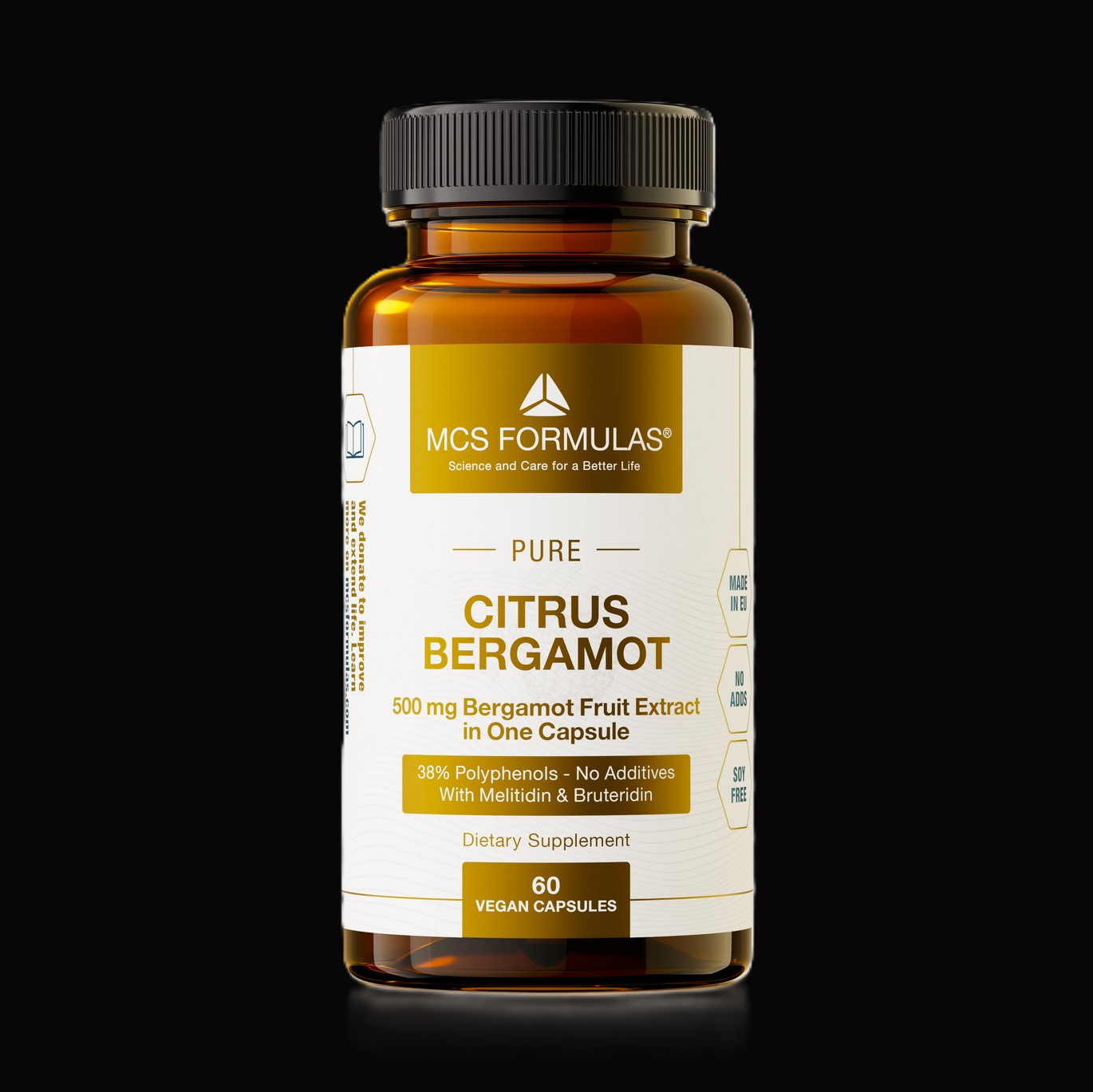
- Bergamot extract: Available in various forms, such as capsules, tablets, powder, and liquid extract. Often used for health benefits like cholesterol regulation.
- Bergamot oil: The essential oil is extracted from the peel and used primarily in aromatherapy and perfume. It can also be used in cooking, but with caution as it is highly concentrated.
3. Other products:
- Cosmetics: Bergamot oil is used in various cosmetic products such as creams, lotions, and soaps.
- Aromatherapy: Bergamot oil is used in aromatherapy to promote relaxation and reduce stress.
Dosage
The optimal dosage of bergamot depends on the specific form and the desired purpose. It is always important to follow the instructions on the product or consult a doctor or other healthcare professional.
Precautions
- Interactions: Bergamot can interact with certain medications, including statins and calcium channel blockers.
- Photosensitivity: Bergamot oil can increase the skin’s sensitivity to sunlight.
- Pregnancy and breastfeeding: There is limited information about the safety of using bergamot during pregnancy and breastfeeding.
Note
Citrus bergamot can be administered in various ways depending on the purpose. It is important to be aware of potential interactions and side effects and to consult a healthcare professional if you have questions or concerns.
Alternative aromatherapy oils
Besides bergamot, there are a number of other essential oils that can be used in aromatherapy to support cancer treatment. Some popular options include:
Lavender: Known for its calming and relaxing properties, which can help reduce stress and anxiety.
Peppermint: Can help relieve nausea and vomiting, common side effects of chemotherapy.
Eucalyptus: Can help ease breathing difficulties and promote nasal decongestion.
Research
While research into bergamot’s health benefits is promising, it should be noted that many of the studies have been conducted in vitro or on animals. More research, especially human clinical trials, is needed to confirm these effects and determine optimal doses and treatment regimens. However, this situation applies to almost all supplements that are considered uninteresting for Big Pharma, as they cannot be patented.
Safety and side effects
Bergamot is generally safe to consume, but there are some potential side effects to be aware of. In rare cases, bergamot can cause muscle cramps or muscle pain, especially when taken with statins. Bergamot can also interact with certain medications, including statins and calcium channel blockers (used to lower blood pressure). Therefore, it is always important to consult a qualified practitioner before taking bergamot supplements, especially if you have existing health problems or take medication.
Conclusion
Citrus bergamot appears as an exciting fruit with a broad spectrum of potential health benefits. Thus, citrus bergamot is more than just a source of aroma. It has the potential to improve health in several areas, from cholesterol and cardiovascular health to counteracting cancer and stabilizing blood sugar. The bioactive substances in bergamot, especially flavonoids, affect cellular processes important for good health.
Although much of the research is still in its early stages, the results are promising. Hopefully, future research will provide us with a deeper understanding of bergamot’s potential and applications. However, it is important to remember that bergamot is not a replacement for other relevant treatment. Always consult a competent advisor before using bergamot as a supplement to your health.
With its versatility and potential, citrus bergamot is a fruit that deserves more attention.
Back to Supplements
See also Aromatherapy
Links
[1] The Potential of Nutraceutical Supplementation in Counteracting Cancer Development and Progression: A Pathophysiological Perspective (PubMed, 2025)
- Content: A scientific article analyzing how specific supplements can counteract cancer development and spread. The article highlights the underlying biological mechanisms and looks at how natural compounds can be used in a preventive and therapeutic context.
[2] Nutraceuticals and Cancer: Potential for Natural Polyphenols (PubMed, 2021)
- Content: A review article examining how natural polyphenols can be used in the prevention and supportive treatment of cancer by influencing cellular signaling pathways and dampening inflammation.
[3] Biological effects of bergamot and its potential therapeutic use as an anti-inflammatory, antioxidant, and anticancer agent (PubMed, 2023)
- Content: A comprehensive review of bergamot’s biological properties, documenting its ability to function as both an antioxidant and an active agent against cancer development in preclinical models.
[4] Bergamot natural products eradicate cancer stem cells (CSCs) by targeting mevalonate, Rho-GDI-signalling and mitochondrial metabolism (PubMed, 2018)
- Content: An in vitro study describing how specific compounds in bergamot can eradicate cancer stem cells by blocking their energy metabolism and preventing their ability to divide.
[5] Targeting Redox Homeostasis and Cell Survival Signaling with a Flavonoid-Rich Extract of Bergamot Juice in In Vitro and In Vivo Colorectal Cancer Models (PubMed, 2025)
- Content: A combined in vitro and non-randomized in vivo study demonstrating how flavonoid-rich bergamot extract effectively combats colon cancer by disrupting the survival mechanisms of cancer cells.
[6] Carvacrol as a Prospective Regulator of Cancer Targets/Signalling Pathways (PubMed, 2023)
- Content: A scientific review of carvacrol’s potential as a regulator of cancer-relevant signaling pathways. The article describes how the substance can target specific molecular targets to inhibit tumor growth and spread.
[7] Aromaterapeuter (Behandlerlisten, updated continuously)
[8] Har du en udfordring, er der en olie (Practitioner, Website, Essential Oils,, no date)
[9] Æteriske Olier (Ren Olie, Retailer,, no date)
[10] Hvad er æteriske olier (Med24, Retailer, updated continuously) (Danish Language)
Page created: July 23, 2024. Latest revision: April 21, 2026.
❤
What you read on I Have Cancer is not a recommendation. Seek competent guidance.
