


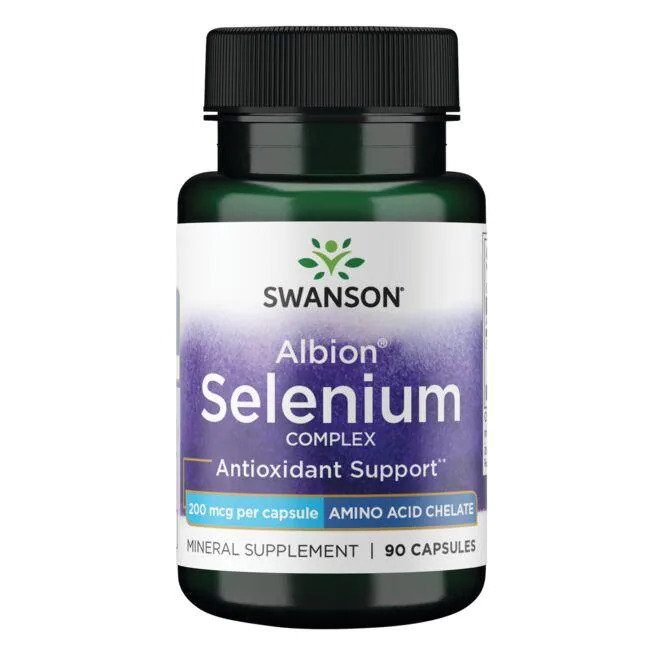
Selenium and cancer
What is selenium
Selenium is an essential trace mineral, meaning the body needs it in small amounts to function properly. It is found in two forms in the body: organic selenium (selenomethionine and selenocysteine) and inorganic selenium (selenite and selenate). Organic selenium is primarily found in animal products, while inorganic selenium is found in soil and plants.
Where selenium is involved
Selenium is involved in the structure of over 25 different selenoproteins, which perform important functions in the body, including:
Antioxidant defense
Selenoproteins such as glutathione peroxidases protect cells from damage caused by free radicals.
Thyroid function
Selenium is essential for the production of thyroid hormones.
Immune function
Selenoproteins are involved in regulating the immune response and fighting infections.
DNA synthesis and repair
Selenium plays a role in DNA replication and repair, which is important for preventing mutations and cancer development.
Use
In addition to its essential role in the body, selenium has gained increased attention for its potential role in cancer prevention and treatment. Research suggests that selenium may have a number of beneficial effects in connection with cancer, including:
Inhibition of cancer cell division
Selenium can induce cell death and inhibit proliferation (cell division) in cancer cells.
Promotion of apoptosis
Selenium can promote apoptosis (programmed cell death) in cancer cells.
Strengthening of the immune system
Selenium can increase the activity of immune cells that fight cancer.
Reduction of side effects in cancer treatment
Selenium can protect healthy cells from damage caused by chemotherapy and radiation therapy.
Mechanisms of action and potential
Selenium exerts its potential anti-cancer effects through various mechanisms:
Antioxidant effect
Selenium is an essential component of glutathione peroxidases, a family of enzymes that neutralize free radicals and protect cells from oxidative stress. Oxidative stress can damage DNA and contribute to cancer development.
Immune-stimulating effect
Selenium can strengthen the immune system by increasing the activity of NK cells (natural killer cells) and T lymphocytes, which play a central role in the body’s defense against cancer. Selenium can also increase the production of cytokines, signaling molecules that regulate the immune response.
Inhibition of cell proliferation
Selenium can inhibit the growth and spread of cancer cells by affecting the cell cycle and signaling pathways involved in cell division. For example, it can inhibit the activity of cyclin-dependent kinases (CDKs), which regulate the cell cycle.
Induction of apoptosis
Selenium can trigger programmed cell death (apoptosis) in cancer cells through various mechanisms, including activation of the caspase cascade and modulation of the Bcl-2 family of proteins. Apoptosis is an important mechanism for removing damaged or abnormal cells, including cancer cells.
Inhibition of angiogenesis
Selenium can inhibit the formation of new blood vessels (angiogenesis), which is necessary for the growth and spread of tumors. For example, it can inhibit the production of vascular endothelial growth factor (VEGF), a growth factor that stimulates the formation of new blood vessels.
Modulation of DNA repair
Selenium plays a role in DNA repair processes that can prevent DNA damage that could otherwise lead to cancer. Selenoproteins such as thioredoxin reductases are involved in DNA repair and protect cells from DNA-damaging substances.
Clinical trials
A number of clinical trials have investigated selenium’s effect on cancer. Some studies have shown promising results, while others have been less convincing.
NPC trial (Nutritional Prevention of Cancer trial)
This large clinical trial showed that selenium supplementation reduced the risk of prostate cancer, lung cancer, and colon cancer in men. Participants in the study took 200 micrograms of selenium daily in the form of selenomethionine.
However, the results of clinical trials are not unambiguous, and more research is needed to confirm selenium’s effectiveness and safety in cancer treatment. Factors such as selenium form, dosage, cancer type, and the patient’s selenium status can affect the effect of selenium supplementation.
Use as a supplement
Selenium can be taken as a dietary supplement in various forms, including:
Selenomethionine
An organic form of selenium that is naturally found in foods and has good bioavailability.
Selenium-enriched yeast
Another source of organic selenium.
Sodium selenite
An inorganic form of selenium.
The recommended daily dose of selenium varies depending on age and gender. For adults, the recommended daily dose in Denmark is 55 micrograms. It is important to follow the recommendations on the product (which are usually somewhat higher) and preferably consult a qualified healthcare provider, especially if you are taking other medication or have a chronic illness.
Benefits of selenium
Essential mineral
Selenium is an essential mineral that plays an important role in a number of bodily functions, including immune defense, antioxidant defense, and DNA repair.
Potential synergistic effect
Selenium can potentially enhance the effect of conventional cancer treatment, for example by increasing cancer cells’ sensitivity to chemotherapy or radiation therapy.
Can improve quality of life
Selenium can contribute to reducing side effects of cancer treatment, such as fatigue, nausea, and hair loss, and improve overall well-being in cancer patients.
Can support the immune system
Selenium can strengthen the immune system and increase the body’s ability to fight cancer cells.
Disadvantages and limitations
Limited clinical evidence
More research is needed to confirm selenium’s effect on cancer in humans. The results of clinical trials are not unambiguous, and there is uncertainty about optimal dosage and selenium form.
Interactions with medication
Selenium can interact with certain types of medication, including chemotherapy and radiation therapy. (Studies suggest that intake of selenium together with chemotherapy may allow the dose to be lowered). It is important to inform your doctor about any selenium supplementation.
Side effects
Too high doses of selenium can cause side effects, such as nausea, diarrhea, hair loss, nail changes, and garlic odor in the breath. It is important to follow the dosage recommendations and not exceed the recommended daily dose.
Not a substitute for conventional cancer treatment
Selenium should not be used as a substitute for conventional cancer treatment, but can be used as a supplement in consultation with a qualified healthcare provider.
Iodine, selenium and hormone balance
There is a complex connection between deficiency of iodine and selenium, the body’s estrogen levels, and the risk of certain cancers, especially breast and thyroid cancer.
Key points
Control of hormones via the thyroid gland:
- Both iodine and selenium are completely crucial for the thyroid gland to function properly. Iodine is used to form thyroid hormones, and selenium helps activate them in the body. Since the two substances work closely together, a deficiency in just one of them can be enough to impair function, so that one can develop low metabolism (hypothyroidism).
Low metabolism and estrogen:
- When metabolism is too low, the entire body’s systems slow down – including the liver’s ability to break down and excrete used hormones, including estrogen. This can lead to a condition called “estrogen dominance,” where there is a high amount of active estrogen in the body relative to other hormones.
Estrogen and breast cancer:
- A large proportion of breast cancer cases (approx. 70-80%) are hormone-sensitive, meaning that cancer cells use estrogen to grow. A persistently high level of estrogen is therefore a well-known risk factor, as it can stimulate cells in the breast tissue to divide uncontrollably.
Direct effect in breast tissue:
- Some research also suggests that iodine has a direct protective effect in breast tissue, making cells less sensitive to the influence of estrogen and acting as an antioxidant.
Conclusion
Selenium is an essential trace mineral with potential in the fight against cancer. There is evidence that selenium can have beneficial effects on the immune system, quality of life, and treatment outcomes in cancer patients. However, more research is needed to confirm these findings and determine the optimal dosage and use of selenium in cancer treatment.
Selenium should always be used in consultation with a competent healthcare provider, as it can interact with medication and cause side effects at too high doses. It is important to choose quality products from reliable manufacturers and follow the dosage recommendations.
Be aware that selenium is not a miracle cure for cancer. It is a supplement that can support the body and improve quality of life during cancer treatment.
Back to Supplements
Links
[1] Selen (Netdoktor.dk, 2024)
- Content: General information about selenium. (Danish Language)
[2] Selen beskytter mod kræft – på flere måder (Sund Forskning, 2017)
- Content: General information about how selenium protects against cancer in multiple ways. (Danish Language)
[3] Selen kan beskytte mod kræft (Magasinet Helse, 2024)
- Content: General information about how selenium can protect against cancer. (Danish Language)
[4] Study of the effect of zinc oxide, selenium, and silver nanoparticles on the expression level of oxidative stress-associated genes in ovarian cancer (PubMed, 2025)
- Content: In vitro study investigating the effect of zinc oxide, selenium, and silver nanoparticles on the expression level of oxidative stress-associated genes in ovarian cancer.
[5] The anticancer activity of fucoidan coated selenium nanoparticles and curcumin nanoparticles against colorectal cancer lines (PubMed, 2025)
- Content: In vitro study investigating the anticancer activity of fucoidan-coated selenium nanoparticles and curcumin nanoparticles against colorectal cancer cell lines.
[6] Selenium-containing metallodrug overcomes cervical cancer radioresistance through physical-chemical dual sensitization (PubMed, 2025)
- Content: In vitro study showing that selenium-containing metallodrug overcomes cervical cancer radioresistance through physical-chemical dual sensitization.
[7] Synthesis and its characterisation of selenium/silver/chitosan and cellular toxicity against liver carcinoma cells studies (PubMed, 2025)
- Content: In vitro study investigating the synthesis and characterization of selenium/silver/chitosan and cellular toxicity against liver carcinoma cells.
[8] Selenium Deficiency (PubMed, 2023)
- Content: Review article on selenium deficiency.
[9] Anticancer signal transduction pathways of selenium nanoparticles in mouse colorectal cancer model (PubMed, 2025)
- Content: In vivo study showing that selenium nanoparticles (SeNPs) naturally accumulate in colon cancer tumors. Here they change the cancer cells’ gene expression, leading to increased anti-inflammatory activity and significant inhibition of both tumor growth and spread (metastasis).
[10] Targeting mineral metabolism in cancer: Insights into signaling pathways and therapeutic strategies (PubMed, 2025)
- Content: Review article examining how an imbalance in essential minerals such as copper, iron, zinc, and selenium plays a crucial role in cancer development, as cancer cells have a disturbed metabolism for these substances. This imbalance creates a vulnerability that can potentially be exploited to develop new, targeted treatments and biomarkers for diagnosis.
[11] Synthesis of N-heterocyclic carbene‑selenium complexes modulating apoptosis and autophagy in cancer cells: Probing the interactions with biomolecules and enzymes (PubMed, 2025)
- Content: In vitro study showing that new, laboratory-produced substances containing selenium (Selenium-NHC) show strong cell-killing effect against cervical cancer cells. They work by attacking the cancer cell from multiple angles simultaneously, including triggering programmed cell death (apoptosis), disrupting autophagy, and stopping cell division.
[12] Anti-cancer potential of chitosan-starch selenium Nanocomposite: Targeting osteoblastoma and insights of molecular docking (PubMed, 2025)
- Content: In vitro study showing that a newly developed nanoparticle based on selenium and chitosan shows strong and targeted effect against bone tumor cells (osteoblastoma). The particle kills cancer cells by creating destructive oxidative stress and can bind to cancer-specific proteins in bone tissue.
Page created: January 12, 2025, Last revised June 9, 2025
❤
What you read on “Jeg har Kræft” is not a recommendation. Seek competent guidance.
