


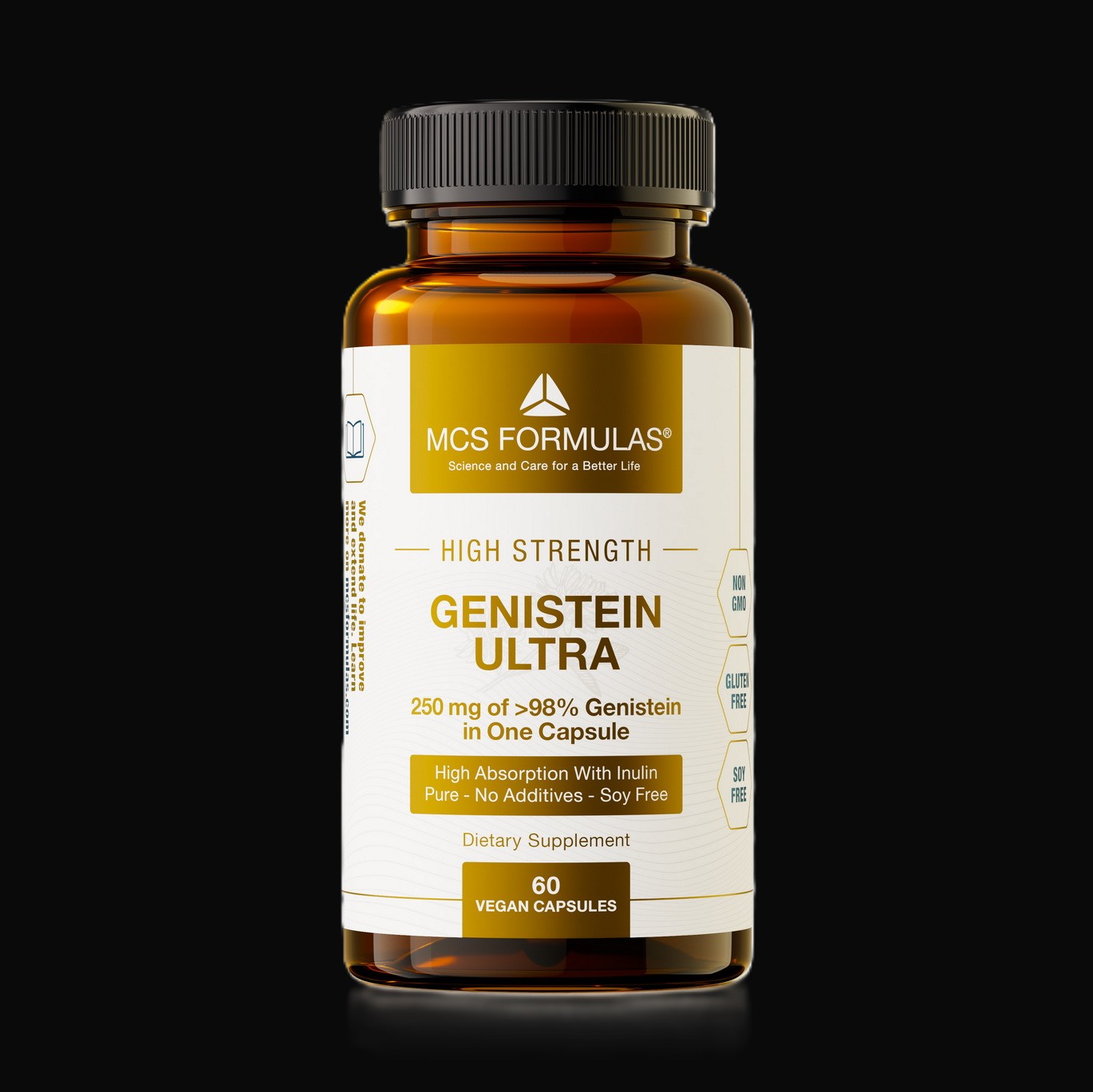
Genistein and cancer
What is genistein
Genistein is an isoflavone, a type of phytoestrogen (plant estrogen) belonging to the polyphenol group. It is naturally found in several plants but is especially concentrated in soybeans and soy products, such as tofu, tempeh, and miso.
History
Isoflavones have been an integral part of traditional Asian diets for centuries, and there is historical evidence of their use in folk medicine, where they were attributed various health-promoting properties.
Present day
In recent years, genistein has attracted significant scientific interest in the West, primarily due to its potential impact on a range of biological processes, including its possible role in the prevention and treatment of certain types of cancer [2]. This interest is driven by observations of lower incidences of certain cancers in populations that consume high amounts of soy.
Mechanisms of action and potential of genistein
The potential anticancer effect of genistein is believed to be the result of its complex and multifaceted mechanisms of action involving multiple cellular processes:
Impact on the cell cycle
Genistein can interfere with various stages of the cell cycle—the process by which cells grow and divide. It can inhibit the transition from one phase to another, potentially slowing the uncontrolled cell growth that characterizes cancer. Specifically, genistein has been shown to stop or delay cells in the G2/M phase, preventing them from dividing. This is particularly interesting as cancer cells often have defects in their cell cycle regulation, contributing to their rapid growth [4].
Inhibition of angiogenesis (formation of new blood vessels)
Tumors need a blood supply to grow and spread. Genistein has been shown to inhibit angiogenesis, the process by which new blood vessels are formed. By limiting the blood supply to the tumor, genistein can potentially inhibit tumor growth and spread (metastasis) to other parts of the body. The mechanism likely involves the downregulation of factors that promote angiogenesis and the upregulation of factors that inhibit the process.
Induction of apoptosis (programmed cell death)
Apoptose is a process of programmed cell death essential for maintaining tissue balance and removing damaged or unwanted cells. Genistein can trigger apoptosis in cancer cells by activating various signaling pathways that lead to cellular “suicide.” This is an important mechanism, as cancer cells often develop ways to avoid apoptosis. Genistein can, among other things, affect the mitochondria (the cells’ power plants) and activate caspase enzymes, which are central to the apoptosis process.
Antioxidant effect
Genistein is a potent antioxidant, meaning it can help protect cells from damage caused by free radicals—unstable molecules that can contribute to cancer development by damaging DNA and other cellular components. Genistein captures and neutralizes free radicals, reducing oxidative stress [7].
Impact on hormone receptors
Genistein has a structure similar to estrogen and can bind to estrogen receptors in cells. This can have various effects depending on the type of receptor, the tissue involved, and the presence of other hormones.
In some cases, genistein may have an anti-estrogenic effect, which could be relevant in treating hormone-sensitive cancers such as breast cancer. However, the interaction between genistein and estrogen receptors is complex and not fully understood [8]. Research also suggests it may act as a “selective estrogen receptor modulator” (SERM), meaning it can have different effects in different tissues.
Modulation of signaling pathways
Genistein can affect various signaling pathways (communication networks inside cells) involved in regulating cell growth, survival, and differentiation. This includes the MAPK, PI3K/AKT, and NF-κB pathways. By modulating these pathways, genistein can potentially influence the behavior of cancer cells and contribute to its anticancer effect [3].
Clinical studies
A number of clinical studies have investigated the effect of genistein on various aspects of cancer. Some studies have shown promising results, such as reducing the risk of certain cancers, including breast, prostate, and colon cancer. Others have focused on its potential as part of cancer treatment, for example, in combination with chemotherapy or radiation therapy [6].
However, the results of these studies are often mixed, and more research is needed to confirm potential benefits and establish optimal doses and treatment strategies. Many existing studies are small and have methodological limitations, making it difficult to draw definitive conclusions.
Safety
Genistein is generally considered safe when consumed in moderate amounts, equivalent to what is found in a typical diet rich in soy products. Long-term studies of populations that traditionally consume high amounts of soy have not shown any significantly increased risk of serious side effects.
Side effects
However, high doses of genistein supplements can cause side effects, including gastrointestinal issues such as nausea, diarrhea, and constipation.
Hormonal side effects
There is also concern that high doses of genistein may have hormonal effects, especially in women with a history of hormone-sensitive cancer. It is therefore crucial to consult a competent practitioner before taking genistein supplements, especially if you have or have had cancer.
Interaction
Interactions with certain medications, such as blood thinners and tamoxifen (a drug used to treat breast cancer), are also possible [1, 5].
Advantages of genistein
Diverse mechanisms of action
Genistein exhibits a range of biological effects that could potentially contribute to cancer prevention and treatment, from cell cycle impact to immunomodulation [3].
Relatively safe at moderate intake
Genistein, as found in common foods, is generally considered safe.
Potential as a supplement
Genistein can potentially be used as a supplement to conventional cancer treatment, though it should never replace it.
Easily accessible
Genistein is found in common foods like soybeans and is also available as a dietary supplement.
Disadvantages and limitations
Mixed results from clinical studies
Clinical results are not yet conclusive, and more research is needed to establish optimal doses. Many studies examine genistein in combination with other substances, making it difficult to isolate its specific effect.
Potential hormonal effects
The complex interplay with the hormonal system means genistein could potentially have unwanted effects, particularly in those with a history of hormone-sensitive cancer or hormonal imbalances. Pregnant and breastfeeding women should also be cautious with high doses.
Interactions with medications
Genistein can interact with medications like warfarin (blood thinner) and tamoxifen (anti-estrogen). These interactions can either increase or decrease the drug’s effectiveness [5].
Lack of supplement standardization
The genistein content in supplements can vary significantly, making precise dosing difficult. It is important to choose products from reliable manufacturers.
Possibility of resistance development
Cancer cells may develop resistance to genistein over time. It is unlikely to be effective as a standalone treatment in the long term and should only be used as a supplement to relevant cancer treatment when appropriate.
Need for more research
While preclinical results are promising, larger and better-designed clinical studies are needed to understand genistein’s role across different cancer types and populations.
Dispensing and application
Diet
Genistein is naturally found in soy products such as tofu, tempeh, and edamame.
Dietary supplements
Genistein is available as a supplement in various forms, such as capsules and tablets.
Dosage
The recommended dose varies by purpose. It is important to follow product instructions and consult a physician if in doubt.
Conclusion
Genistein is an isoflavone with potential anticancer properties that deserves further research. While clinical results are not yet definitive, its various mechanisms suggests it may play a role in the prevention and treatment of certain cancers [2].
However, genistein should not be considered a substitute for other relevant cancer treatments, and a competent practitioner should always be consulted before use as a supplement—especially if diagnosed with a hormone-sensitive form of cancer.
Back to Dietary supplements
Links
[1] Natural medicinal products alongside chemotherapy and anti-hormone treatment (Kræftens Bekæmpelse, 2024)
- Content: A guide regarding the use of natural products during conventional cancer treatments.
[2] Genistein and Cancer: Current Status, Challenges, and Future Directions (Science Direct, 2015)
- Content: A review of the scientific status and future potential of genistein in oncology.
[3] Genistein in focus: pharmacological effects and immune pathway modulation in cancer (PubMed, 2025)
- Content: A recent study (randomized) on genistein’s pharmacological effects and its ability to modulate immune pathways in cancer.
[4] Molecular Mechanisms of Action of Genistein in Cancer: Recent Advances (PubMed 2019)
- Content: An article describing the molecular mechanisms, such as cell cycle inhibition, used by genistein against cancer.
[5] Soy Isoflavone Genistein Enhances Tamoxifen Sensitivity in Breast Cancer via microRNA and Glucose Metabolism Modulation (PubMed, 2025) Content: Research showing how genistein can increase sensitivity to tamoxifen in breast cancer treatment.
[6] Genistein Implications in Radiotherapy: Kill Two Birds with One Stone (PubMed, 2025)
- Content: A study exploring genistein’s dual role in enhancing radiotherapy and protecting healthy tissue.
[7] Flavonoids – natural compounds with antiviral and anticancer potential (PubMed, 2024)
- Content: A comparative analysis of flavonoids, including genistein, and their antiviral and anticancer potential.
[8] Exploring the Complex Mechanisms of Isoflavones: From Cell Bioavailability, to Cell Dynamics and Breast Cancer (PubMed, 2025)
- Content: An in-depth look at isoflavone bioavailability and its complex relationship with breast cancer dynamics.
Page created: Jan 31, 2025
❤
What you read on Jeg har Kræft is not a recommendation. Seek competent guidance.
