


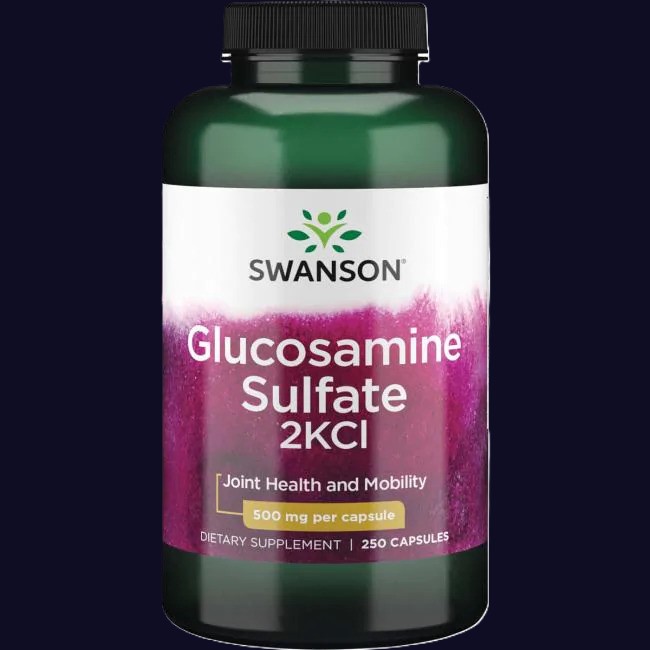
Glucosamine sulfate and cancer
What is glucosamine sulfate
Glucosamine sulfate is a naturally occurring compound found in cartilage and other connective tissues. It plays a role in the building and maintenance of healthy joints. Glucosamine has been used for years (for horses) and later as a popular dietary supplement, primarily for the treatment of osteoarthritis, where it is believed to support the structure and function of cartilage. Traditionally, focus has been on its potential for joint health, but there is also increasing interest in its possible role in other areas, including cancer.
Mechanisms of action and potential for glucosamine sulfate
The potential mechanisms of action of glucosamine sulfate in relation to cancer are complex and not fully understood, but research points to several interesting possibilities:
Anti-inflammatory effect
Chronic inflammation plays a role in the development and progression of many types of cancer. Glucosamine sulfate has been shown to have anti-inflammatory properties in vitro (in test tubes/petri dishes) and in vivo (in living organisms), which may contribute to inhibiting the growth and spread (metastasis) of cancer cells.
Influence on signaling pathways
Glucosamine sulfate may possibly affect various signaling pathways in cells involved in cell growth, differentiation, and apoptosis (programmed cell death). By modulating these signaling pathways, glucosamine can potentially contribute to controlling the behavior of cancer cells [1].
Effect on the extracellular matrix (ECM)
The ECM is the network of proteins and other molecules that surround cells and provide them with structure. Changes in the ECM can play a role in cancer spread. Glucosamine sulfate may possibly affect the composition and structure of the ECM, potentially inhibiting the ability of cancer cells to invade surrounding tissue [4].
Interaction with the immune system
Some studies suggest that glucosamine sulfate may have immunomodulatory effects, meaning it can influence the function of the immune system. This could potentially contribute to strengthening the body’s natural defense against cancer cells.
Inhibition of angiogenesis (formation of new blood vessels)
Cancerous tumors need their own blood supply to grow and spread. In some studies, glucosamine sulfate has been shown to inhibit angiogenesis, potentially limiting tumor growth.
Clinical studies
There is limited but growing clinical research on the potential of glucosamine sulfate in relation to cancer. Some studies have investigated the effect of glucosamine on specific types of cancer, while others have focused on its general impact on cancer development or as part of a combination therapy.
Animal trials
Some animal trials have shown promising results, where glucosamine sulfate has inhibited the growth of cancer cells and improved survival in animals with cancer.
In vitro studies
Laboratory experiments have shown that glucosamine sulfate can influence the growth and death of cancer cells [1].
Clinical studies
Some clinical studies have been conducted on humans, but the results have been inconsistent. Some studies have shown a positive effect, while others have not.
Divergent results
The results are not yet clear, and more high-quality research is needed to confirm the potential benefits and establish the optimal use of glucosamine sulfate in cancer treatment.
However, a larger study concluded that glucosamine did not have any preventive effect against cancer [3].
Safety
Glucosamine sulfate is generally considered safe for most people when taken in recommended doses. The most common side effects are mild and include digestive issues such as nausea, diarrhea, and constipation.
Individuals with shellfish allergies should be aware that some glucosamine products are derived from shellfish. It is always a good idea to consult a competent practitioner before starting to take glucosamine sulfate, especially if you have other health problems or are taking medication.
The safety of using glucosamine sulfate during pregnancy and breastfeeding has not been sufficiently studied.
Advantages of glucosamine sulfate
Potential synergistic effect
Glucosamine sulfate may possibly have a synergistic effect when combined with conventional cancer treatments such as chemotherapy or radiation therapy.
Quality of life improvement
Some studies suggest that glucosamine sulfate can contribute to improving the quality of life for cancer patients by reducing pain and inflammation, especially in patients with joint problems related to their cancer treatment.
Preventive potential
There are speculations about whether glucosamine sulfate may have a preventive effect against certain types of cancer, but this requires further research. However, it was not confirmed in this study: Glucosamine and Cancer Incidence in Osteoarthritis: A Prevalent New-User Cohort Design (PubMed) (No increased protection against cancer).
Disadvantages and limitations
Limited clinical evidence
More high-quality clinical research is still needed to confirm the potential of glucosamine sulfate in cancer treatment.
Variation in product quality
The quality of glucosamine products can vary significantly, which can affect their effectiveness.
Interactions with medication
Glucosamine sulfate may possibly interact with certain drugs, including blood-thinning medication.
A special (metabolic) perspective
When viewing cancer as a metabolic disorder, new perspectives for treatment open up, including the role of substances like glucosamine sulfate.
O-GlcNAc and cancer
O-GlcNAc plays a central role in the regulation of cellular processes in response to nutrient levels. Elevated levels of O-GlcNAc are often associated with cancer, as it can promote cell growth, survival, and spread.
Glucosamine sulfate and O-GlcNAc
Glucosamine sulfate is a precursor to O-GlcNAc. One might think that by adding glucosamine sulfate, you would further increase O-GlcNAc levels and thus worsen the cancer.
What is O-GlcNAc
O-GlcNAc (O-linked N-acetylglucosamine)
A single sugar molecule (N-acetylglucosamine) attached to the oxygen atom on a serine or threonine amino acid in a protein.
Dynamic modification that can be quickly added to and removed from proteins.
Functions as a kind of “nutrient sensor” in the cell and plays a role in many cellular processes, including signaling, transcription, and protein synthesis.
Not so simple
The dynamics of O-GlcNAc
The O-GlcNAc cycle is very dynamic. This means that both the addition and removal of O-GlcNAc from proteins are important for maintaining a balance. Too much or too little O-GlcNAc can be harmful to the cell.
Specific needs of cancer cells
Cancer cells often have an increased need for glucose and other nutrients. By supplying glucosamine sulfate, one can potentially “oversaturate” the cancer cells and thus inhibit their growth [1].
Collaboration with other treatments
Glucosamine sulfate could potentially collaborate with other cancer treatments, for example, by making cancer cells more sensitive to chemotherapy or radiation therapy.
More or less
The question of whether glucosamine sulfate should be avoided or added in cancer is not straightforward and depends on a number of factors, including:
Type of cancer
Different cancer types have different metabolic characteristics.
Stage of cancer
The effect of glucosamine sulfate may vary depending on how far the disease has progressed.
Combination with other treatments
Glucosamine sulfate can potentially enhance the effect of other cancer treatments.
Individual patient factors
Each patient is unique, and what works for one does not necessarily work for another.
Note
It is crucial to emphasize that although there are promising research results, there is still much we do not know about the connection between glucosamine sulfate and cancer.
One should therefore refrain from self-medicating with glucosamine sulfate (or other dietary supplements) during cancer treatment without first speaking with their practitioner.
Future research
Further research is needed to clarify if and how glucosamine sulfate can be used in the treatment of cancer. It is also important to investigate the potential side effects of glucosamine sulfate, especially when combined with other treatments.
Dispensing and application
Dosage
The recommended dose of glucosamine sulfate varies depending on the product and the individual situation. It is important to follow the instructions on the product label or your practitioner’s recommendation.
Form
Glucosamine sulfate is available in various forms, including capsules, tablets, and powder.
Administration
Glucosamine sulfate is normally taken orally with or without food.
Duration
The length of treatment with glucosamine sulfate can vary. Some people experience benefits after a few weeks, while for others, it may take longer.
Combination with other treatments
Glucosamine sulfate may possibly be used in combination with other cancer treatments, but it should always be done in consultation with a doctor.
Conclusion
Glucosamine sulfate shows promising potential as a supplementary treatment in connection with cancer, but it must be emphasized that it is not a substitute for other relevant cancer treatments.
More research is needed to fully understand its mechanisms of action, establish its effectiveness, and identify the patients who may benefit most from it. Before considering using glucosamine sulfate as part of a cancer treatment plan, one should consult their practitioner to ensure it is purposeful and risk-free in the given situation.
Back to Dietary supplements
Links
[1] Glucosamine Inhibits the Proliferation of Hepatocellular Carcinoma Cells by Eliciting Apoptosis, Autophagy, and the Anti-Warburg Effect (PubMed, 2025) Content: A study demonstrating that glucosamine inhibits the growth of liver cancer cells by inducing cell death and counteracting the metabolic “Warburg effect.”
[2] Sulforaphane acutely activates multiple starvation response pathways (PubMed, 2025) Content: A study investigating how compounds like sulforaphane trigger cellular stress responses that may be relevant to cancer metabolism.
[3] Glucosamine and Cancer Incidence in Osteoarthritis: A Prevalent New-User Cohort Design (PubMed, 2024) Content: A large cohort study concluding that glucosamine use did not provide increased protection against cancer incidence in patients with osteoarthritis.
[4] Bisecting GlcNAc modification of vesicular GAS6 regulates CAFs activation and breast cancer metastasis (PubMed, 2025) Content: Research exploring how specific sugar modifications influence the activation of tumor-associated cells and breast cancer metastasis.
[5] Use of Glucosamine and Chondroitin and Lung Cancer Risk in the VITamins And Lifestyle (VITAL) Cohort (PubMed, 2011) Content: An observational study from the VITAL cohort suggesting a potential association between glucosamine/chondroitin use and reduced lung cancer risk.
[6] Glucosamin virker ikke kun på slidgigten (Sund Forskning, 2016) Content: An article discussing that glucosamine may have health effects beyond joint health, though further validation is needed.
Page created: Jan 31, 2025. Last updated: Apr 28, 2026.
❤
What you read on Jeg har Kræft is not a recommendation. Seek competent guidance.
