


Grape seed extract/ OPC and cancer
Summary of Grape seed extract
Effect:
- The active substances in grape seed extract/OPC (Oligomeric Proanthocyanidins), especially proanthocyanidins, function as strong antioxidants. They can protect the body’s cells from damage and counteract inflammation.
Potential in cancer:
- Laboratory studies show that the extract can cause cancer cells to self-destruct, slow their growth, and prevent them from forming the blood vessels they need to grow. It may also be able to make chemotherapy more effective.
Main limitation:
- Most promising results come from laboratory and animal studies. There is still a lack of larger studies on humans to confirm the effect and safety as a complementary cancer treatment.
What is grape seed extract

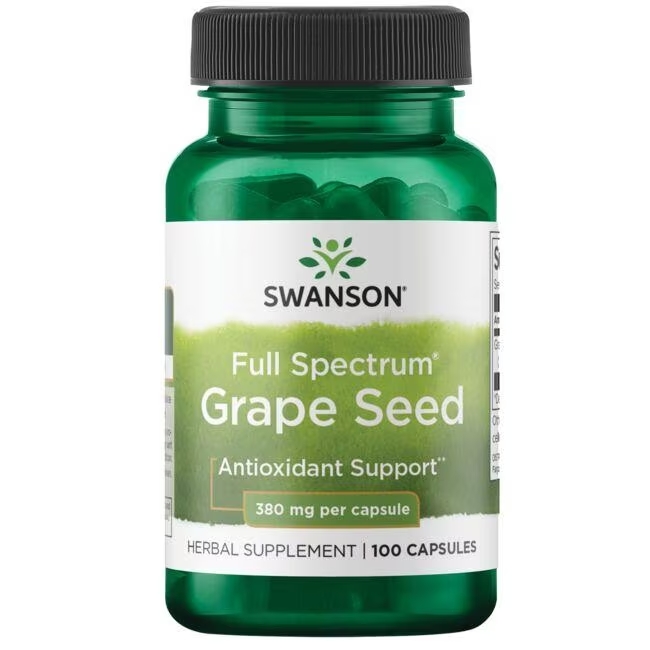
Grape seed extract is a dietary supplement made from the seeds of grapes (Vitis vinifera), which is a byproduct of wine production. The extract is a rich source of a group of plant substances called polyphenols, especially proanthocyanidins, which in everyday language and marketing are often referred to as OPC.
These substances are powerful antioxidants that are believed to have a number of health-promoting properties. OPC (Oligomeric Proanthocyanidins) is the primary active compound targeted, regardless of whether you buy grape seed extract or the related product made from French maritime pine bark (Pycnogenol). However, grape seeds are often the most economical source of high doses of OPC.
In relation to cancer, it is especially these OPC compounds that attract attention. Research points to these active substances being able to affect cancer cell development at multiple levels, including inhibiting their growth, inducing cell death, and counteracting the formation of new blood vessels that tumors need to grow.
History
The use of grapes for medicinal purposes can be traced back thousands of years in both European and Asian cultures, where different parts of the plant were used to treat a range of ailments.
The extraction and use of extract from the seeds, however, is of more recent date. Previously, the seeds were often discarded during wine production. It was not until the 20th century that researchers seriously began to investigate the health potential hidden in the small seeds, which led to the development of the concentrated extracts found today.
Mechanisms of action

Grape seed extract exerts its potential effect against cancer through a complex interplay of several biochemical processes. The active substances, primarily OPC, work at the cellular level to counteract the mechanisms that drive cancer development.
Induction of apoptosis
One of the most well-documented mechanisms of action is the ability to induce apoptosis, which is the body’s natural process for programmed cell death.
Cancer cells are characterized by evading this process and dividing uncontrollably.
Studies show that proanthocyanidins can activate signaling pathways inside cancer cells that restart this suicide process. This happens, among other things, by upregulating proteins such as p53 and Bax, which promote cell death, and downregulating proteins that protect the cell from apoptosis [2].
This mechanism causes the extract to be able to make cancer cells self-destruct without damaging the surrounding healthy cells.
Inhibition of angiogenesis
For a tumor to grow and spread, it depends on forming new blood vessels, a process called angiogenesis. These blood vessels supply the tumor with oxygen and nutrients.
Grape seed extract has been shown to be able to effectively inhibit this process. This happens by blocking the activity of growth factors such as VEGF (Vascular Endothelial Growth Factor), which are crucial for the formation of new blood vessels [3].
By inhibiting the VEGF signaling pathway, the extract can “starve” the tumor and thus limit its growth and potential to spread.
Antioxidant and anti-inflammatory effect
Chronic inflammation and oxidative stress (an imbalance between free radicals and antioxidants in the body) are known driving forces behind the development of cancer.
Grape seed extract is a very potent antioxidant that neutralizes harmful free radicals and protects the cells’ DNA from damage that can lead to mutations and cancer.
At the same time, the extract has strong anti-inflammatory properties. It can dampen the body’s inflammatory response by inhibiting the production of inflammation-promoting substances, which creates a less favorable environment for cancer cell growth [5, 6].
Regulation of cell cycle
Cancer cells have a defective cell cycle that causes them to divide uncontrollably. Research has shown that grape seed extract can intervene in this process. It can cause a so-called “cell cycle arrest,” where the cancer cell is forced to stop its division.
This gives the cell time to either repair any DNA damage or, if the damage is too great, to undergo apoptosis [2].
Potential in cancer
Preclinical studies, both in vitro (in test tubes/petri dishes) and in vivo (in living organisms), have shown that grape seed extract has potential against a wide range of cancer types.
The results indicate that the extract can not only inhibit the growth of cancer cells but also make them more sensitive to conventional treatment.
Specific cancer types
Research has investigated the effect of grape seed extract on cell lines from, among others, breast, prostate, colon, lung, and skin cancer.
In many of these studies, the extract has shown an ability to selectively attack the cancer cells while leaving the healthy cells unaffected.
- A specific substance in the extract, known as B2G2, has been shown to be particularly effective at killing prostate cancer cells [1].
- For colon cancer, studies have shown that the extract can enhance the effect of chemotherapy such as 5-fluorouracil (5-FU) and simultaneously reduce the treatment’s harmful side effects on the intestines [4].
Synergy with chemotherapy
One of the most promising aspects of grape seed extract is its potential to work in synergy with chemotherapy. Studies have indicated that the extract can make cancer cells more susceptible to chemotherapeutic agents, which potentially can increase the treatment’s effectiveness.
At the same time, research suggests that the extract’s protective properties can reduce some of the damage that chemotherapy causes to healthy tissue, such as inflammation in the digestive system. This can lead to fewer side effects and a better quality of life during treatment [4].
Benefits of grape seed extract

In addition to the direct mechanisms of action against cancer cells, grape seed extract offers several general health benefits that can be relevant in a cancer treatment course.
General cell protection
The strong antioxidant capacity in grape seed extract contributes to protecting the body’s healthy cells from the oxidative stress that both the disease and its treatment can cause.
This protection of the cells’ DNA, proteins, and fats can strengthen the body’s general resistance.
Support for the cardiovascular system
Cancer treatment can be a burden on the heart and blood vessels. Grape seed extract is known for its positive effects on cardiovascular health.
It can help maintain healthy blood vessels, improve blood circulation, and regulate blood pressure, which are factors that can support the general physical condition during a demanding treatment course.
Disadvantages and limitations

Although the research is promising, it is important to acknowledge the limitations of the current knowledge about grape seed extract as a complementary cancer treatment.
Lack of human studies
The majority of the existing research is based on laboratory and animal studies. Although these results are encouraging, they cannot be directly transferred to humans.
There is a need for more and larger clinical studies on cancer patients to establish the extract’s real effect, optimal dosing, and safety in a treatment context.
Varying product quality
The quality and concentration of the active substances, especially proanthocyanidins, can vary significantly between different products on the market. This can make it difficult to achieve a consistent and therapeutically relevant dose.
Clinical studies

A limited number of clinical studies with grape seed extract have been conducted on humans, and only a few of them have specifically focused on cancer patients.
A Phase I study investigated the safety of an extract from muscadine grapes (a grape variety with high polyphenol content) in patients with advanced cancer.
- The study concluded that the extract was generally well-tolerated, but it was not designed to measure a direct effect on the cancer disease [5].
Other studies have primarily focused on the extract’s effect on cardiovascular health or as an antioxidant.
There is thus a great need for further clinical research that specifically investigates grape seed extract’s role as a complementary treatment in cancer patients.
Safety

Grape seed extract is generally considered a safe dietary supplement for most adults when taken in moderate amounts. Side effects are rare and typically mild, but may include headache, dizziness, nausea, and stomach discomfort.
People taking blood-thinning medications (e.g., warfarin) or antiplatelet medications (e.g., clopidogrel) should exercise caution, as grape seed extract may potentially increase the risk of bleeding.
It is always advisable to talk to your healthcare provider before starting a new dietary supplement, especially during an active cancer treatment, to avoid unwanted interactions with conventional treatment.
Dispensing and use

Grape seed extract is typically found in capsule or tablet form.
Since there is no established standard dosage for complementary treatment of cancer, recommendations can vary.
- General dosage: There is no official standard dosage. In clinical studies and protocols, high, pharmacological doses are used, which vary greatly, often from 1 to 8 grams daily, and in some cancer trials up to 12 grams daily [12].
- The dose is typically taken divided into 2-3 times during the day.
- Standardization: It is recommended to choose a product that is standardized to contain a specific amount of proanthocyanidins (often indicated as a percentage, e.g., 95%), as these are the substances believed to have the primary effect.
- Intake: The capsules can be taken with or without food. Taking them with a meal may for some reduce the risk of stomach discomfort.
Conclusion

Grape seed extract appears as an interesting natural supplement in connection with cancer treatment, primarily due to its high content of proanthocyanidins.
Preclinical research has shown that the extract possesses several relevant properties, including the ability to induce cell death in cancer cells, inhibit the formation of blood vessels to tumors, and counteract inflammation and oxidative stress.
The potential to enhance the effect of chemotherapy and simultaneously protect healthy cells is particularly noteworthy. However, it is crucial to emphasize that the current knowledge is primarily derived from laboratory and animal studies. Therefore, there is an urgent need for more clinical studies on humans to be able to validate these findings and establish a clear role for grape seed extract as part of an integrated cancer treatment.
Also see Medicine Logistics (Especially the schedule for use)
Also see Resveratrol
Back to Supplements
Links
[1] Forskere dræber kræftceller med vindruekerner (Videnskab.dk, 2013)
- Content: The article describes how American researchers have identified and synthetically produced the substance B2G2 from grape seed extract, which specifically kills prostate cancer cells without harming healthy cells. (Danish Language)
[2] Grape Seed Proanthocyanidins Induce Apoptosis and Cell Cycle Arrest of HepG2 Cells Accompanied by Induction of the MAPK Pathway and NAG-1 (PubMed, 2020)
- Content: In vitro study showing how proanthocyanidins from grape seeds inhibit the growth of liver cancer cells by inducing programmed cell death (apoptosis) and stopping cell division.
[3] Grape Seed Extract Inhibits Angiogenesis via Suppression of the Vascular Endothelial Growth Factor Receptor Signaling Pathway (AACR Journals, Cancer Prevention Research, 2008)
- Content: In vitro research showing that grape seed extract can inhibit the formation of new blood vessels (angiogenesis) that tumors depend on to grow, by blocking the VEGF signaling pathway.
[4] Grape Seed Extract – The Moss Report (The Moss Report, Date not specified)
- Content: A report summarizing studies showing that grape seed extract can enhance the effect of chemotherapy (such as 5-FU) against colon cancer and simultaneously reduce the treatment’s side effects.
[5] Phase I Study of Muscadine Grape Extract for Patients with Advanced Cancer (PMC, NIH, 2021)
- Content: Phase I clinical study investigating the safety and tolerability of an extract from muscadine grapes in patients with advanced cancer.
[6] Grape Seed Components as Protectors of Inflammation, DNA Damage, and Cancer (Current Nutrition Reports, 2023)
- Content: Review study summarizing research on how substances in grape seeds can protect against inflammation, prevent DNA damage, and thus play a role in counteracting cancer.
Page created: October 28, 2025, Last revised May 2, 2026
❤
What you read on “Jeg har Kræft” is not a recommendation. Seek competent guidance.
