


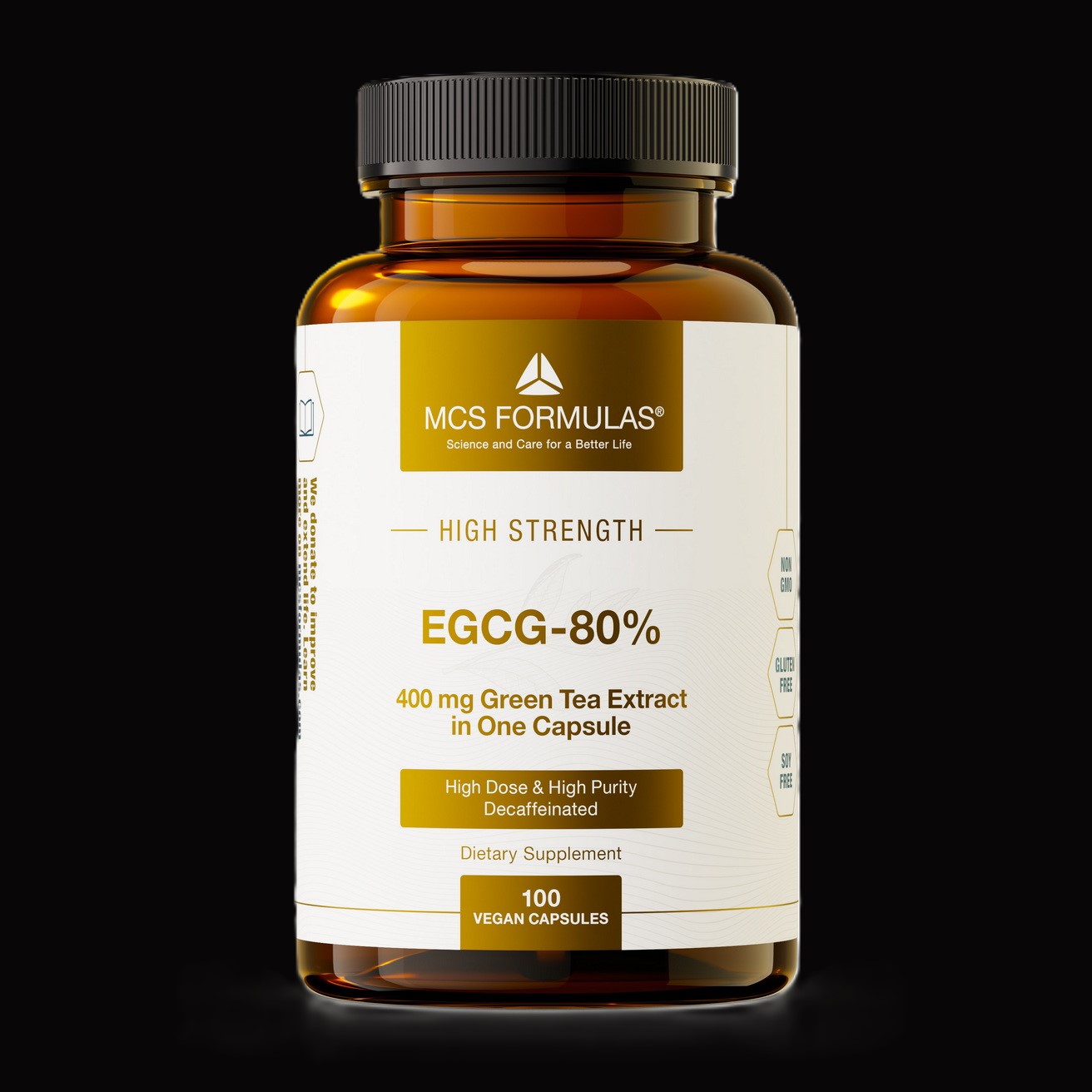
Green tea (EGCG) and cancer
What is green tea
Green tea is a type of tea made from fresh tea leaves of the Camellia sinensis plant that have not undergone fermentation. It is known for its light flavor and green color and is rich in antioxidants, especially catechins, which are believed to have health benefits. Green tea is often associated with improved cardiovascular health, weight management, and various other health effects. It also contains caffeine, but in smaller amounts than black tea or coffee.
Green tea as a supplementary treatment for cancer. Effect, pros, and cons.
Green tea contains polyphenols, especially epigallocatechin gallate (EGCG), which have shown potential cancer-preventive and cancer-fighting properties [3, 4].
Effect of green tea
Antioxidant effect
EGCG can neutralize free radicals, which can damage cells and lead to cancer.
Inhibition of tumor growth
EGCG can inhibit the growth and spread of cancer cells. Recent research shows that EGCG can inhibit breast cancer progression by suppressing the EGFR/Src signaling pathway [6].
Improve effect of chemotherapy and radiotherapy
EGCG can make cancer cells more susceptible, making chemotherapy and radiation therapy more effective [7].
Advantages of green tea
Improved effect of traditional treatment
Can potentially enhance the efficacy of chemotherapy and radiotherapy.
Anti-inflammatory effect
Can exert an anti-inflammatory effect that may be beneficial during cancer treatment. It can modulate the JAK/STAT pathway, which is central to inflammation and cancer progression [10].
Strengthens the immune system
Can strengthen the immune system.
Few side effects
Relatively few side effects compared to traditional cancer treatments.
Symptom relief
Can provide some degree of relief for cancer symptoms.
Disadvantages
Cannot stand alone as a treatment for cancer
Overdose
Green tea can be overdosed, potentially damaging the liver. Therefore, do not use more than recommended on the package and only provided that your liver is functioning well.
Limited evidence
Limited scientific evidence for its effectiveness in cancer patients.
Interactions
Can interact with certain cancer drugs.
High-dose intake can cause side effects such as nausea, constipation, and insomnia.
Can also delay or prevent effective traditional cancer treatment.
Mechanisms of action
EGCG (Epigallocatechin gallate) functions as a versatile metabolic regulator that attacks cancer cells through several independent signaling pathways. A central mechanism is the inhibition of the enzyme CYP17A1, which blocks the formation of androgens (male sex hormones). This is particularly critical in prostate cancer, as it removes the growth signals that the tumor depends on [8].
At the cellular level, EGCG acts as an antagonist against the GRP78 protein. This protein normally functions as a “survival helper” that enables cancer cells to withstand the stressful environment of a tumor and develop resistance to chemotherapy. By deactivating GRP78, the cell’s defenses are significantly weakened [9].
Furthermore, EGCG directly interferes with the cancer cell’s communication system by inhibiting the JAK/STAT [10] and EGFR/Src signaling pathways [6]. These function as the cell’s internal “command centers” for division and movement; when blocked, the cancer cell loses the ability to multiply uncontrollably and, even more importantly, the ability to invade neighboring tissue and form metastases.
Typical question
How much and how often can you drink green tea?
Answer:
It depends on how concentrated it is in the blend, how strong you prepare it, what other medications and supplements you are taking, how robust you are yourself, etc. Therefore, it is very difficult for others to answer.
However, some drink virtually nothing else. Others take a single cup. Personally, I have 2-3 cups a day and supplement with a single capsule.
However, one should be aware that green tea can be overdosed. And as mentioned above, it can also interact with other preparations.
Note
Green tea should not be used as a substitute for traditional cancer treatment.
If green tea is nonetheless used as an alternative treatment, this measure cannot stand alone.
People undergoing cancer treatment should talk to their doctor before consuming green tea or other dietary supplements.
The optimal dose of green tea for cancer prevention or treatment is unknown.
Conclusion
Green tea, rich in polyphenols like epigallocatechin gallate (EGCG), has been shown to possess potential cancer-preventive and fighting properties. Research indicates that EGCG can have an antioxidant effect, inhibit tumor growth [6], and improve the efficacy of chemotherapy and radiotherapy [7]. Furthermore, green tea can contribute to strengthening the immune system and provide anti-inflammatory benefits [10], while generally having few side effects. However, there is limited scientific evidence for its efficacy in cancer treatment, and it should not be considered a substitute for conventional treatments. Overdosing can lead to negative health effects, making it important to use green tea with caution.
Back to Dietary supplements
Links
[1] Green tea (Danish Cancer Society, 2024)
- Content: A general overview of green tea, its ingredients, and potential in cancer prevention from a major health organization.
[2] A bit about tea (Tidslerne, 2020)
- Content: An article describing different types of tea and their properties in relation to health and cancer.
[3] The Role of EGCG in Breast Cancer Prevention and Therapy (PubMed, 2021)
- Content: A study (systematic review) focusing on EGCG’s mechanisms specifically in breast cancer therapy.
[4] Anti-Cancer Effects of Green Tea Epigallocatechin-3-Gallate and Coffee Chlorogenic Acid (PubMed, 2020)
- Content: A comparative analysis of the anti-cancer effects of EGCG and other phytochemicals.
[5] New research: Green tea can improve survival after cancer diagnosis (Patientakademiet, 2024)
- Content: News article based on recent studies showing potential survival benefits for cancer patients consuming green tea.
[6] Network pharmacology and in vitro analyses reveal EGCG inhibits breast cancer progression via suppression of the EGFR/Src pathway (PubMed, 2025)
- Content: EGCG can inhibit breast cancer by blocking signals in the EGFR/Src pathway, reducing growth, invasion, and migration.
[7] Exploring the cytotoxicity of phytochemicals: Comparative analysis of single and combination therapies in multiple cell lines (PubMed, 2025)
- Content: EGCG contributes to overall cytotoxicity, especially in combination with other phytochemicals like curcumin, enhancing treatment efficacy.
[8] Prostate Cancer and Tea: CYP17A1 Inhibition by Phytochemicals from Tea Plant Camellia sinensis L. and Implications for Anti-androgenic Effect (PubMed, 2025)
- Content: EGCG can block the enzyme CYP17A1, reducing male sex hormone production to potentially prevent or treat prostate cancer.
[9] GRP78: A new promising candidate in colorectal cancer pathogenesis and therapy (PubMed, 2025)
- Content: EGCG can counteract GRP78, a protein promoting tumor growth and chemoresistance in colorectal cancer.
[10] Modulating the JAK/STAT pathway with natural products: potential and challenges in cancer therapy (PubMed, 2025)
- Content: Natural products like EGCG can inhibit the JAK/STAT pathway, offering potential as supplementary cancer therapy.
Page created: Jul 15, 2024, Last revised Jun 9, 2025
❤
What you read on Jeg har Kræft is not a recommendation. Seek competent guidance.
