


L-Glutamine and cancer
What is L-Glutamine
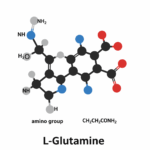
L-Glutamine is a non-essential amino acid (a building block of proteins). The “L” prefix indicates the amino acid’s stereochemistry (the structure of the molecules), specifically the levo-rotatory form (left-handed molecular form), which is the natural and biologically active isomer used in the body’s processes.
The body is normally capable of producing sufficient quantities of this amino acid. L-Glutamine is involved in important functions such as protein production, the immune system, and the maintenance of the intestinal wall.
It is found in various foods, especially animal products and to a lesser extent in certain plants. In the body, the muscles are the largest reservoir of L-Glutamine. The amino acid is also essential for rapidly growing cells, such as immune cells and intestinal cells, which use it as their primary energy source.
History
Although L-Glutamine has always been part of the human diet, its specific importance during physiological stress was first investigated in the mid-20th century. Clinical interest emerged in the 1980s and 90s within areas such as parenteral nutrition (IV nutrition), the treatment of severe burns, and intensive care.
Research began to highlight its role in modulating the immune system and supporting gut health, leading to studies on its potential as a supplementary treatment for cancer.
Mechanisms of action
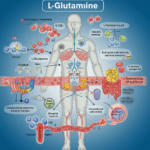
The mechanisms of action for L-Glutamine are diverse and complex.
Energy source for rapidly dividing cells
A central mechanism is L-Glutamine’s role as the primary energy source for cells with high division rates, such as immune cells (lymphocytes) and the cells of the intestinal mucosa (enterocytes). During cancer treatment, where both the immune system and the gastrointestinal system are often under pressure, an adequate supply of L-Glutamine can support the function of these cells and help maintain the health of the intestinal wall.
Nitrogen carrier and amino acid synthesis
L-Glutamine also serves as an important carrier of nitrogen between different tissues and is involved in the formation of other amino acids and nucleotides, which are the building blocks of DNA and RNA. This function is essential for cell growth and repair, which can be relevant in connection with the rebuilding of tissues damaged by cancer or cancer treatment.
Antioxidant function
Indirectly, L-Glutamine can help protect cells from damage by supporting the production of glutathione, a powerful antioxidant that neutralizes harmful free radicals that can be formed during cancer treatment.
Regulation of inflammation
Research suggests that L-Glutamine may have a modulating effect on inflammation by helping to reduce the production of pro-inflammatory signaling molecules (cytokines) and promoting the formation of anti-inflammatory cytokines. This balance is important for managing inflammatory processes that may be involved in both the cancer itself and the side effects of treatment.
Support of the intestinal barrier
A well-studied mechanism of action is L-Glutamine’s ability to strengthen and maintain the gut’s barrier function. The intestinal mucosa prevents harmful substances from entering the body.
During stress such as chemotherapy, this barrier can be weakened. L-Glutamine is an important energy source for intestinal cells and supports their growth and function, which is necessary to maintain an intact intestinal barrier and potentially reduce the risk of complications.
Potential as supplementary treatment for cancer
L-Glutamine shows potential for reducing certain challenges associated with cancer treatment.
Reduction of chemotherapy-induced mucositis
Several studies indicate that L-Glutamine can reduce the severity and duration of mucositis, a painful inflammation of the mucous membranes that often occurs during chemotherapy and radiation therapy. This is likely due to L-Glutamine’s ability to promote the healing of mucosal cells and strengthen the intestinal barrier.
See also Dry mouth, pain, and mouth sores
Support of immune function during treatment
Cancer treatment can weaken the immune system. L-Glutamine is important for the function of immune cells, and supplementation can potentially help maintain the immune system’s ability to fight infections during treatment.
Improvement of nutritional status and reduction of weight loss
By supporting healthy gut function, L-Glutamine can indirectly contribute to improving the absorption of nutrients and potentially counteract unintended weight loss, which is common among cancer patients.
Reduction of peripheral neuropathy
Some preliminary studies suggest that L-Glutamine may have a protective effect against the development or severity of peripheral neuropathy, a type of nerve damage that can occur as a side effect of certain chemotherapies.
See also Nerve damage/sensory disturbances in Chemo – Minimize
Potential synergistic effect with conventional treatment
There is a possible synergistic effect where L-Glutamine can improve the efficacy of certain cancer treatments or help patients tolerate them better.
Advantages of L-Glutamine
L-Glutamine has several potential advantages as a supplementary treatment.
Broad-spectrum support of the body under stress
As mentioned above, it supports several vital systems often negatively affected by cancer and its treatment, including the immune system, the gastrointestinal system, and energy metabolism in rapidly dividing cells.
Good tolerance with few side effects
At recommended doses, L-Glutamine is generally well-tolerated with few and mild side effects compared to many pharmaceutical preparations.
Natural supplement
As a naturally occurring amino acid, it can be an attractive supplement for those who wish to combine conventional treatment with natural approaches.
Possible improvement of quality of life
By reducing distressing side effects (such as mucositis and neuropathy) and supporting immune defense and nutrition, L-Glutamine can potentially contribute to a better quality of life during and after cancer treatment.
Disadvantages and limitations
Certain disadvantages and limitations must be considered.
- Heterogeneous research results: Clinical study outcomes have shown variation to date.
- Theoretical risk of promoting growth in certain cancer cells: Since cancer cells also utilize L-Glutamine, there is a theoretical concern, though it is not strongly supported clinically.
- Possible interactions with medication: There is a potential risk of interactions with certain drugs.
- Individual differences in response: The effect can vary significantly between individuals.
- Need for more research: Further, larger studies are required.
Clinical studies
Studies have investigated the effect on the following, with varying results:
- Mucositis
- Immune function
- Peripheral neuropathy
- Nutritional status
This emphasizes the need for more research in the field.
Safety
L-Glutamine is generally safe in recommended doses. However, mild side effects may occur rarely. Caution is advised for certain medical conditions and regarding potential drug interactions. Dosage instructions should be strictly followed.
Mild side effects typically include:
- Mild stomach discomfort: This can manifest as a feeling of unease in the stomach.
- Nausea: A mild feeling of needing to vomit.
- Bloating: A feeling of the stomach being filled with air.
These side effects are usually mild and transient, meaning they normally disappear on their own over time. However, it is important to be aware of your body’s reaction when starting a new supplement.
Remember that these are general potential side effects. Individual reactions can vary, and it is always best to consult your practitioner if you experience unexpected or persistent symptoms when taking L-Glutamine.
Dispensing and application
L-Glutamine is available as an over-the-counter supplement in many health food stores, pharmacies, and online. It is typically found in the following forms:
- Powder: L-Glutamine powder can be dissolved in water, juice, or other beverages. This allows for flexible dosing.
- Capsules: Capsules contain a measured dose of L-Glutamine and are easy to consume.
- Oral solution: Some products are offered as pre-mixed oral solutions.
- Intravenous solution: In certain situations, especially in severely ill patients, L-Glutamine can be administered intravenously under medical supervision.
The use of L-Glutamine depends on the purpose of the supplementation and individual needs. One should follow recommended dosage instructions and consult a practitioner for individual advice on the correct dose and method of use in connection with cancer treatment.
Conclusion
L-Glutamine is a non-essential amino acid with significance for immune function, gut health, and energy metabolism. Studies suggest that as a supplementary treatment for cancer, it may potentially reduce certain side effects of chemotherapy and radiation therapy, such as mucositis and peripheral neuropathy.
Additionally, it can support the immune system and improve nutritional status.
Although research results are mixed, several investigations indicate that L-Glutamine can be a valuable addition to the treatment plan for some cancer patients. However, one should be aware of possible disadvantages, limitations, and interactions with other medications.
Back to Dietary supplements
Links
[1] GOT2: New therapeutic target in pancreatic cancer (PubMed, 2024)
- Content: A study identifying GOT2 as a potential metabolic target in pancreatic cancer, linked to how the tumor utilizes nutrients like glutamine.
[2] Investigation of the transcriptome and metabolome of the cerebral cortex and testes in Cntnap4-deficient mice (PubMed, 2025)
- Content: Research exploring metabolic changes, including amino acid levels, in genetic mouse models.
[3] G-protein coupled receptors in metabolic reprogramming and cancer (PubMed, 2025)
- Content: An overview of how cellular receptors influence metabolic changes in cancer cells, including the uptake of energy sources.
[4] RNA‑seq analysis of predictive markers associated with glutamine metabolism in thyroid cancer (PubMed, 2025)
- Content: Analysis of markers that can predict how thyroid cancer cells depend on glutamine metabolism.
[5] BCR::ABL1 expression in chronic myeloid leukemia cells in low oxygen is regulated by glutamine via CD36-mediated fatty acid uptake (PubMed, 2025)
- Content: A study on how leukemia cells regulate their survival in low-oxygen environments through glutamine and fatty acid uptake.
Page created: May 16, 2025. Last revised: Apr 28, 2026
❤
What you read on Jeg har Kræft is not a recommendation. Seek competent guidance.
