


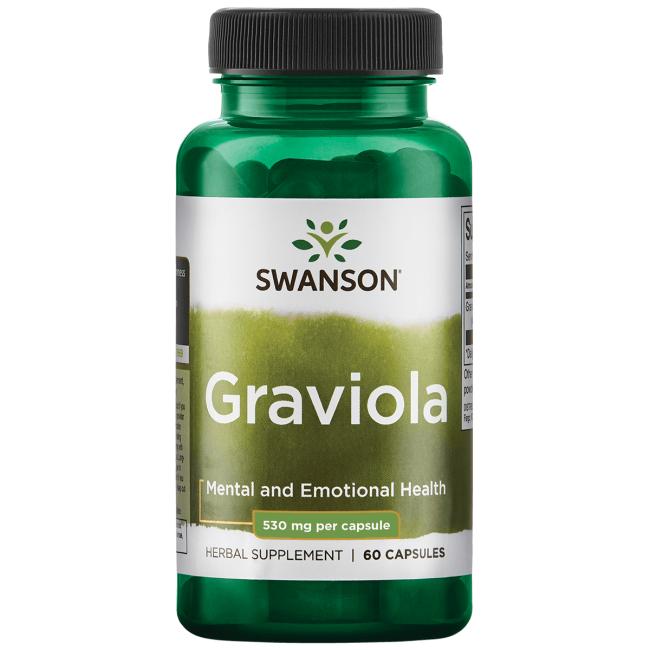
Graviola and cancer
What is Graviola
Graviola (Annona muricata) is a small evergreen tree native to tropical regions of the Americas. It is known for its large, heart-shaped fruit with a sweet and tart flavor.
Graviola has a long history of traditional use in folk medicine for treating various ailments, including infections, parasites, and cancer. In recent years, graviola has garnered increasing interest in cancer research due to its potential anti-cancer properties.
Mechanisms of action and potential
Bioactive compounds
Graviola contains several bioactive compounds, including acetogenins (carbon-based molecules), alkaloids (nitrogen-containing plant compounds/organic molecules), and flavonoids (antioxidant plant pigments), which are believed to contribute to its potential anti-cancer effects [6]. Acetogenins are of particular interest, as they have demonstrated cytotoxic (cell-killing) properties against various cancer cell lines in vitro (in test tubes/petri dishes) and in vivo (in living organisms) [3, 5].
Inhibition of mitochondrial complex I
Research suggests that acetogenins work by inhibiting mitochondrial complex I, a key enzyme in cellular energy production [4]. By blocking this enzyme, acetogenins can prevent cancer cells from producing energy, leading to cell death (apoptosis). Additionally, acetogenins are thought to inhibit the growth of new blood vessels (angiogenesis), which is critical for tumor growth and spread.
Potential against various cancer types
Graviola has shown potential against several different cancer types, including breast, lung, prostate, and colon cancer, as well as leukemia [5]. It is important to note that the majority of this research has been conducted in vitro (laboratory experiments) and in vivo (animal studies). More research, particularly human clinical trials, is needed to confirm graviola’s efficacy and safety as a cancer treatment.
Advantages of Graviola
Potential anti-cancer activity
As mentioned above, graviola has shown cytotoxic properties against various cancer cell lines. This is primarily due to acetogenins, which can inhibit the growth and spread of cancer cells [3].
Rich in antioxidants
Graviola is a good source of antioxidants, which can protect cells from damage caused by free radicals. Antioxidants play an important role in preventing oxidative stress, which can contribute to cancer development.
Anti-inflammatory properties
Graviola is believed to possess anti-inflammatory properties that can help reduce inflammation in the body. Chronic inflammation can increase cancer risk, so graviola’s anti-inflammatory effect may have a protective role.
Supports the immune system
Graviola can help strengthen the immune system and improve the body’s natural defense against diseases. A strong immune system is essential for fighting cancer cells.
May improve digestion
Graviola can help improve digestion and relieve constipation. Healthy digestion is important for overall health and may indirectly contribute to reducing cancer risk.
May improve mood
Some studies suggest that graviola may have a positive effect on mood and reduce anxiety.
May have antibacterial and antiviral properties
Graviola can help fight infections caused by bacteria and viruses.
May have analgesic properties
Graviola may have a pain-relieving effect, which can be beneficial for cancer patients experiencing pain.
Disadvantages and limitations
Limited clinical evidence
There is limited clinical evidence for graviola’s effectiveness in treating cancer in humans [1].
Potential side effects
Graviola can cause side effects, including nausea, vomiting, and diarrhea.
May interact with medications
Graviola can interact with certain medications, including blood pressure medications and antidepressants [2].
Neurotoxicity
Long-term use of high doses of graviola can cause neurotoxicity. This is attributed to the acetogenins in graviola, as they can affect mitochondrial function in nerve cells [1].
Not a substitute for conventional cancer treatment
Graviola should not be considered a substitute for conventional cancer treatment.
Clinical studies
Limited clinical evidence
Clinical evidence for graviola’s efficacy in treating cancer in humans is sparse. Most available studies are preclinical, conducted in labs or on animals. However, a few small clinical observations suggest graviola may have a positive impact.
Study on liver cancer
A 2016 study investigated the effect of graviola extract on patients with liver cancer. The results showed that graviola extract improved patients’ quality of life and reduced tumor size in some participants.
Study on breast cancer
Another 2012 study examined the effect of graviola leaf extract on breast cancer patients. The results showed that graviola extract inhibited the growth of breast cancer cells in vitro and induced apoptosis.
Need for more research
It is important to emphasize that these studies are small and have limitations. Larger, well-designed clinical trials are necessary to confirm these results and establish graviola’s efficacy and safety in cancer therapy.
Safety
General safety
Graviola is generally considered safe when consumed in moderate amounts. However, potential side effects include nausea, vomiting, and diarrhea.
Neurotoxicity
In rare cases, graviola can cause neurotoxicity (damage to the nervous system), particularly with long-term use of high doses [1].
Interaction with medications
Graviola can interact with certain drugs, such as blood pressure medication and antidepressants. It is therefore vital to consult a qualified practitioner before taking graviola, especially if you have an underlying condition or take other medications [2].
Pregnant and breastfeeding women
Pregnant and breastfeeding women should avoid graviola, as there is insufficient information regarding its safety in these groups.
Dispensing and application
Fresh fruit
The graviola fruit can be eaten fresh.
Juice
Graviola juice can be made from fresh fruit or purchased ready-made.
Tea
Graviola leaves can be used to brew tea.
Extract
Graviola extract is available in capsule or powder form.
Dietary supplements
Graviola is also found in various dietary supplements.
Conclusion
Graviola is a tropical fruit with potential anti-cancer properties. Preclinical studies have shown promising results, but more research, especially human clinical trials, is needed to confirm graviola’s efficacy and safety as a cancer treatment.
Graviola should not be viewed as a replacement for other relevant cancer treatments but may potentially be used as a supplement in consultation with a competent practitioner.
Back to Dietary supplements
Links
[1] Graviola – Purported Benefits, Side Effects & More (Memorial Sloan Kettering Cancer Center, 2026)
- Content: A comprehensive review of graviola’s traditional uses, potential side effects, and the risk of neurotoxicity associated with long-term use.
[2] Cytotoxicity Activity of Graviola Fruit Extract with Carbamazepine and Valproic Acid Show Antagonistic and Indifferent Effects (PubMed, 2023)
- Content: Research investigating how graviola interacts with specific medications, highlighting potential antagonistic effects.
[3] Overcoming multi drug resistance mediated by ABC transporters by a novel acetogenin- annonacin from Annona muricata L (PubMed, 2024)
- Content: A study on how specific compounds in graviola may help overcome drug resistance in cancer cells by targeting ABC transporters.
[4] Molecular Targets of Natural Compounds with Anti-Cancer Properties (PubMed, 2021)
- Content: An overview of how natural compounds, including those in graviola, target specific molecular pathways in cancer cells.
[5] Evaluation of metabolomics behavior of human colon cancer HT29 cell lines treated with ionic liquid graviola fruit pulp extract (PubMed, 2021)
- Content: Analysis of how graviola extract affects the metabolism of colon cancer cells, leading to inhibited growth.
[6] A Review on Annona muricata and Its Anticancer Activity (PubMed, 2022)
- Content: A scientific review of the chemical composition of graviola and the mechanisms behind its observed anti-cancer activities in various studies.
Page created: Jan 27, 2025. Last revised: Apr 28, 2026.
❤
What you read on Jeg har Kræft is not a recommendation. Seek competent guidance.
