


Peppermint and cancer
What is peppermint
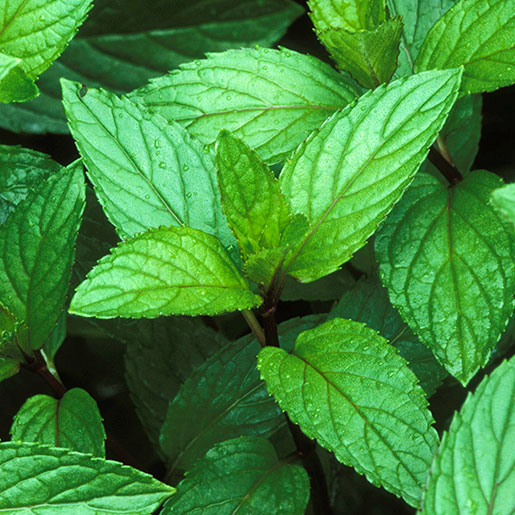
Peppermint (Mentha × piperita) is an aromatic hybrid plant in the Lamiaceae (mint) family, which is a cross between water mint (Mentha aquatica) and spearmint (Mentha spicata). The plant is known for its characteristic leaves and the refreshing, cool scent and taste, which are primarily due to its content of menthol and menthone.
History
Peppermint has a long history of medicinal use dating back to ancient Egypt, Greece, and Rome. In folk medicine, peppermint has traditionally been used to relieve digestive problems such as bloating, gas, and indigestion, as well as to relieve headaches, muscle tension, and symptoms of colds and flu. The essential oil from peppermint is also widely used in aromatherapy and in various commercial products such as toothpaste, gum, and skin care products.
Mechanisms of action
Peppermint’s potential health benefits are primarily attributed to the bioactive components, especially menthol and menthone, but other substances such as limonene, cineole, and flavonoids also contribute. These ingredients interact with various biological processes in the body, which may be relevant for cancer treatment and symptom relief.
Anti-inflammatory properties
Menthol, one of the main components in peppermint oil, has been shown to have anti-inflammatory effects. Inflammation plays a complex role in the development and growth of cancer. Chronic inflammation can create a microenvironment that promotes tumor growth, angiogenesis (formation of new blood vessels that supply the tumor), and metastasis (spread of cancer cells to other parts of the body).
By inhibiting pro-inflammatory cytokines (signaling molecules that promote inflammation) and enzymes, peppermint can potentially help dampen this process.
Research in vitro (in test tubes/petri dishes) has indicated that peppermint extract and its components can reduce the production of inflammatory signaling substances, which potentially can have a positive impact in connection with cancer.
Antioxidant effect
Peppermint contains several antioxidant compounds, including flavonoids and phenolic acids. Oxidative stress, caused by an imbalance between the production of reactive oxygen species (free radicals) and the body’s ability to neutralize them, is involved in DNA damage and the development of cancer.
Antioxidants help neutralize free radicals and protect cells from oxidative damage. Studies in vitro (in test tubes/petri dishes) have shown that peppermint extract can exhibit significant antioxidant activity, which potentially can help protect cells from the harmful effects of oxidative stress during cancer treatment.
Inhibits cell growth and kills cancer cells
Certain studies in vitro (in test tubes/petri dishes) have suggested that peppermint extract and its isolated components can have antiproliferative (inhibits cell growth) and cytotoxic (cell-killing) effects on various cancer cell types.
The mechanisms behind these effects may include induction of apoptosis (programmed cell death) in cancer cells, inhibition of cell cycle progression, and interference with signaling pathways that are crucial for cancer cell growth and survival.
However, it is important to note that these results are primarily based on laboratory studies, and there is a need for further research in vivo (in living organisms) and in human clinical trials to confirm these effects and understand their clinical relevance [4].
Affects enzymes and metabolism
Peppermint can also affect certain enzymes and metabolic processes in the body. For example, menthol has been shown to be able to interact with certain drug-metabolizing enzymes in the liver, which potentially can affect the metabolism of certain chemotherapeutic agents.
Therefore, it is important that people in cancer treatment inform their healthcare provider about the use of peppermint products to avoid potential interactions. Further research is needed to fully understand these interactions and their clinical significance.
Where peppermint may help with cancer
Although peppermint is not a treatment for cancer itself, it may help with some of the problems that can arise in connection with the disease and its treatment.
Relief of stomach problems
Many cancer patients experience stomach problems, such as nausea, vomiting, diarrhea, or constipation. Peppermint has traditionally been used to relieve such problems. Menthol can help soothe the intestines and reduce cramps. Some studies have shown that peppermint oil can help with irritable bowel syndrome, which has some of the same symptoms.
Also see Nausea and vomiting with chemo – what you can do
Reduces nausea and vomiting
Nausea and vomiting are common side effects of chemotherapy. Peppermint’s soothing effect on the stomach may help reduce these symptoms. The scent of peppermint oil has in some studies helped against nausea after surgeries [3].
Help with dry mouth
Some cancer treatments can cause dry mouth. Peppermint’s fresh taste may help increase saliva production and relieve the feeling of dryness in the mouth. However, one should be careful, as it can also irritate a sensitive mouth.
Also see Dry mouth, pain and sores – what you can do
Pain relief
Menthol has a cooling and pain-relieving effect. It may help with muscle pain or nerve pain that some cancer patients experience.
Better mental well-being
Being diagnosed with cancer and being in treatment can be mentally challenging. The scent of peppermint can be refreshing and may help reduce stress and anxiety in some people.
Benefits of peppermint
There are several reasons why peppermint can be an attractive supplement for cancer patients.
Natural and relatively safe
Peppermint is a natural product that has been used for a long time and is generally considered safe in moderate amounts.
Easy to obtain and inexpensive
Peppermint as tea, oil, or dietary supplement is easy to find and usually does not cost much.
Many ways to use it
You can drink peppermint tea, use peppermint oil for scent or on the skin (remember to mix with another oil), or take it as a dietary supplement.
May be good together with other treatment
Although peppermint does not treat cancer, it may help alleviate side effects so that one can better tolerate conventional treatment. However, it is important to talk to your healthcare provider about it.
Can improve quality of life
If peppermint can help with stomach problems, nausea, pain, or mental discomfort, it can overall improve the quality of life for cancer patients.
Disadvantages and considerations
Although peppermint is natural, there are some things to be aware of.
Can affect medication
Peppermint oil can change how some medications work in the body. It is especially important to be careful if you are receiving chemotherapy. Always talk to your healthcare provider before using peppermint products.
Stomach problems in some
Although peppermint often helps with stomach problems, it can worsen heartburn in some people.
Allergic reactions
A few people may be allergic to peppermint.
Product quality
The quality of peppermint products can vary greatly. Choose products from reliable manufacturers.
Peppermint vs. menthol
Peppermint and menthol are closely related, but they refer to different things:
Peppermint
- Botanical plant: Peppermint (Mentha × piperita) is a hybrid between water mint and spearmint. It belongs to the mint family and is known for its strong, fresh taste and scent.
- Use: Peppermint is often used in cooking, tea, medicine, and aromatherapy. It also has a number of health benefits, such as relieving digestive problems and headaches.
Menthol
- Chemical compound: Menthol is an organic compound found naturally in peppermint oil, but it can also be synthesized chemically. It is responsible for the characteristic cooling sensation and scent associated with peppermint.
- Use: Menthol is used in many products, including cough syrup, toothpaste, cosmetics, and candy, for its cooling effect and taste. It also has medical uses, such as relieving irritation and pain.
Summary
- Peppermint is a plant, while menthol is a chemical compound typically found in peppermint and used for various purposes. Peppermint can be used whole, while menthol is an isolated component often used in products for its specific effect.
Research
There are not many large studies on how peppermint works specifically on cancer patients. Much of what we know comes from laboratory studies and studies of other diseases.
Some smaller studies have looked at whether peppermint oil can help with nausea in chemotherapy patients, but the results are not entirely clear. There is a need for more research on humans to say anything certain about how peppermint can help with cancer [3, 5].
Safety
For most adults, peppermint is safe in the amounts normally used in tea or as a flavoring. But there are some things to consider, especially for cancer patients.
Interaction with medication
As mentioned, peppermint can affect how certain medications work.
Pregnancy and breastfeeding
Pregnant and breastfeeding women should be careful with using large amounts of peppermint oil.
Children and elderly
Children and the elderly may be more sensitive to peppermint.
Quality is important
Choose pure peppermint products from good manufacturers.
Use
Peppermint can be used in several ways:
- Peppermint tea: Dried leaves are poured with hot water.
- Peppermint oil (essential oil): Must be mixed with another oil before applying to the skin. Can also be used for scent.
- Peppermint capsules or tablets (dietary supplement): Follow the instructions on the package.
- Fresh leaves: Can be used in food and drinks.
Start with a small amount to see how your body reacts. If symptoms get worse, you should stop and talk to your healthcare provider.
Conclusion
Peppermint has some properties that may be useful for cancer patients, especially to relieve certain symptoms and improve quality of life. It can help with stomach problems, nausea, and possibly also pain and mental discomfort.
It is a natural product that is generally safe, but it can affect certain types of medication. Therefore, it is a good idea to talk to your healthcare provider about the use before using peppermint as a supplement to your cancer treatment. There is a need for more research to be certain about how well it works and how it can best be used.
Back to Supplements
Also see Diet
Links
[1] Esophagogastroduodenoscopy Quality Improvement and the Role of Topical Antiperistaltic Agents: A Systematic Review and Meta-Analysis (PubMed, 2024)
- Content: Systematic review and meta-analysis examining the role of topical antiperistaltic agents, including peppermint oil, in improving the quality of esophagogastroduodenoscopy procedures, with relevance for gastrointestinal symptom management.
[2] Intranasal delivery of herbal medicine for disease treatment: A systematic review (PubMed, 2024)
- Content: Systematic review exploring the intranasal delivery of herbal medicines, including peppermint, for disease treatment, with potential applications for symptom relief in cancer patients.
[3] Effects of aromatherapy on nausea and vomiting in patients with cancer: A systematic review and meta-analysis of randomized controlled trials (PubMed, 2024)
- Content: Systematic review and meta-analysis of randomized controlled trials investigating the effects of aromatherapy, including peppermint, on nausea and vomiting in cancer patients, showing promising results for symptom relief.
[4] Menthol induces apoptosis and inhibits proliferation and migration of nonsmall cell lung carcinoma in vitro and in vivo through Akt pathway (PubMed, 2023)
- Content: In vitro and in vivo study demonstrating that menthol can induce apoptosis and inhibit proliferation and migration of non-small cell lung carcinoma cells through the Akt signaling pathway.
[5] Prevention of radiotherapy-related oral mucositis with zinc and polyherbal mouthwash: a double-blind, randomized clinical trial (PubMed, 2023)
- Content: Double-blind, randomized clinical trial investigating the prevention of radiotherapy-related oral mucositis using zinc and polyherbal mouthwash, with potential relevance for peppermint’s application in managing mouth dryness and sores.
[6] Nanoemulsion and Solid Nanoemulsion for Improving Oral Delivery of a Breast Cancer Drug: Formulation, Evaluation, and a Comparison Study (PubMed, 2021)
- Content: Study exploring nanoemulsion formulations for improving oral delivery of breast cancer drugs, with potential insights into how peppermint components might be delivered effectively.
Page created: April 8, 2025
❤
What you read on “Jeg har Kræft” is not a recommendation. Seek competent guidance.
