


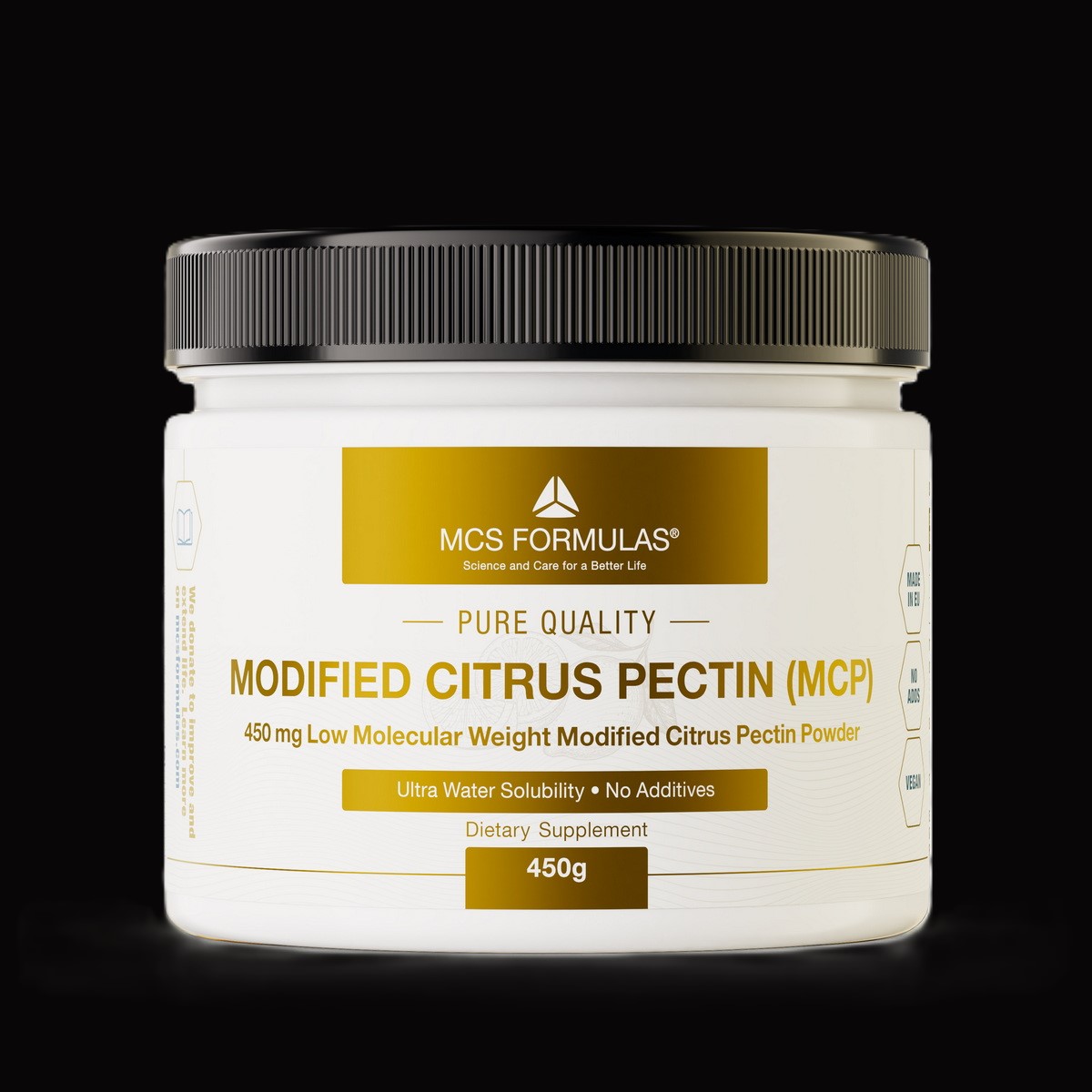
Modified citrus pectin and cancer
What is modified citrus pectin
Modified citrus pectin (MCP) is a complex polysaccharide (a long-chain carbohydrate) extracted from citrus peels, typically from fruits like lemons, limes, and grapefruits.
It differs from regular citrus pectin by being modified through a process that involves breaking down the long pectin chains into shorter chains. This modification increases the solubility and bioavailability of MCP, meaning it is more easily absorbed by the body to exert its effects [2, 11].
History
Historically, citrus pectin has primarily been used in the food industry as a gelling agent, for example, in the production of jam and jelly. However, besides this, it has traditionally been used for the treatment of various ailments.
Present day
Research in recent years has shown that MCP has potential health benefits, especially in relation to cancer, which has led to an increasing interest in the substance’s use as a dietary supplement [11, 13]. Traditional use of citrus fruits and their peels in folk medicine has also contributed to this interest, as it has provided a reason to examine the active substances in these fruits more closely.
Mechanisms of action for citrus pectin
MCP exerts its effects through several complex mechanisms that interact with each other and contribute to its potential health benefits. These mechanisms include:
Binding to galectin-3
Galectin-3 is a protein found in many of the body’s cells, playing a role in various biological processes, including cell adhesion (the ability of cells to stick to each other), cell proliferation (cell growth), angiogenesis (the formation of new blood vessels), and metastasis (the spread of cancer). MCP has a strong tendency to bind to galectin-3. By binding to galectin-3, MCP can block this protein’s interaction with other molecules, potentially disrupting the processes it is involved in. In relation to cancer, this means that MCP, by binding to galectin-3, can potentially inhibit the ability of cancer cells to spread to other parts of the body [1, 6, 10].
Impact on the immune system
The immune system plays a crucial role in fighting cancer. MCP can interact with certain immune cells, including natural killer cells (NK cells) and macrophages (immune cells that “eat” foreign bodies). NK cells are a type of white blood cell specialized in killing cancer cells and virus-infected cells.
Macrophages are another type of immune cell that patrol the body and “eat” foreign bodies, including cancer cells.
Studies have shown that MCP can stimulate the activity of these cells and thus strengthen the immune system’s ability to fight cancer cells [13].
Inhibition of angiogenesis
Angiogenesis is the formation of new blood vessels. Cancer cells need blood vessels to be supplied with the oxygen and nutrients necessary for their growth and spread. MCP can inhibit angiogenesis by affecting the signaling pathways involved in the formation of new blood vessels. By inhibiting angiogenesis, MCP can potentially limit the growth and spread of cancer [9].
Anti-inflammatory effect
Chronic inflammation plays a role in the development of many types of cancer. Inflammation is a natural process that helps the body fight infections and injuries. However, when inflammation becomes chronic, it can create an environment that promotes cancer development.
MCP has been shown to possess anti-inflammatory properties, which may contribute to its potential cancer-preventive and therapeutic effects [2, 11].
Impact on the gut flora
The gut flora, i.e., the bacteria living in our intestines, plays an important role in our health, including our immune system. MCP can have a prebiotic effect, meaning it can promote the growth of beneficial bacteria in the gut. A healthy gut flora is important for a well-functioning immune system and can potentially play a role in the prevention and treatment of cancer [13].
Potential as supplementary treatment for cancer
The various mechanisms of action of MCP give it potential as a supplementary treatment for cancer. However, it is important to emphasize that MCP should not be used as a replacement for other relevant cancer treatment. Yet, it can potentially play a role in combination with other forms of treatment such as chemotherapy, radiation therapy, and surgery. MCP’s potential as a supplementary treatment for cancer includes:
Inhibition of metastasis
MCP’s ability to bind to galectin-3 and thus potentially prevent cell adhesion (cohesion) and the spread of cancer cells is of particular interest in relation to the prevention of metastases [1, 10, 15]. Metastasis is the process where cancer cells spread from the original tumor site to other parts of the body. This is often the most challenging aspect of cancer treatment, and MCP’s potential to inhibit metastasis can therefore be very valuable.
Strengthening the immune system
By stimulating certain immune cells, MCP can potentially help the body fight cancer cells more effectively. A strong immune system is essential to be able to fight cancer, and MCP’s potential to strengthen the immune system can therefore be an important part of an integrated cancer treatment strategy [13].
Reduction of chemotherapy side effects
Chemotherapy is an effective treatment against cancer, but it can also have serious side effects such as fatigue, nausea, and hair loss. Some studies suggest that MCP can help reduce certain of these side effects [8].
Improving quality of life
By alleviating certain symptoms, strengthening the immune system, and potentially reducing side effects of chemotherapy, MCP can contribute to a better quality of life for cancer patients [8].
Clinical studies
A number of clinical studies have been conducted investigating MCP’s potential as a supplementary treatment for cancer. The results of these studies are promising, but more research is needed to confirm MCP’s efficacy and safety.
It is important to note that most of these studies are small and have certain limitations, and there is therefore a need for larger and more well-designed studies to confirm the results.
Some studies have shown that MCP can be effective in reducing the spread of certain types of cancer, including prostate cancer and breast cancer [4, 14, 15].
Other studies have focused on MCP’s ability to improve immune function and reduce side effects of chemotherapy [8].
Safety
MCP is generally considered safe, and no serious side effects have been reported in most studies.
Side effects
The most common side effects are mild and include gastrointestinal discomfort (discomfort from the stomach and intestinal tract) such as bloating, diarrhea, and nausea. These side effects are usually transient and disappear on their own.
Allergy
As MCP is a natural substance extracted from citrus fruits, it is generally considered safe to consume. However, there is always a risk of allergic reactions if one is hypersensitive to citrus fruits.
Benefits of MCP
- Good tolerance: MCP is generally well-tolerated by most people, and no serious side effects have been reported in most studies.
- Few side effects: Most side effects are mild and transient, primarily including gastrointestinal discomfort.
- Potential to improve quality of life: MCP can potentially alleviate certain symptoms, strengthen the immune system, and reduce side effects of conventional treatment.
- Can be combined with other treatments: MCP can potentially be used in combination with conventional cancer treatment.
Drawbacks and limitations
- Not a replacement for conventional treatment: MCP should not be used as a replacement for conventional cancer treatment.
- Need for more research: More research is needed to confirm MCP’s efficacy and safety.
- Variable quality: The quality of MCP products can vary, so it is important to choose a high-quality product.
Dispensing and application
Dosage
The recommended dose of MCP varies depending on the specific product and individual needs. It is important to follow the instructions on the product label or consult a physician or other healthcare professional.
Administration
MCP is usually available in powder or capsule form, taken orally with water or another liquid.
Timing
MCP can be taken with or without food.
Interactions
MCP can interact with certain medications, so it is important to inform your doctor about all the medications you are taking before you begin taking MCP.
Conclusion
Modified citrus pectin has shown potential as a supplementary treatment for cancer. Its various mechanisms of action, including binding to galectin-3, impact on the immune system, inhibition of angiogenesis, and anti-inflammatory action, give it a broad spectrum of possible applications. Although more research is needed to confirm its efficacy and safety, MCP can potentially play a role in combination with conventional cancer treatment and contribute to a better quality of life for cancer patients.
Mini-guide – what is the difference
What is the difference between modified citrus pectin, citrus flavonoids, and vitamin C:
Origin
Both citrus pectin and citrus flavonoids come from citrus fruits, but they have different chemical structures and health effects.
Citrus pectin
Citrus pectin is a type of soluble fiber found in the peel of citrus fruits. Besides the properties mentioned above, it is known for its ability to bind to certain substances in the body, such as cholesterol and heavy metals, which can help lower cholesterol levels and remove toxins. Modified citrus pectin is a form of citrus pectin that has been treated to make it easier for the body to absorb.
Citrus flavonoids
Citrus flavonoids are a group of plant compounds found in many different fruits and vegetables, including citrus fruits. They are known for their antioxidant action, which means they can help protect the body against damage from free radicals. Research suggests that citrus flavonoids may have a range of health benefits, including protection against heart disease, certain forms of cancer, and other chronic diseases.
Vitamin C
Vitamin C is a vitamin found in many fruits and vegetables, including citrus fruits. It is a strong antioxidant and is important for the immune system, wound healing, and collagen formation. Vitamin C is not the same as citrus flavonoids, but it is often found in the same foods.
Summary
- Citrus pectin is a soluble fiber mainly found in the peel, helpful for lowering cholesterol and removing toxins, and likely has a beneficial effect as supplementary cancer treatment.
- Citrus flavonoids are plant compounds with antioxidant effects that may protect against various diseases and likely serve as a beneficial supplement in cancer treatment.
- Vitamin C is essential for the immune system. Some believe high-dose IV vitamin C is beneficial against cancer by harming cancer cells without affecting normal cells. While oral intake is beneficial for healthy people, there is disagreement over whether oral vitamin C supplements (tablets/capsules) are more harmful than beneficial for people who already have cancer.
See also Modified citrus pectin for the treatment of prostate cancer
See also the page Vitamin C I.V.
See also Mitochondrial stem cell connection in cancer treatment, targeting
Back to Supplements
Links
[1] Breaking barriers: How modified citrus pectin inhibits galectin-8 (PubMed, 2024)
- Content: A non-randomized laboratory study describing how modified citrus pectin (MCP), specifically the active component MCP-30-3, can bind specifically to galectin-8 and thus potentially inhibit processes in cancer metastasis.
[2] Therapeutic Potential of Pectin and Its Derivatives in Chronic Diseases (PubMed, 2024)
- Content: A review article highlighting that pectin, a natural plant compound, has shown beneficial effects against chronic diseases like cardiovascular disease and cancer.
[3] Potential therapeutic target for polysaccharide inhibition of colon cancer progression (PubMed, 2023)
- Content: A non-randomized study investigating how natural polysaccharides, especially citrus pectin, can reduce tumor size in colon cancer.
[4] Modified Citrus Pectin Treatment in Non-Metastatic Biochemically Relapsed Prostate Cancer: Long-Term Results of a Prospective Phase II Study (PubMed, 2023)
- Content: A non-randomized Phase II study showing that the supplement modified citrus pectin (P-MCP) had a safe and durable stabilizing effect in 85% of men with prostate cancer where only the PSA level was rising.
[5] High-Dose Vitamin C Improves Outcomes for Late-Stage Pancreatic Cancer (Pharmacy Times, 2024)
- Content: An article discussing how high-dose vitamin C can improve outcomes for patients with late-stage pancreatic cancer.
[6] Galectin-3 expression and secretion by tumor-associated macrophages in hypoxia promotes breast cancer progression (PubMed, 2020)
- Content: A non-randomized study exploring how galectin-3 expression in the tumor microenvironment promotes the progression of breast cancer.
[7] Inhibition of Liver Cancer HepG2 Cell Proliferation by Enzymatically Prepared Low-molecular Citrus Pectin (PubMed, 2022)
- Content: A non-randomized in vitro study examining the ability of low-molecular citrus pectin to inhibit the growth of liver cancer cells.
[8] Naturopathic Oncology Care for Thoracic Cancers: A Practice Survey (PubMed, 2018)
- Content: A survey-based study discussing the use of natural products, including MCP, in the care of patients with thoracic cancers.
[9] Modified Citrus Pectin as a Potential Sensitizer for Radiotherapy in Prostate Cancer (PubMed, 2018)
- Content: A non-randomized study investigating how MCP may increase the sensitivity of prostate cancer cells to radiation therapy.
[10] Breaking barriers: How modified citrus pectin inhibits galectin-8 (PubMed, 2024)
- Content: A non-randomized laboratory study showing how MCP can bind specifically to galectin-8, opening possibilities for developing functional foods with anticancer properties.
[11] Therapeutic Potential of Pectin and Its Derivatives in Chronic Diseases (PubMed, 2024)
- Content: A review article noting that pectin and its derivatives may serve as a less harmful alternative treatment for various chronic conditions.
[12] Potential therapeutic target for polysaccharide inhibition of colon cancer progression (PubMed, 2024)
- Content: A non-randomized study indicating that citrus pectin has potential as a safe and effective treatment for colon cancer, though bioavailability remains a challenge.
[13] How do tumours outside the gastrointestinal tract respond to dietary fibre supplementation? (PubMed 2023)
- Content: A review article describing how dietary fibers, including citrus pectin, can improve cancer treatment by modulating gut flora and strengthening the immune response.
[14] Modified Citrus Pectin Treatment in Non-Metastatic Biochemically Relapsed Prostate Cancer: Long-Term Results of a Prospective Phase II Study (PubMed, 2023)
- Content: Long-term results from a Phase II study showing that P-MCP is safe and can stabilize disease progression in a majority of patients with biochemically relapsed prostate cancer.
[15] Modified citrus pectin inhibits breast cancer development in mice by targeting tumor-associated macrophage survival and polarization in hypoxic microenvironment (PubMed, 2021)
- Content: A non-randomized animal study showing that MCP combats breast cancer indirectly by starving and inhibiting the “helper cells” (TAMs) crucial for tumor growth.
Page created: July 9, 2024. Latest revision: April 25, 2026.
❤
What you read on I Have Cancer is not a recommendation. Seek competent guidance.
