


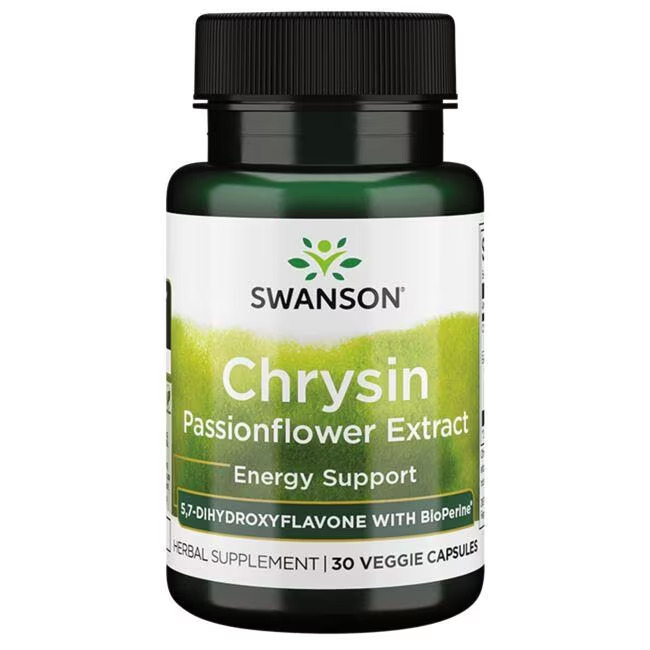
Chrysin and cancer
What is chrysin
Chrysin is a flavonoid, a class of natural compounds found in various plants, particularly in the flowers of passionfruit and in honey. Historically, chrysin has been used in traditional medicine, including herbal medicine, for the treatment of anxiety and sleep problems. Its use also extends to sports nutrition, where it has become popular for its claimed abilities to improve muscle building and reduce stress [3].
Mechanisms of action
Chrysin has several complex mechanisms of action that may be relevant as a supplementary treatment for cancer:
Aromatase inhibition
Chrysin inhibits aromatase, an enzyme that converts androgens (male hormones) into estrogens (female hormones). This is particularly important for hormone-dependent cancers, such as breast cancer, where estrogen levels can promote tumor growth [1, 4].
Antioxidant activity
Chrysin acts as a powerful antioxidant, meaning it protects cells from oxidative damage caused by free radicals. This damage can lead to DNA mutations that may initiate cancer development [3].
Anti-inflammatory effect
The anti-inflammatory activity of chrysin can reduce inflammation in the body, which is often associated with tumor growth. By dampening inflammatory cytokines, chrysin may help prevent the microenvironmental changes that promote cancer progression [1].
Induction of apoptosis
In vitro (in test tubes/petri dishes) studies have shown that chrysin can induce apoptosis (programmed cell death) in certain cancer cell lines. This can be an important mechanism that helps eliminate cancer cells and prevents them from spreading [2, 6].
Potential as supplementary treatment for cancer
Chrysin has significant potential as a supplementary treatment for cancer for several reasons:
Synergistic effect
Chrysin may synergize favorably with conventional cancer treatments. Research suggests it can improve the efficacy of chemotherapy and radiation therapy by reducing side effects and increasing tumor response [1, 3, 5].
Improving quality of life
Patients undergoing cancer treatment often experience side effects such as fatigue, nausea, and anxiety. Chrysin may help alleviate these symptoms through its calming effect and ability to improve sleep quality.
Immunomodulation
Chrysin may have a regulatory effect on the immune system, which is crucial for fighting cancer and preventing recurrence. Its ability to reduce inflammation can also improve immune system function.
Research and future applications
Although research is still in its early stages, existing data shows promising results [1]. Potential applications include combination therapies and the development of new delivery methods to maximize chrysin’s effects [5].
Benefits of chrysin
Chrysin offers several benefits that make it an attractive candidate for supplementary treatment:
Availability:
- Chrysin (found, as mentioned, in passionflower) is available as a dietary supplement and can therefore be easily integrated into dietary habits.
Natural compound:
- As a natural flavonoid, chrysin is generally considered safe with few reported side effects. This makes it a good option for patients wishing to avoid synthetic substances.
Multifunctionality:
- In addition to its anti-cancer properties, chrysin also has the potential to improve mental health by reducing anxiety and stress, which is particularly important for cancer patients.
Minimal interaction:
- Chrysin has a low risk of interacting with many common medications, making it easier to include in existing treatment regimens like chemotherapy.
Drawbacks and limitations
Although chrysin has many benefits, there are also drawbacks and limitations to its use:
- Limited research: Most studies are in vitro or performed on animal models. There is a lack of comprehensive clinical trials in humans, making it difficult to draw definitive conclusions about efficacy and safety in clinical practice [1].
- Potential interactions: Chrysin can interact with certain medications, especially those metabolized by the liver. This can affect the medication’s efficacy and safety, requiring caution during simultaneous use.
- Optimal dosage: Standardized doses for chrysin in relation to cancer treatment have not been established, and finding the right dose can be challenging.
- Variability in quality: Dietary supplements containing chrysin can vary significantly in quality and purity.
Interactions
As mentioned, chrysin can potentially interact with several types of medication, particularly those metabolized by the liver:
- Anticoagulants (blood thinners): Chrysin may affect the action of blood thinners like warfarin, which could increase the risk of bleeding.
- Antidepressants: Chrysin may affect the metabolism of certain antidepressants, potentially altering their efficacy and side effects.
- Hormonal treatments: Since chrysin inhibits aromatase, it may interfere with hormone treatments used to treat hormone-sensitive cancers like breast cancer.
- Chemotherapeutic agents: Chrysin may affect the metabolism of certain chemotherapeutic drugs, potentially impacting their efficacy and toxicity. Examples include:
- Doxorubicin: Used for various cancers; chrysin may affect its metabolism.
- Cyclophosphamide: An alkylating agent; chrysin may potentially alter how this drug is metabolized.
- Paclitaxel: Often used for breast and ovarian cancer; chrysin may affect its metabolism.
- Methotrexate: Used for certain cancers and autoimmune diseases; chrysin may potentially affect its efficacy.
- Vincristine: Used for leukemia and lymphomas; chrysin may influence how it is metabolized in the body.
- Antiepileptics: Chrysin may interfere with medications used to treat epilepsy, affecting their blood concentration.
Clinical trials
Research regarding chrysin in relation to cancer is still in its early stages, but some studies have provided promising indications:
- In vitro and animal studies: Previous studies have found that chrysin can inhibit the growth of certain cancer cell lines and induce apoptosis [2, 5]. These data suggest that chrysin could have a significant impact on cancer therapy.
- Need for human studies: More randomized, controlled clinical trials are needed to confirm the in vitro and animal studies and to assess chrysin’s safety and efficacy in humans [1].
Safety
Chrysin is generally considered safe when used in moderate amounts. Side effects reported in connection with chrysin are rare but include:
- Mild gastrointestinal discomfort: Some users may experience mild stomach issues such as nausea or diarrhea.
- Allergic reactions: In rare cases, individuals may be allergic to chrysin, resulting in a skin rash or other allergic symptoms.
As a starting point, you should ask your practitioner before beginning dietary supplements, especially if you are undergoing treatment for cancer.
Dispensing and application
- Dietary supplements: Chrysin is available in the form of dietary supplements, such as capsules or tablets. It is important to choose products from reputable manufacturers.
- Dose: A standard dose has not been established, but many recommend doses between 500 mg and 1000 mg daily. It is recommended to follow the manufacturer’s instructions and consult a qualified practitioner for individual advice.
- Combination therapy: Chrysin can be used with other supplements or treatments, but it is important to discuss this with your practitioner to avoid potential interactions.
See also Supplements and chemotherapy
Conclusion
Chrysin is a promising flavonoid with potential as a supplementary treatment for cancer. Its mechanisms of action, including aromatase inhibition, antioxidant effect, and induction of apoptosis, make it an interesting candidate for further research. While there are many benefits, including its natural origin and multifunctionality, there are also limitations that should be considered.
Back to Supplements
Links
[1] Anti-cancer Activity of Chrysin in Cancer Therapy: a Systematic Review (PubMed, 2022)
- Content: A systematic review analyzing the existing research on chrysin’s anti-cancer activity and its potential as a therapeutic agent.
[2] Chrysin Exhibits Selective Antiproliferative and Antimigratory Activities in a Wide Range of Human-derived Cervical Cancer Cell Lines (PubMed, 2025)
- Content: A non-randomized in vitro study demonstrating chrysin’s ability to inhibit growth and migration in various cervical cancer cell lines.
[3] Chrysin: A Promising Anticancer Agent its Current Trends and Future Perspectives (European Journal of Experimental Biology, 2018)
- Content: A review article discussing chrysin’s potential as an anticancer agent, its sources, and future perspectives in cancer treatment.
[4] Network pharmacology unveils the intricate molecular landscape of Chrysin in breast cancer therapeutics (PubMed, 2025)
- Content: A laboratory study using network pharmacology to map how chrysin interacts with various molecular targets in breast cancer.
[5] Anticancer Activity of Ether Derivatives of Chrysin (PubMed, 2025)
- Content: A non-randomized in vitro study investigating the enhanced anticancer effects of specific chrysin derivatives.
[6] A novel chrysin derivative HYS-072 induces apoptosis and autophagy in Triple-negative breast cancer cells (PubMed, 2025)
- Content: A non-randomized in vitro study showing how a chrysin derivative can induce programmed cell death in aggressive breast cancer cells.
Page created: March 31, 2025. Latest revision: April 25, 2026.
❤
What you read on I Have Cancer is not a recommendation. Seek competent guidance.
