


Sulforaphane and cancer
What is sulforaphane
Sulforaphane is a naturally occurring substance primarily found in cruciferous vegetables such as broccoli, cauliflower, cabbage, Brussels sprouts, and broccoli sprouts. It belongs to a group of organic compounds called isothiocyanates, which have been shown to have a number of health-promoting properties. These have therefore received significant attention in recent years [1, 2, 4].
These substances have a characteristic sharp taste, which we know from herbs such as horseradish and mustard. Their chemical structure contains a special group of atoms that give them their unique properties. Mustard is a good example, as it contains an isothiocyanate called allyl isothiocyanate, which contributes to mustard’s characteristic taste.
How sulforaphane works
Sulforaphane works by activating certain enzymes in the body that help neutralize harmful substances and reduce inflammation. These enzymes can protect cells from damage caused by free radicals and other toxins that can contribute to the development of chronic diseases, including cancer [2, 4].
Sulforaphane and cancer
One of the most studied properties of sulforaphane is its potential to prevent and combat cancer [2, 4].
Research suggests that sulforaphane can:
Inhibit the growth of cancer cells
Sulforaphane can induce cell death in cancer cells and prevent them from spreading [5, 6, 7, 8, 9].
Protect DNA
The substance can help repair DNA damage, which is an important factor in cancer prevention [2, 4].
Improve the effect of chemotherapy
Studies have shown that sulforaphane can make other treatments more effective [2, 4].
Reduce inflammation
Chronic inflammation is associated with an increased risk of many types of cancer, and sulforaphane can help reduce this inflammation [2, 4].
Sulforaphane as complementary treatment for cancer
Although the research is promising, it is important to emphasize that sulforaphane cannot stand alone as a cure for cancer.
It should always be used as part of a comprehensive cancer treatment plan under competent guidance.
Benefits of taking sulforaphane
Natural
Sulforaphane is found naturally in foods and is generally well tolerated [1].
Multiple health benefits
In addition to cancer prevention, sulforaphane may also have positive effects on cardiovascular health, brain function, and liver function [2, 4].
How to get sulforaphane
Eat cruciferous vegetables
Including broccoli, cauliflower, cabbage, Brussels sprouts, and broccoli sprouts in your diet.
Increase sulforaphane content
To increase the amount of sulforaphane in vegetables, you can chop or grate them and let them stand for 10-15 minutes before cooking. This gives the enzymes an opportunity to convert the naturally occurring substances into sulforaphane.
Dietary supplements
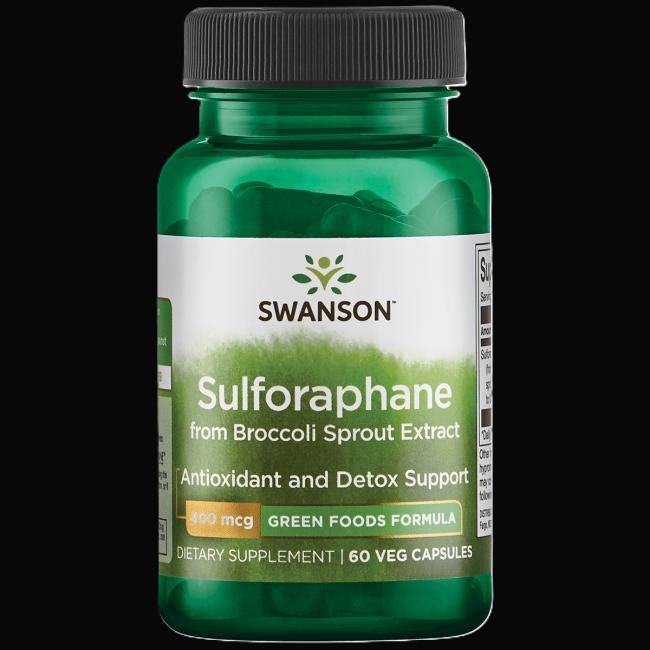
Finally, sulforaphane can also be obtained as a dietary supplement. Capsules are a common form.
Conclusion
Sulforaphane is a promising substance with potential to prevent and combat cancer. Although more research is needed, it is clear that a diet rich in cruciferous vegetables can be an important part of a healthy lifestyle [1, 2, 4].
Back to Supplements
Links
[1] Denne mængde broccoli forebygger kræft (Jyllands-Posten, 2010)
- Content: General article about how a certain amount of broccoli can prevent cancer. (Danish Language)
[2] Sulforaphane: An emergent anti-cancer stem cell agent (PubMed, 2023)
- Content: Review article examining sulforaphane as an emergent anti-cancer stem cell agent.
[3] Stof fra broccoli kan hæmme brystkræft (Naturli, 2017)
- Content: General article about how a substance from broccoli can inhibit breast cancer. (Danish Language)
[4] Anticancer properties of sulforaphane: current insights at the molecular level (PubMed, 2023)
- Content: Review article examining the anti-cancer properties of sulforaphane at the molecular level.
[5] Sulforaphane downregulates mitochondrial TIGAR via inhibiting mitochondrial transmembrane assembly and LONP1/CASP3 axis causing apoptosis (PubMed, 2025)
- Content: In vitro study showing that sulforaphane (SFN) combats non-small cell lung cancer by removing the harmful protein TIGAR from the cancer cells’ “power plants” (mitochondria). SFN uses a dual mechanism that both blocks new TIGAR from entering and simultaneously promotes the destruction of what is already there, leading to cell death.
[6] Exploring the broad-spectrum activity of carbohydrate-based Iberin analogues: From anticancer effect to antioxidant properties (PubMed, 2025)
- Content: In vitro study showing that researchers have created new, potent substances against bladder cancer by coupling sugar molecules to the natural substance iberin (which is related to sulforaphane). The new compounds have a dual effect, as they both activate the body’s own antioxidant defense (via the Nrf2 signaling pathway) and directly inhibit a central cancer signaling pathway (STAT3).
[7] Sulforaphane’s Role in Osteosarcoma Treatment: A Systematic Review and Meta-Analysis of Preclinical Studies (PubMed, 2025)
- Content: In vitro review article highlighting promising laboratory experiments where sulforaphane (SFN) inhibits growth and promotes cell death in bone cancer (osteosarcoma). Based on this, researchers are now calling for clinical studies on humans to confirm the potential.
[8] Targeting p62 by sulforaphane promotes autolysosomal degradation of SLC7A11, inducing ferroptosis for osteosarcoma treatment (PubMed, 2025)
- Content: In vitro study showing that sulforaphane (SFN) from cruciferous vegetables kills bone cancer cells (osteosarcoma) by triggering a specific type of cell death called ferroptosis. The mechanism is that SFN causes the cancer cell to degrade one of its own central defense proteins (SLC7A1L1), making it vulnerable.
[9] Impact of Sulforaphane on Breast Cancer Progression and Radiation Therapy Outcomes: A Systematic Review (PubMed, 2025)
- Content: In vitro systematic review article collecting 20 studies confirming that sulforaphane (SFN) is extremely effective against breast cancer. The substance works by inhibiting cancer cell growth and spread, promoting programmed cell death, and simultaneously protecting healthy cells during treatment.
Page created: July 27, 2024, Last revised June 9, 2025
❤
What you read on “Jeg har Kræft” is not a recommendation. Seek competent guidance.
