


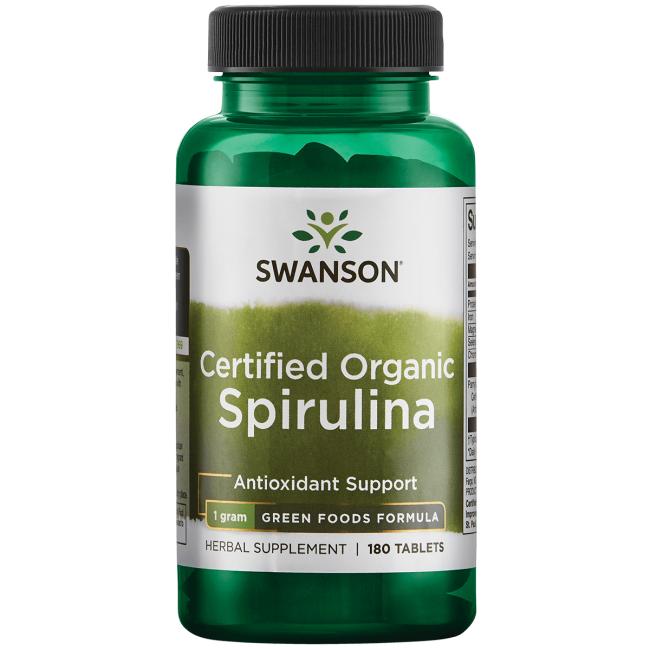
Spirulina and cancer
Summary of Spirulina
Effect:
- Spirulina is a blue-green alga (cyanobacterium) rich in protein, vitamins, and iron. Its most important active substance is phycocyanin, which functions as a powerful antioxidant and acts strongly anti-inflammatory.
Potential in cancer:
- Research (primarily in laboratories and animal studies) suggests that spirulina can strengthen the immune system, help induce cell death (apoptosis) in cancer cells, and potentially protect the body’s healthy cells from damage caused by chemotherapy [1].
Main limitation:
- One should be aware of the risk of contamination. Spirulina can absorb heavy metals (such as lead and mercury) and toxic microcystins from the water in which it is grown. It is crucial to choose products that are tested pure for these substances [4].
What is Spirulina
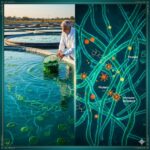
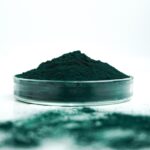
Spirulina is a blue-green alga, which technically is a cyanobacterium. The most common species used as a dietary supplement are Arthrospira platensis and Arthrospira maxima. It has gotten its name from its spiral-shaped structure.
It has been a food source in cultures in Africa and Central America for centuries due to its exceptionally high nutritional content. It consists of up to 70% protein (by dry weight), contains all essential amino acids, and is rich in B vitamins, iron, beta-carotene, and gamma-linolenic acid (GLA).
The most studied active substance in Spirulina is phycocyanin. It is a pigment-protein complex that gives the algae its characteristic blue-green color and at the same time is responsible for many of its health properties [2].
History
Spirulina has been used as a food source in at least two historical epicenters. The Aztecs in Mexico harvested it from Lake Texcoco and shaped it into cakes called “tecuitlatl.” At the same time, the Kanembu people by Lake Chad in central Africa traditionally harvested and dried the algae for use in cooking.
In the Western world, Spirulina first became widely known in the 1960s. Since then, it has been cultivated commercially in large, controlled ponds around the world and is recognized as a “superfood” due to its dense nutritional profile.
Spirulina vs. Chlorella

Although Spirulina and Chlorella are both nutrient-rich algae, they are fundamentally different.
Type:
- Spirulina is technically a cyanobacterium (a blue-green alga) and is spiral-shaped. Chlorella is a single-celled green alga (a eukaryote, like plants) and is spherical.
Cell wall:
- Spirulina does not have a hard cell wall and is therefore easily digestible in its natural form. Chlorella has a very hard cell wall of cellulose that must be broken down (a process where the cell wall is broken down) for humans to absorb the nutrients.
Nutritional profile:
- Spirulina is generally richer in protein and the unique blue pigment phycocyanin, which has strong antioxidant properties. Chlorella has a significantly higher content of chlorophyll (the green pigment) and is often recognized for its ability to bind heavy metals.
Mechanisms of action
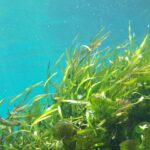
Spirulina’s biological activity is closely linked to its active substances, especially phycocyanin, but also polysaccharides and sulfolipids.
Phycocyanin as a central substance
Phycocyanin is the primary active molecule in Spirulina. Research has shown that it has several interesting mechanisms of action. It functions as a powerful antioxidant that can neutralize reactive oxygen species (free radicals) and protect cell membranes and DNA from oxidative damage [5].
Anti-inflammatory potential
Spirulina, and specifically phycocyanin, has been shown to be able to inhibit central inflammatory processes. It can block the enzyme COX-2 (cyclooxygenase-2), which is involved in the production of inflammatory prostaglandins – the same signaling molecules that anti-inflammatory medication (NSAIDs) often target. It also appears to be able to downregulate the production of pro-inflammatory cytokines, such as TNF-alpha and Interleukin-6 (IL-6) [1].
Immunomodulation
Spirulina has an immunomodulatory effect, meaning it can affect the activity of the immune system. Studies suggest that it can stimulate the production and activity of immune cells such as NK cells (Natural Killer cells) and T helper cells. These cells are crucial for the body’s “immune surveillance” – the ability to recognize and eliminate abnormal cells, including cancer cells [5].
Potential in cancer
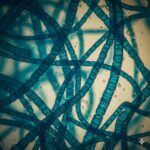
Most of the specific research on Spirulina and cancer comes from in vitro (test tubes/petri dishes) and in vivo (in living organisms, typically mice) studies. The results from these point to several interesting potentials.
Induction of apoptosis
Apoptosis is the body’s natural process for programmed cell death, a mechanism that cancer cells often evade. Several laboratory studies have shown that phycocyanin can initiate apoptosis signaling pathways in various cancer cell lines, including breast cancer, liver cancer, and colon cancer.
The substance appears to be able to activate the enzymes (caspases) that are responsible for initiating the controlled breakdown of the cell from within [2].
Inhibition of cell growth
In addition to promoting cell death, phycocyanin appears to be able to slow down cell division (proliferation). It can disrupt the cancer cell’s cycle and prevent it from copying itself unchecked.
Anti-angiogenesis
A tumor needs a constant blood supply to grow. The process by which the tumor forms new blood vessels is called angiogenesis.
Preclinical studies have indicated that extracts of spirulina can inhibit the growth factors, such as VEGF (Vascular Endothelial Growth Factor), that the tumor emits to attract new blood vessels.
Protection of healthy cells
One of the most relevant potentials is Spirulina’s ability to protect healthy cells from the toxicity that comes with chemotherapy and radiation therapy. Due to its strong antioxidant capacity, Spirulina can help neutralize the free radicals that these treatments generate.
Studies on mice have shown that spirulina can reduce damage to kidneys, liver, and bone marrow caused by chemotherapeutic agents such as cisplatin, without appearing to reduce the cancer-killing effect of the chemotherapy itself [1].
Benefits of Spirulina

In addition to the specific mechanisms of action, Spirulina has nutritional benefits that can be relevant during a cancer course.
High nutritional content
Cancer and cancer treatment often lead to unintended weight loss, loss of muscle mass, and malnutrition (cachexia). Spirulina is one of the most concentrated protein sources found (up to 70% dry weight).
The protein is complete (contains all essential amino acids) and easily digestible, as the algae lacks the hard cell wall of cellulose that chlorella has.
Support for anemia and fatigue
Iron deficiency and anemia are common during cancer treatment and contribute to pronounced fatigue. Spirulina is a rich source of bioavailable iron and B vitamins, which are necessary for the formation of red blood cells.
Prebiotic properties
A healthy gut flora is crucial for the immune system and general health. Spirulina has been shown to function as a prebiotic, feeding beneficial gut bacteria such as Lactobacillus and Bifidobacterium, and can contribute to maintaining healthy gut function [3].
Disadvantages and limitations

The biggest concern with spirulina is not the algae itself, but the risk of contamination if it is not cultivated correctly.
Contamination with heavy metals
Spirulina is extremely effective at absorbing minerals from the water in which it grows. If it is grown in contaminated water, it will also absorb heavy metals such as mercury, lead, cadmium, and arsenic.
Risk of microcystins
If wild blue-green algae (which are not Arthrospira) are accidentally harvested along with spirulina, there is a risk of contamination with microcystins. These are potent liver toxins that can cause serious damage.
Therefore, it is crucial to use products exclusively from recognized manufacturers that can present certificates and third-party tests that guarantee that the product is pure and free from both heavy metals and microcystins [4].
Interactions and autoimmune conditions
Due to Spirulina’s immune-stimulating effect, there is a theoretical concern that it may worsen symptoms in autoimmune diseases (such as rheumatoid arthritis or multiple sclerosis). In addition, spirulina contains vitamin K, which theoretically can reduce the effect of blood-thinning medication (warfarin).
Clinical trials

It is important to note that the vast majority of research that specifically links spirulina with cancer is preclinical (laboratory and animal studies) [1, 2].
There are fewer human clinical studies. The human studies that do exist often focus on spirulina’s ability to improve blood lipids (cholesterol), blood sugar control, or its general antioxidant status [3, 5].
However, human studies have been conducted regarding precancerous conditions. A study on people with oral leukoplakia (white patches in the mouth that can develop into cancer) showed that intake of spirulina led to a significant regression of the lesions in some of the participants.
Safety
When spirulina is grown under controlled conditions and is certified free from contamination, it is considered very safe to consume, even in relatively high doses. It has GRAS (Generally Recognized As Safe) status by the US health authorities (FDA) [4].
Common side effects
Mild side effects can occur, especially at the start. These typically include mild digestive discomfort, nausea, gas in the stomach, or headache.
Some experience a slight feverish feeling, which may be due to the intense metabolism of the high protein content.
Importance of source
Repetition is necessary here: Safety depends entirely on the source. One should avoid cheap products without clear origin or test documentation. Choose organic products that are third-party tested for purity.
Dispensing and use
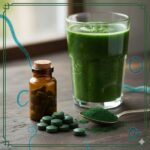
Spirulina is found primarily in three forms:
- Powder: This is the most common form. It has a very characteristic, strong taste of “sea” or seaweed. It is best mixed in smoothies, juice, or yogurt to mask the taste.
- Tablets: Pressed powder. Easy to dose and take, and you avoid the taste.
- Capsules: Powder in a capsule. Same advantages as tablets.
There is no official standard dose. A typical maintenance dose is 3-5 grams daily. In studies looking at specific effects, doses of up to 10 grams daily are often used. It is recommended to start with a low dose (e.g., 1-2 grams) and gradually increase it over a couple of weeks to minimize any digestive discomfort.
Conclusion
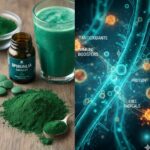
Spirulina is a nutritionally dense alga whose potential as a complementary treatment is primarily linked to the active substance phycocyanin. Its strong antioxidant, anti-inflammatory, and immunomodulatory properties are well-supported in preclinical research.
For people in cancer treatment, the most immediate benefits lie in the high, easily absorbable protein content, which can counteract malnutrition, as well as its potential to protect healthy cells from treatment toxicity. The decisive factor for safe use is, as mentioned, to ensure a high-quality product that is guaranteed free from heavy metals and microcystins.
Back to Supplements
Links
[1] Functional properties of bioactive compounds from Spirulina (ScienceDirect.com, 2022)
- Content: Review of the biological activities of Spirulina, including its potential as an anti-cancer agent, anti-inflammatory, and as an immune modulator.
[2] C-Phycocyanin, Anticancer Activity and Nutritional Value of Arthrospira platensis (ResearchGate, 2025)
- Content: Article focusing on the active substance phycocyanin and its specific anti-cancer activity as well as nutritional value.
[3] Application of Arthrospira platensis for Medicinal Purposes (National Institutes of Health (NIH), 2023)
- Content: A summary of research on the medicinal use of Spirulina, including its chemical composition and health potential.
[4] Spirulina maxima supplementation: benefits and limitations (Journal of Pre-Clinical and Clinical Research, 2024)
- Content: A scientific review of the benefits of supplementation with Spirulina maxima. The article also looks at limitations and results from toxicological studies regarding safety.
[5] Spirulina platensis: A comprehensive review of its biological activities (Sage Journals, 2024)
- Content: Comprehensive review of Spirulina’s biological activities, including the substances that are believed to have anti-tumor effects and immune-boosting properties.
Page created: October 21, 2025
❤
What you read on “Jeg har Kræft” is not a recommendation. Seek competent guidance.
