


AHCC (active hexose correlated compound) and cancer
Summary of AHCC
Effect:
- AHCC is an extract from shiitake mushroom mycelium (the root-like part of the mushroom) that primarily works by modulating (adjusting and strengthening) the immune system. It increases the activity of key immune cells such as NK cells and dendritic cells.
Potential in cancer:
- It is used supportively to improve quality of life during chemotherapy by reducing side effects such as nausea and bone marrow suppression. Studies also show potential for strengthening the immune response against the cancer itself and in fighting HPV infections.
Main limitation:
- AHCC is a dietary supplement used as an adjunct to cancer treatment. Unfortunately, it is quite costly if one needs to reach the doses used in clinical studies
What is AHCC (active hexose correlated compound)

AHCC (active hexose correlated compound) is a specialized extract produced from the mycelium (the part of the mushroom that grows underground, like a root system) of Lentinula edodes, better known as the shiitake mushroom. It is not simply dried mushroom, but the result of a patented cultivation and enzymatic process where the mushroom culture is grown in liquid tanks.
During this process, the long-chain polysaccharides (a type of complex carbohydrate) that mushrooms are rich in are broken down into shorter chains. The result is an extract with a unique composition, dominated by acetylated alpha-glucans. These alpha-glucans have a very low molecular weight (around 5,000 daltons), which is believed to make them particularly easy for the body to absorb and utilize. [1]
AHCC differs from other mushroom-based supplements, which are often rich in beta-glucans, precisely because of this high concentration of easily absorbable alpha-glucans.
History
AHCC was developed in Japan in the 1980s. The original purpose was to develop a natural remedy to regulate blood pressure. However, it was quickly discovered that the extract’s most significant effect was a powerful modulation (adjustment) of the immune system.
Since the late 1980s, and especially in the 1990s, it became one of the most widely used supportive agents in Japan, particularly in connection with cancer treatment. Today, it is used in hospitals and clinics in Japan and is gaining global recognition as a well-supported immune-strengthening supplement.
Mechanisms of action
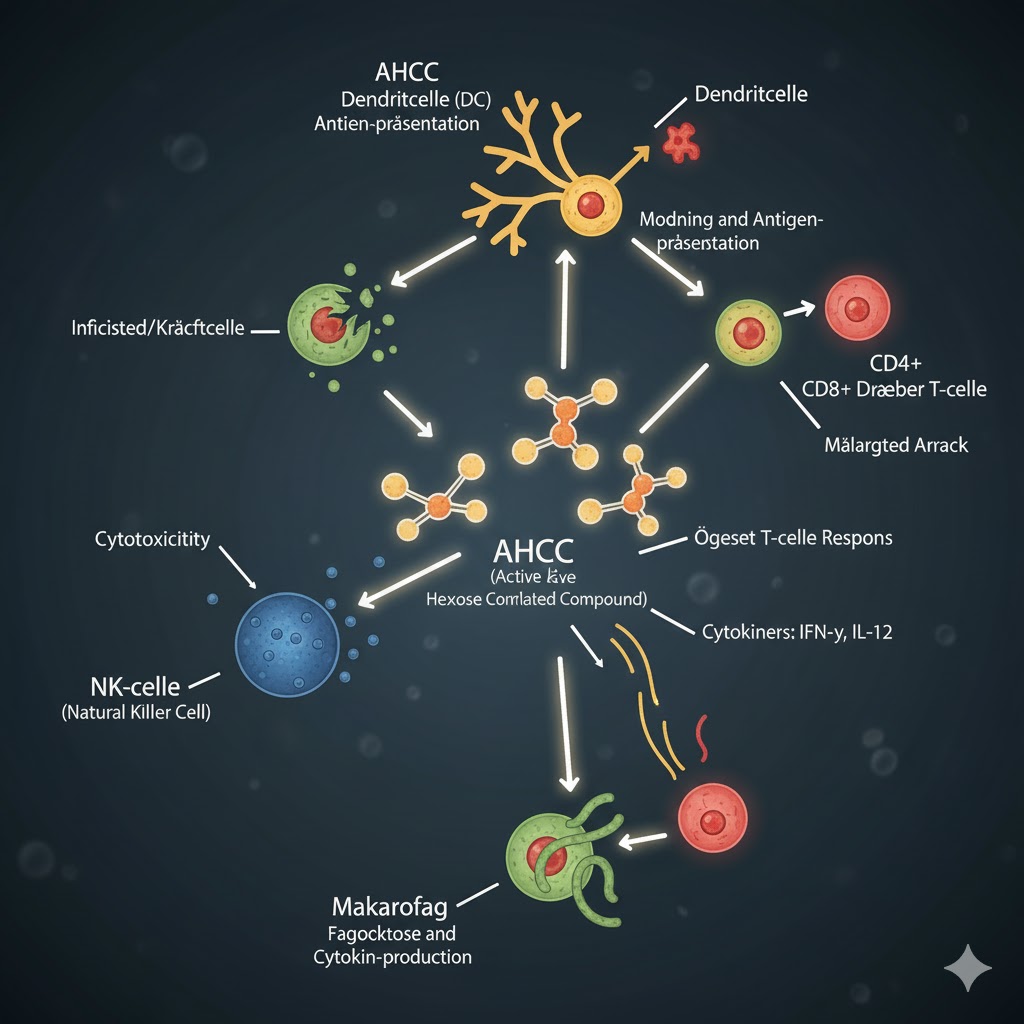
The primary action of AHCC is immunomodulation—an adjustment and activation of the body’s innate and adaptive immune systems. Its role is to function as a supplement that supports the body’s own defenses.
It is not designed to directly attack cancer cells, as chemotherapy does, but rather to “train” and strengthen the immune system so it becomes more effective at recognizing and reacting to threats.
Activation of the innate immune system
The innate immune system is the body’s first line of defense. AHCC has been shown to have a significant influence here:
NK cells (natural killer cells):
- This is often the most highlighted effect. NK cells are specialized immune cells capable of recognizing and killing cells that are infected with viruses or have become cancerous.
- Studies show that AHCC can increase the number of NK cells and, most importantly, significantly increase their “killer activity” (cytotoxicity). [2]
Dendritic cells (DC):
- These cells function as the immune system’s “signposts.” They capture foreign substances (antigens) from, for example, a cancer cell and present them to T cells (the adaptive defense), thereby initiating a targeted attack.
- AHCC promotes the maturation and function of dendritic cells, creating a stronger link to the adaptive immune system. [3]
Macrophages:
- These “scavenger cells” clear away waste products, dead cells, and pathogens (disease-causing agents).
- AHCC can increase their activity and their production of signaling molecules (cytokines).
Regulation of the adaptive immune system
The adaptive immune system is the targeted part of the defense that develops over time and “remembers” specific threats.
T cells:
- AHCC has been shown to increase the number of CD4+ (helper cells) and CD8+ (cytotoxic T cells), which are crucial for a specific, targeted attack on cancer cells.
Cytokine production:
- AHCC balances the production of cytokines (the immune system’s signaling substances). It typically increases the production of Th1 cytokines such as Interferon-gamma (IFN-γ) and Interleukin-12 (IL-12). These cytokines promote a cellular immune response, which is desired in the fight against cancer and viruses.
Anti-inflammatory potential
Although AHCC strongly activates the immune system, it also appears to be able to dampen inappropriate chronic inflammation, which is often associated with cancer development and other chronic diseases.
Potential in cancer
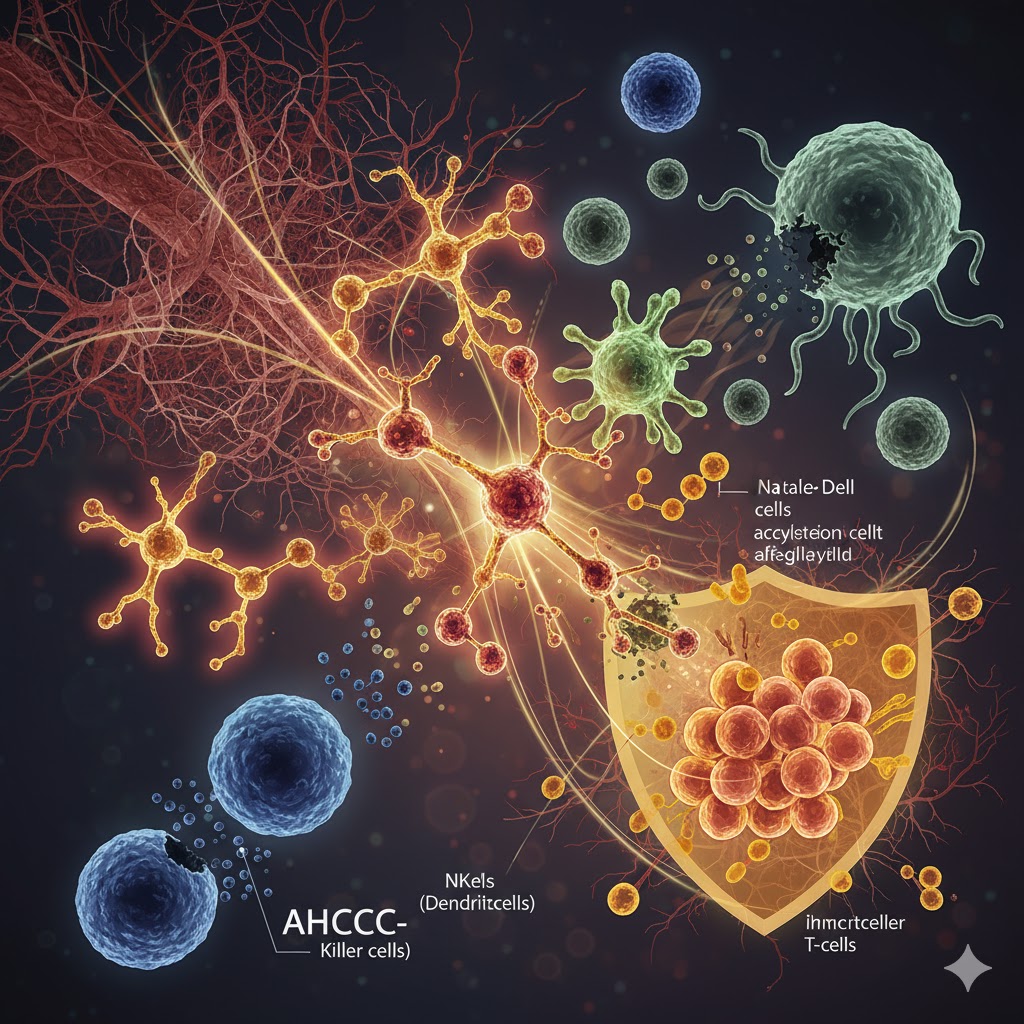
AHCC is primarily used as a supportive agent with two main goals: reducing the side effects of conventional treatment and strengthening the body’s ability to fight the disease itself.
Reduction of side effects from chemotherapy
This is one of the best-documented areas for AHCC. Many undergoing chemotherapy experience a significant improvement in quality of life by supplementing with AHCC.
Bone marrow suppression:
- Chemotherapy often affects the bone marrow, leading to low levels of white blood cells (neutropenia), platelets (thrombocytopenia), and red blood cells (anemia). Studies have shown that AHCC can protect the bone marrow and mitigate these declines. This reduces the risk of infections and the need for medication that stimulates the bone marrow (growth factors). [1, 4]
Nausea, vomiting, and loss of appetite:
- AHCC can reduce the nausea and discomfort caused by chemotherapy, improving nutritional status and general well-being.
Liver protection:
- AHCC has shown liver-protective properties, which is relevant as the liver is under heavy pressure to break down chemotherapy drugs.
Direct immune support against cancer
By strengthening NK cells and T cells, AHCC contributes to the body’s ability to identify and attack cancer cells. While it is not a standalone treatment, research suggests it can improve the prognosis when combined with standard treatment.
Particularly in liver cancer, promising results have been seen in Japanese studies where AHCC as a supplement was associated with longer survival and a lower risk of recurrence. [2]
Combating HPV infection
A specific and well-investigated area is AHCC’s ability to fight high-risk Human Papillomavirus (HPV). HPV is the cause of most cases of cervical cancer, as well as anal cancer and certain types of mouth and throat cancer.
Clinical studies have shown that daily intake of AHCC (typically 3 grams) over 6–12 months can lead to the complete elimination of persistent HPV infections in a significant proportion of participants. [5] This is a major discovery, as there are no other effective remedies against the persistent HPV viral infection itself.
Advantages of AHCC
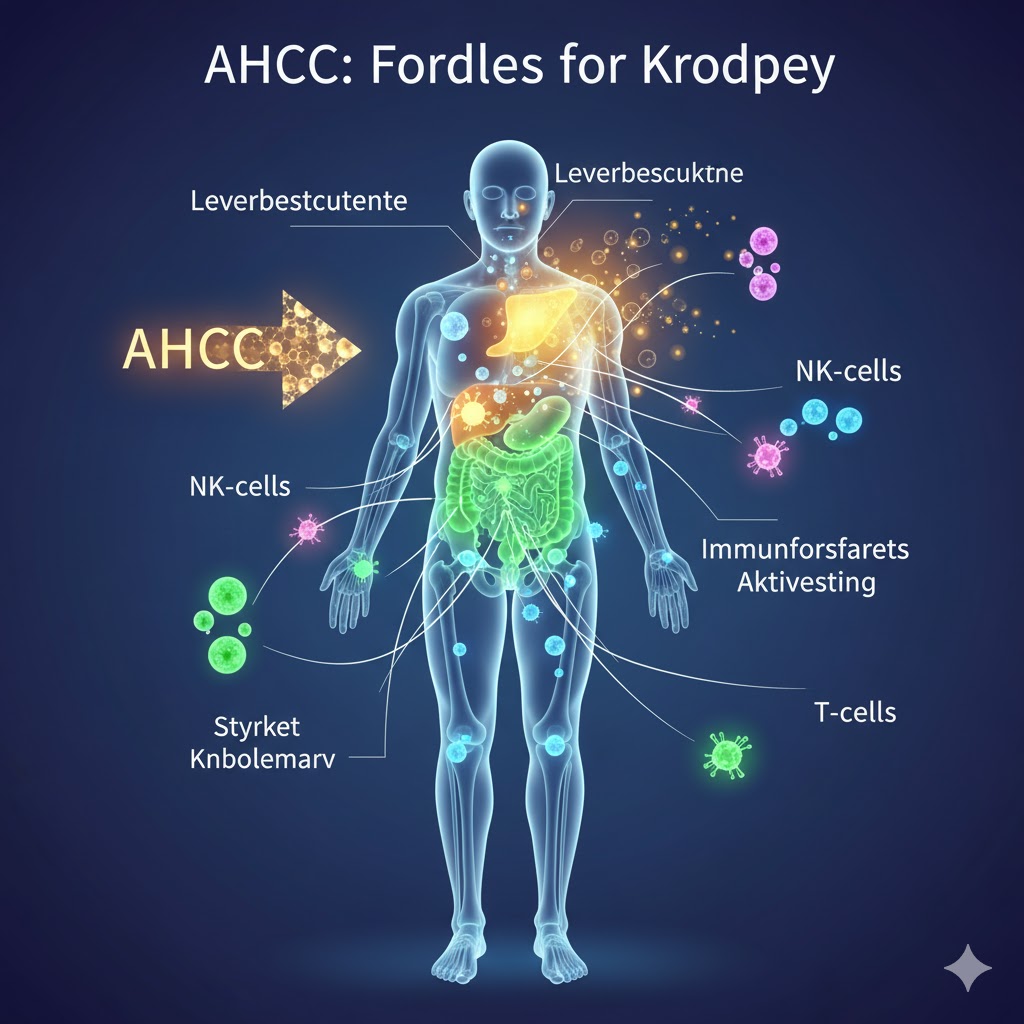
The primary advantage of AHCC is its broad yet specific support for the immune system combined with a very high safety profile.
Improved quality of life:
- One of the most noticeable effects for many is a general improvement in quality of life during a demanding treatment course. This includes better energy, less fatigue, and better mood.
High bioavailability:
- Due to the low molecular weight (alpha-glucans), AHCC is believed to be absorbed more efficiently in the intestine than the heavier beta-glucans found in standard medicinal mushroom supplements.
Prevention of infections:
- By strengthening the innate immune system (especially NK cells) and counteracting neutropenia (low white blood cells) during chemotherapy, AHCC can reduce the risk of secondary infections, which can be serious during a cancer journey. [4]
Disadvantages and limitations

While AHCC is promising, there are significant limitations to be aware of.
- Costs: The patented manufacturing process makes AHCC an expensive supplement. The doses used in clinical studies (often 3 grams or more daily) can represent a significant monthly expense.
- Not a standalone treatment: It is important to note that AHCC is a supplement. It is intended to support the body and cannot replace conventional cancer treatment.
- Interactions (theoretical): AHCC is metabolized (broken down) in the liver via the CYP450 enzyme system (specifically 2D6). Theoretically, it can affect the metabolism of medications using the same enzyme pathway, such as tamoxifen (hormone therapy) or doxorubicin (chemotherapy). In practice, however, very few clinically relevant interactions have been reported, and it is generally considered safe to combine. [1]
Clinical trials

There are over 100 published studies (including preclinical in vitro/in vivo and human clinical trials) on AHCC. Many of the early trials are Japanese and focus on liver cancer (hepatocellular carcinoma), where improved prognosis and lower recurrence rates were seen in those who took AHCC after surgery. [2]
Recent Western clinical trials have focused on:
- HPV infections: As mentioned, a phase II clinical trial from UTHealth in Houston has shown significant success in eliminating HPV infections, which is a major step in preventing HPV-related cancer. [5]
- Quality of life: Several clinical trials confirm that cancer patients taking AHCC alongside chemotherapy report significantly better quality of life, less fatigue, and fewer side effects. [4]
- Immune response: Clinical trials have measured immune parameters in both healthy and ill individuals and confirmed the increased activity in NK cells and dendritic cells after intake of AHCC. [3]
Safety

AHCC has an exceptionally high safety profile and has been sold for over 20 years without reports of serious side effects.
In the doses used in studies (up to 9 grams daily), it is well-tolerated. Mild, transient side effects may in rare cases include slight nausea or mild headache at the start, but this is rarely seen.
It is considered safe to take with most forms of chemotherapy and radiation therapy. Due to the theoretical interaction via liver enzymes (CYP450 2D6), it may be relevant to be aware of potential effects on the metabolism of medications broken down via this specific enzyme pathway.
This applies, for example, to the hormone therapy tamoxifen, the chemotherapy drug doxorubicin, pain relievers like tramadol and codeine, and SSRI-type antidepressants (e.g., fluoxetine).
Dosage and application
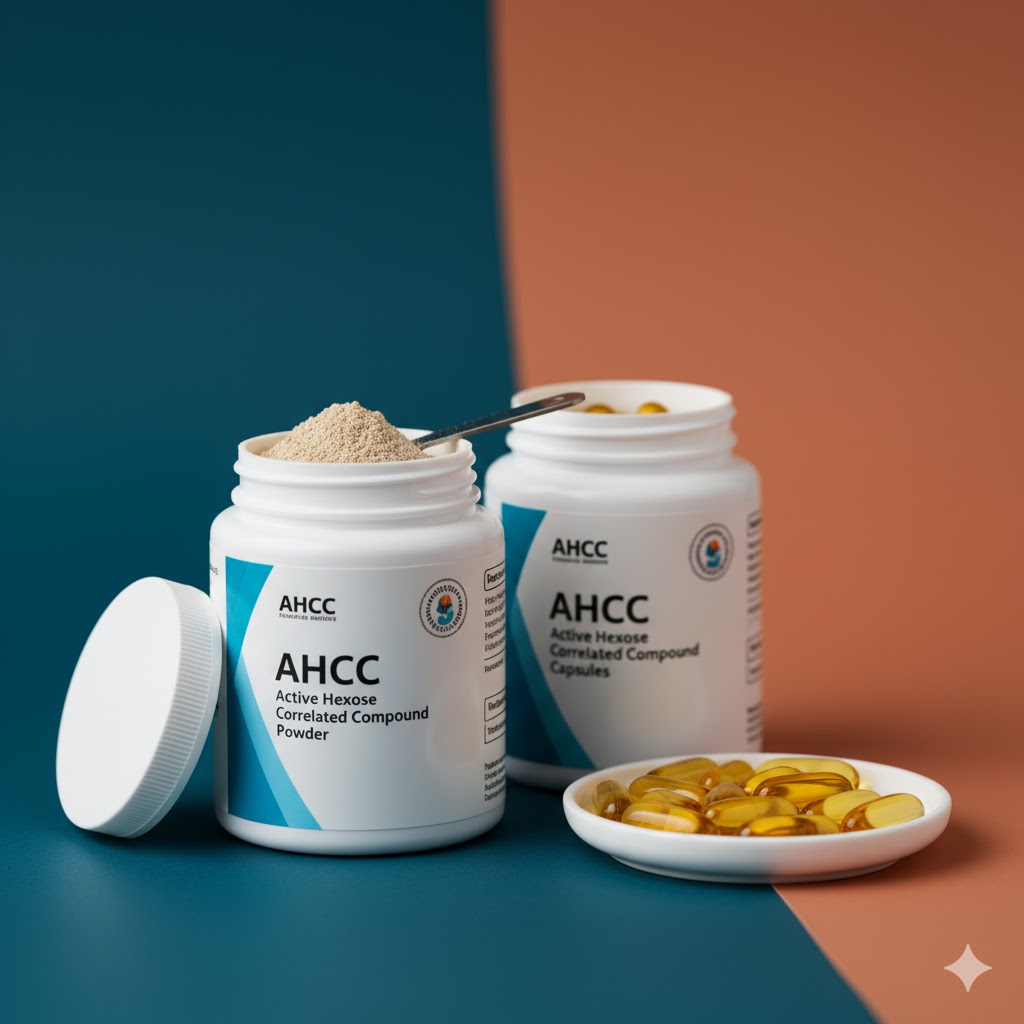
AHCC is taken as capsules or powder. It should be taken on an empty stomach (e.g., 30 minutes before meals or 2 hours after) to ensure the best possible absorption.
- General immune support (maintenance): 1–1.5 grams daily, divided into two doses (e.g., morning and evening).
- During active treatment (chemotherapy/radiation): 3 grams daily, divided into two or three doses.
- For serious illness or specific purposes (e.g., HPV): 3–6 grams daily have been used in clinical trials.
It is often recommended to start AHCC before a chemotherapy course begins to “prime” (prepare) the immune system and achieve the protective effect on the bone marrow.
Conclusion

AHCC (active hexose correlated compound) is a well-documented, mushroom-based supplement from Japan that primarily works by strengthening the body’s own immune system. Its ability to increase the activity of NK cells and dendritic cells makes it a valuable supplement during cancer treatment. It has shown solid potential to reduce the burdensome side effects of chemotherapy, improve quality of life, and possibly contribute to the body’s own disease-fighting capabilities. Particularly noteworthy is its documented effect against persistent HPV infections. With a very high safety profile, the primary disadvantage is the relatively high cost of effective doses.
Back to Supplements
See also Minimize Side Effects – Chemo, Nerve Problems
Links
[1] Bioactive Immunomodulatory Compounds (PubMed Central – National Institutes of Health, 2019)
- Content: A scientific review describing how AHCC stimulates the immune system. The article details how the compound modulates the body’s response against pathogens and has the potential to strengthen it via several mechanisms.
[2] AHCC (Memorial Sloan Kettering Cancer Center, 2024)
- Content: An overview article summarizing data for AHCC. It mentions that preliminary findings suggest AHCC may improve prognosis and prevent recurrence after surgery for liver cancer (hepatocellular carcinoma).
[3] Immunological effect of active hexose correlated compound (AHCC) in healthy volunteers: a double-blind, placebo-controlled trial (PubMed Central – National Institutes of Health, 2008)
- Content: A randomized, double-blind, placebo-controlled trial investigating the effect of AHCC intake on the immune response in healthy volunteers. Results showed that AHCC led to an increased number of dendritic cells (DC) and improved function of these cells.
[4] The Effects of Active Hexose Correlated Compound (AHCC) on Levels of CD4+ and CD8+ in Patients with Epithelial Ovarian Cancer or Peritoneal Cancer Receiving Platinum Based Chemotherapy (PubMed Central – National Institutes of Health, 2017)
- Content: A randomized clinical trial examining AHCC’s effect on specific immune cells (CD4+ and CD8+) in women with ovarian or peritoneal cancer while receiving platinum-based chemotherapy.
[5] AHCC® Supplementation to Support Immune Function to Eradicate Persistent High-Risk HPV Infections (Frontiers in Oncology, 2022)
- Content: A randomized, double-blind, placebo-controlled phase II clinical trial which showed that daily dosing with 3 grams of AHCC was effective in supporting the immune system to eliminate persistent HPV infections and was well-tolerated..
Page created: Nov. 2, 2025
❤
What you read on I Have Cancer is not a recommendation. Seek competent guidance.
