


Activated charcoal and cancer
Summary of activated charcoal
Effect:
- Activated charcoal is a fine, porous powder that is not absorbed into the body but acts like a sponge in the intestine. It binds harmful substances, toxins, and waste products to its surface so they are not absorbed into the bloodstream but are instead carried out with the stool.
Potential in cancer:
- It has been investigated for alleviating side effects such as diarrhea from chemotherapy, but recent research has been unable to confirm a clear effect. An important practical application is as a tool to bind unwanted substances from food if one deviates from a strict diet, which can provide mental flexibility and increased quality of life.
Main limitation:
- The biggest disadvantage is that activated charcoal can bind regular medication, chemotherapy, and important nutrients if taken at the same time. It is therefore crucial to take it with several hours of separation from all other medicine, supplements, and food.
What is activated charcoal
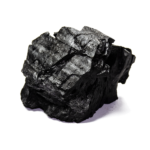
Activated charcoal, also known as medicinal charcoal, is a fine black powder produced from materials rich in carbon, such as wood, coconut shells, or peat. Production takes place by heating these materials to very high temperatures in an oxygen-poor environment. This process is followed by an “activation,” where the charcoal is exposed to oxygen or steam—also at high temperatures. This activation creates an extremely porous structure with an enormous internal surface area. It is this microporous structure that gives activated charcoal its unique ability to bind a wide range of substances to itself through a process called adsorption (a physical process where molecules bind to a surface).
Adsorption
Adsorption is a physical process where molecules, atoms, or ions from a gas, liquid, or dissolved solid bind to a surface. The large surface area of activated charcoal, which can be compared to a football field for just a few grams of material, makes it extremely effective at trapping and holding other molecules. It functions as a kind of molecular “magnet” or sponge that can bind toxins, chemicals, and other unwanted substances in the gastrointestinal tract before they are absorbed into the bloodstream. It is important to distinguish between activated charcoal and the charcoal used for grilling, which does not have the same medicinal properties and may contain harmful substances.
History
The use of charcoal for medicinal purposes has a long history spanning thousands of years. The earliest known applications originate from ancient Egypt around 1500 BC, where it was used to clean wounds and treat gastrointestinal ailments. In ancient Greece, the physician Hippocrates (c. 400 BC) also recommended the use of charcoal to treat various diseases, including epilepsy and anthrax. Throughout history, cultures worldwide have recognized the purifying properties of charcoal, both for water purification and for medicinal use [1].
Modern scientific interest in activated charcoal began in the late 18th and early 19th centuries, when researchers started documenting its ability to bind toxins. In 1831, the French professor Pierre Fleurus Touéry dramatically demonstrated the effectiveness of activated charcoal by ingesting a lethal dose of strychnine mixed with activated charcoal in front of his colleagues at the French Academy of Medicine—and he survived without ill effects. This event helped cement activated charcoal’s place in medicine as a potent antidote, a role it still holds today in hospitals and emergency rooms worldwide for the treatment of acute poisoning and overdoses [1].
Mechanisms of action
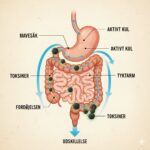
The primary mechanism of action for activated charcoal is adsorption. When ingested, it passes unchanged through the gastrointestinal tract, as it is not absorbed into the body. On its way through the system, it binds a wide range of substances to its porous surface. This binding prevents the substances from being absorbed through the intestinal wall and into the bloodstream. Instead, the bound substances are excreted from the body along with the charcoal via the stool.
Adsorption of toxins and waste products
Activated charcoal is particularly effective at binding organic molecules and chemicals. Its effectiveness depends on several factors, including the chemical structure, molecular size, and polarity of the specific toxin. Generally, it binds non-polar, larger molecules best. This includes many environmental toxins, byproducts of metabolic processes, and certain medications. The process can be seen as a form of “gastrointestinal dialysis,” where the charcoal acts as a sponge collecting harmful substances.
Enterohepatic recirculation (gut-liver)
Another important mechanism is the interruption of enterohepatic recirculation. This is a process where substances that have been excreted from the liver into the bile and then into the intestine are reabsorbed into the bloodstream instead of being excreted.
Many drugs and toxins undergo this recirculation, which prolongs their effect and presence in the body. By ingesting activated charcoal, these substances can be bound in the intestine before they are reabsorbed. This significantly accelerates their elimination from the body. This mechanism is particularly relevant for reducing the toxic burden that can arise during cancer treatment, where the body must break down and excrete large amounts of cellular waste and medication residues [2].
Potential in cancer
The role of activated charcoal as a supplementary treatment in cancer is primarily centered on its ability to detoxify the body and alleviate side effects from conventional treatment, rather than a direct cancer-fighting effect. Its potential lies in improving quality of life and supporting the body’s own healing processes. Thus, activated charcoal does not have its own effect on the body but is effective by preventing other substances from exerting their unfortunate effects.
Reduction of chemotherapy-induced toxicity
Chemotherapy works by killing rapidly dividing cells, which unfortunately also includes healthy cells in, for example, the gastrointestinal tract and bone marrow. This leads to a series of well-known side effects such as nausea, vomiting, and diarrhea. Some studies have investigated the potential of activated charcoal to mitigate these side effects.
An earlier study showed a reduction in diarrhea caused by the chemotherapy drug irinotecan, but more recent and comprehensive research has had difficulty confirming this effect, leaving a mixed picture of the evidence [3]. The mechanism (if it exists) is thought to be the binding of the active metabolite of irinotecan (SN-38) in the intestine, preventing irritation of the intestinal mucosa.
Detoxification and decreased systemic inflammation
Cancer cells and treatments like chemotherapy and radiation therapy create a large amount of waste products and cellular “debris” in the body. This can strain the body’s detoxification organs, primarily the liver and kidneys, and contribute to a state of chronic systemic inflammation, which is known to promote cancer growth. By binding toxins and waste products in the intestine, activated charcoal can potentially ease the burden on the liver and kidneys. This may contribute to reducing the overall inflammatory state in the body and creating an environment that is less favorable for cancer cells.
Improvement of immune function
Research points to a connection between activated charcoal and immune function. A study investigating activated charcoal nanoparticles in combination with the chemotherapy drug cisplatin found that the charcoal not only enhanced cisplatin’s anticancer effect but also improved the immune system in experimental animals. This occurred, among other things, by increasing the number of CD4+ T-helper cells, which are central to orchestrating an effective immune response against cancer [4]. Although this is early research, it opens exciting perspectives for activated charcoal as an immune-supporting treatment.
Advantages of activated charcoal

As a supplementary treatment, activated charcoal can offer several advantages primarily focused on symptom relief and improvement of general well-being during a cancer journey.
Gentle and non-invasive
Activated charcoal works locally in the gastrointestinal tract and is not absorbed into the bloodstream. This makes it a very gentle treatment with few systemic side effects compared to many medications.
Relief of digestive discomfort
In addition to diarrhea caused by chemotherapy, activated charcoal can also alleviate other digestive problems such as bloating and flatulence. It works by binding the gases produced by bacteria in the intestine, which can provide significant relief.
Support for the body’s detoxification systems
With regular, well-timed use, activated charcoal can function as a daily “vacuum cleaner” for the intestinal system, reducing the amount of toxins that must be handled by the liver and kidneys. This can free up resources in the body that can instead be used for healing and fighting the disease.
A help for quality of life and flexibility
For many following a strict dietary protocol as part of a cancer journey, the mental burden can be significant. The need to deviate from the plan on social occasions—to indulge—is crucial for psychological balance and for maintaining the protocol in the long term. Here, activated charcoal can play an important and concrete role as a tool for damage control.
Binding of unwanted substances from a meal
A meal that falls outside a strict diet plan can introduce substances one normally works hard to avoid. This can range from additives and preservatives in processed foods to pro-inflammatory compounds that can arise from heavy frying or unwanted substances from conventionally produced raw materials. These can create a temporary increased burden on the body.
Through strategic use, activated charcoal can help bind some of these unwanted substances directly in the gastrointestinal tract. By ingesting activated charcoal several hours after the meal, typically at bedtime, it can act as a “cleaner” in the intestine. It passes through the system and adsorbs some of the remaining waste and toxins before they are fully absorbed into the body. This can ease the burden that such a meal temporarily places on the body’s detoxification systems, especially the liver.
It is important to emphasize that activated charcoal is not a “free pass” to an unhealthy diet. It cannot bind calories, sugar, or fat. Instead, it should be seen as a valuable tool that can provide the necessary flexibility and security to participate in social settings without worry. Correct timing, far from all medicine and important supplements, is vital for this strategy to be both safe and effective, as there is otherwise a risk that the activated charcoal will bind the medicine, preventing it from having its full effect. [6]
Management of cleansing symptoms (Herxheimer reaction)
In many metabolic and cleansing protocols designed to fight chronic infections like parasites, Lyme disease, Candida fungus, or certain cancer protocols, a common phenomenon is the so-called Herxheimer reaction (also known as “die-off”). This reaction occurs when a large number of pathogens die in a short time and release a quantity of endotoxins (internal toxins) into the body.
These toxins can overwhelm the body’s detoxification systems and lead to a series of unpleasant symptoms such as headache, fatigue, nausea, skin rashes, and general malaise. The symptoms are not a worsening of the disease but rather a sign that the protocol is working and that toxins are circulating.
Here, activated charcoal plays an important role. By ingesting it strategically—always with several hours of separation from the agents killing the pathogens—it can function as an effective “toxin magnet” in the intestinal system. It binds the released endotoxins before they can be reabsorbed into the bloodstream and create systemic inflammation and other discomforts. This can significantly reduce or completely remove the unpleasant symptoms associated with a Herxheimer reaction and make a cleansing protocol much more tolerable to complete. [7]
Support after medical examinations
Certain medical examinations, such as CT or PET scans, use contrast media (some of which are radioactive), which must subsequently be excreted by the body. Although the primary excretion occurs via the kidneys, some of these substances and their breakdown products can end up in the intestine via the so-called enterohepatic recirculation (mentioned above—where substances from the liver are excreted into the intestine via bile).
Here too, activated charcoal can play a supportive role. By ingesting activated charcoal in the hours or days following such a scan, it can help “catch” and bind these remaining contrast agents in the intestine. This prevents them from being reabsorbed into the bloodstream and ensures they are instead excreted directly with the stool. Although it does not affect the primary excretion through urine, it can function as an extra “cleanup” in the intestinal system and potentially reduce the total burden on the body’s detoxification organs. [8]
Disadvantages and limitations

Despite its advantages, it is crucial to understand the limitations and potential disadvantages of activated charcoal, especially in connection with a cancer journey where other medications are often received.
Binding of medication and nutrients
The biggest disadvantage of activated charcoal is its non-specific binding ability. It cannot distinguish between toxins and beneficial substances. This means it can bind and prevent the absorption of oral chemotherapy, pain medication, supplements, and nutrients from food. This can potentially reduce the effectiveness of cancer treatment and lead to deficiency states. Therefore, timing is vital. Activated charcoal must always be taken at least 2–3 hours away from all other medicine, supplements, and large meals. If prioritization becomes necessary due to multiple daily medication intakes, one should choose to shorten the distance from medicine to activated charcoal (in the hope that the medicine thus has the necessary head start in the intestinal tract). Never from activated charcoal to medicine (as the medicine then necessarily ends up with the charcoal and is bound by it).
Risk of constipation
One of the most common side effects of activated charcoal is constipation. It is therefore important to drink plenty of water when taking activated charcoal to counteract this effect. In severe cases, it can lead to blockage of the intestine
Not effective against all substances
Activated charcoal is not a universal antidote. It binds poorly to alcohols, metals like iron and lithium, as well as strong acids and bases.
Clinical trials
Research into the role of activated charcoal in counteracting side effects from chemotherapy has yielded mixed results. Originally, a study from 2004 created optimism as it showed that activated charcoal could significantly reduce severe diarrhea in individuals receiving chemotherapy with the drug irinotecan.
However, more recent and methodologically stronger studies have had difficulty replicating this positive result. A comprehensive review article from 2025, which gathers existing knowledge, confirms that specialized charcoal adsorbents (such as AST-120) have been thoroughly investigated. A large, randomized and placebo-controlled trial, for example, found no significant benefit from the use of activated charcoal compared to placebo in preventing irinotecan-induced diarrhea.
Overall, current evidence indicates that although there were early promising signs, the effect of activated charcoal on chemotherapy-induced diarrhea has not been clearly confirmed in more recent research [3].
Safety
Activated charcoal is generally considered safe for short-term use. The most common side effects are related to the gastrointestinal tract and include blackening of the stool, constipation, and in rarer cases, nausea or vomiting.
The primary safety concern is, as mentioned, the interaction with other drugs. One should consult their healthcare provider before starting to take activated charcoal, especially if in active treatment with oral chemotherapy or other vital medication. Incorrect timing can undermine the treatment.
In very rare cases, more serious complications such as intestinal blockage or aspiration (where the charcoal enters the lungs) have been reported, especially in individuals who are weakened or have reduced intestinal function.
Dosage and application
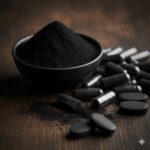
Activated charcoal is available over the counter as powder, capsules, or tablets. The choice of form depends on personal preference.
- Timing: The most important rule is to take activated charcoal with good separation from other medication and supplements. A general recommendation is to ingest it at least 3–4 hours before and 2 hours after taking medication or supplements. Many choose to take it at bedtime, far from dinner and potential morning medication.
- For deviations from the diet plan: A practical application is taking activated charcoal as part of a protocol on days when deviating from the normal diet (indulging). Such a meal can introduce a range of unwanted substances from processing or heavy cooking, such as heterocyclic amines or additives. By ingesting activated charcoal strategically—free from medicine and supplements—it can help bind and excrete some of these complex waste products. It is important to note, however, that activated charcoal does not bind simple nutrients like sugar, fat, or alcohol.
- Dosage: Dosage can vary depending on the purpose. For general detoxification and relief of digestive discomfort, doses of 500–1000 mg at a time are often used. It is best to start with a low dose and gradually increase it to see how the body reacts.
- Fluid intake: It is crucial to drink plenty of water with activated charcoal. This helps prevent constipation and ensures that the charcoal can move freely through the digestive system. A large glass of water per dose is recommended.
- Duration: There are no fixed guidelines for how long one can take activated charcoal. Many use it in periods, for example during a chemotherapy cycle, or as needed for digestive issues or dietary deviations. Long-term daily use should be discussed with a healthcare provider, as it can potentially affect nutrient absorption over time.
Conclusion

Activated charcoal is a historically recognized remedy with a well-documented ability to bind toxins in the gastrointestinal tract. In supplementary cancer treatment, its primary potential lies in supporting the body’s detoxification processes, alleviating side effects from conventional treatment such as diarrhea, and potentially reducing systemic inflammation. Although a direct anticancer effect has not been documented in humans, early research points to possible immune-strengthening properties. The greatest advantage is the gentle, local action in the intestine, but this is also associated with the greatest disadvantage: non-specific binding that requires careful timing in relation to medicine and nutrients. With correct use in consultation with a provider, activated charcoal can be a valuable tool for improving quality of life and supporting the body during a cancer journey.
Back to Supplements
Links
[1] The history of Activated Carbon (DEC Group, 2023)
- Content: The article provides an overview of the historical use of activated charcoal, from ancient Egypt and Greece to its scientific recognition in the 19th century as a remedy for poisoning.
[2] Activated Charcoal (NCBI StatPearls, 2023)
- Content: An in-depth medical review of activated charcoal’s mechanism of action, primarily the adsorption of toxins and the interruption of enterohepatic recirculation in the gastrointestinal tract.
[3] Managing Irinotecan-Induced Diarrhea: A Comprehensive Review of Therapeutic Interventions in Cancer Treatment (National Institutes of Health (NIH), 2025)
- Content: This review article summarizes current knowledge on managing diarrhea caused by irinotecan chemotherapy. It reviews various strategies and the research conducted on oral adsorbents like activated charcoal (AST-120), noting that a large randomized and placebo-controlled trial found no significant benefit.
[4] Effects of activated charcoal nano-particles on anti-cancer action of cisplatin (ResearchGate, 2015)
- Content: A preclinical study showing that activated charcoal nanoparticles can enhance the effect of cisplatin chemotherapy and improve immune function in mice with cancer.
[5] Does activated charcoal interact with medication? (Live Science, 2024)
- Content: The article explains how activated charcoal acts like a “fishing net” in the intestine that can trap and prevent the absorption of oral drugs, emphasizing the importance of correct timing.
[6] Activated Charcoal: Benefits, Uses, Side Effects, and Dosage (Healthline, 2021)
- Content: The article explains that the porous surface of activated charcoal has a negative electrical charge, which attracts positively charged molecules, including toxins and gases. It confirms that the charcoal can bind these substances in the gastrointestinal tract.
[7] Activated Carbon for Sepsis Prevention and Intervention (MDPI, 2023)
- Content: This scientific review article explains how activated charcoal can bind and neutralize endotoxins (toxins from bacteria) directly in the intestine. This mechanism is central to dampening the systemic inflammation caused by these toxins, supporting the use of charcoal to manage Herxheimer reactions.
[8] Waiting times between examinations with intravascularly administered contrast media: a review of contrast media pharmacokinetics and updated ESUR Contrast Media Safety Committee guidelines (Springer, 2024)
- Content: A recent scientific review article detailing how contrast agents are distributed and excreted. It confirms that besides primary renal excretion, a secondary excretion route exists via the liver to the intestine, providing the scientific basis for using activated charcoal to bind these residues.
Page created: Oct. 15, 2025
❤
What you read on I Have Cancer is not a recommendation. Seek competent guidance.
