


Proanthocyanidins and cancer
Summary of proanthocyanidins
Proanthocyanidins stand out in the following way:
Primary effect:
- Proanthocyanidins are complex plant substances (tannins) that function as food for the good gut bacteria and create a physical barrier on the mucous membranes, preventing disease-causing bacteria and toxins from settling.
Potential in cancer:
- New research shows that these substances especially work in the intestine by being converted into cancer-inhibiting fatty acids via the gut flora. In addition, they can block the “hooks” that cancer cells use to attach themselves to the tissue, which counteracts spread.
Main limitation:
- The large molecules are poorly absorbed into the blood in their full form. Their effect in the stomach and intestines is therefore local, while the effect in the bladder depends on the gut flora being able to break them down into smaller active substances that can then be excreted via the urine.
What are proanthocyanidins
Proanthocyanidins (often abbreviated as PACs) belong to the large family of polyphenols. This is the same overarching group of plant substances that also includes well-known antioxidants such as curcumin (from turmeric), EGCG (from green tea), and resveratrol (from grapes).
Chemically speaking, proanthocyanidins are a type of condensed tannins. These are the substances that give the dry, astringent feeling in the mouth when you bite into an unripe banana, eat dark chocolate, or drink a strong red wine.
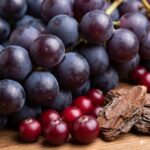
While the designation OPC specifically covers the small, easily absorbable chains, the concept of proanthocyanidins is broader and also includes the long, heavy molecule chains (polymers). These are found in large amounts in the skin of berries (especially cranberries, aronia, and blueberries), in cinnamon, sorghum, and cocoa.
An important detail is the type: One distinguishes between Type-A (found primarily in cranberries) and Type-B (found in cocoa and grapes). It is especially Type-A that has shown unique properties in relation to infection control and cancer defense on mucous membranes.
History
Humans have empirically used plants rich in proanthocyanidins for thousands of years to tan hides (hence the name tannins) and for medicinal use to stop bleeding and diarrhea.
In modern times, the breakthrough came when it was discovered why cranberry juice prevents bladder infections: The proanthocyanidins form a smooth film so that bacteria cannot get a grip. This “anti-adhesion” mechanism is now being intensively studied in relation to cancer cells.
Mechanisms of action
Proanthocyanidins differ from many other antioxidants by their complex path through the digestive system, where they work on several levels.
Prebiotic effect
The large molecules are too complex to be absorbed directly in the small intestine. They therefore continue to the large intestine, where they function as prebiotics (food for bacteria). Here, the gut flora breaks them down into smaller, active substances (such as valerolactones and phenolic acids). It is primarily these breakdown products that are absorbed into the blood and exert an effect in the rest of the body [1].
Blocks adhesion
On the mucous membranes in the stomach, intestines, and bladder, the substances can form a barrier that makes it difficult for disease-causing bacteria to gain a foothold. In relation to cancer spread, researchers are investigating whether the circulating substances can change the surface of cancer cells so that they have a harder time attaching to the tissue and forming metastases.
Inhibition of growth signals
Proanthocyanidins have the ability to affect cell communication. In the context of cancer, studies suggest that they can inhibit specific enzymes and signaling pathways (e.g., PI3K/Akt), which cancer cells depend on to grow and form new blood vessels (angiogenesis) [2].
Potential in cancer
Research is increasingly focusing on the “gut-lung axis” and the gut’s role in cancer defense.
Colorectal cancer and direct contact
Since the substances stay in the intestines for a long time in high concentration before breaking down, they have a direct local effect. Studies show that proanthocyanidins from berries can induce apoptosis (programmed cell death) in cancer cells in the intestine by stressing the cells’ energy centers (mitochondria), without damaging the healthy intestinal cells [3].
Bladder cancer and local effect
Because the active breakdown products from proanthocyanidins are excreted via the kidneys, a high concentration is achieved in the urine. This means that the inside of the bladder is “bathed” in these substances. Research in cell models indicates that this environment can inhibit the growth of bladder cancer cells and induce cell death.
In addition, it is being investigated whether the “anti-adhesion” effect (making the surface smooth) can make it more difficult for cancer cells to settle again after surgery, which is otherwise a common cause of recurrence [5].
Lung cancer and immunity
A developing field of research is the connection between the gut and lungs. Studies indicate that when gut bacteria break down proanthocyanidins, substances are formed that reach the lungs via the blood and can inhibit the growth of lung cancer cells.
This underscores that intake of these substances can work systemically in the body, provided that the gut flora functions optimally [1].
Benefits of proanthocyanidins
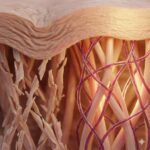
In addition to cancer potential, the substances contribute to the body’s general maintenance.
Mucous membrane protection
They strengthen the mucous membranes in the digestive system through direct contact. In the urinary tract, protection is achieved indirectly when the active metabolites are excreted through the kidneys and form a defense against bacteria in the bladder.
Blood sugar stability
Proanthocyanidins inhibit the enzymes (amylase) that break down carbohydrates in the intestine. This means that sugar is absorbed more slowly into the blood after a meal, which gives a more stable blood sugar and a lower insulin response.
Disadvantages and limitations
The biggest challenge is the dependence on the gut flora. If one has a weakened gut flora (e.g., after antibiotics), one will get significantly less out of proanthocyanidins, as one lacks the bacteria that should convert them into active substances.
In addition, tannins in very large amounts can have an inhibitory effect on the absorption of proteins from the diet, because they bind to them in the stomach.
Clinical trials
Newer studies focus heavily on the interaction with the microbiome and the systemic effect of the metabolites.
See references [1, 2, 3, 4] in the links section for details.
Safety
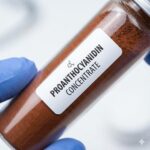
Proanthocyanidins are generally very safe, as they are found naturally in food.
Iron absorption
Be aware that tannins bind iron in the intestine. If you suffer from iron deficiency or anemia, you should not take supplements (or drink strong tea/berry juice) simultaneously with your meals or iron tablets. Keep at least 2 hours apart.
Blood-thinning
The substances have a mild blood-thinning effect. At high doses, this should be coordinated with the doctor if one is taking blood-thinning medication.
Dispensing and use
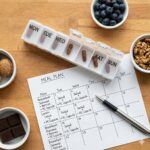
To get the best benefit from proanthocyanidins, consider the following:
- Sources: Cranberry extract (for Type-A), Aronia, Cinnamon bark extract, or broad-spectrum berry complexes.
- Standardization: Look for products that indicate the content of PACs (e.g., “standardized to 20% proanthocyanidins”).
For cranberry products, one often looks for the content of PAC-A. - Dose: Studies often use 200-500 mg extract daily.
Strategic placement and combination
In a treatment protocol, proanthocyanidins have a dual role.
Type: Repair
They primarily belong in the Repair category due to their ability to rebuild intestinal health and strengthen mucous membranes.
But they also have significant Kill properties, as they can actively block growth signals and enzymes that cancer cells use to spread.
Synergy
- Probiotics: This is the most important partner. To get the full effect of the large molecules, you need good gut bacteria (especially Lactobacillus and Bifidobacterium). Feel free to take supplements of these in the same period.
- Vitamin C: Protects proanthocyanidins from oxidation in the stomach, so more reach the intestine intact.
- Omega-3: Dampens inflammation while proanthocyanidins help repair the mucous membrane.
Avoid simultaneous intake
- Iron supplements: As mentioned, they bind iron. For example, take iron with breakfast and proanthocyanidins with lunch/dinner.
- Protein: Proteins in the food can bind to the tannins and neutralize them. Therefore, preferably take berry extracts outside of large, protein-rich meals if you want the full effect.
Conclusion
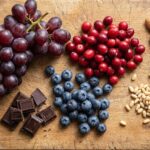
Proanthocyanidins are nature’s advanced defense for mucous membranes and the gut. Their strength lies in the ability to collaborate with the gut flora and form cancer-inhibiting substances that work throughout the body.
In colorectal cancer and bladder problems, they are particularly relevant as part of a strategy to block the disease’s spread [1, 3].
Back to Supplements
Also see Medicine logistics
Also see Bombs, fire extinguishers and timing (with, among other things, schedule for use)
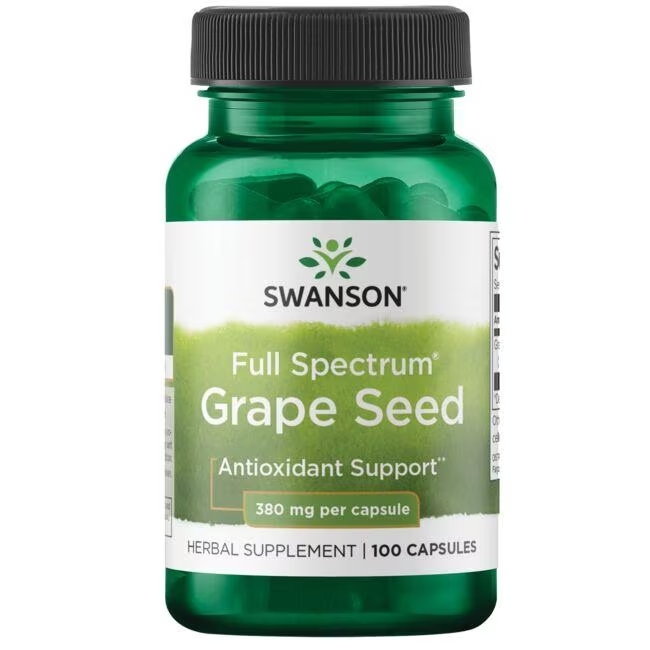
Also see Grape seed extract
Also see Diet
Links
[1] Litchi procyanidins inhibit colon cancer proliferation and metastasis by triggering gut-lung axis immunotherapy (PubMed, Cell Death & Disease, 2023)
- Content: A groundbreaking study confirming how proanthocyanidins (here from litchi) stop the spread of colon cancer by activating the immune system via the “gut-lung axis”.
[2] The role of intestinal microbiota and microRNAs in the anti-inflammatory effects of cranberry (PubMed, Frontiers in Immunology, 2024)
- Content: Comprehensive review of how proanthocyanidins from cranberries are broken down by the gut flora and regulate genes and signaling pathways that otherwise drive inflammation and cancer in the intestine.
[3] Anthocyanins: From Natural Colorants to Potent Anticancer Agents (International Journal of Molecular Sciences, 2025)
- Content: Brand new review article documenting berry pigments’ (including proanthocyanidins) ability to destroy cancer cells’ energy centers (mitochondria) and induce cell death.
[4] Potential effects of cinnamon on cancer prevention and progression (Frontiers in Nutrition, 2025)
- Content: Updated research review from 2025 establishing cinnamon’s (and its active substances’) ability to block signaling pathways such as NF-κB and slow growth in, among others, prostate cancer cells.
[5] Clinical Potential of Fruit in Bladder Cancer Prevention and Treatment (PubMed, Nutrients, 2022)
- Content: A scientific review specifically investigating how bioactive substances from fruit – including proanthocyanidins from cranberries and grapes – can inhibit bladder cancer. The article confirms that these substances accumulate in the urine and can affect the cancer cells directly inside the bladder (local effect).
Page created:
January 4, 2026, Last revised May 3, 2026
❤
What you read on “Jeg har Kræft” is not a recommendation. Seek competent guidance.
