


Papaya leaf extract and cancer
Summary of Papaya leaf extract
Effect:
- Papaya leaf extract primarily works by stimulating the production of platelets and modulating the immune system via active enzymes such as papain. Studies also show a direct inhibitory effect on the growth of certain cancer cells and an ability to promote cell death.
Potential in cancer:
- The most significant potential is the ability to counteract chemotherapy-induced drops in platelets, which can ensure a stable treatment course without interruptions. At the same time, research suggests that the extract can attack cancer cells selectively without damaging healthy tissue.
Main limitation:
- Most evidence for the direct effect on tumors is still based on laboratory and animal studies, and there is a lack of large clinical trials on humans.
- May also interact with blood-thinning medications.
What is Papaya leaf extract
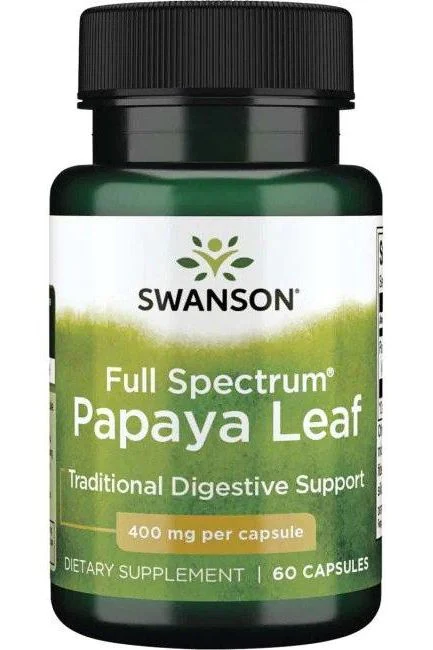
Papaya leaf extract is extracted from the leaves of the papaya tree (Carica papaya), a plant well-known for its fruits, but whose leaves contain a unique composition of active substances.
Unlike the fruit, which is rich in sugars, the leaves contain high concentrations of proteolytic enzymes (protein-breaking) such as papain and chymopapain, as well as alkaloids such as carpain, flavonoids, and phenolic compounds.
It is these specific components in the leaves that make them interesting in a medical context, particularly in relation to immunomodulation and cell protection. It is important to distinguish between the extract from the leaves and the fruit itself, as the therapeutic profiles are significantly different.
History
Over time, extracts from papaya leaves have been used in tropical regions such as Southeast Asia, Africa, and South America as part of folk medicine. It has traditionally been used against fever diseases, especially dengue fever, where it is known for its ability to quickly raise the number of platelets in patients.
Originally, the plant comes from Central America, but its medicinal use has spread globally as its properties have been observed and passed down through generations.
Mechanisms of action
Papaya leaf extract works through several biological pathways that together create its therapeutic effect. A central mechanism is the ability to increase the production of the signaling substance Interleukin-11 (IL-11) and thrombopoietin in the liver, which stimulates the bone marrow to produce more megakaryocytes – the precursor to platelets. This is the primary reason why the extract can counteract drops in platelet count.
At the cellular level, the extract has been shown to be able to induce apoptosis (programmed cell death) in abnormal cells. This happens, among other things, by affecting the cell cycle, so that the division of cancer cells is slowed, typically in the G2/M phase. The proteolytic enzymes, papain and chymopapain, are also believed to be able to break down the fibrin cap that cancer cells often hide behind to avoid the immune system’s attacks.
Finally, the extract works immunomodulating by shifting the immune response toward a so-called Th1 response. This means that it increases the release of specific cytokines (such as IL-12 and Interferon-gamma), which help the immune system more effectively recognize and attack pathogens and tumor cells [1].
Potential in cancer
Support during chemotherapy
The most documented and immediate potential for cancer patients is the use of papaya leaf extract as a supportive treatment during chemotherapy.
Many chemotherapeutic agents destroy rapidly dividing cells, which takes a heavy toll on the bone marrow and results in thrombocytopenia (dangerously low platelet count). This can force healthcare providers to delay vital treatments or reduce the dose.
Here, papaya leaf extract has shown significant potential to stabilize and raise platelet counts, so that treatment can continue undisturbed.
Selective cytotoxicity
In addition to this supportive function, there is great potential in the extract’s direct effect on cancer cells. In vitro (in test tubes/petri dishes) studies have shown promising results against cancer cell lines from, among others, breast, lung, prostate, pancreas, and cervix.
The potential lies in a “selective cytotoxicity,” where the extract appears to kill cancer cells without damaging normal, healthy cells to the same extent.
This is attributed partly to the antioxidant properties, which protect healthy tissue, and partly to the specific enzymatic activity that attacks the surface of cancer cells [2].
German complementary treatment
In Germany, there is a strong tradition for so-called complementary oncology, where the best from natural medicine is combined with conventional hospital treatment.
Here, enzymes from papaya, especially papain, have long been a fixed component of systemic enzyme therapy. German healthcare providers use these enzymes to dampen inflammation and reduce side effects from radiation and chemotherapy, such as damage to mucous membranes.
This clinical experience has paved the way for the targeted use of leaf extract for patients with low platelet counts, to ensure that their body is strong enough to complete the planned chemotherapy course without interruptions [5].
Benefits of papaya leaf extract
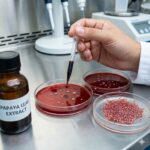
Papaya leaf extract represents a promising, complementary option for cancer patients, especially as a tool to manage the hematological side effects of chemotherapy.
A significant benefit of papaya leaf extract is that it is a natural product that is generally well tolerated by the body. It offers a dual effect, as it supports the body by clearing up inflammation and strengthening blood values, while simultaneously attacking disease processes.
For patients with digestive problems—which often come with cancer treatment—the content of papain can be an additional benefit, as this enzyme helps break down proteins and thus facilitates nutrient absorption. It is also relatively easy to take, either as tea, juice, or in capsule form, which makes it easy to implement in a daily routine.
Disadvantages and limitations
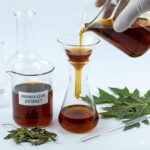
The primary taste-related disadvantage is that pure juice from papaya leaves is extremely bitter, which can be challenging for people who already suffer from nausea or loss of appetite. Capsules can alleviate this, but the taste of tea or extract can be penetrating.
An important medical limitation is the interaction with blood clotting ability. Although it increases the number of platelets, it can in some cases unpredictably affect the effect of blood-thinning medications.
In addition, the bioavailability (how much the body absorbs) depends on the extraction method. Tea has a different profile than alcohol extracts, which can make it difficult to ensure a precise, standardized dose each time [4].
Clinical trials
Research on papaya leaf extract is growing, especially in recent years. There is solid clinical data from studies of dengue fever that prove the effect on platelets.
In the field of cancer, several in vivo (in living organisms) studies on animals as well as smaller case series on humans have been conducted.
An interesting case study from 2022 described a patient with glioblastoma (brain cancer) who suffered from severe chemotherapy-induced thrombocytopenia. After starting papaya leaf extract, the patient’s platelet count rose significantly from critically low levels to normal levels, which enabled continued treatment.
Systematic reviews of animal studies also confirm that the extract can protect against side effects from drugs such as carboplatin and busulfan [2].
In vitro (in test tubes/petri dishes) studies have also demonstrated that the extract can inhibit the growth of ovarian cancer cells by stopping their cell cycle [3].
Safety
High tolerance:
Papaya leaf extract is generally considered safe at recommended doses and short-term use. Toxicological studies indicate that it has low toxicity.
Caution with latex allergy:
One should be aware that the plant belongs to the family of latex-producing plants, so people with latex allergy may experience cross-reactions.
Pregnant and breastfeeding:
Pregnant women should exercise great caution or completely avoid the extract, as certain substances in papaya can stimulate the uterus.
Interactions:
However, the most important safety measure concerns interactions with medication. If you are taking blood-thinning medications (e.g., Warfarin or Magnyl) or diabetes medications, you should consult your healthcare provider, as the extract can enhance or alter the effect of these medications.
Dispensing and use

The use varies depending on the product, but the following are typical approaches:
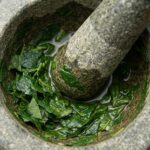
- Fresh leaf juice: Fresh leaves are washed, crushed, and pressed. This is often considered the most potent form, but the taste is very bitter.
- Te (Infusion): Dried or fresh leaves are poured with boiling water and steep for 10-15 minutes. This is a milder form, but good for maintenance.
- Standardized capsules/tablets: This ensures a more consistent dose and eliminates taste problems. Always follow the manufacturer’s or your healthcare provider’s instructions.
- Dose titration: It is often recommended to start with a low dose and slowly increase it to see how the stomach reacts.
- Intake: Preferably taken with meals to reduce the risk of stomach irritation.
Conclusion
Papaya leaf extract represents a promising, complementary option for cancer patients, especially as a tool to manage the hematological side effects of chemotherapy.
Its ability to support platelet production is well-founded, and the immunomodulating properties can contribute to a strengthened body during a disease course.
While we still await large, definitive human studies of the direct cancer-killing effect, current research shows that the extract has a broad therapeutic window and can be used safely by most, as long as one is aware of medication interactions.
Back to Supplements
Links
[1] Delving into the Therapeutic Potential of Carica papaya Leaf against Thrombocytopenia (PubMed, 2022)
- Content: Comprehensive review discussing the mechanisms behind the extract’s ability to increase platelets and its immunomodulatory effects.
[2] A Case Study Using Papaya Leaf Extract to Reverse Chemotherapy-Induced Thrombocytopenia in a GBM Patient (PubMed, Integrative Cancer Therapies, 2022)
- Content: Clinical case study showing how a cancer patient successfully regained normal platelet counts using papaya leaf extract during chemotherapy.
[3] Effect of Ethanolic Extract of Carica papaya Leaves and their Cytotoxicity and Apoptotic Potential in Human Ovarian Cancer Cell (Pharmacognosy Magazine, 2021)
- Content: In vitro study demonstrating the extract’s ability to kill ovarian cancer cells by inducing apoptosis and stopping the cell cycle.
[4] Carica papaya L. Leaf: A Systematic Scoping Review on Biological Safety and Herb-Drug Interactions (Frontiers in Pharmacology, 2021)
- Content: Systematic review of the safety profile, which concludes that short-term use is safe, but warns of interactions with certain medications.
[5] Patienteninformation: Enzyme (Universitätsklinikum Jena)
- Content: Patient information on complementary enzyme therapy in cancer care, including papain from papaya and its potential use for treatment-related side effects. (German language)
Page created: December 14, 2025
❤
What you read on “Jeg har Kræft” is not a recommendation. Seek competent guidance.
