


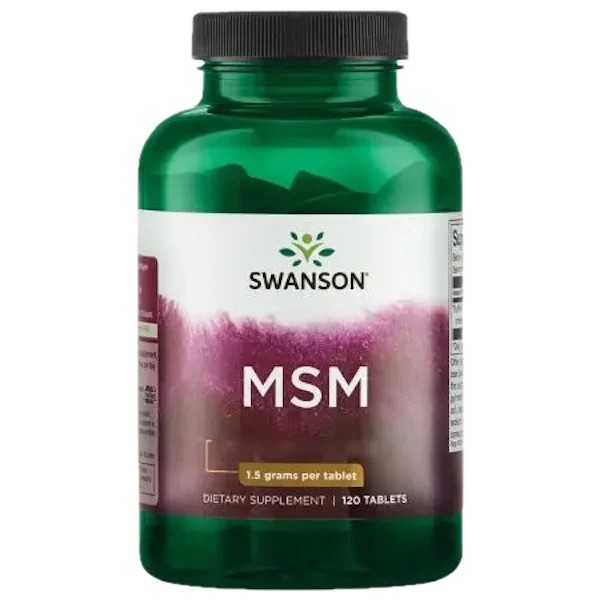
MSM (Sulfur) and Cancer
Summary of MSM
Effect:
- MSM, an organic sulfur compound, primarily functions by dampening inflammation in the body’s cells. At the same time, it contributes to the formation of glutathione, one of the body’s most important antioxidants, which protects cells from damage.
Potential in Cancer:
- Laboratory studies have shown that MSM can slow the growth and spread of cancer cells. It also appears to be able to initiate a process where cancer cells self-destruct (apoptosis).
Main Limitation:
- Current knowledge of MSM’s direct effect on cancer in humans is limited, as most studies have been conducted in test tubes or on animals.
What is MSM

MSM, or Methyl-sulfonyl-methane, is an organic sulfur compound found naturally in humans, animals, and many plants. It is a source of biologically active sulfur, which is an essential mineral for the body’s functions.
Sulfur is involved in countless processes, including the formation of connective tissue such as cartilage, tendons, and ligaments, as well as the production of important molecules like amino acids and antioxidants.
As a dietary supplement, MSM is recognized for its anti-inflammatory and pain-relieving properties, especially in connection with joint diseases, but newer research has also focused on its potential in complementary cancer treatment.
History
MSM’s history is closely linked to the substance DMSO (Dimethyl sulfoxide), which was originally used as an industrial solvent. It was discovered that MSM, which is a conversion product of DMSO in the body, possessed many of the same positive, anti-inflammatory properties, but without the characteristic side effects such as a strong odor and skin irritation.
Also see DMSO (Dimethyl sulfoxide)
Mechanisms of Action

Anti-inflammatory Effect
One of the most well-documented effects of MSM is its ability to inhibit inflammation. This happens, among other things, by suppressing the activity of NF-κB (Nuclear Factor kappa B), a protein complex that functions as a central on/off switch for inflammation in the body’s cells.
When NF-κB is active, it starts the production of a number of pro-inflammatory signaling substances, including cytokines such as TNF-α (Tumor Necrosis Factor-alpha) and IL-6 (Interleukin-6). By inhibiting NF-κB, MSM can effectively reduce the levels of these substances and thus dampen the inflammatory response in the tissue [1].
Antioxidant Properties
MSM’s antioxidant properties are closely connected to its sulfur content. Sulfur is a fundamental building block for glutathione, the body’s perhaps most important endogenous (body-produced) antioxidant. Glutathione neutralizes free radicals – unstable molecules that can damage cells’ DNA, proteins, and fats – and thus protects cells from oxidative stress. By functioning as a sulfur donor, MSM helps the body maintain a robust defense against oxidative stress.
Additionally, research suggests that MSM can also have a more direct effect by itself neutralizing the particularly harmful hydroxyl radicals [2].
Regulation of Cell Signaling Pathways
In addition to affecting inflammation and oxidative stress, MSM can also regulate specific signaling pathways involved in cell growth, survival, and spread.
Research has shown that MSM can inhibit the activity of STAT3 and STAT5b (Signal Transducer and Activator of Transcription). These proteins are often overactive in cancer cells, where they send constant signals to the cell to divide and resist cell death. By blocking these signaling pathways, MSM can help normalize cell behavior and slow uncontrolled growth [3].
Potential in Cancer

In laboratory experiments, MSM has shown the ability to slow the growth of cells from cancer types such as breast, liver, and colon cancer.
Inhibition of Cancer Cell Growth
The effect appears to occur by stopping the cells in their division cycle, preventing them from reproducing [4].
Induction of Apoptosis (Cell Death)
Cancer cells ignore the body’s signals for programmed cell death (apoptosis). Studies suggest that MSM can help reactivate these signals in cancer cells, causing them to self-destruct [5].
Reduction of Metastasis
For cancer to spread, cancer cells must be able to move and invade surrounding tissue. Research indicates that MSM can inhibit these properties, including by downregulating the enzymes that cancer cells use to break down tissue barriers [3].
Enhancement of Conventional Treatment
Newer research has investigated whether MSM can enhance the effect of conventional treatment. A 2020 study showed that MSM could make endometrial cancer cells more susceptible to the chemotherapy drug Doxorubicin [7].
Another study from the same year indicated that MSM, in addition to slowing cell division in colon cancer cells, could also suppress the cancer cells’ “stem cell potential,” a property associated with resistance to treatment [8].
Benefits of MSM

In addition to the direct effects at the cellular level, which are relevant in cancer treatment, MSM offers a number of general benefits that can improve quality of life.
- Support for Connective Tissue: As a rich source of sulfur, MSM is crucial for maintaining healthy connective tissue, including cartilage, skin, hair, and nails. Sulfur is involved in the formation of collagen and keratin, which give these tissues strength and elasticity.
- Pain Relief: MSM is widely recognized for its ability to relieve pain, especially chronic pain associated with osteoarthritis and other inflammatory conditions in the joints.
- Improved Recovery: By dampening inflammation and oxidative stress, MSM can help reduce muscle soreness and accelerate recovery after physical exertion.
Disadvantages and Limitations
The overriding limitation is that the promising results come from the laboratory. There is a lack of solid clinical studies that can confirm an effect in humans with cancer. And it may be difficult to obtain funds for this research, as one cannot patent sulfur, there is no one who has a financial interest in such scientific studies.
It should be noted that many substances that show potential in a petri dish have no or a completely different effect in the complex human body. Without human studies, MSM’s role in cancer treatment remains essentially an unanswered question.
Clinical Studies

While there are not yet large clinical studies that specifically investigate MSM’s effect on cancer in humans, several studies have been conducted on its effect on other conditions.
Most notably is the research in osteoarthritis, where several randomized, controlled trials have shown that MSM can significantly reduce pain and improve physical function compared to placebo [6].
These studies support MSM’s general anti-inflammatory and pain-relieving effect in humans and provide a solid foundation for its safety profile.
Safety

MSM is considered a very safe dietary supplement with few and mild side effects. It has achieved GRAS status (Generally Recognized As Safe) from the US health authorities.
The most common side effects are mild and often related to digestion, such as slight nausea, diarrhea, or bloating. These can typically be avoided by starting with a low dose and gradually increasing it.
People taking blood-thinning medications such as Warfarin should exercise caution, as sulfur-containing compounds theoretically may have a mild blood-thinning effect. It is recommended to discuss the use of MSM with one’s healthcare provider if one is undergoing medical treatment.
Dispensing and Use

MSM is available in several forms and can be used in different ways.
- Powder: This is often the most economical form. The powder can be easily dissolved in water, juice, or a smoothie. The taste is slightly bitter.
- Capsules/Tablets: A practical solution for those who do not like the taste of the powder. Capsules make it easy to dose precisely.
- Topical (cream/gel): For external use, MSM creams can be applied directly to sore joints or muscles for local pain relief.
A typical starting dose is 1-2 grams (1000-2000 mg) per day. The dose can gradually be increased to 3-6 grams per day, divided into 2-3 doses, to achieve a better effect and minimize any digestive discomfort.
Conclusion

MSM is an organic sulfur compound with well-documented anti-inflammatory properties. Pre-clinical research has uncovered interesting mechanisms that point to potential in cancer treatment, but it is crucial to emphasize that this is based on laboratory experiments.
At present, MSM’s role in the treatment of cancer in humans is unknown and an area that requires much more research before conclusions can be drawn.
Back to Supplements
Links
[1] Methylsulfonylmethane: Applications and Safety of a Novel Dietary Supplement (Nutrients, 2017)
- Content: Comprehensive review of MSM’s mechanisms of action, including its ability to dampen inflammation by inhibiting NF-κB and reducing oxidative stress. The article discusses MSM’s role in modulating immune responses and its potential therapeutic applications.
[2] Methylsulfonylmethane as an antioxidant and its use in pathology (ScienceDirect, 2020)
- Content: Review of MSM’s role as a naturally occurring antioxidant. The article describes how MSM protects against oxidative stress by affecting the body’s antioxidant enzymes and glutathione levels, contributing to cellular defense mechanisms.
[3] In vitro effects of methylsulphonylmethane in MCF7 cells (DergiPark, 2019)
- Content: Laboratory study confirming that MSM is effective against the growth of breast cancer cells. The effect occurs by regulating multiple signaling pathways, including STAT3 and STAT5b, which are involved in cancer cell proliferation and survival.
[4] Methylsulfonylmethane: Applications and Safety of a Novel Dietary Supplement (National Institutes of Health, 2017)
- Content: Review article describing how in vitro studies indicate that MSM can initiate cell death in cancer cells from the gastrointestinal tract, liver, and colon. The study synthesizes findings from multiple laboratory experiments.
[5] Methylsulfonylmethane suppresses hepatic tumor development through activation of apoptosis (National Institutes of Health, 2014)
- Content: Study reporting that MSM has an apoptotic (cell-killing) effect on liver cancer cells, among other cancers in the digestive system. The research demonstrates MSM’s ability to trigger programmed cell death in cancerous cells.
[6] Methylsulfonylmethane Improves Knee Quality of Life in Participants with Mild Knee Pain: A Randomized, Double-Blind, Placebo-Controlled Trial (MDPI, 2023)
- Content: Randomized, double-blind, placebo-controlled study showing that MSM intake improved both knee and general health conditions in participants experiencing mild knee pain. The study supports MSM’s efficacy and safety profile.
[7] Methylsulfonylmethane sensitizes endometrial cancer cells to doxorubicin-induced apoptosis and oxidative stress (National Institutes of Health, 2020)
- Content: Study showing that MSM can not only initiate cell death (apoptosis) in endometrial cancer cells but also makes them more sensitive to the chemotherapy drug Doxorubicin, potentially enhancing treatment effectiveness.
[8] Methylsulfonylmethane Induces Cell Cycle Arrest and Apoptosis, and Suppresses the Stemness Potential of HT-29 Colon Cancer Cells (Anticancer Research, 2020)
- Content: Research confirming that MSM has a cancer-inhibiting effect on colon cancer cells by stopping their division and promoting cell death. The study also indicates that MSM can suppress cancer cells’ stem cell potential.
Page created: October 12, 2025
❤
What you read on “Jeg har Kræft” is not a recommendation. Seek competent guidance.
