


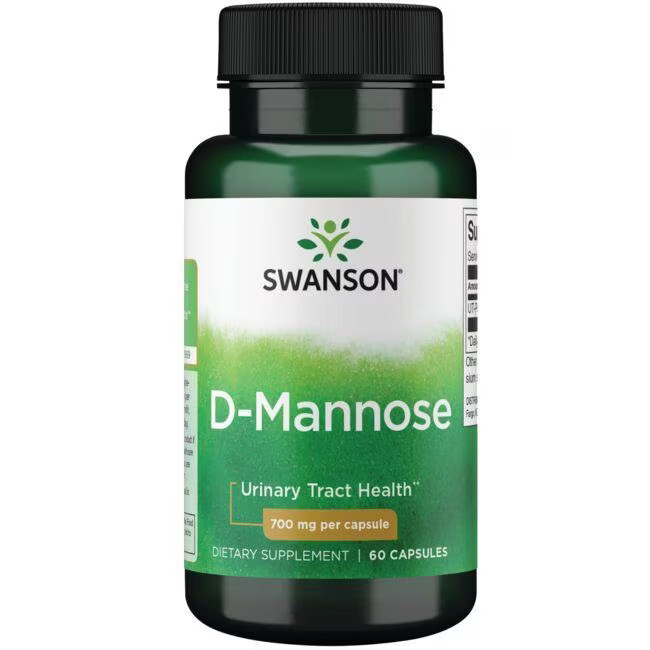
D-Mannose and cancer
Summary of D-Mannose
Effect:
- D-mannose is a naturally occurring sugar that interferes with the ability of cancer cells to metabolize energy (glycolysis), while it is also known to prevent bacteria from adhering to the urinary tract.
Potential in cancer:
- It has been shown to slow tumor growth by creating metabolic stress in cancer cells and can potentially make chemotherapy more effective.
Main limitation:
- The effect depends on the amount of a specific enzyme (PMI) in the tumor, and very high doses can cause gastrointestinal issues such as bloating and loose stools.
What is D-Mannose
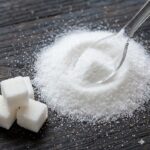
D-mannose is a simple sugar (monosaccharide) that is structurally very similar to glucose. It is found naturally in small amounts in a variety of fruits and berries, including cranberries, oranges, apples, and peaches, as well as in certain types of wood.
In the body, it normally functions as an important building block in glycosylation, a process where sugars are bound to proteins to ensure they function correctly and that cells can communicate with each other.
Although chemically a sugar, it behaves differently in the body than common table sugar (sucrose) or grape sugar (glucose). It is rapidly absorbed into the bloodstream but is metabolized to energy only to a very small extent. Instead, the majority is excreted unchanged through the kidneys and urinary tract, which is the reason for its most well-known application.
In the context of cancer, it is precisely the similarity to glucose that makes it interesting as a form of “decoy sugar.”
History
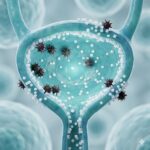
Historically, D-mannose has primarily been used as a natural remedy for cystitis and urinary tract infections. This use stems from the observation that cranberry juice could prevent infections, where D-mannose was later isolated as the active component that prevents E. coli bacteria from attaching to the bladder wall.
Interest in Mannose in cancer treatment is of a very recent date. It was only around 2018 that breakthrough research revealed the substance’s ability to manipulate the metabolism of cancer cells, which has moved the substance from being a simple supplement for the urinary tract to now being intensively investigated as a metabolic cancer treatment.
Mechanisms of action
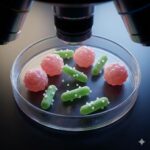
D-mannose works by exploiting the greed of cancer cells for sugar. Cancer cells typically have an enormous energy demand and upregulate the number of transport channels (GLUT transporters) to soak up as much glucose as possible. D-mannose enters the cell via these same transporters [1].
Once Mannose is inside the cancer cell, the problem for the cell arises. It begins to break down Mannose as if it were glucose, but the process grinds to a halt. Mannose is converted to mannose-6-phosphate, which accumulates in the cell because many cancer cells lack sufficient amounts of the enzyme phosphomannose isomerase (PMI) to process it further.
This accumulation acts as a brake on the cell’s entire energy production (glycolysis). It is equivalent to pouring sand into an engine; the machinery is there, but it clogs up. This forces the cancer cell into a state of metabolic stress, where it cannot produce enough energy to divide or survive. At the same time, it affects the cell’s ability to form the building blocks (nucleotides) needed for DNA synthesis.
Potential in cancer
Metabolic effect
The potential for D-mannose lies in its ability to function as a metabolic inhibitor that specifically targets cancer cells without damaging the body’s healthy cells. Since healthy cells generally have a lower energy demand and a better ability to handle mannose, they are not affected to the same degree.
Chemotherapy and Mannose
Research further suggests that Mannose can sensitize cancer cells to chemotherapy. When the cancer cell is stressed by energy deficiency due to Mannose, it has a harder time repairing the damage inflicted by the chemotherapy. This opens the possibility of achieving better results with standard treatment or potentially reducing the dose of chemotherapy to minimize side effects [2].
The immune system
In addition, it is being investigated whether Mannose can strengthen the immune system. By changing the sugar composition on the surface of cells, it can potentially make it easier for the immune system’s T-cells to recognize and attack the tumor.
Advantages of Mannose

One of the greatest advantages of Mannose is its side effect profile. Since it is a substance the body knows and naturally handles, it is generally safe to ingest, even in the higher doses often used in trials.
It is easy to administer, as it is simply a powder dissolved in water, and it tastes slightly sweet without causing the large blood sugar fluctuations seen with regular sugar. This makes it possible for patients to participate actively in their own treatment with a remedy that is easily accessible.
Another advantage is specificity. Unlike diets that try to “starve” cancer by removing all sugar (which can be difficult to adhere to and hard on the body), Mannose works by competing with glucose directly in the cell.
Disadvantages and limitations

The primary limitation is that the effect appears to be dependent on the level of the enzyme PMI in the individual tumor. Cancer cells with a very high content of PMI can metabolize Mannose quickly enough to avoid accumulation and thus avoid the inhibitory effect. It does not work on all types of cancer [3].
At high doses, which are often necessary to achieve an anti-cancer effect, some users experience gastrointestinal problems. Since Mannose is not 100% absorbed in the intestine, the remaining amount can bind fluid and act osmotically, which can cause diarrhea and bloating.
There is also a theoretical risk that very high doses over a long period could affect the glycosylation of proteins in healthy cells, although studies so far have not shown serious toxicity.
Clinical studies
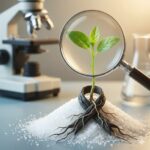
Research into Mannose as a cancer treatment has gathered pace in recent years. It started primarily with in vivo studies (in living organisms/animals), where significant results were seen.
A landmark study showed that supplementing Mannose in mice with pancreatic, lung, and skin cancer significantly reduced tumor growth and prolonged survival. The same study showed that the combination of Mannose and chemotherapy (doxorubicin) was far more effective than chemotherapy alone.
Clinical trials in humans are now underway to determine the optimal dose and safety of long-term use in cancer patients, as well as to identify exactly which patient groups (based on PMI levels) will benefit from the treatment.
Safety

D-mannose is generally considered safe (GRAS status). It affects blood sugar minimally compared to glucose, but diabetics should still monitor their blood sugar at startup, as a small portion can be metabolized.
Pregnant and breastfeeding women should consult a practitioner, although it is often used for cystitis in this group. At very high doses, temporary liver effects have been observed in animal studies, but this is reversible and has not been seen as a major problem at normal therapeutic doses for humans.
Navigating without a PMI test
Since it is currently not possible to routinely measure the level of the enzyme PMI in a tumor, a user must take a pragmatic approach to the treatment. Here are three rules of thumb that can help assess whether D-mannose is a good strategy for you.
Look at the statistics
Research has shown that certain types of cancer more often have low PMI levels and are therefore more susceptible to Mannose than others.
- Likely good effect (often low PMI): Studies (including Nature, 2018) have shown particularly good effects in cell lines from colon cancer, lung cancer, skin cancer (melanoma), and certain forms of pancreatic cancer. If you suffer from one of these, the odds are statistically on your side.
- Be extra observant (often high PMI): Cells from testicular cancer and certain brain tumors have often proven to be resistant. Here, one should be more cautious or monitor the effect very closely.
Use combination strategy
The risk of a high PMI score is theoretically that the cancer cell uses Mannose as fuel. But Mannose is a poorer source of energy than glucose.
If you simultaneously follow a strategy that lowers your general blood sugar (e.g., Keto diet, fasting, or use of Berberine/Metformin), you minimize the risk. Even if your tumor has high PMI, it will lack its primary fuel source (glucose), and Mannose will still occupy the space in the transport channels.
Advice: Never use Mannose as the “only” strategy. And especially not if you are in doubt. Use it as part of a broader metabolic effort.
Keep an eye on your numbers
The most important guide is your own response. Since Mannose is a fast-acting metabolic intervention, you should be able to see an effect (or lack thereof) relatively quickly on tumor markers or through scans.
- The 3-month rule: Try the protocol for 3 months until the next check-up/blood test.
- Stop signal: If your tumor markers (e.g., PSA, CEA, CA-125) rise unexpectedly fast, or the tumor grows despite treatment, you must stop using Mannose. This may be a sign that your specific tumor is relatively good at metabolizing it (high PMI).
One cannot know with 100% certainty whether it is suitable without a biopsy analysis. But by sticking to the types of cancer where it most often works, and by always combining it with measures that ensure low blood sugar, you significantly reduce the risk of failure.
Dispensing and application

D-mannose is available both as a loose powder and in capsules. The choice depends mostly on practicality, dose, and individual preferences.
- Powder vs. capsules:
- Capsules: Are the easiest solution if you are on the go or want to avoid the taste. Be aware, however, that you often have to take quite a few capsules (e.g., 3-6 at a time) to reach the doses used therapeutically.
- Powder: Is often cheaper and makes it easier to ingest large amounts (e.g., a teaspoon) without having to swallow many pills.
- Timing: Optimally taken approximately 30 minutes before a meal. This ensures that D-mannose is absorbed and reaches the cells before it has to compete with glucose from the food.
- Start low: Regardless of the form, you should scale up slowly to get the stomach used to the substance and avoid bloating or loose stools.
- Dissolving (for powder): Stir into a glass of water. It has a clean, sweet taste (about 60% of the sweetness of sugar).
- Distribution: It is important to spread the intake throughout the day (e.g., 3 times daily) to maintain a constant level in the blood.
- Fluid: Drink plenty of water during the day, as D-mannose is excreted via the kidneys.
How does it taste?
- It tastes clean and sweet. It does not have the bitter aftertaste known from Stevia, or the “cold” sensation one can get from Erythritol. However, the sweetness is milder than regular sugar (sucrose). D-mannose is about 60% as sweet as regular sugar.
Can it be used as an alternative to sugar?
- No, in practice it should not be used as a culinary sweetener, primarily for two reasons:
- The stomach: If you use it in quantities required to sweeten a cake or coffee (which requires quite a lot due to the lower sweetness), you will most likely get an upset stomach. Because D-mannose is not completely absorbed, it draws fluid into the intestine, which causes loose stools and bloating at large doses (typically over 5-10 grams at a time).
- The price: D-mannose is significantly more expensive than common sweeteners. It is a therapeutic supplement, so it would be a very costly way to sweeten your tea.
Conclusion as a sweetener
- It is an advantage that it tastes good (sweet), as it makes it easy to drink dissolved in water – unlike many other supplements that taste bad. But it should be considered a medicine/supplement, not food.
Strategic placement and combination

In a treatment protocol, Mannose takes a place as a “Metabolic Blockade.”
Type: Starve (starvation/blockade)
Mannose belongs to the category of metabolic treatment. Its role is to trick the cancer cell into thinking it is getting food (glucose), but instead, a substance is delivered that slows down the engines.
Synergy
- Chemotherapy: Mannose works strongly synergistically with several forms of chemotherapy (including Cisplatin and Doxorubicin). By stressing the cell metabolically, it becomes more vulnerable to the toxic effect of the chemo.
- Metformin: Since Metformin also affects the cell’s metabolism and blood sugar, there may be a theoretical synergy in attacking the energy supply from two angles.
- Keto/low-carb diet: If you reduce the intake of glucose through the diet and simultaneously supplement with Mannose, you increase the ratio between Mannose and Glucose in the blood. This gives Mannose a competitive advantage at the entry to the cancer cell [4].
Avoid simultaneous intake
- Large amounts of sugar/glucose: If you ingest large amounts of fast carbohydrates together with Mannose, the glucose will outcompete the Mannose at the cell gates, and the effect will be significantly reduced.
Systemic versus cellular effect
To understand the power of combining remedies, it is useful to look at their different angles of attack:
- Berberine and Metformin (systemic effect): These work primarily by lowering blood sugar and insulin levels throughout the body. The strategy is to reduce the supply by ensuring that there is less glucose available in the blood.
- D-mannose (cellular effect): This works inside the cancer cell itself. It competes with glucose to get in and sabotages the engine by blocking the breakdown of the sugar (creating a traffic jam).
When applying both, the cancer is attacked from two sides. Berberine or Metformin ensures that less sugar reaches the door, while D-mannose ensures that the cell cannot utilize the sugar that slips through anyway.
Conclusion

Mannose represents an exciting new approach to cancer treatment that focuses on targeting the metabolic weaknesses of the disease. As a simple, natural substance with few side effects, it provides the opportunity to supplement conventional treatment by stressing the cancer cells on the energy side.
Although large human studies are still awaited to establish its final place in treatment, current knowledge shows that it is a promising tool, especially when combined strategically with other treatments.
Back to Dietary supplements
See also Metabolic strategy – block signaling pathways by cancer type – chart overviews
Tak for Tip
To Irene Axelsen (from the Facebook group Jeg har Kræft – Hvad kan jeg gøre?)
Links
[1] Mannose impairs tumour growth and enhances chemotherapy (Nature, 2018)
- Content: A breakthrough in vivo study (randomized) showing how mannose disrupts glucose metabolism in cancer cells, slows tumor growth, and increases the efficacy of chemotherapy in mice.
[2] Effect of D-mannose on Philadelphia chromosome-positive leukemia cells (Sage Journals, 2022)
- Content: A study that investigated the effect of D-mannose on a specific type of leukemia (CML). The results showed that treatment with D-mannose altered the cells’ metabolism and reduced their growth.
[3] Manipulating mannose metabolism as a potential anticancer strategy (FEBS Press, 2025)
- Content: A brand new review describing how mannose can dampen the sugar addiction of cancer cells (the Warburg effect) and thus function as a promising strategy to slow cancer growth.
[4] Metabolic clogging of mannose triggers dNTP loss and genomic instability in human cancer cells (eLife, 2023)
- Content: A scientific study mapping how mannose creates a metabolic blockade in cancer cells, leading to a lack of DNA building blocks and inhibiting cell division.
Page created: 01/10/26
❤
What you read on Jeg har Kræft is not a recommendation. Seek competent guidance.
