


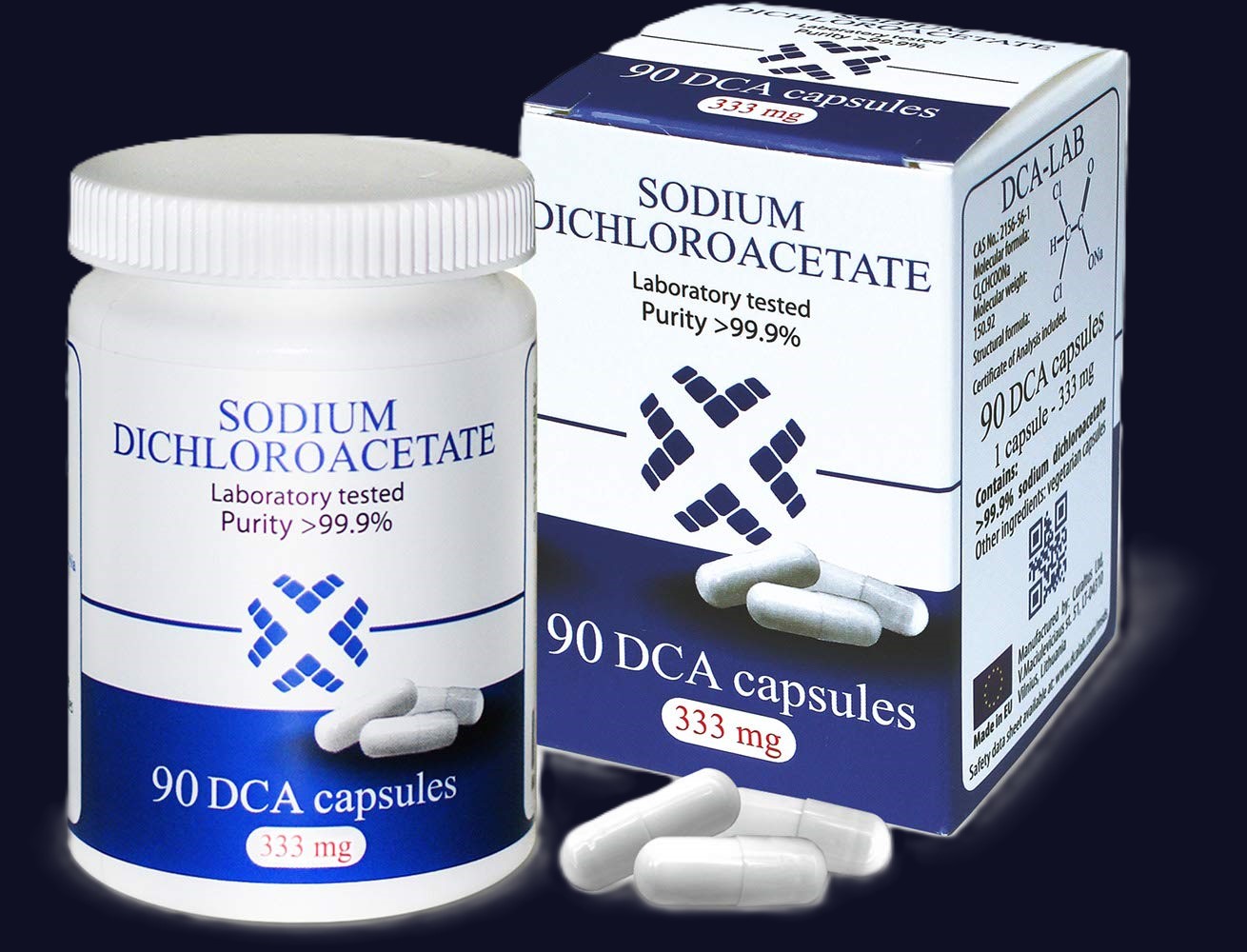
DCA and cancer
What is DCA (Dichloroacetic acid)
DCA, or dichloroacetic acid, is an organic compound originally used in industry. In recent years, it has attracted attention in health research due to its potential therapeutic properties. DCA is a promising molecule with the potential to revolutionize cancer treatment.
Some studies have suggested that DCA may have positive effects on certain health conditions, and as a result, it has been marketed as a dietary supplement.
How does DCA work
The mechanism of action for DCA is complex, but it is based on a fundamental understanding of cancer cell metabolism. Cancer cells tend to produce energy in a different way than normal cells. They prefer a process called glycolysis, which is less efficient but faster.
The exact mechanism by which DCA works in the body is not fully understood. However, researchers believe it may affect cellular respiration and mitochondrial function. Mitochondria are the “powerhouses” of cells, and they play a crucial role in producing energy. Some studies suggest that DCA can increase the production of energy in the mitochondria, which can be beneficial for cells with reduced energy production.
Mechanisms of action:
Inhibition of pyruvate dehydrogenase kinase (PDK)
One of the central aspects of DCA’s effect is the inhibition of PDK. This enzyme is involved in the regulation of glucose metabolism in cells. By inhibiting PDK, DCA forces cancer cells to use a different energy metabolic pathway, which can lead to cell death.
Increased production of reactive oxygen species (ROS)
DCA can increase the production of ROS in cancer cells. ROS are unstable molecules that can damage cell structures, including DNA. This can lead to programmed cell death (apoptosis) in cancer cells.
Synergy with other treatments
DCA can potentially increase the effect of other cancer treatments, such as chemotherapy and radiation therapy. It can make cancer cells more sensitive to these treatments by reinforcing their harmful effects.
Modulation of tumor environment
DCA can affect the tumor environment by inhibiting the formation of new blood vessels necessary for tumor growth. This can limit the supply of nutrients and oxygen to the tumor and thus inhibit its growth.
Restoring normal cellular respiration
DCA apparently can stimulate the mitochondria in cancer cells to produce energy in a more normal way. This can lead to cell death in cancer cells.
Advantages of DCA
Cancer
One of the most studied applications of DCA is in connection with cancer. Some studies have shown that DCA can inhibit the growth of certain cancer cells by increasing their sensitivity to chemotherapy and radiation therapy [1, 2]. Several studies have thus shown that DCA can inhibit the growth of various types of cancer tumors, both in vitro and in vivo [4, 5].
Neurodegenerative diseases
Studies have been conducted suggesting that DCA may have positive effects on neurodegenerative diseases such as Alzheimer’s and Parkinson’s.
Diabetes
Some studies have suggested that DCA can improve insulin sensitivity and reduce blood sugar levels in people with diabetes.
Cardiovascular diseases
There is limited research in this area, but some studies suggest that DCA may have protective effects on the heart.
Broad-spectrum effect
DCA has shown activity against various types of cancer, including breast cancer, colon cancer, and brain cancer.
Improvement of quality of life
By supplementing conventional treatment, DCA can potentially reduce side effects and improve patients’ quality of life.
Increased survival
Some studies suggest that DCA can prolong survival in cancer patients.
Increased sensitivity to conventional treatment
DCA can potentially make cancer cells more susceptible to chemotherapy and radiation therapy [3].
Relatively few side effects
Compared to conventional cancer treatments, DCA generally has milder side effects.
Disadvantages and limitations
Safety profile
Although DCA is generally well-tolerated, side effects such as nausea, vomiting, fatigue, and muscle pain can occur. Long-term safety has not yet been fully investigated [6].
Regulatory challenges
DCA is often available as an unregulated dietary supplement, which can lead to variations in quality, dosage, and purity.
Limited clinical research
Although there are promising results from animal experiments and smaller clinical studies, there is still a need for larger and more comprehensive clinical investigations to confirm DCA’s effectiveness and safety in humans.
Individual variations
The effect of DCA can vary from patient to patient, and there is a need to identify those patients who will benefit most from this treatment.
Interactions with medication
DCA can interact with other medical treatments, so it is important to inform your practitioner if you are considering taking this supplement.
Conclusion
Dichloroacetic acid (DCA) has attracted significant attention in cancer research in recent years. Although it is not yet approved as a standard treatment, there are promising signs that DCA can be an effective supplement to conventional cancer treatment.
However, it is important to emphasize that further research is still needed to establish its precise role in cancer treatment (as is generally the case for virtually all complementary medicine, as it is difficult to obtain funding for research in the field). Patients considering using DCA should always discuss it with their practitioner.
Back to Dietary supplements
Links
[1] Antitumoral Activity and Metabolic Signatures of Dichloroacetate, 6-Aminonicotinamide and Etomoxir in Breast-Tumor-Educated Macrophages (PubMed, 2024)
- Content: An in vitro study describing the antitumoral activity and metabolic signatures of dichloroacetate in breast cancer models.
[2] Curcumin-Dichloroacetate Hybrid Molecule as an Antitumor Oral Drug against Multidrug-Resistant Advanced Bladder Cancers (PubMed, 2024)
- Content: A study regarding a hybrid molecule using DCA against multidrug-resistant bladder cancer.
[3] Fenbendazole and Diisopropylamine Dichloroacetate Exert Synergistic Anti-cancer Effects by Inducing Apoptosis and Arresting the Cell Cycle in A549 Lung Cancer Cells (PubMed, 2024)
- Content: A study showing how DCA and Fenbendazole exert synergistic effects against lung cancer cells.
[4] The antitumor effect of diisopropylamine dichloroacetate on non-small cell lung cancer and its influence on the tumor immune microenvironment (PubMed, 2024)
- Content: An article describing the antitumor effect of DCA on lung cancer and its influence on the immune environment.
[5] Dichloroacetate (DCA) as a potential metabolic-targeting therapy for cancer (PubMed, 2008)
- Content: A foundational study describing DCA as a potential metabolic-targeting therapy for cancer.
[6] Dichloroacetate for Cancer Treatment: Some Facts and Many Doubts (PubMed, 2024)
- Content: A review of current facts and doubts regarding DCA in cancer treatment.
Page created: Nov 9, 2024
❤
What you read on Jeg har Kræft is not a recommendation. Seek competent guidance.
