


Treatments
Complementary and Alternative Treatments
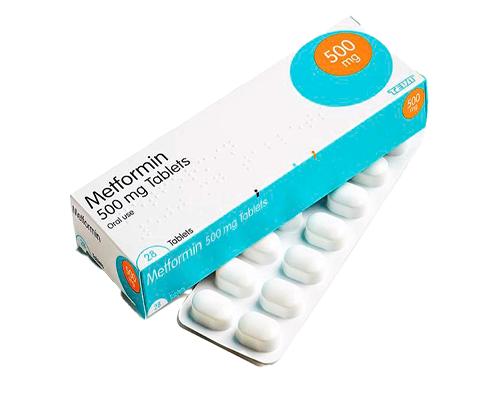
Metformin and cancer
What is metformin
Metformin is a drug primarily used for the treatment of type 2 diabetes. It helps lower blood sugar levels by improving insulin sensitivity and reducing glucose production in the liver. Metformin is often the first choice for diabetes treatment and can also have beneficial effects on weight loss and cardiovascular health.
Metformin as a repurposed drug for cancer is a promising but controversial area. While approved for type 2 diabetes, it has shown potential in the prevention and treatment of certain cancers. However, using metformin for this purpose is considered off-label, as it is not approved by the Medicines Agency for this specific indication. Metformin is included in the COC Protocol.
Effect on cancer
Metformin may act against cancer by:
- Reducing insulin levels: High insulin is associated with increased cancer risk; metformin can lower it.
- Lowering IGF-1: This hormone promotes the growth of cancer cells; metformin can slow it down.
- Dampening inflammation: Inflammation plays a role in cancer development; metformin has anti-inflammatory properties.
- Promoting cell death: Metformin can induce death in cancer cells.
Advantages – anticancer effect
1. AMPK and Energy Homeostasis:
The head of the energy factory AMPK
- (5′-AMP-activated protein kinase) is often referred to as the “head of the cell’s energy factory.” When cells experience low energy stores, AMPK is activated, initiating a series of processes to restore energy balance.
See more about AMPK in relation to cancer (scroll to)
The high energy consumption of cancer cells
- Cancer cells have an extremely high energy consumption to grow and divide rapidly.
2. The role of Metformin:
By activating AMPK, metformin can “confuse” cancer cells by signaling that energy levels are low. This can lead to:
- Inhibited cell growth: Cancer cells may enter a kind of “dormancy” and stop dividing.
- Induction of apoptosis: In some cases, metformin can even trigger programmed cell death in cancer cells.
- Inhibition of angiogenesis: Metformin can also inhibit the formation of new blood vessels (angiogenesis), which are necessary for tumors to grow.
3. Other Potential Mechanisms:
- Reduction of IGF-1: Metformin can lower levels of insulin-like growth factor 1 (IGF-1), a hormone that stimulates cell growth and survival.
- Modulation of the cell cycle: Metformin can affect various proteins involved in regulating the cell cycle, thereby preventing cancer cells from dividing.
- Anti-inflammatory effect: Much like statins, metformin can have an anti-inflammatory effect, which may help reduce the growth of cancer cells.
Side effects
Common side effects:
- Metallic taste in the mouth
- Diarrhea
- Nausea
- Vomiting
- Stomach pain
Rare side effects:
- Lactic acidosis
- Low blood sugar
- B12 deficiency
It should be noted that this is not an exhaustive list of all possible side effects. You can find more information in the package leaflet of your medication.
Metformin is not suitable for everyone. People with kidney or liver disease, type 1 diabetes, acidosis, or serious infection should not take it.
Research
Studies suggest that metformin can:
Alleviate symptoms such as:
- Fatigue, weight loss.
Reduce the risk of:
- Breast cancer, colorectal cancer, pancreatic cancer.
Improve survival in:
- Cancer patients.
Increase the effectiveness of:
- Chemotherapy and radiation therapy.
Note
The decision to use metformin for cancer is made in consultation with a physician who has a deep understanding of your medical history, risk profile, and treatment goals. Off-label use of medication is not part of the standard clinical guidelines for cancer (Danish version), and it is important to be well-informed about the benefits and risks before making a decision.
Conclusion
Metformin, originally developed for diabetes treatment, has shown promising potential as an anticancer agent. By affecting cellular energy consumption and regulating various cellular processes, metformin can inhibit the growth of cancer cells and potentially improve patient survival. Furthermore, be aware that certain drugs can interact, leading to unintended effects when combined.
If in doubt, it can be checked here:
See also Repurposed Drugs
See also No medicine – Plan B
Links
Interaktioner (search for preparations) (Danish Medicines Agency) (Danish Language)
Medical Journal (Metformin reduces cancer risk) (Danish Language)
Dagens Medicin (Diabetes drug lowers risk of breast cancer) (Danish Language)
Nordjyske (Diabetes pill slows cancer) (Danish Language)
Metformin – its potential anti-cancer and anti-aging effects (PubMed)
Metformin as an adjuvant treatment for cancer: a systematic review and meta-analysis (PubMed)
Metformin in colorectal cancer: molecular mechanism, preclinical and clinical aspects (PubMed)
Metformin May Play a Surprising Role in Radiation Protection (Technology Networks)
Metformin as an anti-cancer agent: actions and mechanisms targeting cancer stem cells (Oxford Academic 2017)
- Relevance: Metformin, a widely used diabetes medication, has been shown to act against cancer by disrupting cellular metabolism and blocking key growth pathways such as mTOR. Research focuses on its ability to target resistant cancer stem cells that drive spread and recurrence. This is a non-randomized review.
Metformin and cancer hallmarks: shedding new lights on therapeutic repurposing (PubMed, 2023)
- Relevance: Metformin, a safe and inexpensive diabetes drug, has been shown to decrease cancer risk and mortality. Its anti-cancer effect works in two ways: indirectly by improving overall metabolism and directly by attacking the energy metabolism of cancer cells. This is a non-randomized review.
An exploration of molecular signaling in drug reprocessing for Oral Squamous Cell Carcinoma (PubMed, 2025)
- Relevance: Metformin is a known repurposed drug with documented anticancer effects, particularly in the treatment of oral squamous cell carcinoma (OSCC). It works through various molecular signaling pathways, making it a valuable supplement in cancer therapy. This is a non-randomized study.
Metformin Enhances PD-L1 Inhibitor Efficacy in Ovarian Cancer by Modulating the Immune Microenvironment and RBMS3 Expression (PubMed, 2025)
- Relevance: Metformin can strengthen the immune system in ovarian cancer by increasing CD8+ T-cells and reducing PD-L1. When used with PD-L1 inhibitors, treatment is improved, though RBMS3 is important for this effect. This is a non-randomized preclinical study.
Neratinib and metformin: A novel therapeutic approach against HER2-Positive Breast Cancer (PubMed, 2025)
- Relevance: The combination of neratinib and metformin reduces cancer cell growth, disrupts the cell cycle, and inhibits invasion and angiogenesis in HER2-positive breast cancer. They affect several important signaling pathways. This is a non-randomized preclinical study.
The multifaceted role of agents counteracting metabolic syndrome: A new hope for gastrointestinal cancer therapy (PubMed, 2025)
- Relevance: Metabolic syndrome increases the risk of cancer, especially in the gastrointestinal tract. Medications like metformin and statins can prevent cancer and improve prognosis, opening possibilities for new combination therapies. This is a non-randomized review.
Metformin: A Dual-Role Player in Cancer Treatment and Prevention: A Comprehensive Systematic Review and Meta-Analysis (MDPI, Cancers, 2024)
- Content: This meta-analysis of 112 studies shows that metformin is associated with a significantly lower cancer risk and reduced mortality in cancer patients. The results support its potential as a supplement to standard care. This is a non-randomized systematic review.
Targeting Cancer Stem Cells and Hedgehog Pathway by Metformin and Cisplatin Combination in Ovarian Cancer (PMC, 2025)
- Content: A laboratory study showing exactly how metformin and a type of platinum-based chemotherapy (cisplatin) work together to induce programmed cell death (apoptosis) in ovarian cancer cells. This is a non-randomized preclinical study.
- Content: Shows that it is safe and feasible to combine metformin with chemo/radiation in a similar patient group (gynecological cancer). This is a randomized Phase II study.
Phase I study of metformin in combination with carboplatin/paclitaxel chemotherapy in patients with advanced epithelial ovarian cancer (PubMed, 2020)
- Content: A safety study establishing the correct dose and confirming that it is safe to combine metformin with Carboplatin-based chemotherapy. This is a non-randomized Phase I study.
Metformin for patients with advanced stage ovarian cancer: A randomized phase II placebo-controlled trial (Research Gate, 2025)
- Content: A high-quality study confirming metformin’s effect in patients with advanced ovarian cancer. This is a randomized, placebo-controlled Phase II trial.
The clinical potentials of combining paclitaxel-based chemotherapy regimen with metformin in cancer treatment: A systematic review and Meta-analysis (Science Direct, 2025)
- Content: A review article gathering knowledge on metformin’s positive effect along with a type of chemotherapy (Taxol/Paclitaxel) that the patient has previously received. This is a non-randomized systematic review.
Efficacy and safety of metformin in combination with chemotherapy in cancer patients without diabetes: systematic review and meta-analysis (Frontiers, 2023)
- Content: A review article confirming that metformin is effective and safe for cancer patients who do not already have diabetes. This is a non-randomized systematic review and meta-analysis.
Page created: July 2, 2024, Last revised September 16, 2025
❤
What you read on Jeg har Kræft is not a recommendation. Seek competent guidance.
AMPK –
A bit nerdy
What is AMPK
AMPK, or 5′-AMP-activated protein kinase, is a central enzyme in the cell’s energy metabolism. It functions as a kind of “energy sensor” that constantly monitors the cell’s energy status. When the cell experiences energy deficiency, the concentration of AMP (adenosine monophosphate) increases, which is a signal that more energy is needed.
AMPK upon activation
When AMPK is activated by the rising level of AMP, it initiates a series of processes to increase the production of ATP (adenosine triphosphate), the cell’s energy currency. Some of the most important effects of AMPK activation include:
Inhibition of the mTOR signaling pathway
- mTOR is an important regulator of cell growth and proliferation. AMPK inhibits mTOR, which can slow down cell growth and division.
Stimulation of glucose uptake
- AMPK increases the cell’s uptake of glucose from the blood, so more “fuel” is available to produce ATP.
Increased fatty acid oxidation
- AMPK stimulates the breakdown of fatty acids, which can be used as an energy source.
Inhibition of fatty acid and cholesterol synthesis
- When the cell needs energy, it is not the time to build new fat stores. AMPK therefore inhibits the processes leading to the synthesis of fatty acids and cholesterol.
Activation of autophagy
- AMPK can induce autophagy, a process where the cell breaks down and recycles unnecessary or damaged components. This can be a way for the cell to obtain energy under stress.
AMPK and cancer
Growth and proliferation
As mentioned earlier, cancer cells have very high energy consumption. By activating AMPK and thereby “fooling” the cancer cells into believing there is an energy deficiency, one can potentially inhibit their growth and proliferation (proliferation means that cells divide and increase in number). This is one of the mechanisms by which metformin is believed to have an anticancer effect.
Conclusion
AMPK plays a crucial role in the cell’s energy metabolism. By functioning as a sensor for the cell’s energy status, AMPK can coordinate a variety of processes to maintain energy balance. AMPK’s role in cancer research is an active area of research, and there are high expectations that a deeper understanding of AMPK’s function can lead to new cancer treatments.
See also Repurposed Drugs
Links
Role of AMP-activated protein kinase in mechanism of metformin action (PubMed)
Ph.d. forsvar: Role of metformin in regulation of AMPK activation, glucose uptake (Department of Nutrition, Exercise and Sports)
Page created: July 2, 2024, Last revised November 1, 2024
❤
What you read on Jeg har Kræft is not a recommendation. Seek competent guidance.
