


Elderberry and cancer
What is Elderberry
Elderberry (latin: Sambucus nigra) is the dark berry from the elder tree, a common tree in Europe and North America. Elderberries have a long history in folk medicine, where they have been used to treat various ailments, including colds, flu, and infections. Traditionally, elderberries have been used in the form of juice, tea, tinctures, and syrups.
Mechanisms of action
Elderberry contains a range of bioactive substances believed to contribute to their potential health benefits. These include:
Anthocyanins Pigments that give elderberries their characteristic dark color and have strong antioxidant effects. Antioxidants help protect cells from damage caused by free radicals (unstable molecules that can contribute to the development of chronic diseases, including cancer).
Flavonoids A group of plant compounds with antioxidant and anti-inflammatory properties [4].
Phenolic acids Another type of antioxidant with potential health benefits.
Lectins and peptides Substances that may have immunomodulatory effects (influencing the function of the immune system) [5, 6].
Potential as a supplementary treatment in cancer
While there is limited scientific evidence that elderberry can cure cancer, some studies suggest they may have potential as a supplementary treatment:
Antioxidant effect Elderberry’s high content of antioxidants can help protect cells from DNA damage, which can be a factor in the development of cancer.
Immunomodulation Some studies suggest that elderberry can stimulate the immune system, which can be beneficial in connection with cancer treatment [7].
Anti-inflammatory effect Chronic inflammation plays a role in the development of several types of cancer. Elderberry’s anti-inflammatory properties may therefore have a preventive effect.
Inhibition of tumor growth In some in vitro (in test tubes/petri dishes) studies, elderberry extract has been shown to inhibit the growth of certain cancer cells [9, 10].
Note
It is important to note that these effects have primarily been observed in in vitro studies. More research in vivo (in living organisms) and in clinical studies is needed to confirm these results and investigate elderberry’s potential as part of cancer treatment.
Clinical studies
There are limited clinical studies specifically investigating the effect of elderberry on cancer. Most studies have focused on elderberry’s effect on the immune system and its ability to alleviate symptoms of colds and flu. There is a need for more high-quality clinical studies to investigate the effect of elderberry on cancer patients.
Safety
Elderberry is generally considered safe for most people when consumed in moderate amounts. However, there are some potential side effects to be aware of:
Allergic reactions Some people may be allergic to elderberry.
Nausea and vomiting Ingesting large amounts of elderberry can cause nausea and vomiting. Never eat raw elderberries, as they contain substances that can cause poisoning unless cooked [1].
Interactions with medication Elderberry can interact with certain types of medication, including immunosuppressants (medications that dampen the immune system).
Seek guidance It is a good idea to talk to your practitioner before you start using elderberry as a supplement, so you can ensure an overview of the risk of interactions.
Advantages of elderberry
In addition to the potential benefits regarding cancer, elderberry may also have other health benefits [2]:
Strengthening the immune system Elderberry can help strengthen the immune system and make the body more resilient to infections.
Relief of cold and flu symptoms Elderberry can help alleviate symptoms such as cough, sore throat, and fever.
Antioxidant effect The high antioxidant content can protect cells from damage and contribute to preventing chronic diseases.
Disadvantages and limitations
Limited scientific evidence More research is still needed to confirm elderberry’s effect on cancer and other health conditions.
Potential side effects Elderberry can cause side effects in some people.
Interactions with medication As mentioned above, elderberry can interact with certain types of medication.
Dispensing and application
Elderberry is available in various forms:
Juice Elderberry juice can be taken alone or mixed with other beverages.
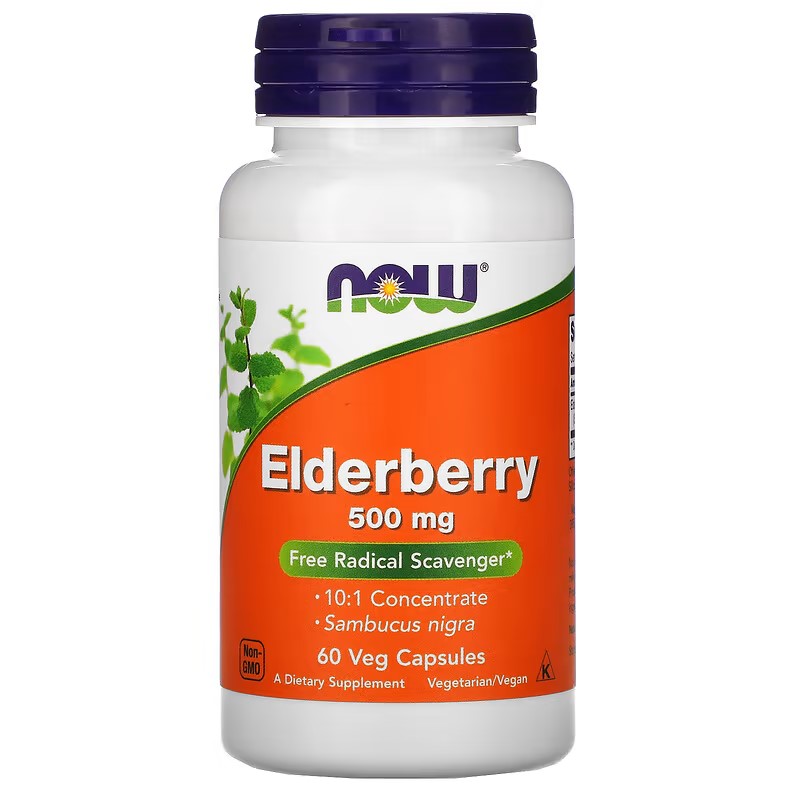
Capsules Elderberry extract is available in capsule form for easy dosing.
Tincture An alcoholic extract of elderberry.
Tea Elderberry tea can be brewed from dried elderberry flowers or berries [3].
Dose It is important to follow the dosage instructions on the product or consult a healthcare professional.
Conclusion
Elderberry is a plant with a long history in folk medicine. While there is limited scientific evidence that elderberry can cure cancer, some studies suggest they may have potential as a supplementary treatment due to their antioxidant, immunomodulatory, and anti-inflammatory properties.
As is always the case with dietary supplements, more research is needed to confirm these results and investigate elderberry’s role in cancer treatment [8]. It is always a good idea to talk to your practitioner before you start using elderberry as a supplement.
Back to Dietary supplements
Links
[1] Why you must never eat raw elderberries (Samvirke, 2025)
- Content: An article explaining the risks of consuming raw elderberries and how to prepare them safely. (Danish Language)
[2] Elderberries – why you should eat them (Femina, ej dateret)
- Content: A health-focused article highlighting the nutritional benefits and traditional uses of elderberries. (Danish Language)
[3] Elder – an ancient magical tree (Green Update, 2018)
- Content: An overview of the elder tree’s history, folklore, and medicinal properties.
[4] Flavonoids – natural compounds with antiviral and anticancer potential (PubMed, 2024)
- Content: A scientific review discussing how flavonoids found in plants like elderberry exhibit antiviral and anticancer effects.
[5] Detection of Sialic Acid to Differentiate Cervical Cancer Cell Lines Using a Sambucus nigra Lectin Biosensor (PubMed, 2024)
- Content: Research on how lectins from elderberry can be used in the detection and differentiation of cervical cancer cells.
[6] Lectins as a promising therapeutic agent for breast cancer: A review (PubMed, 2024)
- Content: A review article exploring the therapeutic potential of plant lectins, including those from Sambucus nigra, in breast cancer treatment.
[7] Use of Nutraceuticals in Elderly to Fight Inflammation and Immuno-Senescence: A Randomized Case-Control Study (PubMed, 2022)
- Content: A randomized study examining how supplements like elderberry can combat age-related inflammation and immune decline.
[8] Black Elder and Its Constituents: Molecular Mechanisms of Action Associated with Female Reproduction (PubMed, 2022)
- Content: A study focusing on the molecular mechanisms of elderberry constituents and their role in reproductive health and related conditions.
[9] Cytotoxic activity of butanolic extract from Sambucus nigra L. flowers in natura and vehiculated in micelles in bladder cancer cells and fibroblasts (PubMed, 2022)
- Content: Research demonstrating the cell-killing (cytotoxic) effects of elderberry flower extract on bladder cancer cells.
[10] Effects of Sambucus ebulus Extract on Cell Proliferation and Viability of Triple-Negative Breast Cancer: An In Vitro and In Vivo Study (PubMed, 2022)
- Content: A study (randomized) investigating how elderberry-related extracts affect the growth and viability of aggressive breast cancer cells.
Page created: Feb 4, 2025
❤
What you read on Jeg har Kræft is not a recommendation. Seek competent guidance.
