


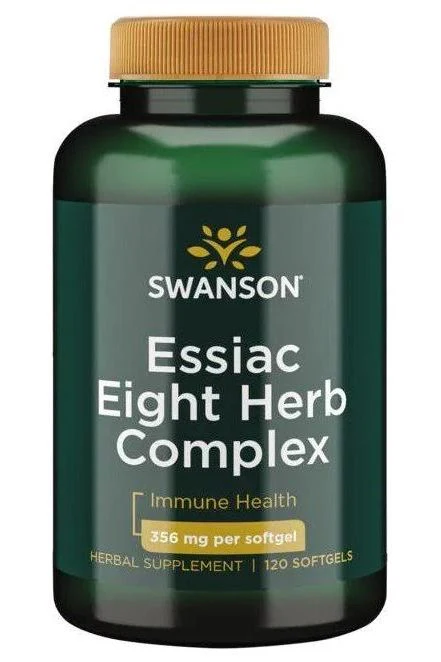
Essiac eight herbs and cancer
What is Essiac eight herbs
Essiac eight herbs is a combination of herbs often used in alternative medicine, particularly as a supplementary agent for cancer treatment. The original formula consisted of four herbs: burdock root, known for its cleansing properties; slippery elm bark, often used to soothe inflammation; sheep sorrel, which contains antioxidants; and Indian rhubarb, used for digestion. In the “eight herbs” version, several additional herbs are typically added, such as watercress, blessed thistle, red clover, and kelp, which also have known health benefits. The purpose of Essiac herbs is to support the body’s natural defenses and promote healing. However, it is important to note that scientific evidence for the effectiveness of Essiac is not conclusive, and it is recommended to consult a healthcare professional before using it as treatment [2, 3].
History
The origin of Essiac can be traced back to a Canadian nurse named Rene Caisse, who in the 1920s claimed to have received an herbal blend from an Ojibwe tribe member that was allegedly effective for treating cancer.
Caisse further developed the mixture and called it “Essiac” (her name spelled backward).
Her claims regarding Essiac’s cancer-fighting properties were controversial and lacked scientific documentation. Caisse fought against legal challenges and bans on selling Essiac, but she continued to distribute the mixture to cancer patients until her death in 1978 [1].
Since Caisse’s death, Essiac has remained popular as an alternative cancer treatment, but its effectiveness is still disputed.
Essiac contains these eight herbs
- Burdock (Arctium lappa)
- Red clover (Trifolium pratense)
- Sheep sorrel (Rumex acetosella)
- Slippery elm (Ulmus rubra)
- Watercress (Nasturtium officinale)
- Blessed thistle (Cnicus benedictus)
- Indian rhubarb (Rheum palmatum)
- Kelp (Laminaria digitata)
Effect of Essiac eight herbs
Some studies suggest that Essiac may have anti-inflammatory, antioxidant, and immune-boosting properties [3].
These properties may potentially be beneficial in cancer treatment, but more research is needed to confirm this.
Application
Essiac is typically consumed as a tea, made by mixing the herbs with hot water. It can also be taken as capsules or a tincture. The recommended dose varies depending on the brand and the individual’s needs.
Advantages
Some studies indicate that Essiac may possess the following properties, which could be beneficial in cancer treatment:
Potential anti-inflammatory, antioxidant, and immune-boosting effects [1].
Quality of life
Some smaller studies have shown that Essiac may improve the quality of life for cancer patients, for example, by reducing fatigue and pain [2].
Side effects
Side effects such as digestive upset may occur, but they are rare.
Disadvantages
Interactions
Essiac may interact with certain medications.
Safety for pregnant women, breastfeeding mothers, and individuals with certain medical conditions is unclear: consult a doctor to determine if Essiac is safe for you.
Limited research
There is limited research to support Essiac’s effectiveness against cancer.
Cancer is a complex disease that requires a comprehensive treatment plan under the guidance of a physician.
Conclusion
Essiac eight herbs is a combination of herbs used in alternative medicine, especially as a supplementary agent for cancer treatment. The original formula, developed by Canadian nurse Rene Caisse, includes four main herbs and four additional herbs, which together aim to support the body’s natural defenses and promote healing. Some studies indicate that Essiac may have anti-inflammatory, antioxidant, and immune-boosting properties, which could potentially be beneficial for cancer patients.
However, research to confirm these effects is limited, and there is also a risk of side effects and interactions with certain medications. Despite the controversial background and lack of scientific documentation of its effectiveness, Essiac remains popular among those seeking alternative approaches to cancer treatment.
Back to Dietary supplements
Links
[1] Essiac Tea for Mesothelioma (Asbestos, updated 2025)
- Content: An article describing the use of Essiac tea as an alternative treatment, its history, and potential benefits for mesothelioma patients.
[2] Essiac (Cancer Research UK, 2022)
- Content: A review from a major research organization regarding the lack of scientific evidence for Essiac’s effectiveness in curing cancer.
[3] Facts About Essiac Tea and Cancer (Mesothelioma.com, 2023)
- Content: An article covering the essential facts, ingredients, and the controversy surrounding Essiac tea in a cancer context.
[4] Essiac Tea: Benefits, Side Effects, and Dosage (Healthline, 2018)
- Content: A review of the individual herbs in Essiac tea and their known biological effects in laboratory studies.
[5] Essiac/Flor Essence (PDQ®)–Patient Version (National Cancer Institute, 2024)
- Content: An article based on information from the NCI, describing Essiac and Flor-Essence as herbal tea mixtures thought to remove toxins from the body and strengthen the immune system. The article reviews the lack of scientific documentation proving that these products can cure cancer in humans.
Page created:
Jul 8, 2024
❤
What you read on Jeg har Kræft is not a recommendation. Seek competent guidance.
