


TUDCA and cancer
What is TUDCA
TUDCA (Tauroursodeoxycholic acid) is a water-soluble bile acid that is naturally found in the body in small amounts. It is formed in the liver by conjugation of ursodeoxycholic acid (UDCA) with the amino acid taurine.
Traditionally, TUDCA has been used to treat liver diseases. And for good reason, as TUDCA has remarkable liver-protective properties. It thus plays a crucial role in maintaining liver health and function, especially for people undergoing cancer treatment, this can be significant.
In addition to protecting the liver, newer research has also pointed to potential benefits of TUDCA in connection with cancer treatment.
TUDCA’s liver-protective properties
1. Combating inflammation
Cancer treatment, especially chemotherapy, can cause significant inflammation in the liver.
TUDCA acts as a potent anti-inflammatory agent, reducing inflammation and protecting liver cells from damage.
It inhibits the production of inflammatory cytokines, signaling molecules that worsen inflammation.
By dampening the inflammation, TUDCA creates a more favorable environment for liver cells, so they can regenerate and thus function optimally.
2. Protection against cell death
Traditional cancer treatment (such as chemo- and immunotherapy, etc.) can induce apoptosis (programmed cell death) in liver cells, which leads to liver damage.
TUDCA counteracts this process by inhibiting apoptosis and protecting liver cells from destruction.
It stabilizes cell membranes and reduces oxidative stress that can trigger cell death.
This protection is essential to preserve liver function and prevent further complications during cancer treatment.
3. Improvement of bile flow
Bile is crucial for digestion and removal of toxins from the body.
Cancer and cancer treatment can disrupt bile flow and lead to accumulation of bile in the liver, which causes damage.
TUDCA stimulates the production and flow of bile, which helps remove toxins from the liver and improves digestion.
Improved bile flow reduces the strain on the liver and promotes its regeneration (healing).
4. Detoxification and regeneration
The liver plays a central role in detoxifying the body by filtering harmful substances from the blood.
Cancer treatment can overwhelm the liver and impair its detoxification capacity.
TUDCA supports the liver’s detoxification process by improving its ability to neutralize and remove toxins.
It also promotes the regeneration of liver cells, which helps restore liver function after damage caused by cancer treatment.
5. Counteracting liver damage
In addition to protecting against damage caused by cancer treatment, TUDCA can also protect the liver from other harmful factors.
It can counteract liver damage caused by medication, alcohol, environmental toxins, and fatty liver disease.
TUDCA’s versatile protective properties make it a valuable supplement for maintaining liver health during and after cancer treatment.
TUDCA’s potential in cancer treatment
In addition to protecting the liver, TUDCA has shown potential in directly combating cancer. TUDCA’s potential anti-cancer effects are primarily attributed to its ability to modulate cellular stress, inflammation, and apoptosis. Some of the presumed mechanisms of action in relation to cancer include:
Inhibition of endoplasmic reticulum (ER) stress
ER (the cell’s factory for proteins and lipids) stress occurs when the cell’s protein production exceeds the ER’s capacity to fold and modify proteins correctly. This can lead to accumulation of misfolded proteins that trigger a stress response in the cell.
Cancer cells are often exposed to ER stress due to their high metabolic activity and rapid growth.
- TUDCA has been shown to be able to reduce ER stress by improving protein folding and stabilizing the ER membrane.
- By reducing ER stress, TUDCA can potentially inhibit cancer cell growth and survival.
Increasing apoptosis in cancer cells
Apoptosis is a form of programmed cell death that is essential for removing damaged or unwanted cells.
Cancer cells often have the ability to evade apoptosis, which contributes to their uncontrolled growth.
TUDCA has been shown to be able to induce apoptosis in certain cancer cell types by modulating various apoptotic signaling pathways.
- For example, TUDCA can activate caspase enzymes, inhibit the Bcl-2 family of anti-apoptotic proteins, and increase the production of reactive oxygen species (ROS).
Anti-inflammatory effect
Chronic inflammation is a risk factor for the development of cancer, and chronic inflammation can promote tumor growth and spread.
TUDCA has been shown to have anti-inflammatory properties by inhibiting the production of inflammatory cytokines and reducing the activation of inflammatory signaling pathways.
Cancer treatment, especially chemotherapy, can cause significant inflammation in the liver.
- TUDCA acts as a potent anti-inflammatory agent, reducing inflammation and protecting liver cells from damage.
- It inhibits the production of inflammatory cytokines, signaling molecules that worsen inflammation.
- By dampening the inflammation, TUDCA creates a more favorable environment for liver cells to regenerate and function optimally.
Sensitization to chemotherapy
Chemotherapy is a common treatment for cancer, but resistance to chemotherapy is a major problem.
TUDCA has been shown to be able to increase the sensitivity of certain cancer cells to chemotherapy by modulating various mechanisms involved in chemoresistance.
- For example, TUDCA can inhibit efflux pumps (proteins that pump substances out of cells) that remove chemotherapeutic agents from cancer cells, and increase the production of ROS, which can enhance the effect of chemotherapy.
Benefits of TUDCA
Potential synergistic effect
TUDCA can potentially enhance the effect of conventional cancer treatment, such as chemotherapy and radiation therapy.
Protection against side effects
TUDCA can potentially protect against some of the side effects of cancer treatment, such as liver damage and neurotoxicity (nerve damage due to toxicity).
Improved quality of life
TUDCA can potentially alleviate some of the symptoms of cancer, such as fatigue and pain.
Disadvantages and limitations
Limited clinical evidence
There is a need for more and larger clinical studies to confirm the preclinical findings and determine the optimal dosage and use of TUDCA in cancer treatment.
Side effects
Although TUDCA is generally well tolerated, it can cause side effects in some people, such as diarrhea and stomach pain.
Interactions with medication
TUDCA can potentially interact with certain types of medication, including bile acid-binding medication and cholesterol-lowering medication.
What can happen
- Reduced effect: TUDCA can potentially reduce the effect of bile acid-binding medication and statins. This is because TUDCA itself is a bile acid, and bile acid-binding medication works by binding bile acids in the intestine to lower cholesterol. If TUDCA is taken together with bile acid-binding medication, it can reduce the medication’s ability to bind bile acids and thus the ability to lower cholesterol.
- Increased side effects: In some cases, the combination of TUDCA with these types of medication can increase the risk of side effects. For example, it can increase the risk of diarrhea.
Example with statins
If you take TUDCA together with statins, the cholesterol-lowering effect of statins may become less effective.
Preclinical and clinical studies
A number of preclinical studies (in vitro and in vivo) have shown promising results suggesting that TUDCA may have anti-cancer effects against various cancers, including liver cancer, colon cancer, breast cancer, and leukemia.
However, there is limited clinical evidence for TUDCA’s effect in humans with cancer.
Most clinical studies have focused on TUDCA’s use in the treatment of liver diseases, and there is a need for more research, including clinical studies with humans, to confirm the preclinical findings and determine the optimal dosage and use of TUDCA in cancer treatment.
Dispensing and intake
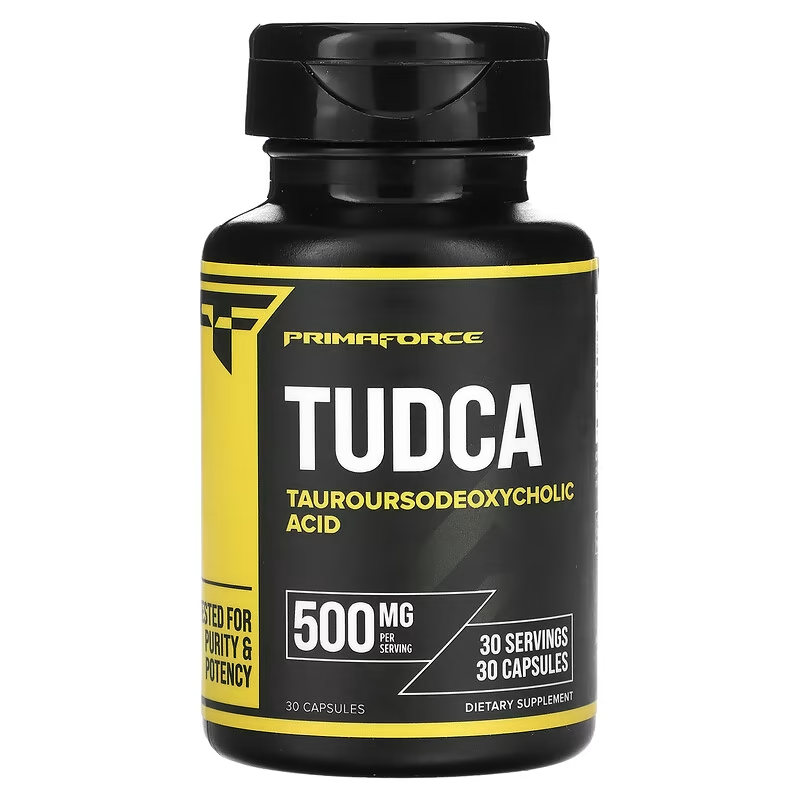
TUDCA is found primarily in dietary supplements in capsule form.
The dosage varies depending on the specific use and product.
It is important to follow the recommendations on the product and consult a qualified healthcare provider before starting on TUDCA, especially if you are taking other medication or have a chronic illness.
Conclusion
TUDCA’s liver-protective properties are crucial for cancer patients who often experience liver damage as a result of cancer treatment. By combating inflammation, protecting against cell death, improving bile flow, supporting detoxification, and promoting regeneration, TUDCA helps preserve liver function and thus also improve the quality of life for cancer patients.
TUDCA is also a promising supplement to cancer treatment with potentially cancer-inhibiting properties. However, it is important to remember that research into TUDCA for cancer treatment is still in its early stages, and more clinical evidence is needed.
TUDCA should be used in consultation with a competent healthcare provider, as it can interact with medication and cause side effects. This applies not least if you are being treated for underlying diseases such as cancer.
Back to Supplements
Links
[1] Tauroursodeoxycholic acid attenuates colitis-associated colon cancer by inhibiting nuclear factor kappaB signaling (PubMed, 2019)
- Content: In vivo study showing that TUDCA attenuates colitis-associated colon cancer by inhibiting NF-κB signaling.
[2] Protective effects of tauroursodeoxycholate against radiation-induced intestinal injury in a mouse model (PubMed, 2024)
- Content: In vivo study showing the protective effects of tauroursodeoxycholate against radiation-induced intestinal injury in a mouse model.
[3] Novel insight on IRE1 in the regulation of chondrocyte dedifferentiation through ER stress independent pathway (PubMed, 2024)
- Content: In vivo study examining the role of IRE1 in the regulation of chondrocyte dedifferentiation through an ER stress-independent pathway.
[4] Bile acid metabolism dysregulation associates with cancer cachexia: roles of liver and gut microbiome (PubMed, 2021)
- Content: In vivo study examining the association between bile acid metabolism dysregulation and cancer cachexia, focusing on the roles of the liver and gut microbiome.
[5] Mixed copper(ii)-phenanthroline complexes induce cell death of ovarian cancer cells by evoking the unfolded protein response (PubMed, 2019)
- Content: In vitro study showing that mixed copper(II)-phenanthroline complexes induce cell death of ovarian cancer cells by evoking the unfolded protein response.
[6] Rutin Suppresses EMT and Induces Mitochondrial Biogenesis via ER Stress-linked AMPK/SIRT1 Signaling in Prostate Cancer Cells (PubMed, 2026) Content: In vitro study showing that rutin suppresses EMT and induces mitochondrial biogenesis via ER stress-linked AMPK/SIRT1 signaling in prostate cancer cells.
[7] The bile acid TUDCA promotes chemoresistance and predicts survival through MAPK signaling in pancreatic ductal adenocarcinoma (PubMed, 2026)
- Content: In vivo study showing that the bile acid TUDCA promotes chemoresistance and predicts survival through MAPK signaling in pancreatic ductal adenocarcinoma.
[8] Combination treatment with epibrassinolide overcomes tamoxifen resistance in breast cancer cells via endoplasmic reticulum stress induction (PubMed, 2025)
- Content: In vitro study showing that combination treatment with epibrassinolide overcomes tamoxifen resistance in breast cancer cells via endoplasmic reticulum stress induction.
Page created: January 15, 2025, Last revised May 6, 2026
❤
What you read on “Jeg har Kræft” is not a recommendation. Seek competent guidance.
