


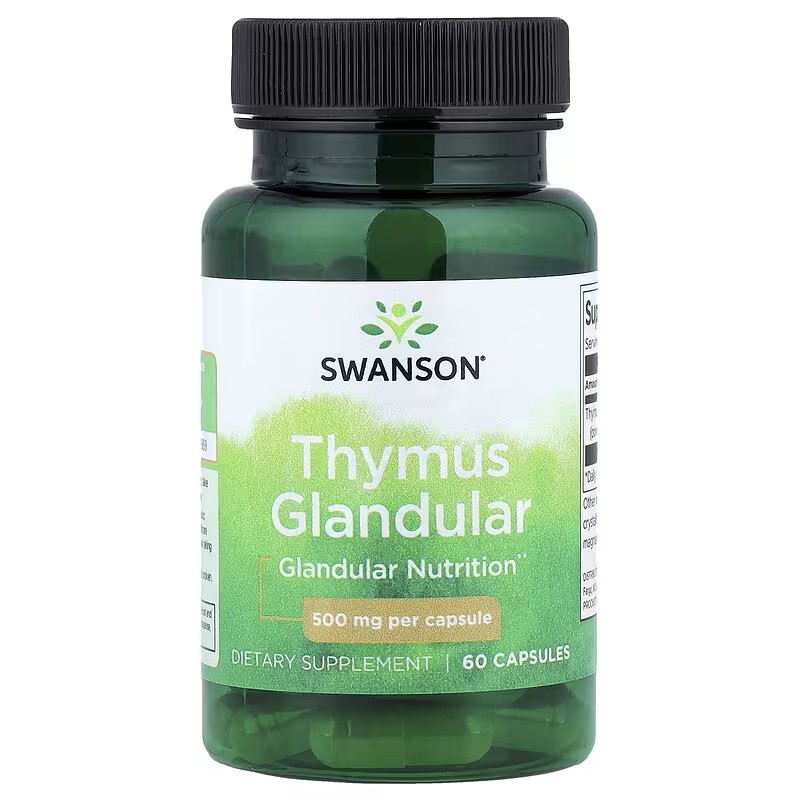
Thymus extract and cancer
Summary of thymus extract
Effect:
- Thymus extract contains peptides (small proteins) from the thymus that support and modulate the function of the immune system, particularly the maturation and activation of T-cells, which are central to the body’s defense.
Potential in cancer:
- It is used as a complementary measure to help rebuild the immune system when it is weakened by cancer or conventional treatment (chemo/radiation), which can improve tolerance to primary efforts and increase well-being.
Main limitation:
- The quality and concentration of the active peptides in the extracts can vary significantly between manufacturers, and most products are of animal origin (typically calf thymus).
What is thymus extract
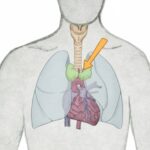
Thymus extract is a biological preparation made from the thymus gland, also known as the thymus. This gland is a small organ located in the chest cavity just behind the sternum, and it plays an absolutely central role in the development of the immune system, especially in childhood.
The extracts are typically made by purifying and extracting the active substances in thymus glands from young animals, most often calves (bovine extract). The reason for using thymus glands from young animals is that the thymus gland is most active in young individuals and shrinks significantly with age, thereby reducing its function.
The active components in thymus extract are a number of small proteins called peptides, including thymosin (especially Thymosin Alpha 1), thymulin, and thymopoietin. These peptides function as signaling molecules or hormones for the immune system.
History
It was not until the 1960s that the thymus gland’s decisive role for the immune system was established. It was discovered that the gland is the “school” for a type of white blood cells called T-lymphocytes (or T-cells; the “T” stands for thymus). In the 1970s and 1980s, researchers in Europe began developing methods to extract the active peptides from animal thymus glands. These extracts were used to treat conditions with impaired immune function.
Since then, thymus extracts and the isolated peptides (such as the pharmaceutical substance Thymosin Alpha 1, which is a synthetic version) have been used in complementary cancer treatment. The purpose has been to counteract the immune weakening that both the cancer disease itself and conventional treatments cause.
Mechanisms of action
The mechanisms of action of thymus extract are centered around restoring and modulating the function of the immune system, primarily the T-cell system. The extract does not merely boost the immune system but helps regulate and “train” it.
Maturation of T-cells
It is in the thymus gland that stem cells from the bone marrow mature into functional T-cells. T-cells are responsible for what is called cell-mediated immunity – the ability to recognize and kill cells that are infected with viruses or have become cancer cells. The thymus peptides in the extract, especially thymulin, function as the necessary signals that drive this maturation process. When thymus function is weakened (with age or due to disease), the production of mature T-cells decreases. The extract provides these signals externally.
Regulation of T-helper cells
T-helper cells (Th) are crucial for the balance in the immune system and are roughly divided into Th1 and Th2.
- Th1 response: Is crucial for fighting cancer and viruses (cell-mediated immunity).
- Th2 response: Is important for fighting parasites and is involved in allergy.
In many people with cancer, there is a shift away from the beneficial Th1 response towards a dominant Th2 response, which weakens the body’s ability to attack cancer cells. Peptides in thymus extract, especially Thymosin Alpha 1, have been shown to be able to push the balance back towards a Th1 response [1].
Activation of killer cells
The extract stimulates the activity of both cytotoxic T-lymphocytes (T-killer cells) and NK cells (Natural Killer cells). These two cell types are the body’s frontline soldiers, specialized in recognizing and inducing apoptosis (programmed cell death) in cancer cells.
Restoration after bone marrow suppression
Chemotherapy and radiation therapy affect all cells that divide rapidly. This includes cancer cells, but unfortunately also the cells in the bone marrow, where all immune cells are formed (myelosuppression), as well as the cells in hair follicles and mucous membranes. Thymus peptides have been shown to be able to protect the bone marrow to some extent and accelerate the recovery of white blood cells (lymphocytes and neutrophils) after completed treatment [2].
Potential in cancer

The potential of thymus extract in cancer treatment lies solely in its role as a complementary (adjuvant) treatment. It is not a cancer treatment in itself, but a support for the body during the pressure that the disease and conventional treatments entail.
Support during chemotherapy and radiation therapy
The primary use is to counteract the severe immune weakening (immunosuppression) caused by chemotherapy and radiation therapy. When T-cell counts drop drastically, one becomes extremely vulnerable to infections.
By adding thymus peptides, one can help the body rebuild its T-cell defense more quickly. This can mean fewer infections, fewer interruptions in the treatment course, and better general condition [2].
Reduction of infection risk
One of the most frequent causes of death during intensive chemotherapy is not the cancer itself, but infections (such as pneumonia or sepsis) that occur because the immune system is disrupted. By maintaining a higher number of functional T-cells and NK cells, thymus extract can help reduce the risk of these life-threatening infections.
Improved quality of life
By reducing the side effects of conventional treatment, reducing fatigue, and strengthening the body’s resistance, thymus extract can contribute to a significantly improved quality of life during an otherwise difficult treatment course. This can provide the necessary energy to complete the planned treatment.
Synergy with other treatments
Recent research (especially on the isolated peptide Thymosin Alpha 1) is investigating how it can work together with modern immunotherapies such as checkpoint inhibitors.
The theory is that while checkpoint inhibitors “remove the brake” from T-cells, thymus peptides can “step on the accelerator” by increasing the number and activity of the same T-cells, creating a stronger combined attack on the cancer [4].
Benefits of thymus extract

In addition to the already mentioned mechanisms, thymus extract has benefits that distinguish it from other immune-stimulating agents.
Broad-spectrum immune regulation
Unlike pharmaceutical agents that often target a single receptor or a single signaling molecule (such as IL-2 or G-CSF), thymus extract offers a cocktail of biological peptides. This provides a broader and more balanced regulation. It does not “force” the system in one direction, but offers the building blocks the system lacks to normalize itself (e.g., Th1/Th2 balance) [3].
High safety profile
A significant advantage of thymus extract as a biological supplement is that it is generally very well tolerated. When used as described, side effects are rare and typically described as mild. This contributes to good quality of life during a course where one may already be burdened by conventional treatments.
Support of “immune aging”
Cancer is most often seen in the elderly, where the thymus gland has already shrunk and T-cell production is reduced (immunosenescence). The addition of thymus peptides can be seen as a form of “replacement therapy” for the function that the gland can no longer perform itself, which is particularly relevant for this group.
Disadvantages and limitations

There are significant reservations and limitations to the use of thymus extract that are important to understand.
Lack of standardization
The biggest disadvantage is the variation in products. Since we are talking about a biological extract and not a single, pure substance, the concentration of the active peptides (such as Thymosin Alpha 1) can vary enormously from brand to brand. Some products on the dietary supplement market may contain only negligible amounts of the active substances [5].
Animal origin
The extracts come from calf thymus glands. This raises ethical considerations for vegans or vegetarians. In addition, there is a theoretical, albeit extremely small, risk of disease transmission or allergic reactions due to the animal proteins. High-quality products are purified to minimize this risk.
Degradation with oral intake
The active substances are peptides (proteins). When taken as capsules or tablets, there is a significant risk that they are broken down by stomach acid and digestive enzymes long before they reach the bloodstream. This is why the most potent preparations (often used in clinics in Germany) are administered as injections.
Not a standalone treatment
It should be emphasized that thymus extract cannot treat cancer alone. It has no documented ability to remove tumors when used in isolation. Its role is exclusively complementary – to support the body and the immune system.
Clinical trials

Most of the research on whole thymus extracts is of older date (1980s and 1990s), primarily from Europe. These studies generally showed improved tolerance to chemotherapy and fewer infections [2].
More recent research has focused on the most well-known active component: the synthetically produced peptide Thymosin Alpha 1 (Tα1), which is sold as the drug Zadaxin in many countries (though not as standard in Denmark).
Studies with Tα1 have shown promising results. For example, Tα1 in combination with chemotherapy has shown improved survival and immune response in people with advanced non-small cell lung cancer [4] and malignant melanoma (skin cancer). These studies confirm that the principle behind thymus peptides is valid. However, research on the extracts themselves is less robust by modern standards.
Safety

Thymus extract is generally considered to be very safe, especially when taken orally as a dietary supplement (where its effect may conversely be neutralized by stomach acid).
- Side effects: Are rare. With injection, local reactions (redness, soreness) at the injection site can occur. Allergic reactions to the animal proteins can occur but are uncommon, especially with high-purity products.
- Autoimmune diseases: People with active autoimmune diseases (such as rheumatoid arthritis, lupus, or multiple sclerosis) should be cautious. These conditions involve an overactive T-cell system, and further stimulation is theoretically undesirable.
- Organ transplantation: People who take immunosuppressive medication after an organ transplant must not take thymus extract, as it counteracts the desired effect of the medication.
Dispensing and use

Thymus extract is found in different forms, whose effectiveness and use vary:
- Oral capsules/tablets: The most common form as a dietary supplement. It is the easiest to use, but as mentioned, there is uncertainty about how much of the active peptides survive digestion and are absorbed intact.
- Subcutaneous injections (under the skin): This is the form used in clinical studies and in clinics (especially in Germany).
- It ensures 100% absorption of the peptides into the bloodstream and is the most potent form of administration.
- Freeze-dried (lyophilized) extracts: Often a purer form that is dissolved in liquid before use (either for injection or oral intake).
- Combination supplements: Often seen combined with zinc. Zinc is an essential mineral for thymus function, and the peptide thymulin is dependent on zinc to be biologically active.
Conclusion

Thymus extract is a biological, immune-modulating preparation that has been used in complementary cancer treatment since the 1970s-80s. Its primary value lies in the ability to deliver the peptides that the body uses to mature and activate its T-cell defense.
In a cancer context, it is used to counteract the immune weakening that both the disease and conventional treatment cause. By supporting the rebuilding of T-cells, the extract can help reduce the risk of infection, improve tolerance to chemotherapy and radiation, and thus contribute to better quality of life during the course.
Although the research on the whole extracts is of older date, robust studies of the isolated component Thymosin Alpha 1 support the fundamental mechanisms of action. The biggest challenge for the consumer is the lack of standardization, which makes the choice of a quality product crucial to achieve an effect.
Back to Supplements
Links
[1] Thymosin alpha 1: A comprehensive review of the literature (NIH/PubMed Central, 2020)
- Content: A scientific review of the peptide Thymosin Alpha 1 (Tα1). The article describes its ability to modify, improve, and restore immune function, which is relevant for its potential in cancer treatment.
[2] Thymus-derived hormonal and cellular control of cancer (NIH/PubMed Central, 2023)
- Content: A scientific review article discussing how the thymus gland, through its hormones and T-cells, plays a complex role in controlling cancer development.
[3] Review of Thymic Peptides and Hormones: From Their Identification to Their Therapeutic Applications (SpringerLink, 2025)
- Content: A new review article (2024) discussing structure, biological properties, mechanisms of action, and therapeutic applications for the most important thymus hormones.
[4] A preliminary analysis of integrating thymosin α1 into concurrent chemoradiotherapy and consolidative immunotherapy for unresectable stage III non-small cell lung cancer (NIH/PubMed Central, 2025)
- Content: A new analysis (2025) showing that long-term use of Thymosin α1 (Tα1) together with chemotherapy and immunotherapy significantly improved survival in people with lung cancer.
[5] Clinical Experience of Thymic Regeneration with Thymus Extract (Herald Scholarly Open Access, 2023)
- Content: An article (2023) discussing clinical experience with thymus extract, and how it can stimulate T-cell production and improve immune function, which can lead to better outcomes.
Page created: November 5, 2025
❤
What you read on “Jeg har Kræft” is not a recommendation. Seek competent guidance.
