


IP6 – Inositol Hexaphosphate Phytic Acid and cancer
Summary of IP6
Effect:
- IP6 (phytic acid) is a natural substance from grains and beans that acts as a powerful antioxidant. It helps neutralize harmful free radicals and can dampen inflammation in the body [1, 3, 12].
Potential in cancer:
- Studies (especially in laboratories and animals) suggest that IP6 can slow down the growth of cancer cells, activate the body’s own “suicide program” (apoptosis) in cancer cells, and strengthen the immune system’s ‘killer cells’ (NK cells), which are specialized in fighting cancer cells [1, 2, 4, 5, 12].
Primary limitation:
- The most well-known disadvantage of the substance is that it can bind important minerals (such as iron, zinc, and calcium) in the intestine, which can decrease their absorption [6]. Furthermore, large-scale human studies are lacking [5].
What is IP6
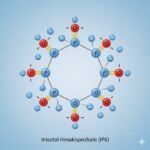
Inositol hexaphosphate (IP6), also commonly known as phytic acid, is a naturally occurring carbohydrate substance found in almost all mammalian cells as well as in many plants. It is particularly abundant in fiber-rich foods like grains, legumes, nuts, and seeds.
IP6 consists of an inositol molecule (a vitamin-like substance also called vitamin B8, although it is not a true vitamin) bound to six phosphate groups.
History
IP6 was identified in the late 1800s but was primarily considered an “anti-nutrient” for nearly a century. The focus was exclusively on its ability to bind minerals in the diet and thus inhibit their absorption.
This perspective changed significantly in the 1980s. Research demonstrated that IP6 possessed strong anti-cancer properties [7, 11]. This discovery shifted the focus from IP6’s negative reputation to its potential as a therapeutically interesting molecule.
Mechanisms of action
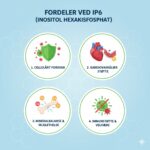
IP6 exerts its effects through a remarkably broad spectrum of biochemical processes. Its potential stems not from a single mechanism, but from its ability to intervene in many of the core processes that go wrong during cancer development [1, 12].
Antioxidant effect
IP6 is an unusually powerful antioxidant. One of the most harmful types of free radicals in the body is the hydroxyl radical. Its formation is often promoted by the presence of free transition metals, especially iron, through a process called the Fenton reaction.
IP6’s strong ability to bind (chelate) iron effectively blocks this reaction and thus neutralizes the formation of these harmful radicals [1]. This mechanism protects cellular DNA, proteins, and fats in the cell membrane from oxidative damage, which is a primary driver for mutations and the initiation of cancer [12].
Regulation of cell growth and cell cycle
Cancer is characterized by uncontrolled cell division. IP6 has been shown to intervene in and normalize this process. It can affect the genes that function as “brakes” in the cell cycle [2]. Specifically, IP6 can increase the activity of tumor suppressor genes such as p53 and p21 [12].
When these genes are active, they send signals to the cell to stop division, allowing time for DNA repair or, if the damage is too great, to initiate cell death. In many cancer cells, these brakes are disabled, but IP6 appears to help reactivate them [2].
Promotion of apoptosis (programmed cell death)
Healthy cells have a built-in mechanism to commit suicide (apoptosis) when they become old or seriously damaged. Cancer cells are masters at avoiding this process.
IP6 has been shown to force cancer cells back into the apoptosis program [2]. This occurs, among other things, by IP6 affecting the balance between proteins that promote survival (like Bcl-2) and proteins that promote death (like BAX). IP6 pushes the balance toward cell death specifically in cancer cells, while leaving healthy cells alone [12].
Inhibition of angiogenesis
A tumor cannot grow larger than a pinhead without its own blood supply, a process called angiogenesis. To obtain nutrients and oxygen, the tumor emits signals, e.g., the growth factor VEGF (Vascular Endothelial Growth Factor), to entice new blood vessels to grow into it.
IP6 has shown in studies to be able to inhibit the production of VEGF and other pro-angiogenic factors. Without an adequate blood supply, the tumor is “starved” and thus prevented from growing and spreading.
Modulation of signaling pathways
Inside the cells is a complex network of signaling pathways that control everything from growth to survival. In cancer cells, many of these signaling pathways are “hijacked” and constantly active. IP6 and its less phosphorylated forms (like IP3, IP4, IP5) function as important signaling molecules [8].
They can intervene and dampen overactive signaling pathways driving cancer, including the critical PI3K/Akt signaling pathway [4, 12]. This pathway is involved in almost all aspects of cancer cell survival and resistance to treatment.
Anti-inflammatory effect
Chronic inflammation is closely linked to the development of cancer. IP6 has been shown to have potent anti-inflammatory properties [3]. Among other things, it can inhibit the activation of NF-kB (Nuclear Factor-kappa B), which is a central “master switch” for inflammation in the body [1].
By dampening NF-kB and related inflammatory processes, IP6 can contribute to reducing the environment in which cancer cells thrive [12].
Strengthening the immune system
IP6 has been shown to modulate and strengthen the immune system. One of the most striking effects is its ability to increase the activity of Natural Killer (NK) cells [1]. NK cells are a vital part of the innate immune system and constitute the body’s “first line of defense” against both virus-infected cells and cancer cells.
By increasing NK cell activity, IP6 can potentially improve the body’s own ability to recognize and eliminate cancer cells [12].
Potential in cancer
Based on the many mechanisms of action, IP6 has been investigated intensively for its potential as a supplementary cancer treatment [7, 10].
Synergy with chemotherapy
One of the most promising areas is IP6’s ability to work together with (create synergy with) conventional chemotherapy [2]. Preclinical studies (in vitro and in vivo) have shown that IP6 can make cancer cells more sensitive to chemotherapeutic agents such as doxorubicin, cisplatin, and tamoxifen [4, 12].
This phenomenon is called “chemo-sensitization.” The potential is that by adding IP6, one might achieve a better effect from chemotherapy or even use lower doses, which could theoretically decrease the side effects of treatment.
Protection of healthy cells
While IP6 appears to make cancer cells more vulnerable, research suggests it has the opposite effect on healthy cells. Its ability to bind excess iron (as described under mechanisms of action) can help protect normal tissues (like heart muscle, kidneys, and bone marrow) from the toxic damage that chemotherapy and radiation therapy can cause [12].
It thus appears to selectively damage cancer cells while protecting healthy ones.
Inhibition of metastasis
The spread of cancer (metastasis) is the primary cause of mortality associated with cancer. To spread, cancer cells must detach from the original tumor, move (migrate), and invade new tissue.
IP6 has shown in animal models to be able to inhibit these processes [5]. This is believed to happen by inhibiting the enzymes (matrix metalloproteinases) that cancer cells use to “eat” through tissue barriers, as well as by affecting the cells’ internal skeleton (cytoskeleton) so they become less mobile [2].
Broad-spectrum potential
Research has shown the effect of IP6 across a wide range of cancer types in the laboratory [11, 12]. This includes breast cancer, prostate cancer, colon cancer, lung cancer, liver cancer, pancreatic cancer, and leukemia.
This broad-spectrum effect suggests that IP6 targets very fundamental and common mechanisms in cancer cells, rather than a specific type-dependent vulnerability.
Advantages of IP6
In addition to the direct cancer-related mechanisms, IP6 has other health benefits that may be relevant.
Prevention of kidney stones
A well-documented and recognized benefit of IP6 (phytic acid) is its ability to prevent the formation of kidney stones. It functions as a strong natural inhibitor of the crystallization of calcium oxalate and calcium phosphate in the urine, which are the most common types of kidney stones.
Cardiovascular health
Through its antioxidant and anti-inflammatory properties, IP6 can contribute to protecting the heart and blood vessels [1]. It can help prevent the oxidation of LDL cholesterol (a key process in atherosclerosis) and has also shown a mild blood-thinning effect by inhibiting platelet aggregation, which can reduce the risk of blood clots.
Disadvantages and limitations
Despite the great potential, there are important limitations and disadvantages to IP6 that one must be aware of [6].
Mineral binding (chelation)
The most significant disadvantage is what the substance was originally known for: its ability to bind minerals. IP6 can form insoluble complexes with minerals like zinc, iron, calcium, and magnesium in the gastrointestinal tract [6].
This means that if you consume high doses of IP6 supplements with food, you may reduce the body’s absorption of these vital minerals from the meal.
Risk of mineral deficiency
With long-term use of high doses of IP6 as a supplement, there is a real risk of developing mineral deficiency, especially zinc and iron deficiency. This is particularly critical if you already have low stores, e.g., due to cancer treatment, decreased appetite, or anemia. It is therefore crucial to manage this risk.
Limited absorption (bioavailability)
The absorption of intact IP6 from the intestine into the bloodstream is relatively limited [8]. A significant portion of the IP6 ingested remains in the intestine or is broken down by gut bacteria into inositol and smaller phosphates.
Although these breakdown products also have biological activity, the limited absorption raises questions about what concentrations of the IP6 molecule itself are actually achieved in the body’s tissues and tumors.
Lack of large clinical studies
The overriding limitation in a clinical context is the lack of large, randomized, placebo-controlled clinical studies (Phase III) in humans [5]. The vast majority of the convincing data stems from in vitro and in vivo (typically mouse) studies [12]. Without large human studies, it is impossible to establish the real effect, optimal dosage, and IP6’s place in cancer treatment.
IP6 in food vs. as a supplement
Is it possible to eat your way to the same effect? This is a central question, as IP6 (phytic acid) is found in large amounts in fiber-rich foods like grains, legumes, nuts, and seeds.
The answer, however, is no. You cannot achieve the same therapeutic, systemic effect from food as sought in a concentrated supplement [9].
The two are not comparable. Here is the decisive difference:
1. The purpose of IP6 in food
An “anti-nutrient” to be neutralized
- In its natural form in plants, IP6 is a disadvantage for human nutrition. Its strong ability to bind minerals (like iron, zinc, and calcium) means it “steals” these vital nutrients from the meal and prevents the body from absorbing them.
- This is one of the reasons for our traditional cooking methods—such as soaking (beans), fermenting (sourdough), and sprouting. The intention is specifically to destroy the IP6 molecule.
- These methods activate the enzyme phytase, which is found naturally in the grain. Phytase breaks down IP6 by removing its phosphate groups. When this happens, IP6 loses its ability to bind minerals. This is good for nutrition, but it also means the molecule loses precisely the structure that gives it its unique, systemic effect.
2. The purpose of IP6 as a supplement
An intact effect to be preserved
- When taking an IP6 supplement, the goal is the exact opposite. You ingest a highly concentrated dose of the intact IP6 molecule. The goal is to get this intact molecule absorbed into the bloodstream so it can perform its specific tasks in the body: strengthening the immune system’s killer cells (NK cells) and acting as a powerful antioxidant (by binding harmful, free iron systemically) [8].
- This is also why the supplement must be taken on an empty stomach. If taken with food, it would merely act as an “anti-nutrient” and bind all the minerals from the meal.
This means
You cannot eat your way to the therapeutic effect of IP6. The IP6 you get from prepared food is largely already broken down and neutralized (and this is appropriate nutritionally) to release the meal’s minerals. The potent, systemic effect comes exclusively from the intact, concentrated IP6 molecule, which can only be obtained via a supplement taken correctly on an empty stomach [7, 10, 11].
IP6 vs. Inositol
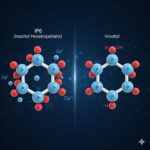
Although the names are often used interchangeably and the substances are closely related chemically, IP6 and Inositol are two different molecules with different primary roles in the body.
Inositol (the base molecule)
Inositol (specifically myo-inositol) is a vitamin-like substance, also known as vitamin B8. Its absolute most important function is to act as an intracellular signaling substance that helps transmit messages inside cells. It is a fundamental building block in the cells’ communication system.
This signaling role is particularly crucial for the action of neurotransmitters in the brain, such as serotonin and dopamine. Therefore, Inositol is closely linked to the function of the nervous system, mood balance, and mental calm.
It is also a central component in the body’s insulin signaling, which is why it is often used to support stable blood sugar and in managing hormonal disturbances in women (such as polycystic ovary syndrome, PCOS).
IP6 (Inositol Hexaphosphate)
IP6 is a more complex version of the molecule. It consists of an Inositol molecule with six phosphate groups attached. In nature, this substance is known as phytic acid, found in fiber-rich grain products, nuts, and legumes.
The six phosphate groups give IP6 entirely different properties:
- Powerful iron binder: IP6 is one of the most potent natural iron binders. This ability makes it a strong antioxidant as it neutralizes free iron, which can otherwise create harmful free radicals [8]. This mechanism is the basis for its use in protecting cells and supporting cardiovascular health.
- Immune modulator: Research has shown that IP6 has the ability to modulate and strengthen the immune system, especially by increasing the activity of the body’s so-called ‘killer cells’ (Natural Killer (NK) cells). These are specialized immune cells crucial for the body’s defense against abnormal cells [8].
Summary
| Feature | Inositol (base molecule) | IP6 (Inositol hexaphosphate) |
| Primary role | Signaling substance (messenger) | Antioxidant (via iron binding) & Immune modulator |
| Main focus | Nervous system, hjernefunktion, humør, insulinfølsomhed | Immune system (NK-cells), heart protection, cell protection |
| Found as | Often “Inositol” or “Myo-Inositol” | Often “IP6” or “IP-6 & Inositol” (the two are often sold together) |
Where Inositol is a signaling substance for nerves and metabolism, IP6 is an antioxidant and immune modulator. Although IP6 is broken down into Inositol in the body, the IP6 molecule itself has its own unique effects.
The two are often sold in a combined dietary supplement (“IP6 & Inositol”), as research suggests they work synergistically [7].
Clinical studies
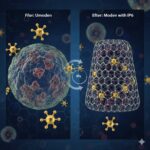
Research in humans is in a much earlier phase than preclinical research. A number of small pilot studies and Phase I/II studies have been performed, primarily focusing on safety and quality of life [5].
A frequently cited study investigated the combination of IP6 and inositol in women with breast cancer receiving chemotherapy [2]. The results were positive and indicated that the women taking the supplement experienced a significantly better quality of life and fewer side effects, such as nausea, fatigue, and depression, compared to the group receiving a placebo.
Other small studies have looked at biomarkers in men with prostate cancer. These have suggested that IP6 may affect the cancer’s progression, but the studies were too small to draw conclusions about survival.
There is a pressing need for larger and better-designed clinical studies to validate the promising results from laboratory and animal experiments [5, 12].
Safety

IP6 is generally considered a very safe substance with low toxicity, reflecting its status as a natural and abundant part of a fiber-rich diet [12].
The primary safety concerns are exclusively related to the mineral-binding effect mentioned above [6]. This is not a toxic effect, but a nutritional interaction. Individuals with diagnosed mineral deficiencies, especially iron deficiency anemia or zinc deficiency, should exercise great caution and only use IP6 in consultation with a practitioner who can monitor their mineral status.
Due to the mild blood-thinning effect (inhibition of platelet aggregation), there is a theoretical risk of interaction with blood-thinning medications like warfarin or clopidogrel. This should be discussed with the responsible practitioner.
Dispensing and application
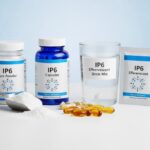
IP6 is taken as a dietary supplement and is most often found in combination with Inositol (myo-inositol). Research suggests the two substances work synergistically and create lower inositol phosphates (like IP3) that have important signaling functions in cells [5, 7].
- Form: Typically sold as capsules or powder under names like “IP6 & Inositol.”
- Dosage: There is no official standard dosage. In clinical studies and protocols, doses vary greatly, often from 1 to 8 grams of IP6 daily [12]. The dose is typically divided into 2-3 times during the day.
- Timing: To maximize absorption and, most importantly, to minimize binding to minerals in the diet, IP6 must be taken on an empty stomach. This means at least 30-60 minutes before a meal or 2 hours after.
- Mineral supplements: Due to the chelating effect, it is strongly advisable to supplement with a high-quality multimineral supplement, especially focusing on zinc, iron (if needed), and calcium. To avoid IP6 binding the minerals from the supplement, they must be taken at completely different times of the day (e.g., IP6 morning and evening, minerals midday).
- Starting out: It is sensible to start with a lower dose and gradually increase it over a couple of weeks to assess the body’s tolerance. Mild gastrointestinal complaints may occur in some individuals but are rare.
Conclusion

IP6 (phytic acid) is a remarkable natural substance that has undergone a transformation from being known as an “anti-nutrient” to being a highly valued molecule in health research. Its potential in the context of cancer is founded on extensive preclinical research showing an impressive ability to intervene in cancer cells’ most fundamental processes, such as growth, survival, and inflammation [1, 2, 12].
The most promising potential lies in its use as a supplementary treatment that can enhance the effect of chemotherapy and radiation while potentially protecting healthy cells from the treatment’s harmful side effects [2, 4].
The primary and most important limitation is the substance’s ability to bind minerals, requiring careful management and timing of supplements [6]. Furthermore, the lack of large clinical studies in humans is the decisive barrier separating IP6 from being a promising substance in the laboratory to becoming a recognized supplementary treatment [5, 12].
See also Antioxidants – for and against
Back to Dietary supplements
Links
[1] Cellular and Molecular Activities of IP6 in Disease Prevention (National Institutes of Health, 2023)
- Content: A scientific review article describing how IP6 works at the cellular level. It reviews the substance’s anti-inflammatory properties and its ability to modulate the immune system.
[2] Inositol Hexaphosphate (IP6) and Colon Cancer (MDPI, 2020)
- Content: A scientific article showing how IP6 (combined with Inositol) enhances the cancer-inhibiting effect of chemotherapy, controls metastasis, and improves quality of life in cancer patients.
[3] Phytic acid and its interactions in food components, health benefits, and applications: A comprehensive review (ScienceDirect.com, 2023)
- Content: A scientific review article discussing the role of phytic acid. It highlights the substance’s beneficial effects, including its anti-inflammatory properties and ability to trap free radicals.
[4] Inositol hexaphosphate suppresses colorectal cancer cell proliferation via the Akt/GSK-3β/β-catenin signaling cascade in a 1,2-dimethylhydrazine-induced rat model (ScienceDirect.com, 2017)
- Content: An in vivo animal study showing that IP6 inhibits cell growth (proliferation) in colon cancer in rats. The study specifies that this occurs by affecting a central signaling pathway.
[5] IP6 reduces colorectal cancer metastasis by mediating the interaction of gut microbiota with host genes (Frontiers, 2022)
- Content: An in vivo animal study showing that a combination of IP6 and Inositol inhibits liver metastasis from colon cancer in mice.
[6] Review of the beneficial and anti-nutritional qualities of phytic acid (ScienceDirect.com, 2021)
- Content: A scientific review article reviewing the properties of phytic acid, covering both its positive health effects and its role as an “anti-nutrient.”
[7] Cancer inhibition by inositol hexaphosphate (IP6) and inositol: from laboratory to clinic (PubMed, 2003)
- Content: A review article by Vucenik and Shamsuddin summarizing the preclinical data and arguing for the potential in clinical trials.
[8] Metabolism and cellular functions of IP6: a review (PubMed, 1999)
- Content: A review by Shamsuddin specifically addressing how IP6 is absorbed and metabolized, reaching distant organs and tumors.
[9] Mammary tumor inhibition by IP6: a review (PubMed, 1999)
- Content: A review article by Shamsuddin and Vucenik. This is central to the discussion about IP6 supplements vs. dietary intake, concluding that pure IP6 is significantly more effective than a high-fiber diet.
[10] Inositol Hexaphosphate (IP6) and Colon Cancer: From Concepts and First Experiments to Clinical Application (PubMed, 2020)
- Content: A more recent review article by Vucenik summarizing decades of research into IP6 and colon cancer and its role as a supplementary treatment.
[11] IP6: a novel anti-cancer agent (PubMed, 1997)
- Content: One of the early, fundamental review articles by Shamsuddin describing how IP6 promotes differentiation (maturation) of cancer cells.
[12] Cellular and Molecular Activities of IP6 in Disease Prevention and Therapy (PubMed Central, 2023)
- Content: A comprehensive scientific review article reviewing the cellular mechanisms of IP6. It confirms the use of very high doses in clinical cancer trials and its anti-cancer properties.
Page created: Oct 28, 2025. Last revised: Apr 30, 2026.
❤
What you read on Jeg har Kræft is not a recommendation. Seek competent guidance.
