


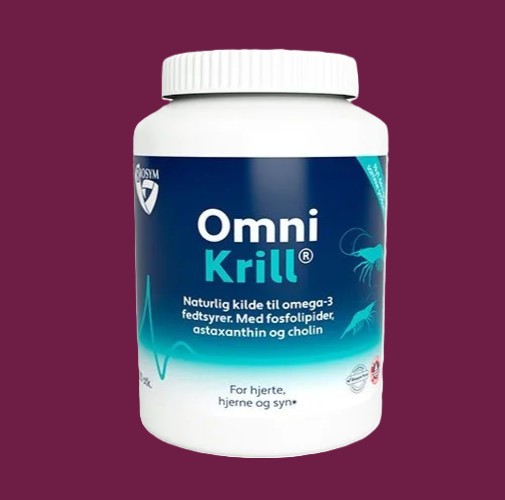
Krill oil and cancer
Summary of Krill oil
Effect:
- Krill oil provides omega-3 (EPA/DHA) bound to phospholipids, which is believed to offer better and gentler absorption than fish oil. The oil also contains the powerful antioxidant astaxanthin [3, 4].
Potential in cancer:
- The oil has a strong anti-inflammatory effect and fights oxidative stress, two conditions that can promote cancer. Studies in test tubes and animal models have shown that krill oil can inhibit cancer cell growth and induce cell death [1, 2].
Primary limitation:
- Individuals with shellfish allergies must not consume krill oil. It can also increase bleeding tendency and should be used with caution alongside blood-thinning medication [5].
What is Krill oil

Krill oil is an oil extracted from Antarctic krill (Euphausia superba), a small, shrimp-like crustacean that lives in large swarms in the cold waters surrounding Antarctica. The oil is particularly valued because it contains a unique combination of health-promoting substances.
The primary active components in krill oil are:
- Omega-3 fatty acids (EPA and DHA): These are the same essential fatty acids found in fish oil [4].
- Phospholipids: Unlike fish oil, where omega-3 fatty acids are primarily bound as triglycerides, a large portion of omega-3 in krill oil is bound to phospholipids. Phospholipids are a fundamental building block of all cell membranes in the body.
- Astaxanthin: A powerful antioxidant from the carotenoid family, which gives krill (and thus the oil) its characteristic red color. Astaxanthin protects the delicate omega-3 fatty acids in the oil from oxidation [3, 4].
- Choline: A small amount of choline is naturally bound to the phospholipid structure, which is a nutrient important for liver and brain function.
The difference in structure (phospholipids vs. triglycerides) is believed to be significant for how effectively the body can absorb and utilize omega-3 fatty acids.
History
Commercial harvesting of krill began in the 1960s and 70s, originally led by the Soviet Union and Japan. In the first decades, krill was primarily used for animal feed (especially in aquaculture for fish farming) and to a lesser extent as a food product in Japan. It is only within the last couple of decades that krill oil as a dietary supplement for humans has gained widespread use.
This interest arose in step with the increasing understanding of the importance of omega-3 fatty acids and the recognition of the potential advantage of the phospholipid form and the natural content of astaxanthin.
Mechanisms of action
The effects of krill oil are attributed to the interaction between its three main components: phospholipid-bound omega-3, astaxanthin, and choline.
Phospholipid-based omega-3
The omega-3 fatty acids EPA (eicosapentaenoic acid) and DHA (docosahexaenoic acid) are essential, meaning the body cannot produce them effectively on its own. When ingested via krill oil, they are bound to phospholipids.
This phospholipid structure is identical to the fats that make up our cell membranes. The theory is that this similarity makes it easier for the body to absorb and integrate EPA and DHA directly into the cell membranes, especially in the brain, heart, and eyes. More effective integration into the cell membrane can change membrane fluidity and the function of receptors located in the membrane. This is crucial for cell communication and signaling.
Anti-inflammatory pathways
One of the most studied mechanisms of omega-3 is its ability to dampen inflammation. Cancer is closely linked to chronic inflammation, which can promote tumor growth and spread [2].
Krill oil acts anti-inflammatories in several ways:
Competition with omega-6:
- EPA and DHA compete with the omega-6 fatty acid arachidonic acid for the same enzymes (COX and LOX).
- When arachidonic acid is converted, it creates strongly pro-inflammatory signaling substances (eicosanoids like prostaglandin E2).
- When EPA and DHA are converted, they create either less inflammatory signaling substances or directly anti-inflammatory substances (such as resolvins and protectins).
Inhibition of signaling pathways:
- Omega-3 fatty acids can downregulate the activation of central inflammatory “switches” in the cell, including NF-κB (nuclear factor-kappa B).
- NF-κB is often chronically active in cancer cells and drives both inflammation and cell growth [2].
Astaxanthin’s antioxidant role
Astaxanthin is one of nature’s most powerful antioxidants. Its unique molecular structure allows it to position itself across the entire cell membrane, thus protecting both the water-soluble exterior and the fat-soluble interior against damage from free radicals (oxidative stress) [3].
Oxidative stress occurs when there is an imbalance between free radicals and antioxidants. This can damage cell DNA, proteins, and fats, which is a driving force in the development of cancer. Astaxanthin helps neutralize these harmful molecules and especially protects the mitochondria (the cells’ energy factories), which are vulnerable to oxidative damage [4].
Potential in cancer

Research into krill oil specifically for cancer is less extensive than for fish oil in general, but preclinical studies (laboratory and animal studies) are promising [1, 2]. The potential is based on anti-inflammatory and antioxidant mechanisms as well as direct effects on cancer cells.
Inhibition of cancer cell growth
Laboratory studies (in vitro) have shown that krill oil can slow the proliferation (cell division) of cancer cells.
A study focused on colon cancer cells showed that krill oil was more effective at inhibiting growth than fish oil, which can potentially be attributed to the phospholipid structure or the interaction with astaxanthin [1].
Promotion of apoptosis (cell death)
Cancer cells are characterized by avoiding apoptosis (programmed cell death). Both omega-3 fatty acids and astaxanthin have shown the ability in studies to reactivate this self-destruction mechanism in cancer cells.
Krill oil has shown in test tube studies to be able to induce apoptosis in colon cancer cells [1].
Counteracting cachexia
Cachexia is a severe wasting condition with loss of muscle mass and fat, seen in many cancer patients in advanced stages. Cachexia is largely driven by systemic inflammation and changes in metabolism.
Because krill oil has strong anti-inflammatory properties and can modulate lipid metabolism, it is being investigated as a potential means to slow or counteract cachexia. By reducing inflammation, one can potentially slow the muscle breakdown that characterizes the condition [4].
Support for cell membrane health
During cancer treatment, such as chemotherapy and radiation, the body’s healthy cells are subjected to significant stress.
The phospholipids in krill oil function as building blocks to repair and maintain healthy cell membranes, which theoretically can help cells better withstand the harmful effects of treatment.
Advantages of krill oil

In addition to the mechanisms relevant to cancer, krill oil has specific advantages compared to other omega-3 sources.
Improved bioavailability
The primary advantage is the presumed higher bioavailability. Because phospholipids are water-soluble (emulsifying), they can be absorbed in the intestine without first having to be broken down in the same way as triglycerides (fats), which require bile salts.
This is believed to lead to a more effective transport of EPA and DHA into the blood and on to the tissues that need them, such as the brain and eyes.
Fewer gastrointestinal complaints
Many people experience discomfort when taking fish oil, especially “fish burps” (regurgitation with a fishy taste) and digestive issues.
Because the phospholipids in krill oil mix with the water in the stomach instead of sitting on top as a layer of fat (which fish oil does), most people experience significantly fewer or none of these issues.
Natural antioxidant protection
Omega-3 fatty acids are very fragile and can easily oxidize (go rancid), which destroys their beneficial effect and can even make them harmful. The astaxanthin in krill oil is a powerful antioxidant that naturally protects the oil against oxidation, increasing its stability and shelf life without the need for added preservatives [3, 4].
Disadvantages and limitations

Lower omega-3 concentration
Although absorption may be better, krill oil typically contains a lower absolute amount of EPA and DHA per capsule compared to concentrated fish oils. To achieve the high doses of EPA/DHA often used in a cancer context, it may therefore be necessary to take a larger number of krill oil capsules, which can become expensive.
Shellfish allergy
This is an absolute contraindication. Krill is a crustacean. People with allergies to shellfish (shrimp, lobster, crab) must under no circumstances consume krill oil, as it can trigger a severe allergic reaction.
Sustainability
Krill forms the foundation of the Antarctic food web and is the primary food source for whales, seals, penguins, and fish. Although the harvest is regulated by the Commission for the Conservation of Antarctic Marine Living Resources (CCAMLR) to ensure sustainability, there are ongoing concerns about the long-term ecological impact of a growing industry in such a fragile ecosystem.
Clinical studies

Research specifically on krill oil and cancer in humans is still in an early stage. Most studies are preclinical—i.e., in vitro [1] or in vivo (typically mice).
There are many human studies on krill oil in relation to other conditions, such as rheumatoid arthritis, cardiovascular health, and inflammation in healthy individuals. These studies generally confirm that krill oil can effectively raise omega-3 levels in the blood and reduce inflammatory markers like C-reactive protein (CRP).
However, large-scale randomized clinical trials are lacking to investigate whether krill oil can directly affect tumor growth, improve survival, or reduce side effects from chemotherapy in humans with a cancer diagnosis.
Safety

Krill oil is generally considered safe for most people when taken at recommended doses, provided they do not have a shellfish allergy.
Interaction with blood-thinning medication
Like fish oil, the omega-3 fatty acids in krill oil have a mild blood-thinning (anti-platelet) effect. This means they can increase the risk of bleeding if taken in high doses along with blood-thinning medication [5].
Great caution should be exercised and a practitioner consulted if taking:
- Anticoagulants (e.g., warfarin, apixaban, rivaroxaban, dabigatran).
- Platelet inhibitors (e.g., clopidogrel or acetylsalicylic acid) [5].
It is also recommended to stop taking krill oil 1-2 weeks before planned surgeries to reduce the risk of bleeding.
Dispensing and application

Krill oil is primarily available in capsule form and should be taken with a meal to optimize absorption.
- Capsules: The most common form. The dose is typically between 500 mg and 2000 mg (1-4 capsules) daily, depending on the concentration and purpose of intake.
- Dosage for cancer: There is no established standard dose for krill oil as a supplementary treatment. Dosage should always be individualized and discussed with a qualified practitioner familiar with dietary supplements.
- Storage: Although astaxanthin provides good protection against rancidity, krill oil should be stored in a dark, cool place. A refrigerator is not always necessary, but it can extend freshness.
Conclusion

Krill oil appears to be a valuable source of omega-3 fatty acids due to its unique phospholipid structure and natural antioxidant content. The presumed higher bioavailability and fewer digestive issues make it an attractive alternative to fish oil.
Its potential in a cancer context is centered on its strong anti-inflammatory [2] and antioxidant [3, 4] properties, as well as preclinical findings suggesting a direct inhibitory effect on cancer cells [1].
Safety must always come first, especially regarding shellfish allergies and the potential interaction with blood-thinning medication [5].
Back to Dietary supplements
Links
[1] Krill oil supplementation reduces the growth of CT-26 orthotopic tumours in Balb/c mice (BMC Molecular and Cell Biology, 2022)
- Content: An in vivo animal study showing that krill oil supplementation significantly reduced the growth of colon tumors in mice by inhibiting cell growth and promoting apoptosis.
[2] Multi-targeted therapy of cancer by omega-3 fatty acids-an updated review (ScienceDirect.com, 2022)
- Content: A review article examining how omega-3 fatty acids act on multiple targets in cancer, including their ability to regulate inflammation.
[3] Astaxanthin: A Compound in the Prevention of Chronic Diseases (MDPI, 2025)
- Content: A review article providing an updated overview of astaxanthin’s protective effects against chronic diseases, including its role as an antioxidant.
[4] Comparison of Dietary Supplementation with Krill Oil, Fish Oil, and Astaxanthin on Ethanol-Induced Gastric Ulcer (MDPI, 2024)
- Content: A study comparing the protective effects of krill oil, fish oil, and astaxanthin, highlighting how they act against oxidative stress and inflammation.
[5] Food-drug Interactions in Patients with Cardiovascular Diseases (ResearchGate, 2025)
- Content: An article highlighting interactions between supplements (like krill oil) and medication, including the risk of increased bleeding.
Page created: Oct 22, 2025.
❤
What you read on Jeg har Kræft is not a recommendation. Seek competent guidance.
