


Rosemary and cancer
What is rosemary
Rosemary (Rosmarinus officinalis) is an aromatic evergreen shrub with needle-like leaves and blue-lilac flowers. Rosemary is known for its characteristic fragrance and taste, but also contains a number of bioactive compounds that may have beneficial effects on health, including in connection with cancer [3].
Use of rosemary
Rosemary is traditionally used to flavor food, but has also over time been used as a medicinal plant. Today, research is being conducted into rosemary’s potential to prevent and treat a range of diseases, including cancer.
Rosemary has a long history dating back to ancient times. Here is a brief insight into rosemary’s past:
Symbol of love and memory in antiquity
In ancient Greece and Rome, rosemary was a symbol of love, fidelity, and memory. It was used in wedding ceremonies, funerals, and religious rituals.
The Greeks believed that rosemary could strengthen memory, and students often wore rosemary sprigs in their hair during exams.
Dioscorides, a Greek physician in the 1st century AD, described rosemary’s medicinal properties in his book De Materia Medica, including its use to treat headaches, digestive problems, and memory loss.
Protection against plague and evil spirits in the Middle Ages
In the Middle Ages, it was believed that rosemary could protect against plague and evil spirits. It was used in amulets and incense, and rosemary was burned in sickrooms to purify the air.
Rosemary was also used to preserve food and perfume clothing.
The Renaissance’s “Youth Water”
In the Renaissance, rosemary became an ingredient in the legendary “Youth Water” (Eau de la Reine de Hongrie), a perfume said to have restored youth to an elderly queen.
Modern research
Today, there is intensive research into rosemary’s potential to prevent and treat a range of diseases, including cancer, Alzheimer’s disease, cardiovascular diseases, and inflammatory conditions [3].
Modern science has confirmed many of rosemary’s traditional uses, and its antioxidant, anti-inflammatory, and neuroprotective properties are well-documented.
All-round
Rosemary’s history is a fascinating example of how a plant can have both symbolic and medicinal significance across cultures and centuries. From antiquity’s symbol of love to modern research’s focus on its potential against cancer, rosemary has retained its relevance and continues to fascinate and inspire.
Mechanisms of action and potential
Rosemary is a rich source of antioxidants, especially carnosol and rosmarinic acid. These substances have been shown to have a number of potentially beneficial effects in connection with cancer.
To elaborate on rosemary’s mechanisms of action as a supplement to cancer treatment, we delve into the specific ways in which rosemary can interact with cancer cells and the body’s immune system:
1. Enhances chemotherapy and radiation therapy
- Synergistic effect: Rosemary can work together with chemotherapy and radiation therapy to increase their effectiveness. Research suggests that rosemary can make cancer cells more sensitive to these treatments, which potentially can lead to better results [2, 4].
- Protection of healthy cells: Cancer treatments can damage both cancer cells and healthy cells. Rosemary can potentially protect healthy cells from damage caused by chemotherapy and radiation therapy, which can reduce side effects.
2. Improves quality of life
- Alleviates side effects: Cancer and cancer treatment can cause a number of side effects, such as fatigue, nausea, loss of appetite, and pain. Rosemary can potentially alleviate some of these symptoms and thus improve quality of life for patients.
- Antioxidant effect: Rosemary is rich in antioxidants that can protect the body from damage caused by free radicals, which can form during cancer treatment.
3. Inhibits cancer metastasis
- Blocking of spread: The spread of cancer to other parts of the body (metastasis) is a serious complication. Some studies suggest that rosemary can inhibit the metastasis process by blocking cancer cells’ ability to invade and spread to other tissues [1].
4. Supports the immune system
- Stimulation of immune cells: Rosemary contains substances that can strengthen the immune system and increase the body’s ability to fight cancer cells. It can, for example, stimulate the activity of natural killer cells (NK cells), which are a type of immune cells that can kill cancer cells.
- Regulation of inflammation: Rosemary has anti-inflammatory properties that can help regulate the immune system’s response and prevent chronic inflammation, which can promote cancer [3].
5. Specific mechanisms of action
- Carnosol: One of the most important bioactive compounds in rosemary. Has been shown to have anti-tumor activity in a number of cancer cell types. Can inhibit cancer cell division, induce apoptosis, and inhibit angiogenesis [6].
- Rosmarinic acid: Another potent antioxidant in rosemary. Has anti-inflammatory and anti-cancer effects. Can protect cells from oxidative stress and DNA damage [3].
Note
- Limited clinical evidence: Although laboratory experiments have shown promising results [1, 2, 4, 5, 6], there is still limited clinical evidence for rosemary’s effect on cancer in humans.
- Supplement, not replacement: Rosemary should be regarded as a supplement to conventional cancer treatment, not a replacement.
- Consultation with a doctor: It is always important to consult a doctor before using rosemary or other dietary supplements as part of cancer treatment.
Benefits of rosemary
Potential benefits of rosemary as a supplement to cancer treatment are described above and summarized here:
- Increased treatment effect: Rosemary can potentially enhance the effect of conventional cancer treatments such as chemotherapy and radiation therapy. This can happen by increasing cancer cells’ sensitivity to the treatments or by protecting healthy cells from damage [2, 4].
- Reduced risk of metastasis: Rosemary can inhibit cancer cells’ ability to spread to other parts of the body (metastasis). This can happen by blocking the mechanisms involved in cell migration and invasion [1].
- Strengthened immune response: Rosemary can support the immune system by stimulating the activity of immune cells that can kill cancer cells, and by regulating inflammation. This can contribute to improving the body’s ability to fight cancer [3].
- Protection of healthy cells: Rosemary can protect healthy cells from damage caused by cancer treatments. This can happen by reducing oxidative stress and DNA damage.
- Improved quality of life: Rosemary can potentially alleviate some of the side effects associated with cancer and cancer treatment, such as fatigue, nausea, loss of appetite, and pain. This can contribute to improving patients’ quality of life.
- General health promotion: Rosemary is a natural product that is generally well-tolerated. It can contribute to a healthy and varied diet and have positive effects on other health aspects, such as brain health and digestion.
Disadvantages and limitations
- Limited clinical evidence: Although laboratory experiments have shown promising results, there is still limited clinical evidence for rosemary’s effect on cancer in humans.
- Interactions: Interactions with medication can occur.
- Allergy: Can cause allergic reactions in some people (very rare).
- Supplement, not replacement: Rosemary should be regarded as a supplement to conventional cancer treatment, not a replacement.
- Competent guidance: It is always important to consult a competent healthcare provider before using rosemary or other dietary supplements as a supplement to cancer treatment.
Dispensing and intake
Rosemary can be taken in various ways:
Spice herb
Use fresh or dried rosemary leaves in cooking.
Tea
Drink rosemary tea.
Extract
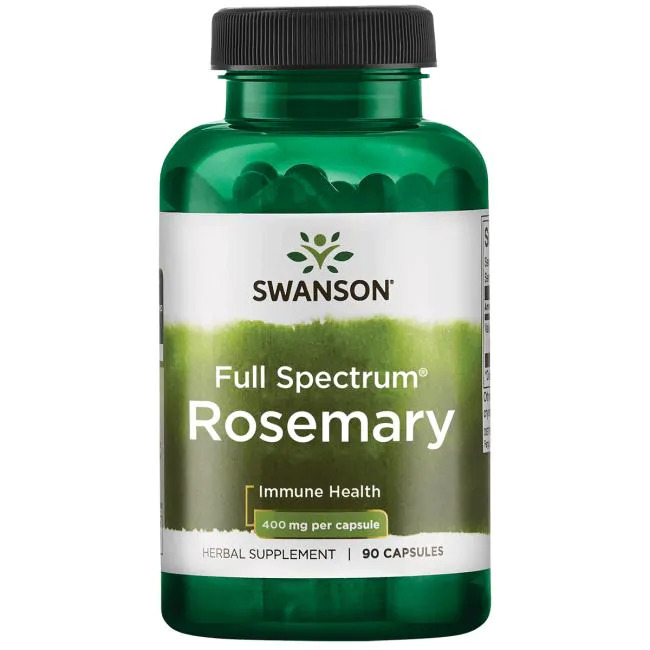
Rosemary extract is available as a dietary supplement in capsule or powder form.
Essential oil
Rosemary essential oil can be used in aromatherapy or applied to the skin (remember to dilute it first).
Clinical studies
As with all other dietary supplements, there is a need for more clinical studies to confirm rosemary’s effect on cancer in humans. Some smaller studies have indicated positive effects, for example on reducing side effects of chemotherapy [1].
However, rosemary does have the potential to be a valuable ally in the fight against cancer.
Conclusion
Rosemary is a versatile spice herb with potential in the fight against cancer. Laboratory experiments have shown promising results [1, 2, 3, 4, 5, 6], but more research is needed to confirm the effect in humans.
Rosemary can be a valuable supplement to a healthy lifestyle and conventional cancer treatment, but should always be used in consultation with a competent healthcare provider.
Back to Supplements
Links
[1] Antitumor Activity and Immunostimulant Properties of Liposomes Containing Rosemary Extract on a Mouse Model of Colorectal Cancer (PubMed, 2024)
- Content: In vivo study demonstrating the antitumor activity and immunostimulant properties of liposomes containing rosemary extract in a mouse model of colorectal cancer.
- Content: In vitro study showing that green tea leaves and rosemary extracts selectively induce cell death in triple-negative breast cancer cells and cancer stem cells, and enhance the efficacy of common chemotherapeutic agents.
[3] Exploring the Therapeutic Potential of Traditional Medicinal Foods in Cancer Treatment: Molecular Evidence and Bioactivities (PubMed, 2025)
- Content: Review article exploring the therapeutic potential of traditional medicinal foods, including rosemary, in cancer treatment, with a focus on molecular evidence and bioactivities.
[4] Rosemary essential oil potentiates the antitumour activity of 5-fluorouracil in human colorectal carcinoma cells (PubMed, 2024)
- Content: In vitro study showing that rosemary essential oil potentiates the antitumor activity of 5-fluorouracil in human colorectal carcinoma cells.
[5] Plant Based Extract Oil-Based Nano emulsions: Impact on Human Melanoma Cell Line (PubMed, 2024)
- Content: In vitro study examining the impact of plant-based extract oil-based nanoemulsions, including rosemary, on human melanoma cell lines.
[6] Anticancer Effects of Rosmarinus officinalis Leaf Extract on KB Cell Lines (PubMed, 2024)
- Content: In vitro study investigating the anticancer effects of rosemary leaf extract on KB cell lines (oral cancer cells).
Page created:
January 22, 2025
❤
What you read on “Jeg har Kræft” is not a recommendation. Seek competent guidance.
