


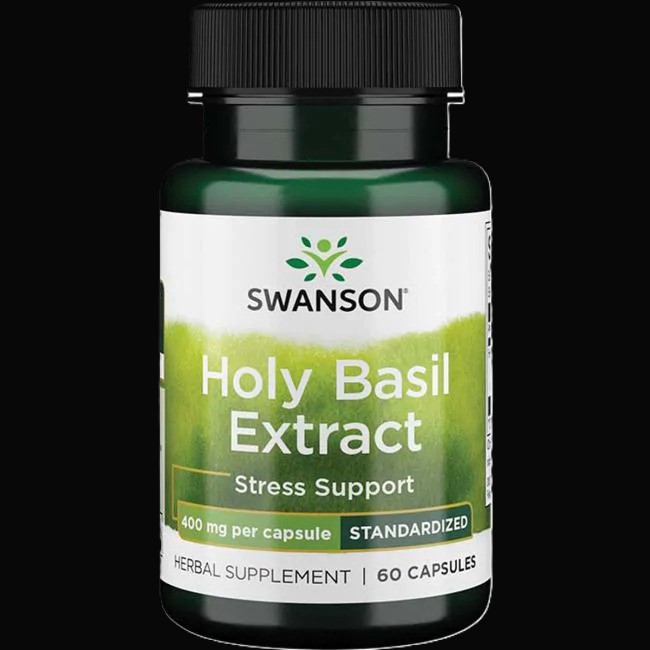
Holy Basil and cancer
What is holy basil
Holy Basil, also known as Ocimum tenuiflorum or Tulsi, is an aromatic herb that has been used for thousands of years in Ayurvedic medicine to treat various ailments. It contains a range of compounds believed to possess medicinal properties [3].
Active ingredients
Eugenol
This aromatic compound has anti-inflammatory, antioxidant, and antimicrobial properties. It can reduce inflammation and pain, protect cells from damage, kill bacteria, fungi, and viruses, and is believed to inhibit the growth of cancer cells [2].
Rosmarinic acid
Possesses antibacterial and antifungal properties that can help fight infections.
Ursolic acid
Has anti-cancer properties and is believed to strengthen the immune system [2].
Carvacrol
This compound has antiseptic and analgesic (pain-relieving) properties.
Linalool
This compound has calming and anti-anxiety properties.
Citronellol
This compound has insecticidal and antibacterial properties.
Eugenol acetate
This compound has anti-inflammatory and analgesic properties.
Oleanolic acid
This compound has anti-cancer properties and is believed to strengthen the immune system [2].
In addition to these compounds, Holy Basil also contains a variety of vitamins and minerals, including vitamins A, C, E, and K, as well as calcium, magnesium, potassium, and iron.
The concentration of these compounds can vary depending on the plant’s growing conditions and the specific part of the plant used.
Effect of holy basil
Holy Basil is believed to have several potential effects against cancer, including:
Killing cancer cells
Research suggests that Holy Basil can kill cancer cells in laboratory settings (in vitro) [1, 2].
Inhibiting the growth of cancer cells
Holy Basil may prevent the proliferation of cancer cells in laboratory environments [2, 4].
Strengthening the immune system
Holy Basil may strengthen the immune system, which can help the body fight cancer more effectively [2].
Advantages of holy basil
Research indicates that Holy Basil may offer several potential benefits for cancer patients, including:
Improved quality of life
Holy Basil may improve the quality of life for cancer patients by reducing symptoms such as fatigue and pain.
Reduced side effects of cancer treatment
Holy Basil may reduce the side effects of cancer treatment, such as nausea and vomiting.
Extended survival rate
Some studies have shown that Holy Basil may extend survival rates in cancer patients [2].
Disadvantages
Holy Basil is generally safe when taken in moderate amounts.
However, some people may experience side effects such as:
- Stomach upset
- Nausea
- Vomiting
It is important to speak with a doctor before taking Holy Basil, especially if you are taking other medications.
It is also important to note that there is currently insufficient scientific evidence to confirm that Holy Basil is effective as a standalone treatment for cancer.
Conclusion
Holy Basil is an herb used for centuries to treat various ailments. It contains a variety of compounds believed to have medicinal properties, including anti-cancer characteristics [2, 4].
Research suggests that Holy Basil may provide several potential benefits for cancer patients, but more research is needed to confirm its safety and effectiveness [1, 2].
It is important to talk to a doctor before taking Holy Basil, particularly if you are on other medications.
Back to Dietary supplements
Links
[1] Holy Basil Leaf Extract Decreases Tumorigenicity and Metastasis of Aggressive Human Pancreatic Cancer Cells in vitro and in vivo (National Library of Medicine, 2014)
- Content: A study describing how Holy Basil extract reduces the ability of pancreatic cancer cells to grow and spread in both laboratory and animal models.
[2] An Update on the Therapeutic Anticancer Potential of Ocimum sanctum L. (PubMed, 2023)
- Content: A comprehensive review summarizing the latest research on the anti-cancer potential of Holy Basil across various cancer types.
[3] Ocimum tenuiflorum ( Wikepedia, 2026)
- Content: General botanical and historical information about Holy Basil and its traditional uses.
[4] Exploring the Therapeutic Potential of Ocimum sanctum and Phanera variegata in Breast Cancer Treatment: A Promising Natural Approach (PubMed, 2026)
- Content: A randomized study investigating the natural approach of using Holy Basil components in breast cancer therapy.
[5] Orientin and Cancer Suppression: Molecular Mechanisms and Synergistic Effects (PubMed, 2026)
- Content: Research focusing on specific flavonoids found in Holy Basil and their role in suppressing cancer growth.
[6] α-pinene effects on the anticancer properties of Lactobacillus acidophilus probiotics against colorectal cancer cells (PubMed, 2026)
- Content: A phase 1 trial exploring the synergy between plant-derived compounds and probiotics in targeting colorectal cancer.
Page created: July 09, 2024. Last revised: Apr 29, 2026.
❤
What you read on Jeg har Kræft is not a recommendation. Seek competent guidance.
