

Treatments
Protokols for cancer
- The metabolic and data-driven
- Repurposed drugs and medical combinations
- Beljanski Protocol (Pao Pereira & extracts)
- Burt Berkson (ALA/ LDN)
- Care Oncology Clinic (COC – repurposed drugs)
- Coley’s Toxins (immunotherapy/ fever)
- FLCCC Cancer Protocol (Ivermectin and Mebendazole)
- Jane McLelland (how to starve cancer)
- Joe Tippens (fenbendazole)
- Rick Simpson Oil (RSO) Protocol (highly concentrated cannabis oil)
- Riordan (IV C-vitamin) (scroll down)
- Stanislaw Burzynski (antineoplastons)
- Intensive diet and detoxification
- Strategic fasting
- Tradition and wisdom
- Mind-body and biological decoding

Riordan protocol – High-dose IV vitamin C
Summary of the Riordan protocol
Purpose of the protocol:
- To achieve such a high concentration of vitamin C in the blood that the vitamin shifts from being an antioxidant to becoming a pro-oxidant (cell-killing) against cancer cells, without harming healthy cells.
The central idea:
- When taken orally (pills), the intestines set a natural limit for absorption. With intravenous (IV) treatment, this barrier is bypassed, allowing doses 100 times higher. At these levels, hydrogen peroxide forms in the tissue, acting as a targeted “natural chemotherapy.”
Key elements:
- Mandatory safety test (G6PD) before starting (test for enzyme deficiency, which can make the treatment life-threatening by causing red blood cells to burst).
- Gradual increase in dose (from 15g up to 50g, 75g, or 100g).
- Measurement of blood saturation to ensure therapeutic levels.
Who was Dr. Hugh Riordan
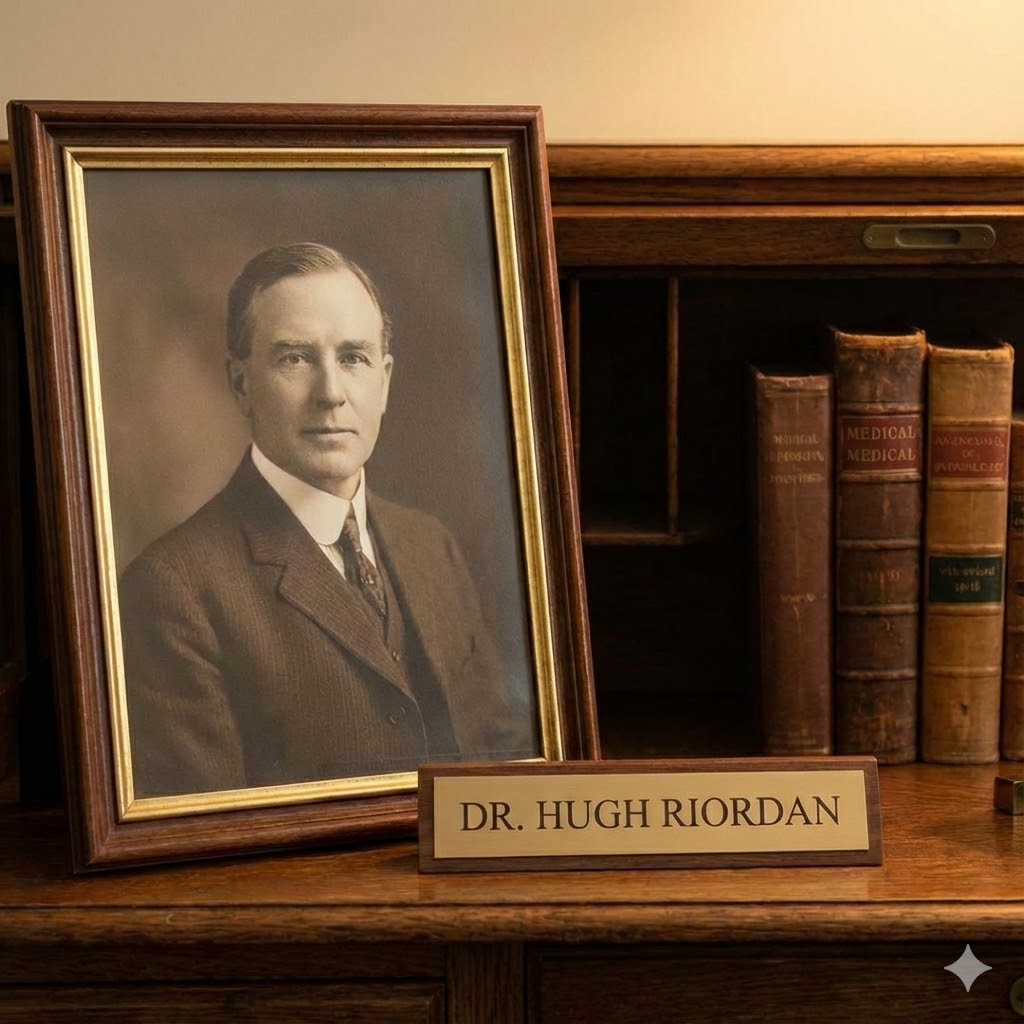
Dr. Hugh Riordan (1932-2005) was an American psychiatrist and pioneer in orthomolecular medicine. He founded the Riordan Clinic in Wichita, Kansas, which is today the world’s leading center for research and treatment with IV vitamin C.
While other doctors used vitamin C as general immune support, Riordan was the first to systematically research the vitamin as a chemotherapeutic agent. He proved that vitamin C in extremely high doses is selectively toxic to cancer cells.
His protocol, “The Riordan IVC Protocol,” is today the gold standard for doctors worldwide who treat with high-dose vitamin C. [1]
From antioxidant to pro-oxidant
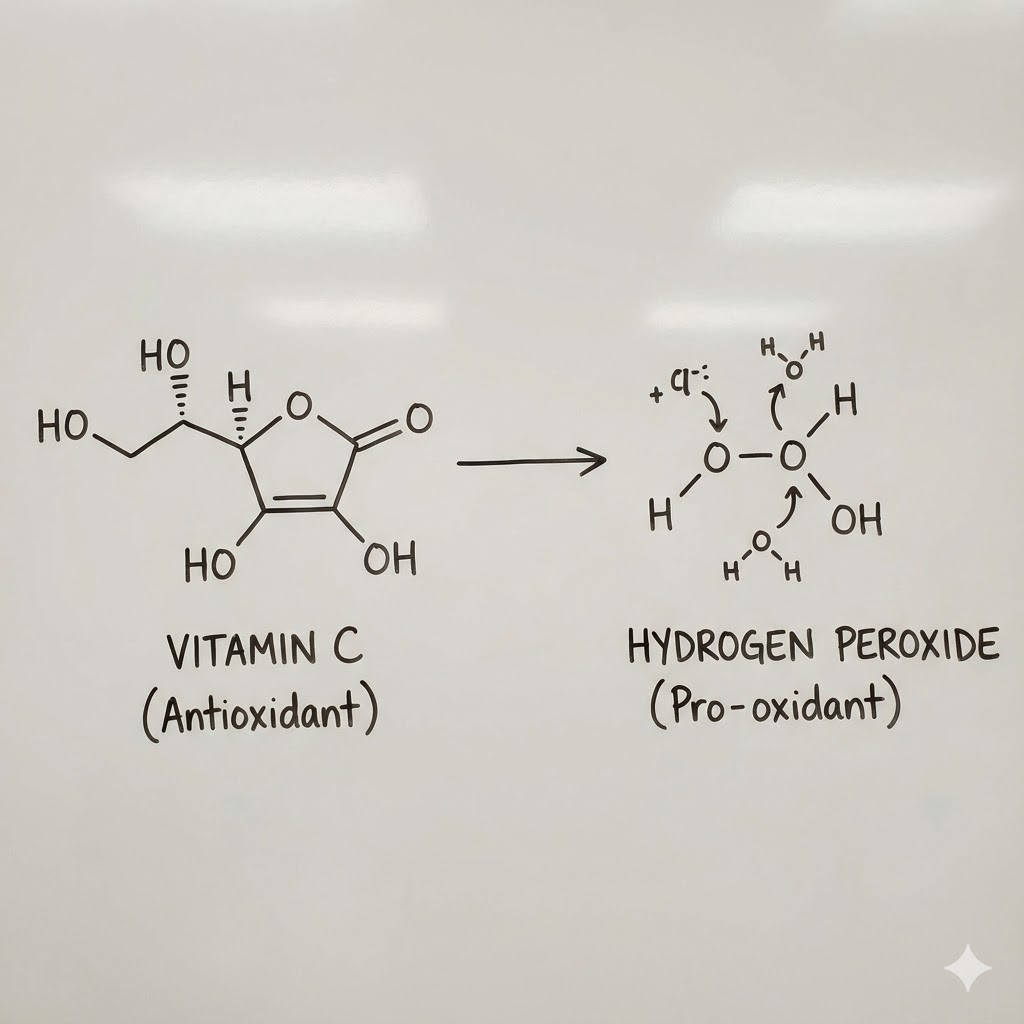
The great paradox of the Riordan protocol is that vitamin C changes function depending on the dose.
Antioxidant (low dose / oral):
At normal doses, vitamin C protects cells from damage (oxidative stress). It is healthy for normal cells.
Pro-oxidant (high dose / IV):
When the concentration in the blood reaches a certain “tipping point” (typically above 350-400 mg/dL), a chemical reaction occurs. The vitamin C reacts with metals in the body and forms large amounts of hydrogen peroxide.
- Healthy cells contain the enzyme catalase, which immediately neutralizes hydrogen peroxide into water and oxygen. They suffer no damage.
- Cancer cells often lack catalase (about 10-100 times less than healthy cells). Therefore, they cannot protect themselves and die from oxidative stress from within. This is called selective toxicity. [2, 4]
Phases of the protocol and safety
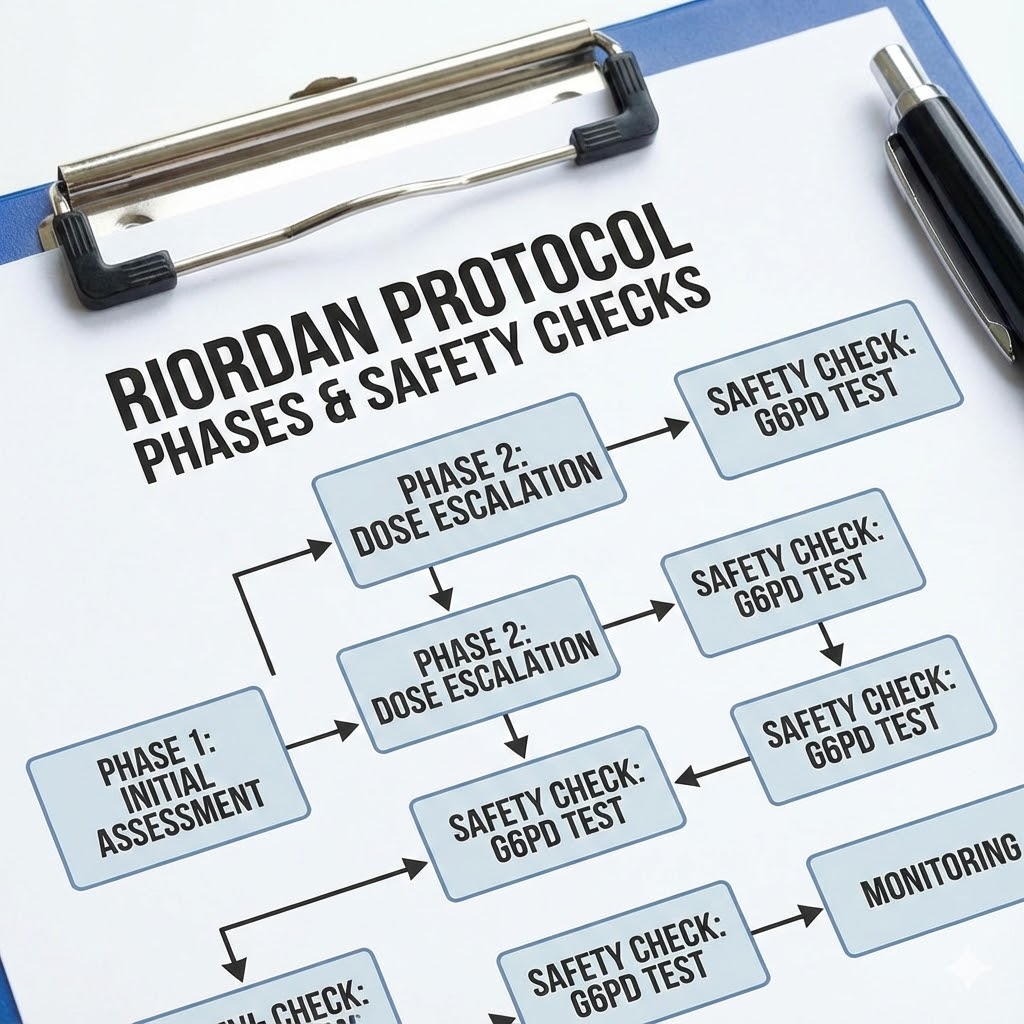
The Riordan protocol is not just “a drop in the arm.” It is a controlled process.
1. Safety test (G6PD)
- Before ever receiving high-dose vitamin C, you must be tested for G6PD (glucose-6-phosphate dehydrogenase) deficiency. If you lack this enzyme, high doses of vitamin C can cause your red blood cells to burst (hemolyze). This is rare, but the test is mandatory in the Riordan protocol.
2. Titration
- You never start at full dose. The body must get used to the high osmolarity (salt balance). A typical titration might look like this:
- Day 1: 15 grams
- Day 2: 25 grams
- Day 3: 50 grams
- After this, blood values are measured to see if the therapeutic level has been reached.
3. “The therapeutic range”
- The goal of the Riordan protocol is not the dose in the bag (grams), but the concentration in the blood. The goal is to maintain a plasma concentration of 350–400 mg/dL during treatment. For some patients, this requires 50 grams; for others, 100 grams per treatment.
Why pills are not enough
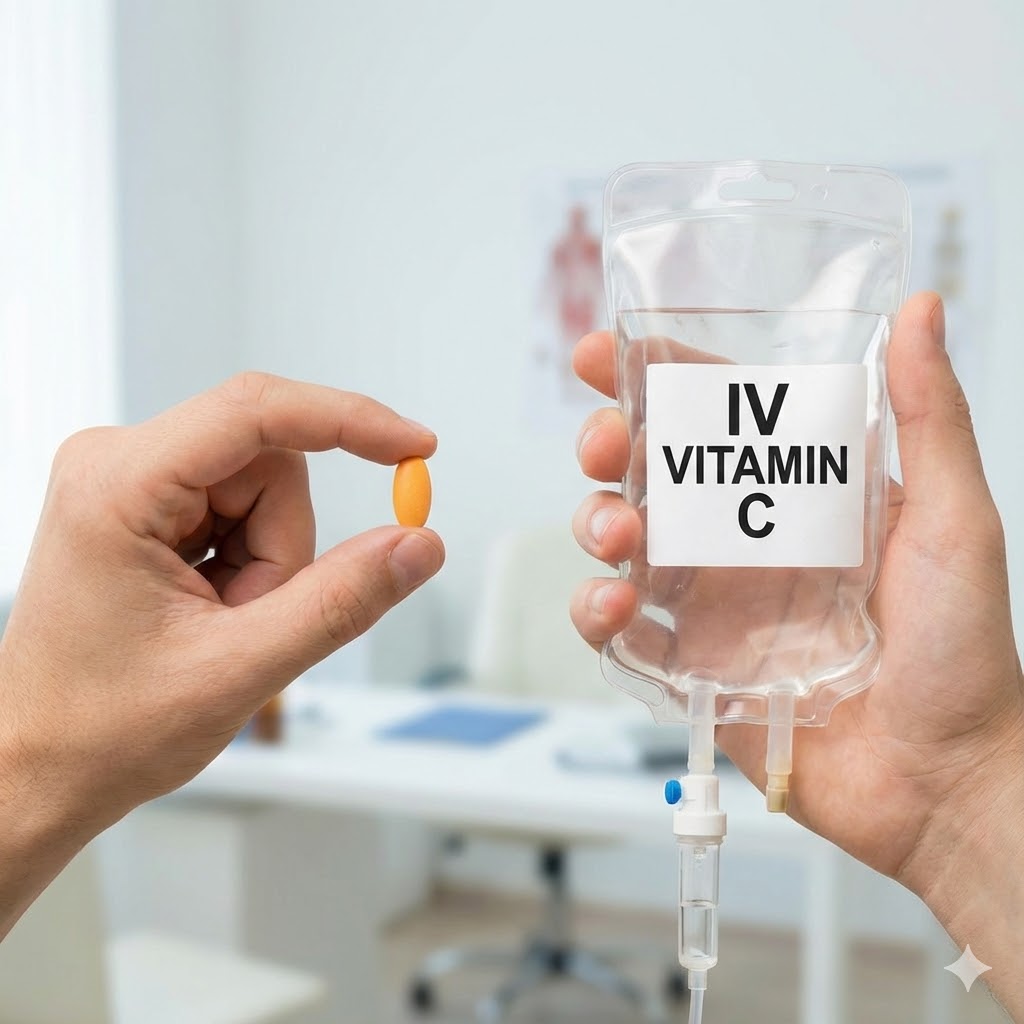
There is often confusion about whether you can just eat your way to the effect. The protocol makes a clear distinction:
Oral vitamin C (pills/powder)
- Absorption: Limited by the intestines. If you take more than 5-10 grams, most people get diarrhea. And whether you get diarrhea or not, you can only absorb a very limited amount of the vitamin.
- Effect: Acts as an antioxidant and immune support.
- Risk: There are theories that oral antioxidants, in rare cases, can protect cancer cells from chemo (“feed the cancer”), because they dampen the oxidative stress that chemo tries to create.
Intravenous vitamin C (IV)
- Absorption: 100% absorption directly into the blood. Bypasses the intestines.
- Effect: Creates the cell-killing hydrogen peroxide effect.
- Combination with chemo: Research from, among others, University of Iowa and Kansas University shows that IV-C often increases the effect of chemo and radiation, while reducing side effects (nausea, fatigue). [5, 6]
Effects on the body
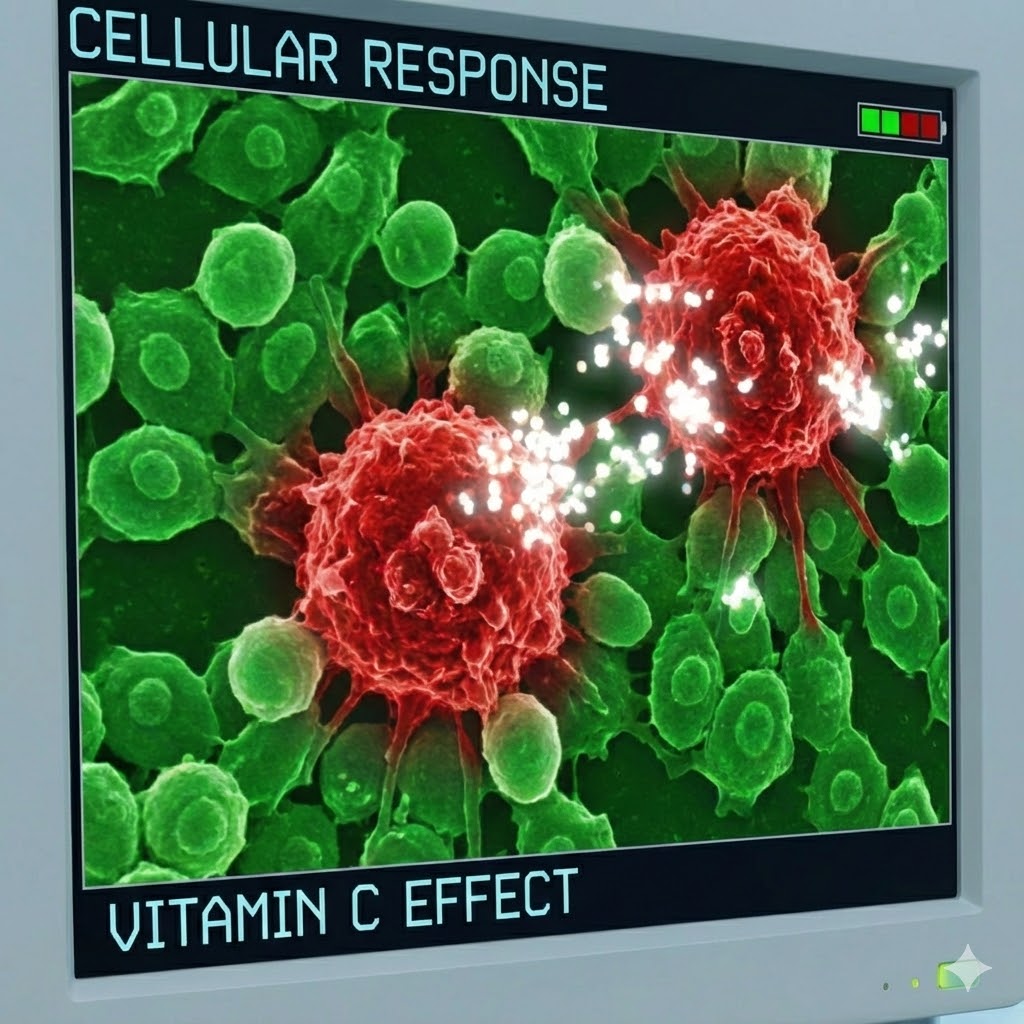
In addition to the direct cell-killing effect, the Riordan Clinic describes the following systemic benefits, supported by newer research:
Anti-inflammatory:
- Intravenous vitamin C lowers levels of C-reactive protein (CRP) and cytokines, which are involved in the spread of cancer and the patient’s discomfort. [3]
Detoxification:
- Helps the liver flush out byproducts from chemotherapy (“chemo fog”) and dead cancer cells.
Energy and quality of life:
- Many patients report a marked increase in energy and appetite just a few days after starting treatment.
Practical considerations
Time-consuming:
- A treatment with 50-100 grams can take 2-3 hours, as it must be administered slowly to avoid irritating the veins.
Fluid balance:
- Since the treatment acts like a powerful saline solution, you should drink plenty of water before and during the treatment to avoid dehydration and headaches.
Availability:
- The treatment is primarily offered at private clinics in Denmark (e.g., by orthomolecular doctors or nurse-run clinics) and requires out-of-pocket payment.
Important warnings

Although vitamin C is a natural substance, IV treatment is a powerful medical intervention that requires precautions beyond the G6PD test.
Kidney stones and kidney failure
Vitamin C is excreted through the kidneys and can crystallize as calcium oxalate along the way.
The problem:
- If you have a history of kidney stones, or if your kidneys are not functioning properly, the large amounts of oxalate (a breakdown product of vitamin C) can form stones or, in the worst case, lead to acute kidney failure.
- Therefore, it is important to have your kidney function (creatinine) checked before starting.
Diabetes (false readings)
IV vitamin C is chemically similar to glucose (sugar).
The problem:
- Most blood sugar monitors (finger pricks) cannot distinguish between vitamin C and sugar. During and after treatment, the device will show a sky-high blood sugar, even if it is actually normal.
- Life-threatening: If a diabetic takes insulin based on this false reading, they can go into insulin shock (hypoglycemia) and die.
- You must never rely on finger-prick measurements for up to 8 hours after an IV drip.
Chemo interaction
Although IV-C generally works well with chemo, there are exceptions.
The problem:
- The drug Bortezomib (brand name Velcade), often used for bone marrow cancer, is directly inactivated by vitamin C.
- The vitamin C prevents the chemo from working.
- These two treatments must not be given simultaneously.
Fluid balance (heart failure)
The treatment involves receiving large amounts of fluid with high salt concentration (osmolarity).
The problem:
- If you suffer from heart failure (weak heart) or tend to have fluid in the lungs/legs, the large amount of fluid can overload the circulatory system.
Safety
Always consult your practitioner before starting a protocol.
Conclusion
The Riordan protocol is not just vitamin C. It is a medical procedure that exploits a specific biochemical mechanism (the pro-oxidant effect) to combat cancer.
While the debate about vitamin C as a sole cure continues, there is growing evidence for the protocol’s ability to improve quality of life, reduce side effects from chemo, and in some cases slow disease progression through selective toxicity.
See also: Vitamin C IV
See also: Vitamin C (oral)
See also: Links for Vitamin C IV
Links
[1] The Riordan IVC Protocol (Riordan Clinic, 2013)
- Content: The official protocol document from the Riordan Clinic. It describes in detail the science, dosage, safety measures, and history behind the treatment.
[2] Mechanisms of anti-cancer effects of ascorbate: Cytotoxic activity and epigenetic modulation (PubMed, 2018)
- Content: A review of the biological mechanisms by which high-dose ascorbate (vitamin C) kills cancer cells via oxidative stress and modulation of enzyme levels.
[3] Effect of high-dose intravenous vitamin C on inflammation in cancer patients (PubMed, 2012)
- Content: The study shows that high-dose IV vitamin C can significantly reduce inflammation markers (such as CRP) in cancer patients, which correlates with better survival.
[4] Pharmacologic ascorbate resistant pancreatic cancer demonstrates enhanced metastatic potential (PubMed, 2025)
- Content: A new study that nuances the picture by showing that certain resistant cancer cells can learn to handle oxidative stress, which underscores the importance of personalized treatment adaptation.
[5] A randomized trial of pharmacological ascorbate, gemcitabine, and nab-paclitaxel for metastatic pancreatic cancer (PubMed, 2024)
- Content: Clinical trial showing that infusions with high-dose vitamin C can extend survival and delay disease progression in patients with pancreatic cancer when given with chemo.
[6] High-dose IV vitamin C plus chemotherapy doubles survival in trials (Carver College of Medicine, 2024)
- Content: An article from the University of Iowa describing the results of clinical trials where the addition of high-dose IV vitamin C to chemotherapy doubled survival rates and significantly delayed disease progression in patients with advanced cancer.
Page created: December 3, 2025
❤
What you read on I Have Cancer is not a recommendation. Seek competent guidance.
