


Treatments
Protokols for cancer
- The metabolic and data-driven
- Repurposed drugs and medical combinations
- Beljanski Protocol (Pao Pereira & extracts)
- Burt Berkson (ALA/ LDN)
- Care Oncology Clinic (COC – repurposed drugs)
- Coley’s Toxins (immunotherapy/ fever)
- FLCCC Cancer Protocol (Ivermectin and Mebendazole)
- Jane McLelland (how to starve cancer)
- Joe Tippens (fenbendazole)
- Rick Simpson Oil (RSO) Protocol (highly concentrated cannabis oil)
- Riordan (IV C-vitamin)
- Stanislaw Burzynski (antineoplastons) (scroll down)
- Intensive diet and detoxification
- Strategic fasting
- Tradition and wisdom
- Mind-body and biological decoding
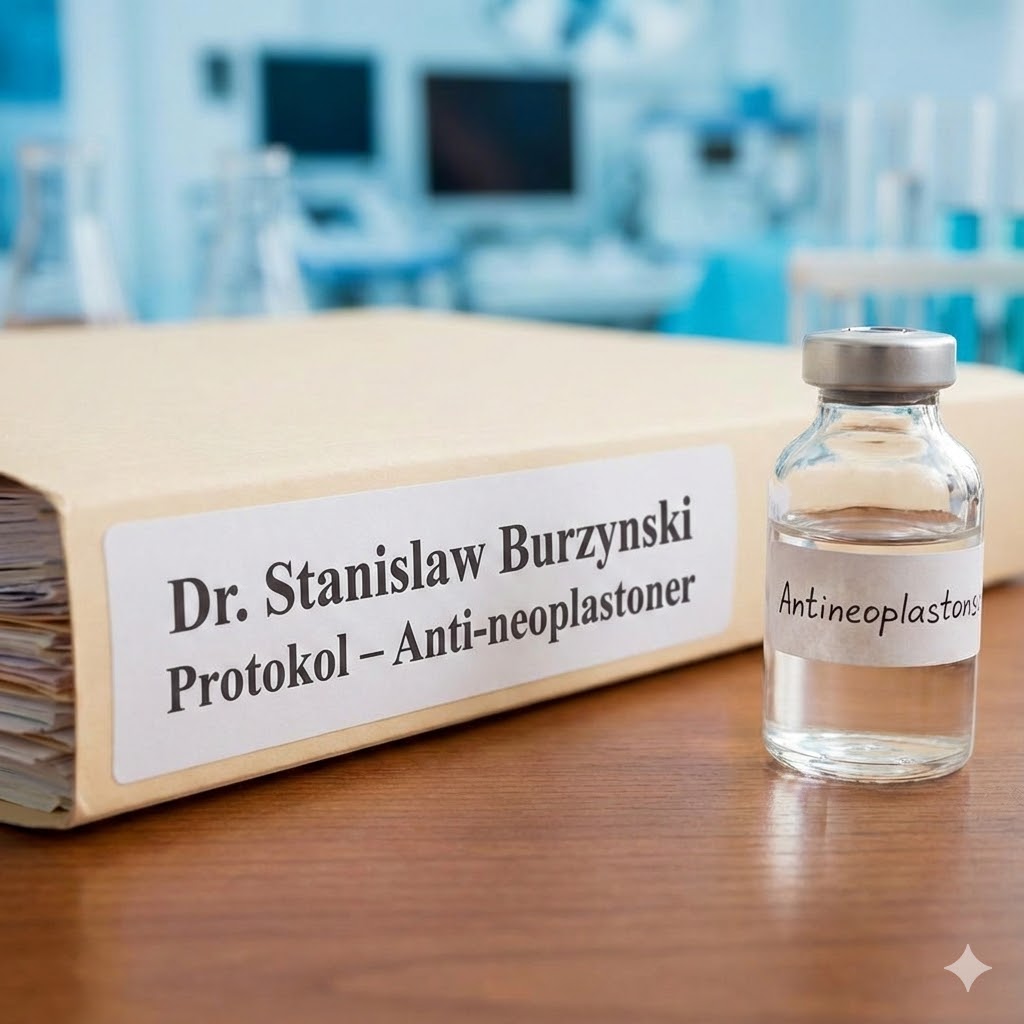
Dr. Stanislaw Burzynski protocol – Antineoplastons
Summary of the Burzynski protocol
Purpose:
- To force cancer cells to differentiate (mature) and undergo apoptosis (cell death) by restoring the body’s natural biochemical signaling pathways.
Content:
- Treatment via IV drip with “antineoplastons” (small protein substances) pumped directly into the blood 24 hours a day.
- This is often combined with medications tailored to the individual patient’s genes.
The central idea:
- Cancer arises due to a lack of liver-produced peptides that act as “molecular switches.” These substances (especially phenylacetate) starve cancer cells of glutamine and function as HDAC inhibitors, which activate the tumor suppressor gene p53 (tumor-suppressing gene).
Who is Dr. Stanislaw Burzynski

Dr. Stanislaw Burzynski is a Polish-born physician and biochemist who today runs the Burzynski Clinic in Houston, Texas. He is undoubtedly one of the most polarizing figures in modern medical history. Since the 1970s, he has been in open conflict with the American health authorities (FDA), who have repeatedly attempted to shut down his clinic and revoke his license.
To the established system, he is a controversial outsider who does not follow the rules for clinical trials. But to thousands of patients—especially parents of children with inoperable brain tumors (DIPG)—he is the hero who saved lives when all other hope was lost. He has dedicated his life to one discovery: antineoplastons.
What the protocol involves
Where chemotherapy aims to kill all rapidly dividing cells (poison), Burzynski’s protocol focuses on reprogramming.
He views cancer as a malfunction in the cells’ information processing. A cancer cell is a cell that has “regressed to childhood”—it divides uncontrollably and refuses to mature and die. The protocol aims to supply the body with the substances it lacks to tell the cancer cell: “Behave properly or die.”
Treatment in practice (Texas model):
This is a tough cure.
Gene-targeted medicine:
- Today, he often combines the pump with pills (targeted therapy) selected specifically based on an analysis of the patient’s genes.
24-hour pump:
- The patient has a permanent catheter inserted in the chest (Hickman) and wears a pump in a backpack.
Massive dose:
- The medication (antineoplastons) is pumped into the blood 24 hours a day for months.
What are antineoplastons
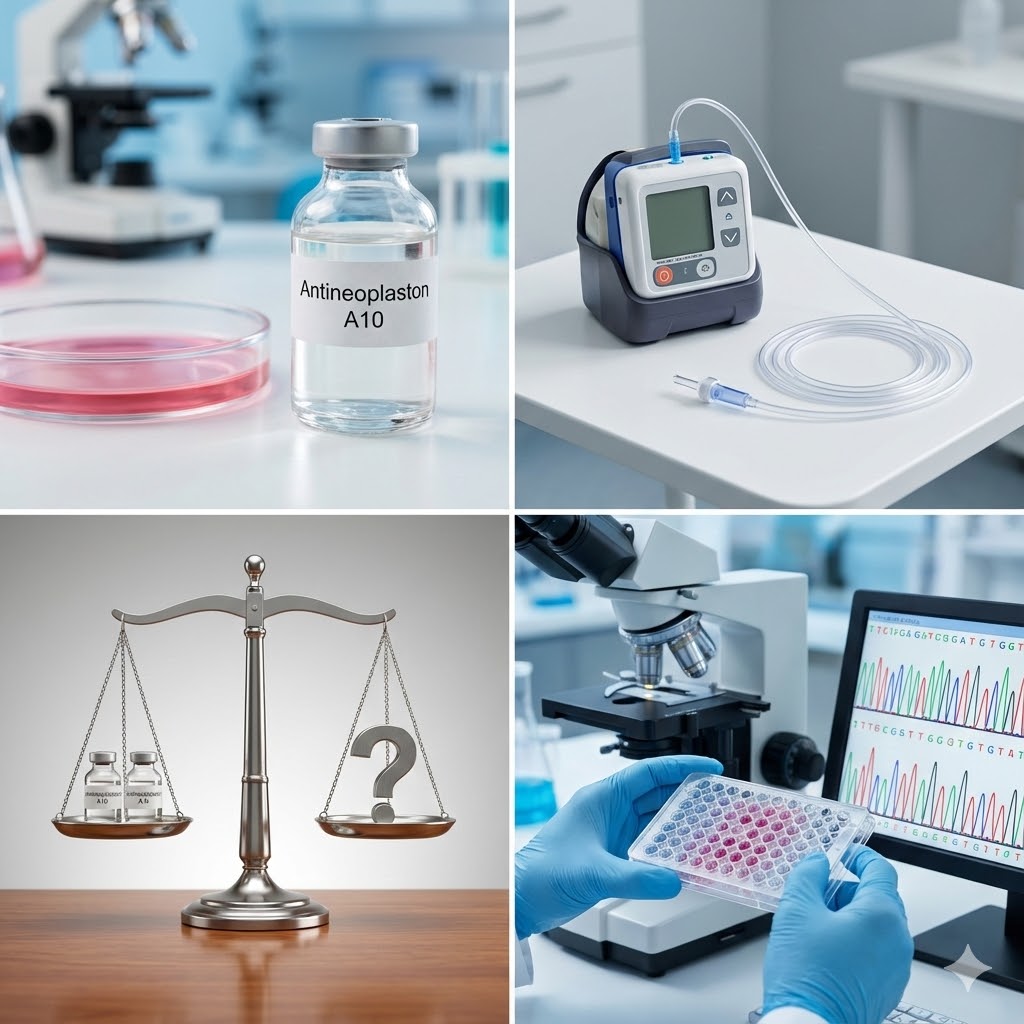
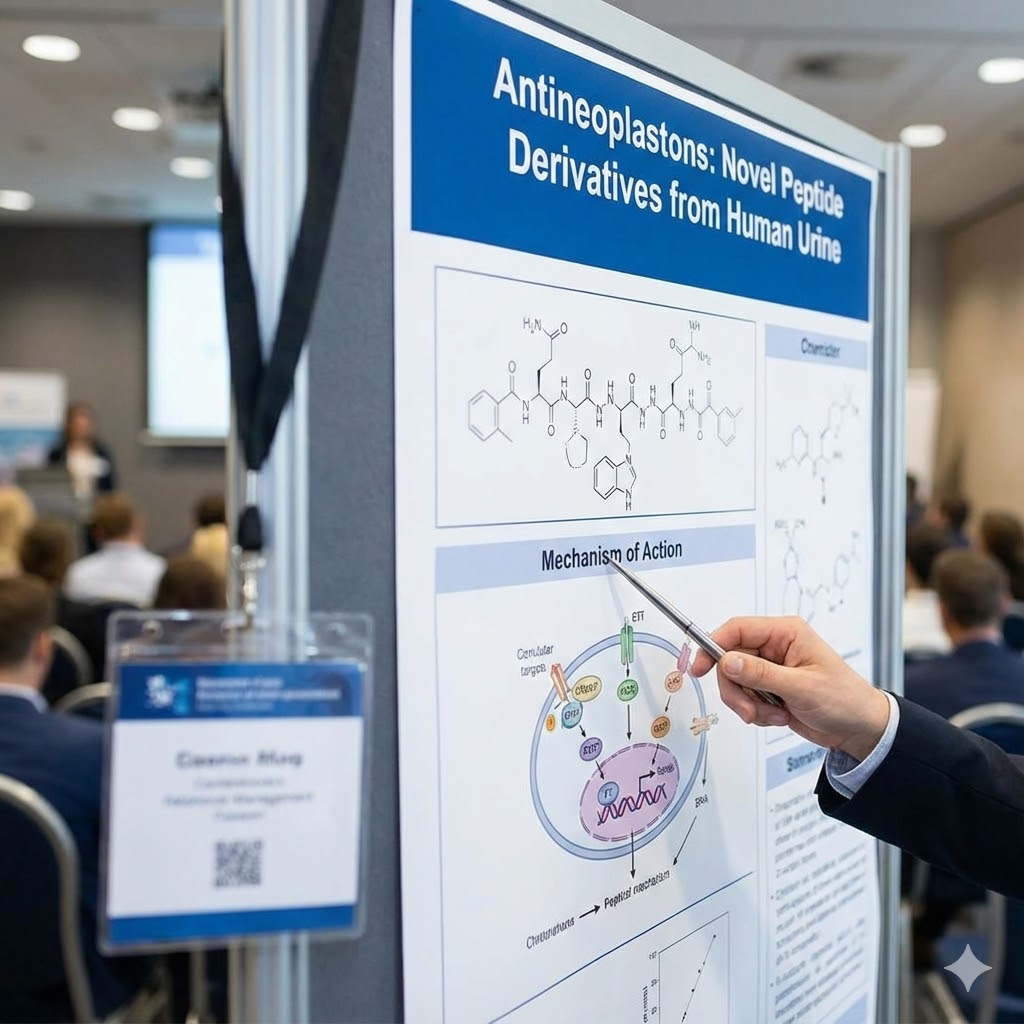
The term antineoplastons covers a group of peptides (small protein chains) and amino acid derivatives (chemically converted substances)—primarily A10 and AS2-1—that Burzynski isolated from urine. These are not mysterious substances but well-defined metabolites (natural breakdown products of metabolism) that attack cancer from four angles simultaneously:
1. Induction of differentiation (normalization)
This is the foundation of Burzynski’s original theory. Cancer cells are characterized by being undifferentiated—they are “primitive” and have lost their specialization. Antineoplastons act as molecular switches that force the cancer cell to resume its maturation process.
When a cell differentiates, it automatically stops dividing uncontrollably because it integrates into the tissue’s normal structure. Instead of dying as a “burst” cell (necrosis), it lives out its cycle as a normal cell.
2. Apoptosis via epigenetics (HDAC inhibition)
This is the mechanism with the greatest scientific validation today. The active substance, phenylacetate, functions as a potent HDAC inhibitor (Histone Deacetylase Inhibitor). In cancer cells, DNA is often tightly coiled around histones, which means the body’s own “brake genes” (tumor suppressor genes) are packed away and deactivated.
Antineoplastons inhibit the enzymes that keep DNA closed. The DNA structure opens, allowing activation of key genes like p53. When p53 is activated, the cell realizes it is sick and undergoes programmed suicide (apoptosis). [4, 6]
3. Stopping cell division (G1 phase arrest)
Cancer cells ignore normal stop signals and constantly run through the cell cycle to copy themselves. Antineoplastons (especially AS2-1) directly interfere with the signaling pathways that drive growth—specifically by inhibiting the RAS/MAPK pathway and reducing the expression of the survival protein Bcl-2.
This locks the cancer cell in the so-called G1 phase (growth phase) of the cell cycle. The cell is physically prevented from progressing to the S phase, where DNA is copied, thereby effectively stopping tumor growth.
4. Metabolic starvation (glutamine trap)
This is a unique metabolic mechanism. Cancer cells are extremely dependent on the amino acid glutamine as fuel—often more than they are on sugar. The active substance phenylacetate has a high chemical affinity for glutamine. In the liver and kidneys, phenylacetate binds to glutamine to form the molecule phenyl-acetyl-glutamine (PAG).
This is a waste product that the body quickly excretes via urine. The patient literally urinates out the cancer’s primary energy source. This drastically drains the blood’s glutamine levels, metabolically starving the tumor.
Home model
Since few can afford treatment in Texas (or time to wait for a spot), many patients and integrative doctors use an accessible medication that mimics the effect.
It has been discovered that the drug Sodium Phenylbutyrate (Buphenyl) works as a “shortcut” to Burzynski’s treatment.
Sodium Phenylbutyrate (Buphenyl) is approved for treating urea cycle disorders.
Strategy:
- Metabolism: When phenylbutyrate is taken orally, the liver converts it extremely quickly (80% conversion) into phenylacetate—the exact same active substance that drives Burzynski’s AS2-1 pump. [5]
- Use: It is used off-label, especially for brain cancer (glioblastoma) and prostate cancer. It requires high doses (often 10-20 grams daily), and it must be monitored by a doctor due to the risk of salt poisoning and potassium deficiency.
Results and controversies
Burzynski is controversial because there is a gap between his published phase 2 results and the established oncological community.
The results
According to Burzynski and published papers, survival rates for Diffuse Intrinsic Pontine Glioma (DIPG)—a fatal childhood cancer—far exceed anything else known. While standard treatment offers 0% survival after 5 years, Burzynski has published data with long-term survivors and complete cures.
Similar results are seen for glioblastoma.
The criticism
Why isn’t this standard?
- No phase 3: He has never conducted a large, randomized phase 3 trial (the gold standard). His data comes from phase 2 trials at his own clinic.
- Toxicity: The treatment is not harmless. The enormous amount of sodium (salt) in the infusions can cause life-threatening fluid retention, and many patients experience extreme fatigue.
- Lack of replication: It is difficult for other hospitals to replicate his results, partly due to patent rights and partly due to the complexity of the treatment.
Gene-targeted medicine
Today, Burzynski rarely uses antineoplastons alone. He was one of the pioneers in “Personalized Medicine” (targeted treatment). He sequences the tumor’s genes and combines antineoplastons with existing targeted medications (e.g., Erlotinib or Sorafenib), even if the medication is intended for a different type of cancer.
The logic is that if the tumor has an EGFR mutation, it should receive an EGFR inhibitor, regardless of whether the cancer is in the lung or the brain.
Dosage and guidance

Since Sodium Phenylbutyrate (brand names: Buphenyl, Pheburane, Ammonaps) is normally dosed to cleanse the blood of toxins (ammonia), the usual standard dose cannot simply be transferred to cancer treatment. To achieve the cancer-inhibiting effect (HDAC inhibition) and match the concentration from infusion treatment, the dose must be significantly increased.
1. Target dose (adult)
To achieve a therapeutic effect against cancer (especially brain cancer/glioblastoma), literature and practicing doctors typically indicate a dose of:
- Total daily dose: 12 to 20 grams (depending on body weight).
- Rule of thumb: Approximately 300-400 mg per kg of body weight daily.
- Conversion to pills: Since the pills are typically 500 mg, a dose of 15 grams corresponds to 30 pills per day.
2. Intake schedule (half-life)
The substance is metabolized extremely quickly in the liver (short half-life). To keep the level stable in the blood so that cancer cells are constantly under pressure, the dose must be distributed throughout the day.
- Distribution: The dose should be divided into 4 or 5 portions with 4-5 hours in between.
- Example (at 15 g daily):
- 6:00 AM: 3 grams (6 pills)
- 10:00 AM: 3 grams (6 pills)
- 2:00 PM: 3 grams (6 pills)
- 6:00 PM: 3 grams (6 pills)
- 10:00 PM: 3 grams (6 pills)
- Food: The pills should be taken with a meal to reduce nausea.
3. IMPORTANT: potassium
This point is critical. Sodium phenylbutyrate chemically contains large amounts of salt (sodium = sodium). When the body excretes this salt, it also pulls potassium out with it. Without supplements, the patient will quickly develop severe potassium deficiency (hypokalemia), which can cause heart arrhythmia and extreme muscle weakness.
- Potassium supplements: It is mandatory to take strong potassium supplements (e.g., Kaleorid) daily throughout the treatment. The dose must be adjusted continuously based on blood tests.
4. Dietary restrictions (salt)
Because the medication itself is a huge salt bomb (15-20 grams of medication contains an amount of sodium equivalent to many times the daily requirement), the rest of the diet should be low in salt.
- No extra salt: Avoid salt on food and processed foods.
- Fluids: Drink plenty of water to help the kidneys excrete the salt.
5. Cycle and duration
Unlike chemo, which is administered in “courses” with breaks, this treatment must be maintained constantly to sustain the differentiation pressure on the cells.
- Duration: Treatment typically continues as long as there is active disease, or until the side effects (fluid retention/fatigue) become too severe.
- Tapering off: When stopping, you should taper off slowly over a few weeks to avoid a “rebound effect” (where the cancer flares up).
Important warnings

This protocol involves massive chemical interference with the body’s salt balance, which can be directly life-threatening if not monitored.
Salt poisoning and heart failure
Both the infusion fluid and the pills (Sodium Phenylbutyrate) contain enormous amounts of sodium.
The problem:
- This salt bomb binds fluid in the body. If you have a weak heart or high blood pressure, it can lead to acute heart failure or pulmonary edema (fluid in the lungs).
- You will swell significantly in the legs and face.
- Blood pressure must be measured daily.
Potassium collapse (cardiac arrest)
When the body tries to excrete the excess sodium through the kidneys, the body’s potassium is also flushed out in the urine.
The problem:
- This creates severe hypokalemia (potassium deficiency). Without potassium, the heart cannot beat, and muscles (including breathing) become paralyzed.
- It is mandatory to take large doses of potassium supplements and have blood tests measured weekly. You can die from cardiac arrest if you forget your potassium.
Acidosis
The metabolism of the substances can make the blood acidic.
The problem:
- Many patients develop metabolic acidosis, which causes confusion, deep breathing, and nausea.
- This must be monitored via blood tests (bicarbonate).
Rebound effect
Burzynski strongly warns against stopping the treatment suddenly.
The problem:
- If you stop from one day to the next, the tumor may react with explosive growth (“rebound”).
- Tapering off should be done slowly over weeks.
Safety
Always consult your practitioner before starting a protocol.
Conclusion
Dr. Burzynski’s protocol is one of the most demanding alternative cancer treatments available—both financially, practically, and emotionally. While many other protocols focus on diet and supplements, this is heavy, experimental medicine.
The strength lies in the documented results with inoperable brain tumors (DIPG and glioblastoma), where conventional oncology often has to give up. [1, 2, 3]
Here, Burzynski offers a real hope and a scientific mechanism (HDAC inhibition) that makes sense.
The weakness is the cost, the lack of approval, and the enormous burden of wearing an infusion pump 24/7. For patients who cannot travel to the USA, the “home solution” (Phenylbutyrate) is a relevant, albeit less potent, option for utilizing the same biological principle. [5]
A typical day on the protocol
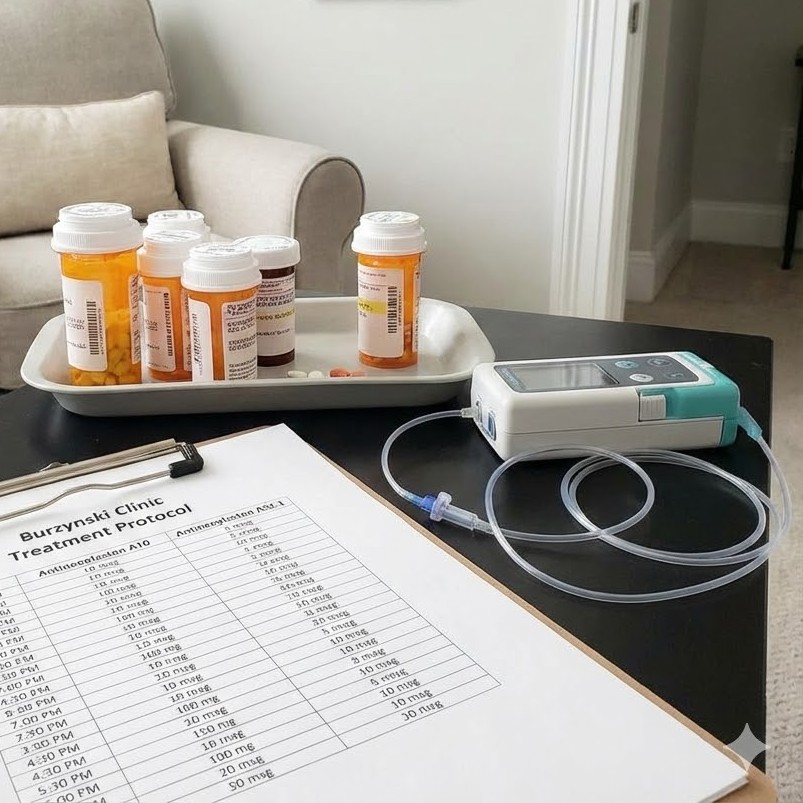
Clinic version
This is a full-time job. Here’s what a day looks like for a patient in Houston:
Morning:
- Pump change: The day starts with sterile procedures. The large IV bag with antineoplastons (A10/AS2-1), which has been running all night, is empty. You must disconnect it from your Hickman catheter (in the chest), flush the tube with heparin (to prevent blood clots), and attach a new bag.
- Targeted medicine: Intake of the oral pills (Targeted Therapy), tailored to your gene profile.
- Breakfast: A healthy, alkaline diet is recommended, but there is no strict diet.
Lunch:
- Fluids, fluids, fluids: The medication contains large amounts of sodium. You become extremely thirsty and must drink liters of water to flush the kidneys and avoid dehydration.
- Activity: You wear the pump in a special backpack. You can take walks and live relatively normally, but you are always connected to the tube.
Afternoon:
- New bag change: Depending on the dosage (flow rate), the bag must be changed again mid-day. This requires that you have your supplies with you if you are out of the house.
- Rest: Many patients experience great fatigue as a side effect and need a midday nap.
Evening:
- Medication: Second round of oral pills and supplements.
- Care procedure: Check the insertion site on the chest for signs of infection.
Night:
- Sleeping with the pump: You sleep with the backpack next to the bed or on you. The pump hums softly as it continues the infusion throughout the night.
A typical day – Home protocol
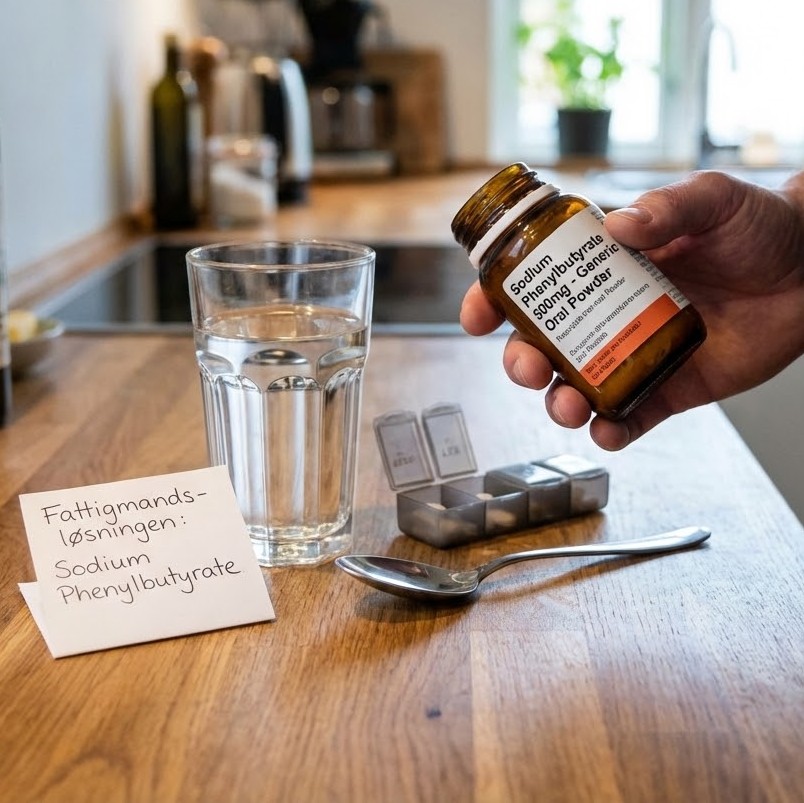
How to do it in practice
For patients who do not travel to Texas but have a doctor prescribe Sodium Phenylbutyrate off-label, daily life looks significantly different. Here, you avoid the pump and catheter.
The medication
The challenge is the quantity. To achieve the concentrations Burzynski uses, you typically need 10-20 grams of Phenylbutyrate per day. Since the medication normally comes in 500 mg tablets, this corresponds to 20-40 pills daily.
A typical day
Early morning:
- Intake of the first large portion of pills (e.g., 6) with food. The medication tastes extremely salty and bitter, so many wash it down with juice.
Supplements:
- Phenylbutyrate depletes the body of potassium. Therefore, you must take potassium supplements daily to avoid heart problems.
Evening:
- Fourth large portion of pills.
Monitoring:
- You should regularly have blood tests taken by your doctor to check liver values and electrolytes.
See also: Repurposed drugs
See also: Metabolic strategy – block signal pathways by cancer type – overview charts
Links
[1] Targeted Therapy with Antineoplastons A10 and AS2-1 of High-Grade, Recurrent, and Progressive Brainstem Glioma (PubMed, Integrative Cancer Therapies, 2006)
- Content: The central study regarding DIPG (childhood brainstem tumors). The study reports on a group of patients, several of whom achieved complete remission and long-term survival (>5 years), which is extremely rare for this diagnosis.
[2] Long-term survival of high-risk pediatric patients with primitive neuroectodermal tumors treated with antineoplastons A10 and AS2-1 (PubMed, Integrative Cancer Therapies, 2005)
- Content: Documentation of the effect on PNET (Primitive Neuroectodermal Tumors) and Medulloblastoma. The study shows a significantly higher survival rate than chemotherapy-based historical controls.
[3] Phase II study of antineoplaston A10 and AS2-1 in children with recurrent and progressive multicentric glioma: a preliminary report (PubMed, Cancer Therapy, 2004)
- Content: Study focused on adults with aggressive, recurrent gliomas. The report concludes that the treatment is effective in inducing stable disease and, in some cases, complete remission.
[4] Antineoplastons (PDQ®)–Health Professional Version (National Cancer Institute, PubMed, 2019)
- Content: The American Cancer Society’s official, neutral review of the treatment. It covers the history, laboratory studies (animal trials), and clinical data. It confirms that the substances have anti-cancer activity in the laboratory but is critical of the lack of randomized trials.
[5] Pharmacokinetics and cerebrospinal fluid penetration of phenylbutyrate and its metabolites in a pediatric patient with a brain tumor (Springer Nature, 2001)
- Content: This study provides the pharmacological evidence for the “poor man’s solution.” It documents that phenylbutyrate is converted into phenylacetate (Burzynski’s active substance) in the body, and most importantly: that the medication penetrates the blood-brain barrier, making it possible to treat brain tumors orally.
[6] Phenylacetate: a novel nontoxic inducer of tumor cell differentiation (National Institutes of Health (NIH), 1992)
- Content: A fundamental study from the NCI’s own researchers confirming that phenylacetate (the active substance in Burzynski’s treatment) actually works. It shows the substance’s ability to promote cell differentiation in cancer cells without being toxic.
[7] Recurrent Glioblastoma Multiforme—A Strategy for Long-Term Survival (Semantic Scholar, 2014)
- Content: The article describes the epigenetic mechanism behind the treatment. It documents that phenylbutyrate (PB) functions as an HDAC inhibitor, and that antineoplastons (A10 and AS2-1) have the same activity pattern, which explains the effect on gene expression.
[8] Phase II study of antineoplaston A10 and AS2-1 in patients with recurrent diffuse intrinsic brain stem glioma: a preliminary report (PubMed, Drugs R D, 2003)
- Content: A phase 2 study documenting the effect on the very aggressive cancer form diffuse intrinsic brainstem glioma. The results showed a 2-year survival rate of 33.3%, with 20% of patients achieving complete response (the tumor disappeared completely), and two patients being cancer-free for over 5 years.
Page created: December 16, 2025
❤
What you read on I Have Cancer is not a recommendation. Seek competent guidance.
