


Treatments
Complementary and Alternative Treatments
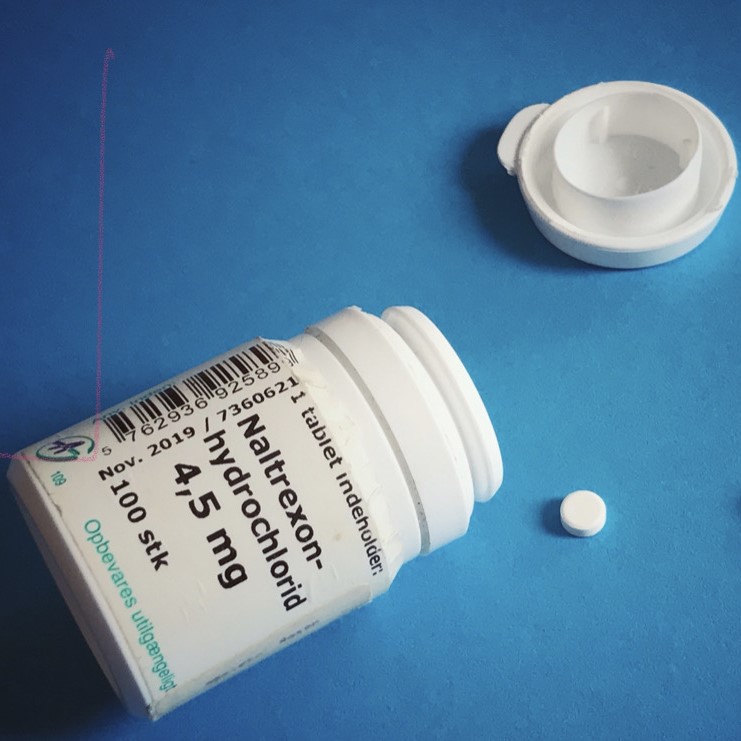
LDN (Low dose Naltraxone) and cancer
What is LDN
Naltrexone is a drug originally approved for the treatment of alcohol and heroin addiction. Here, it is typically used in doses of 60 mg or higher. LDN (Low-Dose Naltrexone) is an interesting treatment that has gained attention in alternative medicine in recent years. Although primarily used for treating chronic pain and certain autoimmune diseases, there have also been studies looking at its potential role in cancer treatment.
What is low dose
When speaking of low dose, this is typically between 2–10 mg, most often 4.5 mg daily. It is now used in connection with pain management but has, in certain contexts, proven effective for the prevention or treatment of cancer. Although not approved by pharmaceutical authorities for this purpose, LDN’s potential in cancer treatment is being investigated in a number of clinical trials and has so far shown promising results in some studies.
LDN’s effect against cancer
Although the precise mechanism behind LDN’s action is not fully understood, it is believed to act on cancer in several different ways:
Antioxidant effect:
- LDN can protect cells from damage by free radicals that can contribute to cancer.
Immunomodulation:
- LDN can affect immune system activity and strengthen the body’s own ability to fight disease. LDN can thus strengthen the immune system and thereby help the body fight cancer cells.
Anti-inflammatory effect:
- Chronic inflammation is associated with cancer development. LDN’s anti-inflammatory effect can contribute to reducing cancer risk.
Interacting with opioid receptors:
- Naltrexone was originally developed as an opioid receptor antagonist, but in low doses, it may have a different mechanism of action.
Hormonal regulation:
- LDN can affect hormones that play a role in cancer development, e.g., growth hormones.
Side effects of LDN
LDN is generally well-tolerated in low doses but can cause side effects such as:
- Nausea and vomiting
- Headache
- Dizziness
- Sleep problems
- Vivid dreams
- Skin itching
In rare cases, LDN can have more serious side effects, such as liver damage. LDN is (as is also the case for other repurposed drugs for cancer) not approved by pharmaceutical authorities for cancer treatment.
Note
It should be noted that this is not an exhaustive list of all possible side effects. You can find more information about side effects in the package leaflet for your medication. It is important to talk to your doctor about potential risks and side effects before you start taking LDN. Furthermore, be aware that certain medications can interact, so unintended effects may occur when these are combined. If in doubt, it can be checked here:
Research
Research into LDN and cancer is still in its early stages, and more comprehensive studies are needed to confirm the preliminary results. Preliminary clinical trials have shown that LDN can:
- Extend survival in patients with advanced lung cancer.
- Reduce the risk of recurrence in patients with breast cancer.
- Improve the response to chemotherapy and radiation therapy in cancer patients.
However, it is important to note that these studies have had limitations, such as small patient sizes and a lack of control groups. There is also a need for more research to understand the precise mechanisms behind LDN’s potential effect against cancer. Research into LDN and cancer is still in its early stages, and more comprehensive studies are needed.
Conclusion
Low-Dose Naltrexone (LDN) is a drug originally developed for the treatment of addiction but is now being investigated for its potential in cancer treatment. It is believed to strengthen the immune system, reduce inflammation, and interact with hormones, which may contribute to fighting cancer. Although LDN shows promising results, including prolonged survival in patients with advanced lung cancer and a reduced risk of recurrence in breast cancer patients, research is still in its early phases, and more comprehensive studies are needed to confirm these effects. Side effects are generally mild, but it is necessary to discuss them with a doctor, especially since it is prescription medication. Further research will be crucial to understanding LDN’s role and safety in cancer treatment.
See also Repurposed Drugs
See also No medicine – Plan B
See also Link-overview
Links
Interaktioner (search for preparations) (Interaktionsdatabasen, Danish Medicines Agency) (Danish Language)
LDN – Lav Dosis Naltrexone (LDN Foreningen) (Danish Language)
Tina Horsted (Doctors Website) (Danish Language)
Specialist in Anesthesia and Pain Management (Horsted Institute) (Danish Language)
Can LDN counteract the development of cancer? (Klinik Slotssøen) (Danish Language)
Low-Dose Naltrexone as an Adjuvant in Combined Anticancer Therapy (Cancers, 2024)
- Content: A new review article explaining the primary hypothesis in detail: LDN temporarily blocks the body’s Opioid Growth Factor receptor (OGFr), causing the body to compensate by producing more endorphins and enkephalins. These act as immunomodulators. This is a non-randomized systematic review.
Low-Dose Naltrexone Targets the Opioid Growth Factor Receptor to Inhibit Cell Proliferation in Triple-Negative Breast Cancer (PubMed, 2011)
- Content: This article demonstrates how LDN inhibits triple-negative breast cancer via OGFr blockade and immunomodulation, directly relating to the primary hypothesis. It explains the mechanisms of cellular growth inhibition in detail. This is a non-randomized preclinical laboratory study.
Low-Dose Naltrexone as an Adjuvant in Combined Anticancer Therapy (PubMed, 2025)
- Content: Low-dose naltrexone blocks the OGFr receptor, increasing OGF synthesis which inhibits cancer development. Studies show LDN can help inactivate cancer cell growth without being directly cytotoxic, serving as a supplement. This is a non-randomized review and protocol for cancer treatment.
Low-dose naltrexone (LDN): A promising treatment in immune-related diseases and cancer therapy (PubMed, 2018)
- Content: The article reviews how low-dose naltrexone can function as an immunomodulator in autoimmune diseases and cancer. Research shows LDN binds to opioid receptors on immune cells, potentially regulating the body’s immune response. This is a non-randomized review of clinical and basic research.
Page created: July 1, 2024, Last revised February 23, 2026
❤
What you read on Jeg har Kræft is not a recommendation. Seek competent guidance.
