


Treatments
Complementary and Alternative Treatments
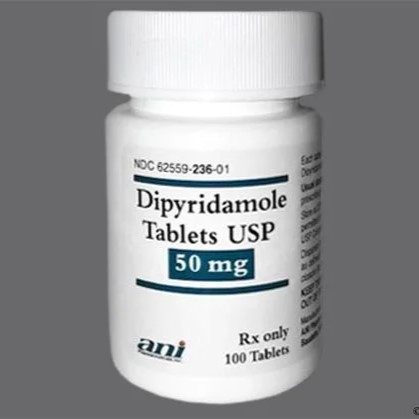
Dipyridamole and cancer
What is Dipyridamole
Dipyridamole is primarily known as a drug used to prevent blood clots, often in combination with acetylsalicylae (aspirin). However, like other drugs that affect blood circulation and inflammation, dipyridamole has also been the subject of research in connection with cancer.
How dipyridamole can affect cancer
Dipyridamole and platelets
Inhibits platelet aggregation:
Dipyridamole prevents platelets from clumping together. This is its primary purpose and the reason it is used to prevent blood clots.
Platelets and cancer:
Cancer cells can utilize platelets to form a kind of protective coating around themselves. This coating can help cancer cells evade the immune system and spread to other parts of the body.
- Prevents formation of protective coating By inhibiting platelet aggregation, dipyridamole can make it harder for cancer cells to form this protective coating.
- Makes cancer cells more visible When cancer cells are not camouflaged by platelets, they become easier for the immune system to detect and attack.
Anti-inflammatory effect
Dipyridamole also has a weak anti-inflammatory effect, which may be relevant as chronic inflammation is linked to the development of many types of cancer.
Effect on blood vessels
Dipyridamole can affect blood vessels in a way that may limit the blood supply to tumors.
Limitations and caution
Side effects
Dipyridamole is generally a well-tolerated drug, but there are some common side effects you should be aware of. They can vary in severity from person to person.
Very common
- Diarrhea
- Nausea
- Headache
- Dizziness
Common side effects
- Angina
- Vomiting
- Muscle pain
- Skin rash
- Flushing
- Sweating
- Rapid pulse
- Restlessness
- Feeling of weakness
- Drop in blood pressure
- Chest pain
Uncommon
- Allergic reactions (can include swelling of the face, mouth, or throat, difficulty breathing)
- Fainting
- Itching
- Stomach upset
- Worsening of asthma symptoms
Rare side effects
- Low blood pressure
- Seizures
- Confusion
- Changes in vision or hearing
- Fever
- Hair loss
It is important to note that this is not an exhaustive list of all possible side effects.
Interactions with other medicine
Dipyridamole can interact with other medicines, so it is important to inform your healthcare provider about all the medications you are taking.
What the research shows
Promising results
- Experiments have shown that dipyridamole can inhibit the growth of certain types of tumors and reduce the spread of cancer cells.
Combination with other treatments
- Some studies suggest that dipyridamole may increase the effectiveness of other cancer treatments, such as chemotherapy and radiation therapy.
Limited human research
- Although animal studies are promising, many large clinical human trials have not yet been conducted to confirm dipyridamole’s potential in cancer treatment.
Consider the following
There is some indication that Dipyridamole may be beneficial for cancer.
If you are considering Dipyridamole as part of your cancer treatment, it is crucial to talk to your healthcare provider about the pros and cons.
Furthermore, be aware that certain drugs can interact, potentially causing unintended effects when combined.
If you are in doubt, it can be checked here:
Conclusion
Dipyridamole is a drug with promising preliminary results in cancer treatment.
However, while there are promising signs that dipyridamole can have a positive effect on cancer, it is important to emphasize that research is still in an early stage (and there are limited funds for such research, as with all other research involving drugs whose age on the market means they can no longer be patented).
Dipyridamole is not part of conventional cancer treatment but is used as an adjuvant, complementary treatment for cancer and prevention of recurrence.
See also Repurposed Drugs
See also No medicine – Plan B
Links
Interactions (search for preparations) (Interaktionsdatabasen, Danish Medicines Agency) (Danish Language)
Starve the cancer cells (Tidslerne) (Danish Language)
Treatments you can add to chemotherapy (Fookid) (Danish Language)
Dipyridamole prevents triple-negative breast-cancer progression (Clinical & Experimental Metastasis, 2013)
- Relevance: A strong preclinical study showing how dipyridamole inhibits both the growth of the primary tumor and the formation of metastases in a model of triple-negative breast cancer, partly by affecting the immune environment in the tumor.
Reverse screening approach to identify potential anti-cancer targets of dipyridamole (PubMed, 2016)
- Relevance: Researchers have used computer models to uncover why the drug Dipyridamole (DIP) enhances the effect of chemotherapy such as 5-fluorouracil (5-FU). The study predicts that Dipyridamole works by blocking the enzyme (DPD) that normally breaks down the chemotherapy. This may explain why the chemotherapy becomes more effective and has fewer side effects.
- Relevance: The combination of statin and dipyridamole can improve the treatment of melanoma by reducing cell growth, especially together with the BRAF inhibitor vemurafenib.
PRUNE1 (located on chromosome 1q21.3) promotes multiple myeloma with 1q21 Gain by enhancing the links between purine and mitochondrion (PubMed, 2023)
- Relevance: This study shows, among other things, that dipyridamole can effectively inhibit the proliferation of MM cells with high PRUNE1 expression both in vitro and in vivo, opening new possibilities for the treatment of this patient group.
Page created: July 1, 2024, Last revised June 10, 2025
❤
What you read on Jeg har Kræft is not a recommendation. Seek competent guidance.
