

FLCCC’s ranking of repurposed drugs, 2024
This article is based on the work of Paul E. Marik, MD, FCCM, FCCP:
The role of repurposed drugs and metabolic interventions in treating cancer, 2nd edition, Oktober 1 (FLCCC Alliance, Honest Medicine, Cancer Care, 2024)
Summary of specialized text from FLCCC Alliance
Cancer as a metabolic disease:
- This specialized text argues convincingly that cancer is primarily a mitochondrial (metabolic) disorder rather than solely a genetic disease. This approach, based on the Warburg effect (cancer cells’ dependence on glucose), lays the foundation for metabolic treatment aiming to “starve” the cancer cells by reducing the availability of glucose and glutamine.
Ranking of repurposed drugs:
- The text presents a four-tier prioritization of repurposed drugs and effective supplements based on the strength of evidence for clinical and biological effect. Tier 1 includes agents with strong recommendations such as Vitamin D, Propranolol, Melatonin, Metformin, Curcumin, Ivermectin, and Mebendazole, all chosen for their ability to provide multiple simultaneous anti-cancer effects. The text contains charts of these.
Focus on lifestyle and side effects:
- A central message is that lifestyle changes—including weight control, stress reduction, exercise, and optimal sleep—are critical for cancer prevention and improved outcomes. Furthermore, the text reviews strategies to reduce toxicity and the serious side effects of conventional chemo- and radiotherapy.
What the article is about
FLCCC Alliance (Front Line COVID-19 Critical Care Alliance) has published a comprehensive text addressing the use of existing, approved drugs (repurposed drugs), supplements, and metabolic strategies as a supplement to conventional cancer treatment. The text serves as a detailed argument for an integrative approach to cancer, where the reader’s interest in complementary measures is taken very seriously and supported by scientific evidence.
The text is an essential source as it:
Highlights the importance of patient autonomy and the right to choose a holistic treatment plan in consultation with healthcare professionals.
See also Quality of life and co-responsibility
Review of the core topics of the text
Acknowledges the use of supplements and openly recognizes the risks of standard treatment.
Provides an evidence-based ranking of specific repurposed agents and supplements, helping to distinguish well-founded information from undocumented or unscientific initiatives.
The specialized text is structured around four main areas: background theory, prevention, treatment (metabolic and pharmaceutical), and potential complementary therapies.
Background
The text begins by questioning the theory of DNA errors and instead points to damaged energy factories (mitochondria) as the primary cause of cancer. The problems found in the DNA (genetic material) often occur after the cell’s energy factories have been destroyed. This is important because the metabolic strategies presented specifically attempt to repair the broken energy supply.
There is also a thorough review of societal factors, including exposure to carcinogens and the potential role that Spike Protein and COVID-19 can play in the development of “turbo cancers”—a topic rarely addressed in conventional texts.
See also Vaccination – for and against
See also COVID-19 vaccine and cancer risk
See also Non-toxic everyday life
Metabolic approach and dietary strategies
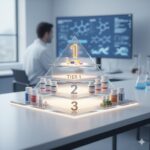
In accordance with the principles of metabolic oncology, several dietary strategies are proposed:
Reduction of glucose and glutamine
The central strategy is dietary calorie restriction to lower glucose levels and thereby “starve” the cancer cells. The ketogenic diet is highlighted as the most effective way to achieve this, as it replaces glucose with ketone bodies (beta-hydroxybutyrate), which normal cells can use but which many cancer cells have difficulty metabolizing.
See also Diet as a tool
See also Sugar and cancer
See also Ketogenic diet and LCHF
Intermittent fasting
Intermittent fasting/time-restricted eating is described as the most effective method for activating autophagy (cellular cleanup of damaged cell parts and proteins), which can potentially help remove damaged cells. However, it is nuanced that the effect of fasting in an established tumor is complex and should be individualized.
See also Fasting
Ranking of repurposed drugs
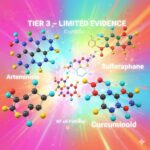
TThe text contains a detailed ranking of over 40 agents, divided into four levels:
Tier 1: Stærk anbefaling
These agents are ranked highest due to strong clinical and/or mechanistic evidence. They often have multiple mechanisms of action (multimodal action) that directly affect cancer cell survival, metastasis, and the tumor microenvironment:
- Vitamin D: Improves the immune system, induces differentiation and apoptosis.
- Propranolol: Blocks sympathetic nervous system activation, which can promote cancer growth and metastasis (especially relevant during surgery).
- Melatonin: A potent oncostasis (anti-cancer) agent that improves sleep and reduces mortality.
- Metformin: Lowers blood sugar, inhibits the mTOR pathway, and has anti-inflammatory effects.
- Curcumin: Inhibits NF-\kappa B (inflammation) and has pro-apoptotic effects.
- Ivermectin: Anti-cancer effect against stem cells.
- Mebendazole: Anti-cancer effect against stem cells.
Tier 1 – strong recommendation
Overview table
Read more…
| Agent | Primary mechanism of action | Primary application/focus |
| Vitamin D3 | Immune modulation, induction of apoptosis, inhibits cell proliferation (WNT-\beta catenin). | Broad spectrum: Breast, colorectal, prostate. Lowers mortality. |
| Propranolol | Blocks beta-adrenergic receptors, counteracts stress-induced spread, and inhibits metastasis. | Prevention of metastasis (perioperatively). Breast cancer. |
| Melatonin | Direct oncostasis, antioxidant, immune modulation (stimulates NK cells), improves sleep/quality of life. | Broad spectrum, especially in combination with chemotherapy/radiation. |
| Metformin | Inhibits mTOR, activates AMPK, lowers blood sugar/insulin (anti-Warburg effect). | Colorectal, prostate, breast. Recommended for insulin resistance. |
| Curcumin | Inhibits NF-\kappa B (anti-inflammation), induces apoptosis, inhibits angiogenesis. | Multiple cell lines. Improves response to chemotherapy. |
| Ivermectin | Anti-cancer effect against cancer stem cells (CSCs). | Multiple tumor types (in vitro/in vivo). |
| Mebendazole/ Fenbendazole/ Albendazole | Disrupts microtubule function (similar to chemotherapy), inhibits CSCs. | Broad spectrum, especially glioblastoma (off-label). |
| Green tea (catechins) | Antiglycolytic (inhibits glutamine metabolism), antioxidant, antiangiogenesis. | Prevention and supplement. |
| Omega-3 fatty acids | Anti-inflammation (inhibits COX-2/PGE_2), inhibits cell proliferation, counteracts cachexia. | Reduces mortality and improves QoL. |
| Berberine | Activates AMPK, lowers blood sugar, improves gut microbiota. | Supplement/alternative to Metformin (especially for glucose control). |
| Atorvastatin/ Simvastatin | Inhibits cholesterol synthesis (HMG CoA), reduces cell division, pro-apoptotic. | Breast, prostate, colorectal. Lipophilic statins preferred. |
| PDE5 inhibitors (Sildenafil, Tadalafil) | Immune modulation (reduces MDSC/Tregs), anti-angiogenesis, pro-apoptotic. | Colorectal, prostate. |
| Disulfiram | Inhibits ALDH (Copper-complex), induces oxidative stress and apoptosis. | Glioblastoma, NSCLC (in combination with copper). |
| Ashwagandha | Adaptogen (stress/sleep), anti-inflammation, pro-apoptotic, increases quality of life during chemo. | Reduces side effects, given as a supplement. |
| Itraconazole | Inhibits Hedgehog and Wnt/\beta-catenin signaling pathways, anti-angiogenesis. | Prostate cancer, NSCLC. |
| Mistletoe (Viscum album) | Immune modulation, improves quality of life, increases tolerance to chemotherapy/radiation. | Broad spectrum (administered subcutaneously/IV). |
| Cimetidine | Blocks H2 receptors, immune modulation, anti-cell adhesion, anti-angiogenesis. | Perioperative prophylaxis – colorectal, melanoma. |
Tier 2: Moderate recommendation
These agents have good evidence for biological effect (mechanistic effect) and are generally safe, but clinical data are more limited or pending. They are considered very promising in an integrative protocol:
- Atorvastatin (Statins): Inhibits HMG-CoA reductase, disrupting cancer cell membrane formation and signaling pathways.
- Doxycycline: An antibiotic with anti-inflammatory properties that inhibits MMPs (matrix metalloproteinases) and metastasis.
- Artemisinin (and derivatives): Shows selective toxicity towards cancer cells through the formation of free radicals in iron-rich cells.
- Berberine: Improves insulin sensitivity and has anti-inflammatory and anti-proliferative effects.
Tier 2 – moderate recommendation
Overview table
Read more…
| Agent | Primary mechanism of action | Cancer type / specific cell type / form |
| Valproic Acid (VPA) | Inhibits Histone Deacetylase (HDAC), induces apoptosis and cell cycle arrest. | Glioblastoma (extends survival, Obs.), Prostate, Ovarian cancer, Leukemia (synergy with chemo). |
| Low Dose Naltrexone (LDN) | Blocks Opioid Growth Factor receptor (OGFr), modulates immune function (TLR inhibition). | Renal cell carcinoma, Melanoma, Breast cancer (primary evidence from case reports/small series). |
| Doxycycline | Blocks tissue-degrading enzymes, anti-inflammation, inhibits metastasis. | Melanoma, Hepatocellular, Lung, Breast cancer, Gliomas (synergy with COX inhibitors). |
| Spironolactone | Regulates DNA damage response (NER inhibitor), inhibits metastasis, increases NK cell effect. | Prostate, Glioblastoma, Lung cancer, Breast cancer (reduced incidence/recurrence in Obs. studies). |
| Resveratrol/ Pterostilbene | Anti-inflammation, inhibits PI3K/Akt/mTOR, induces apoptosis. | Prostate, Breast, Colorectal, Hepatocellular (Pterostilbene is the preferred analog). |
| Wheatgrass | Antioxidant enzymes, immune modulation (increases IL-10 and NK cells). | Colorectal (improves survival in Obs.), Breast cancer (reduces myelosuppression during chemo). |
| Captopril | Inhibits Angiotensin Converting Enzyme (ACE inhibitor), anti-angiogenesis (reduces VEGF), inhibits MMP-2. | Prostate, Lung cancer (LNM35 cell line), Hepatocellular (cirrhosis model). |
| Clarithromycin | Immune modulation (increases NK cells), anti-angiogenesis, pro-apoptotic. | Multiple Myeloma (high response rate in combination), NSCLC, Lymphoma (MALT). |
Tier 3: Consideration with limited evidence
These agents have some promising data but are often more experimental, or their clinical relevance has not yet been established. They should only be used in individual cases after careful consideration:
- Aspirin: Can reduce the risk of certain cancers and metastasis through anti-inflammatory action, but there is a risk of bleeding.
- Silybin (Milk Thistle): Has shown hepatoprotective (liver-protective) and anti-cancer effects.
- Sulforaphane: A powerful antioxidant that modulates phase I and II enzymes, aiding detoxification.
Tier 3 – limited evidence
Overview table
Read more…
| Agent | Primary mechanism of action | Cancer type / specificity / evidence status |
| Cyclooxygenase inhibitors (Aspirin, Diclofenac) | Inhibits COX-2 (anti-inflammation), anti-angiogenesis, pro-apoptotic. | Colorectal (Prevention, RCTs mixed), Breast, Prostate, Glioblastoma (Note: Risk of bleeding). |
| Nigella sativa (Thymoquinone) | Anti-inflammation, inhibits PI3K/Akt/mTOR and NF-\kappa B, induces apoptosis. | Ovarian, Leukemia, Colorectal, Hepatocellular, Lung (Strong in vitro/in vivo, lacks human trials). |
| Ganoderma Lucidum (Reishi) & Medicinal Mushrooms | Immune modulation (stimulates NK cells), induces apoptosis/pyroptosis. | Breast, Colorectal (reduced adenomas), Hepatocellular, Leukemia (improves QoL in trials). |
| Dipyridamole | Inhibits Phosphodiesterase (PDE), blocks nucleoside uptake, anti-platelet. | Breast cancer (reduces metastasis in animal models). (Limited human data). |
| High-Dose Intravenous Vitamin C (HDIVC) | Pro-oxidant effect (creates H_2O_2) in cancer cells (due to low catalase). | Colorectal, Ovarian, Glioblastoma (synergy with chemo. Note: Contraindicated in G6PD deficiency). |
| Dichloroacetate (DCA) | Blocks cancer cells’ sugar metabolism and forces them to use oxygen. | Glioblastoma, Lung cancer, Colorectal (neurotoxicity is a major safety concern). |
| Nitroglycerin (NTG) | Increases nitric oxide (NO), reduces hypoxia, potentially increased chemotherapy delivery. | NSCLC (mixed clinical results), Prostate (synergistic in animal models). |
| Sulforaphane | Inhibits Histone Deacetylase (HDAC), eliminates cancer stem cells. | Prostate, Pancreatic, Breast (TNBC). (Absorption depends on myrosinase). |
| Artemisinin | Forms free radicals via iron (Fenton reaction), induces ferroptosis (iron-dependent cell death). | Glioblastoma, Breast, Colorectal (availability and resistance issues). |
| Cannabinoids (THC/CBD) | Causes cancer cells to die via a chemical signal (CB1 receptor) and stops new blood vessels to the tumor. | Glioblastoma (promising Phase I/Ib), Pain management (opioid-refractory). |
| Fenofibrate | Stimulates PPAR\alpha, induces apoptosis and cell cycle arrest. | Hepatocellular, Breast, Lung, Glioma (only preclinical evidence). |
| Niclosamide | Mitochondrial uncoupler (Oxidative phosphorylation inhibitor), inhibits Wnt/\beta catenin. | Ovarian (CSC target), Prostate (only preclinical evidence). |
| Pao Pereira (Geissospermum vellosi) | Induces apoptosis, inhibits Wnt/\beta catenin. | Prostate, Ovarian, Pancreatic, Glioblastoma (only preclinical evidence). |
| Dandelion Extract | Induces apoptosis, modulates TME (repolarizes macrophages). | Esophageal squamous cell carcinoma, Colorectal, Breast (TNBC) (preclinical only). |
| Annona muricata (Graviola) | Inhibits ATP production (Complex I), induces apoptosis. | Prostate, Breast, Colorectal (Risk of neurotoxicity). |
Tier 4: Discouraged
The text is also clear in its warnings against agents that are either ineffective, harmful, or have a poor risk profile.
This includes:
- B-complex vitamins: Folate and B12 can function as growth factors for tumors.
- Colchicine
- Essiac/Flor-Essence
- Laetrile (Amygdalin): Discouraged due to lack of evidence or risk of toxicity.
Perioperative drugs
A special and important focus is on the use of repurposed drugs before surgery (perioperatively). This is done to reduce the risk of metastasis resulting from surgical manipulation.
Recommendations include Propranolol, COX-2 inhibitors (e.g., Celecoxib), and Cimetidine given in the days leading up to and following surgery.
Et særligt og vigtigt fokus er på brugen af repurposed drugs før en operation (perioperativt). Dette gøres for at reducere risikoen for metastaser som følge af kirurgisk manipulation.
Integrative and adjunctive treatments
Finally, other complementary therapies that can be used in combination are touched upon:
- Terapeutisk Hypertermi (TH): Used in combination with chemo- and radiotherapy to increase tumor killing.
See also Magnetic hyperthermia
- Tumor Treating Fields (TTF): Non-invasive anti-mitotic therapy (Optune®), which has shown benefit for patients with glioblastoma.
- Metronomic Dosing: A strategy where chemotherapy is given in low doses over a longer period to reduce toxicity and affect the tumor microenvironment.
See also Integrative Onchology
Clinical evidence vs. pathway blocking
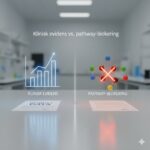
One might immediately wonder why there are preparations under Tier 3 that can be part of the “Main Path” in the charts for metabolic blocking. This applies to agents such as Aspirin, Artemisinin, Sulforaphane, and intravenous Vitamin C (HDIVC).
This is based on their strong fundamental biological action. Their placement in Tier 3 is solely due to factors related to safety and clinical uncertainty, not a lack of biological potential:
- Fundamental purpose (biological effect): The agents are suitable for blocking the characteristics of cancer (inflammation or energy supply). For example, Aspirin blocks an inflammation-promoting enzyme called COX-2. This enzyme helps produce a chemical growth signal (called PGE_2), which the cancer uses to grow. Aspirin effectively turns off this signal, which is otherwise a strong inflammation signal in the tumor that both accelerates cell division, weakens the immune system, and helps the cancer obtain its own blood supply.
- Reasons for Tier 3 placement: The ranking is due to individual limitations:
- Safety risk: Aspirin has a documented bleeding risk, and HDIVC carries a risk in G6PD deficiency and is complex to administer.
- Lack of clinical data: Artemisinin and Sulforaphane have strong preclinical data but lack robust clinical evidence in humans to justify a Tier 1 recommendation.
- Administration: For intravenous Vitamin C (HDIVC), it has complex administration requirements and there is a risk of a dangerous reaction in a rare genetic condition (G6PD deficiency).
Summary:
- These substances are all Tier 1 agents in terms of biological potential (high pathway efficiency), but clinically, they are Tier 3 agents in this context for the reasons mentioned above (safety risk or insufficient survival data).
- The specialized text reviewed in this article prioritizes safety and robust survival data highest in the Tier ranking. In contrast, the charts for blocking cancer pathways prioritize blocking as effectively and broadly as possible using repurposed drugs and supplements.
Conclusion
This text is a rare, authoritative source that brings together hundreds of studies on complementary oncological strategies. It offers a counterweight to the established system’s often trivializing attitude towards these topics.
It confirms that the individual patient and their self-determination should and must be at the center.
Thanks for the tip
To Pia Friis (from the Facebook group Jeg har Kræft – Hvad kan jeg gøre)
Links
The role of repurposed drugs and metabolic interventions in treating cancer, 2nd edition (af Paul E. Marik, MD, FCCM, FCCP, FLCCC Alliance, Honest Medicine, Cancer Care, 2024)
Approach to the Use of Repurposed Drugs in Patients with Cancer (af Paul E. Marik, MD, FCCM, FCCP og Justus R. Hope, MD, Cancer Care, Independent Medical Alliance, 2025)
Page created: 18.11.25
d. 18.11.25
❤
What you read on Jeg har Kræft is not a recommendation. Seek competent guidance.
