


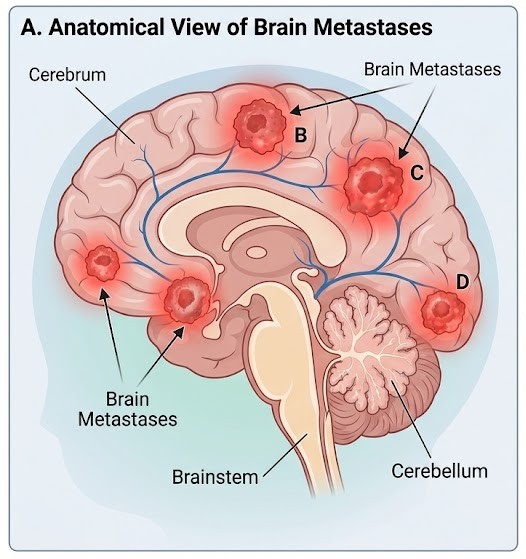
Brain metastases and the blood-brain barrier
Resume om hjernemetastaser og blod-hjerne-barrieren
Blood-brain barrier (BBB):
- The body’s filter protects the brain by rejecting 95% of all medicine. To target brain metastases, one must choose substances that are small and fat-soluble enough to break through this defense.
Bioavailability and passage:
- The fact that a substance is beneficial for the body does not guarantee passage to the brain. The BBB effectively blocks the vast majority of supplements and medications. Even with targeted carriers, such as modified liposomes, only a vanishingly small group of specific (especially small) molecules can be assisted across.
Targeted choice of agents:
- The use of off-label medicine such as Mebendazole and supplements like Honokiol are strategic choices. Their chemical profile, including a very small molecular size, enables them to cross the barrier and attack tumor cells directly in the central nervous system.
Brain metastases – spread to the central nervous system
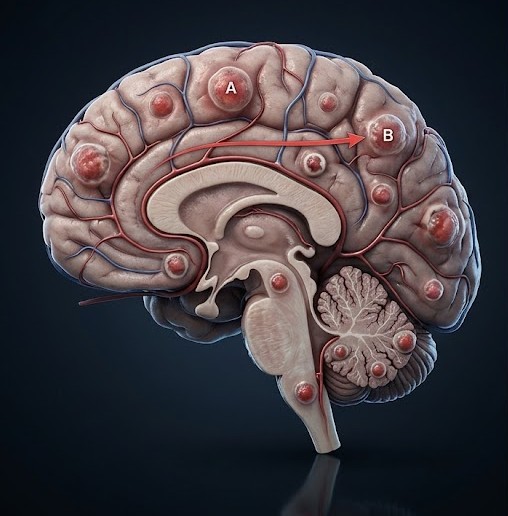
Brain metastases occur when cancer cells break away from a primary tumor – often in the lungs, breast, or skin – and are transported through the bloodstream to the brain. Since the brain is the body’s most protected organ, the cancer cells must not only survive in a new environment but also physically break through the body’s natural defenses to establish themselves.
This creates a complex situation where the tumor hides behind the same barrier that tries to keep life-saving treatment out. From a treatment perspective, the challenge is therefore to find a viable path through for effective agents.
What is the blood-brain barrier? (BBB)
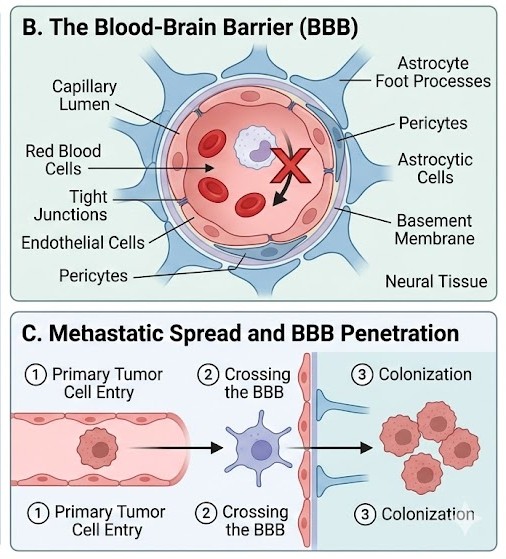
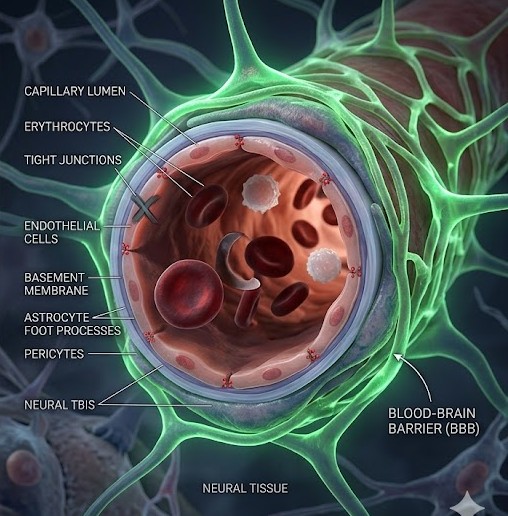
The blood-brain barrier (often abbreviated as BBB) is the body’s most advanced security system. It is a dense network of specialized endothelial cells (barrier cells) lining the capillaries (the small blood vessels) in the brain. These cells are bound together by tight junctions, which prevent toxins and bacteria from penetrating from the blood into the brain tissue.
The challenge arises with brain metastases, as the barrier’s primary task is to keep foreign molecules out. This means that it rejects over 95% of all modern drugs. Only very small, fat-soluble (lipophilic) molecules or substances that utilize active transport proteins can pass effectively. It is a widespread scientific recognition that the blood-brain barrier often changes in metastatic disease. It becomes leakier and forms what is called the blood-tumor barrier, which opens a window for specific therapeutic agents. [17]
Bioavailability and passage to the brain
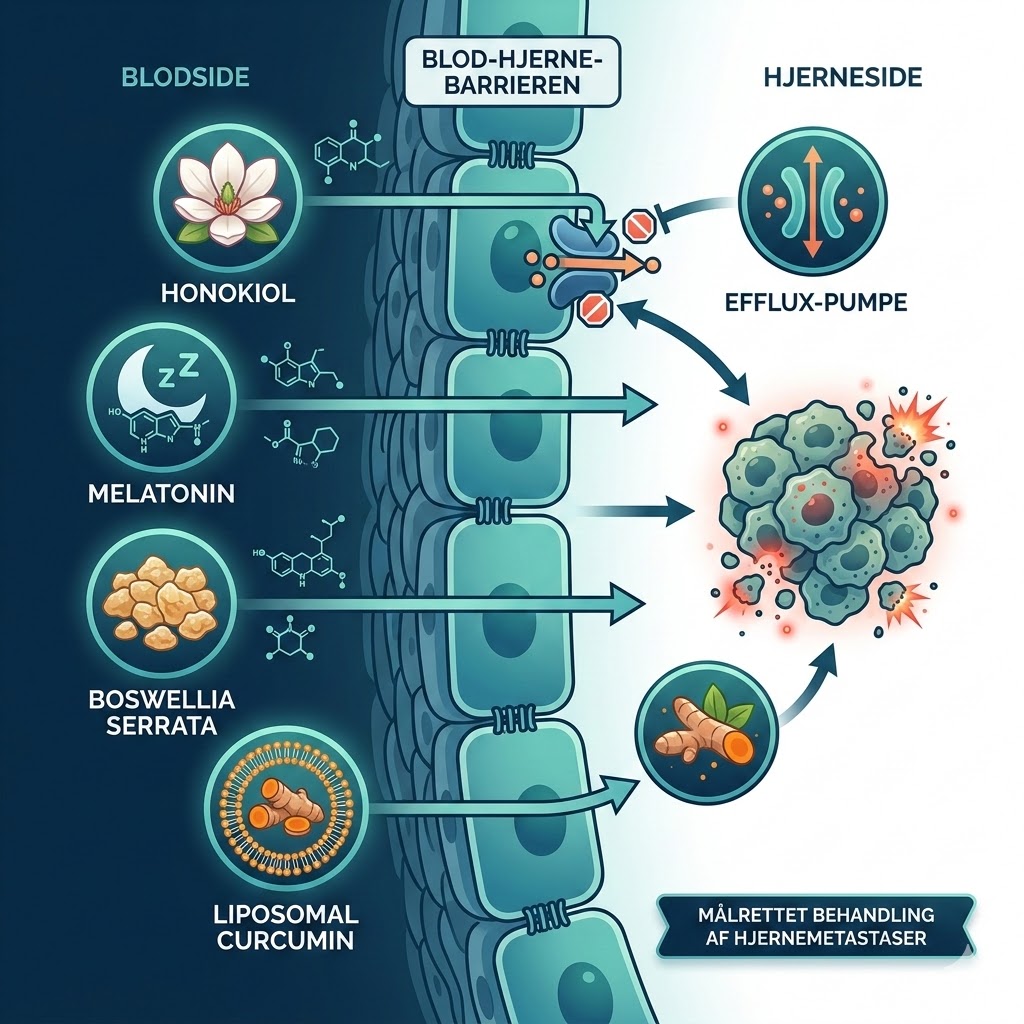
It is a critical mistake to believe that every anti-inflammatory substance works in the brain. The greatest challenge, as mentioned, is the substance’s ability to reach its destination and remain there.
Lipophilicity and transport:
Since the brain largely consists of fat, fat solubility (lipophilicity)—in addition to a very small molecular size—is a prerequisite for a substance to diffuse through the barrier’s membranes. Substances that do not naturally possess this property, such as standard Curcumin, require advanced delivery systems like liposomes or nanoparticles to bypass degradation and cross the barrier. [15, 16]
Efflux pumps (P-gp):
Many substances technically enter the brain but are immediately pumped back out by P-glycoprotein pumps (P-gp). Inhibiting these pumps is a central strategy for increasing the concentration of medicine in the central nervous system.
Strategic “gate openers”:
Certain agents such as Honokiol can modify the barrier’s permeability and thus act as a door opener for subsequent oncological preparations. [7]
From blood-brain barrier to blood-tumor barrier
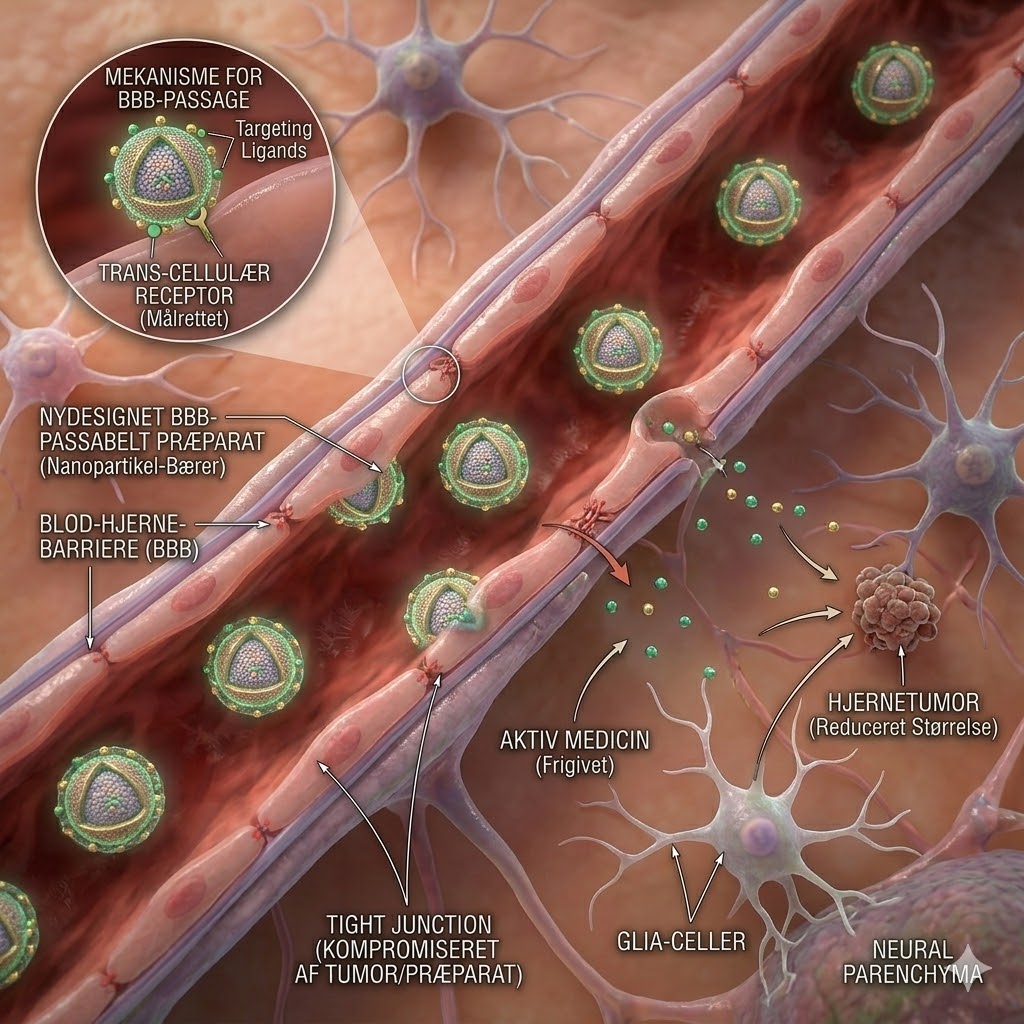
In brain metastases, the original blood-brain barrier is often observed to transform into a “blood-tumor barrier” (BTB). Although this tumor barrier can be leakier than the healthy BBB, the distribution of medication within the metastases is often highly irregular. This means that the outer parts of a metastasis may receive medication, while the inner, most aggressive parts remain protected. Therefore, the choice of preparations with naturally high CNS penetration—the ability to penetrate deep into the central nervous system—is absolutely crucial for the success of the treatment.
Off-label medicine with CNS penetration
Several medications, originally approved for other purposes, possess the unique chemical properties required to penetrate the central nervous system (CNS):
- Mebendazole: In addition to inhibiting microtubule formation, it is now being investigated in phase 1 human trials to determine the maximum dose that can safely cross the barrier in malignant brain tumors. Furthermore, it is suggested as a superior replacement for vincristine, as it has a naturally higher ability to penetrate deep into brain tissue and thus reach the most aggressive parts of metastases. [1]
- Chloroquin/ Hydroxychloroquin: Originally for malaria. It crosses the BBB and blocks the cancer cells’ “recycling stations” (autophagy), which prevents them from repairing themselves. This weakens their survival mechanisms and makes them significantly more vulnerable to radiation and chemotherapy. [2]
- Simvastatin and Lovastatin: Certain statins are more lipophilic than others. Simvastatin and Lovastatin cross the BBB effectively and are being investigated for their ability to induce apoptosis (cell death) in cancer cells in the brain by disrupting the cells’ energy production. However, Atorvastatin also appears to have some effect. [3]
- Propranolole: A beta-blocker that freely crosses the BBB. It can reduce the stress response (norepinephrine) that otherwise promotes the spread and survival of metastases. By blocking these stress signals, the cancer cells’ ability to colonize the brain tissue is inhibited. [4]
- Celecoxib (Celebra): A COX-2 inhibitor that crosses the BBB and is used to reduce neuroinflammation (inflammation in nerve tissue) and the edema (fluid accumulation) that often occurs around a tumor. By dampening the inflammation, the environment in the brain tissue is improved, which can increase the effectiveness of other treatments. [5]
Supplements with the ability to cross the barrier
In the case of brain metastases, one must choose supplements that are not only systemically healthy, but which demonstrably reach the brain tissue:
- Honokiol: Extracted from magnolia bark. It is extremely fat-soluble and acts as a gate opener that can increase the penetration of conventional medicine into the brain. It helps overcome drug resistance and triggers direct cell death in cancer cells after crossing the barrier. [6, 7, 8]
- Melatonin: An amphiphilic (water- and fat-soluble) molecule that freely crosses the BBB. In oncological use, it acts as a radiosensitizer that increases the sensitivity of tumor cells to radiation, while providing neuroprotection (nerve protection) to healthy brain tissue. [9]
- Boswellia Serrata: Clinically important for the management of perifocal edema (fluid accumulation) around tumors. By inhibiting the 5-LOX enzyme, active boswellic acids reduce vascular leakage and inflammation, which helps alleviate critical pressure in the brain. It is documented to be effective in radiation-induced brain edema (fluid accumulation) and can be used strategically to reduce the need for corticosteroids. [10, 11]
- Berberine: Although it has low general bioavailability, in the right doses it can cross the BBB and interfere directly with the metabolism of cancer cells. It works by inhibiting their energy supply and blocking the signaling pathways that metastases use to invade brain tissue, which can limit spread in the central nervous system. [12]
- Andrographis paniculata: Contains andrographolide, which penetrates the brain and dampens neuroinflammation (inflammation in nerve tissue) by blocking pro-inflammatory cytokines, protecting the brain tissue from the inflammatory reactions that occur as a result of the cancer. [13, 14]
- Curcumin: By utilizing a lipid-encapsulated form, curcumin can bypass the barrier’s restrictions. Here, it acts as a crucial pump inhibitor, blocking the mechanisms that otherwise remove chemotherapy from the brain’s cancer cells. It simultaneously attacks specific stem cell markers, weakening the cancer cells’ resistance and ability to regenerate. [15, 16]
Overview of studies and evidence

| Substance | Study Type | Oncological Relevance |
| Mebendazole | Clinical Phase 1 | High CNS penetration; inhibits microtubules and cell division in the brain. [1] |
| Melatonin | Non-randomized | Radiosensitizer; protects healthy brain tissue during chemo and radiation. [9] |
| Honokiol | Non-randomized (Lab) | Gate opener; triggers direct cell death in cancer cells after passing the BBB. [6, 7, 8] |
| Boswellia | Randomized | Treats cerebral edema and vascular leakage; reduces the need for corticosteroids. [10, 11] |
| Andrographis | Non-randomized | Dampens neuroinflammation and protects the CNS from cytokines. [13, 14] |
| Liposomal curcumin | Non-randomized | Inhibits P-gp resistance pumps and attacks cancer stem cells. [45A] |
| Chloroquine | Non-randomized | Blocks cancer cells’ recycling stations (autophagy); increases radiation sensitivity. [2] |
| Simvastatin / Atorvastatin | Non-randomized | Lipophilic statins; cross the BBB and are being investigated for the ability to induce apoptosis in brain tumors. [3] |
| Propranolol | Non-randomized | Beta-blocker; reduces the stress response (norepinephrine) that promotes spread. [4] |
| Celecoxib | Randomized Phase 3 | Reduces neuroinflammation and fluid edema around tumors. [5] |
| Berberine | Preclinical/Lab | Affects cancer cell metabolism and can cross the BBB in the right doses. |
Conclusion

Treatment of brain metastases is a race against time and the body’s own defense in the form of the blood-brain barrier. It is not enough to find a substance that works on cancer cells in a petri dish; it must be able to cross the BBB in therapeutic concentrations. By combining lipophilic off-label medications like Mebendazole and Simvastatin with strategic supplements like Honokiol and Boswellia, a more targeted effort against brain metastases can be created. The understanding of chemical passage and bioavailability is the decisive factor here that separates an effective strategy from a wasted effort.
See also Barriers and chemo-uptake
See also Metastases
See also Metabolic strategy – block signaling pathways by cancer type – table owerviews
See also Medication logistics
See also Bombs, fire extinguishers and timing
See also Ablation treatment
See also CyberKnife
See also Holistic doctors DK.
Links
[1] Repurposing Drugs in Oncology (ReDO) – Mebendazole (eCancer, 2014)
- Content: A review of preclinical studies and case reports documenting mebendazole’s potential as a cancer treatment. The article highlights the drug’s ability to act synergistically with existing chemotherapy and its documented activity against several different types of cancer.
[2] Neuroprotective effects of chloroquine on neurological scores, blood-brain barrier permeability, and brain edema (Journal of Neurocritical Care, 2023)
- Content: A preclinical study (animal trial) documenting that chloroquine easily crosses the blood-brain barrier and exerts neuroprotective effects. Results show that the preparation reduces brain edema and protects the integrity of the barrier by decreasing the secretion of inflammatory markers (MMP-9) in the cerebrospinal fluid.
[3] The effects of statin therapy on brain tumors, particularly glioma: a review (Anti-Cancer Drugs, 2023)
- Content: A systematic review documenting that simvastatin and lovastatin (and to some extent atorvastatin) are lipophilic and therefore easily penetrate the barrier to the brain. The study explains how these preparations as supplementary treatment can slow the cancer cells’ ability to divide, migrate into healthy tissue, and form new blood vessels, while promoting natural cell death in brain tumors.
[4] β-blockers: Their new life from hypertension to cancer and migraine (Pharmacological Research, 2020)
- Content: A literature review documenting that lipophilic beta-blockers, specifically propranolol, easily cross the barrier to the brain. The study explains how the preparation blocks receptors that otherwise stimulate the growth of cancer cells, thereby potentially reducing the risk of metastasis in various types of solid tumors.
[5] Avoiding Glucocorticoid Administration in a Neurooncological Case (Cancer Biology & Therapy, 2005)
- Content: A case report describing how celecoxib was used as a replacement for corticosteroids to prevent swelling in the brain in a patient with a brain tumor. Although measurements showed limited passage to the cerebrospinal fluid, the treatment was sufficient to avoid fluid accumulation throughout the course.
[6] Honokiol in glioblastoma recurrence: a case report (Frontiers in Oncology, 2023)
- Content: A case report documenting an effective and safe response in a patient with recurrent brain cancer using honokiol encapsulated in lipid particles (liposomes). The study confirms that this form of honokiol can penetrate the barrier to the brain and fight aggressive cancer cells where standard treatment is no longer effective.
[7] Honokiol traverses the blood-brain barrier and induces apoptosis of neuroblastoma cells via an intrinsic bax-mitochondrion-cytochrome c-caspase protease pathway (PubMed, 2012)
- Content: This scientific investigation documents that honokiol can effectively pass through the blood-brain barrier due to its small molecular size. The study, based on non-randomized laboratory research, explains that after crossing, the substance triggers programmed cell death in neuroblastoma cells by activating specific proteins and signaling pathways in the cells’ mitochondria.
[8] Honokiol in cancer: Roles in enhancing combination therapy efficacy and preventing post-transplant malignancies (Acc Science, 2025)
- Content: This scientific review describes how honokiol can function as supportive treatment by increasing the effectiveness of chemotherapy such as cisplatin and paclitaxel. The study, based on non-randomized evidence, explains that the substance helps overcome drug resistance and can reduce the required doses of other preparations by reactivating the immune system and inhibiting tumor growth.
[9] Melatonin in Chemo/Radiation Therapy; Implications for Neuroprotection and Radiosensitivity (ResearchGate, 2024).
- Content: This scientific review describes how melatonin effectively crosses the blood-brain barrier due to its lipophilicity and small molecular size. The study, based on non-randomized evidence, documents that this property makes it possible for melatonin to protect the central nervous system and reduce brain damage caused by chemotherapy and radiation.
[10] Boswellia serrata acts on cerebral edema in patients irradiated for brain tumors (Cancer, 2011)
- Content: A randomized and double-blind phase 1 pilot study documenting that 60% of patients had their swelling in the brain reduced by over 75% using Boswellia. The study shows that the active substances can be measured in the blood and suggests that the plant can reduce the need for corticosteroids during radiotherapy for brain tumors.
[11] Treatment of Steroid-Resistant Radiation-Induced Cerebral Edema (Balkan Medical Journal, 2025).
- Content: This scientific article describes how Boswellia serrata can be used to treat brain edema caused by radiotherapy. The study, which includes randomized evidence, explains that the active boswellic acids work by inhibiting inflammation and reducing vascular leakage, which helps decrease fluid accumulation in the brain tissue.
[12] Therapeutic Efficacies of Berberine against Neurological Disorders (Cells, 2022)
- Content: A literature review documenting berberine’s ability to cross the barrier to the brain and protect against damage in the central nervous system. The study describes how berberine can combat brain tumors by slowing their growth and promoting natural cell death, while dampening inflammatory conditions in the brain tissue.
[13] A review for the neuroprotective effects of andrographolide (ResearchGate, 2025).
- Content: This scientific review describes how andrographolide from the plant Andrographis paniculata can effectively pass the blood-brain barrier and distribute into various regions of the brain. The study, based on non-randomized evidence, documents that the substance protects the central nervous system by inhibiting neuroinflammation and reducing the production of pro-inflammatory cytokines, making it relevant for the prevention and treatment of neurological disorders.
[14] Drug-Herb Interactions among Thai Herbs and Anticancer Drugs (National Institutes of Health / PMC, 2022).
- Content: This scientific review maps interaction risks for Thai herbs, including Andrographis paniculata, when combined with oncological preparations. The study, based on non-randomized evidence, documents that these herbs can affect the safety and efficacy of chemotherapy by interacting with liver enzymes (CYP) or altering the drugs’ pharmacodynamics.
[15] Revisiting Curcumin in Cancer Therapy: Recent Insights and Clinical Progress (MDPI, 2025).
- Content: This scientific review evaluates curcumin as a promising anti-cancer agent through its ability to regulate key signaling pathways and trigger new forms of cell death such as ferroptosis. The study, based on non-randomized evidence, documents that modern nanoformulations improve the substance’s bioavailability and enable it to act synergistically with chemotherapy to overcome drug resistance.
[16] Effects of Curcumin on Cancer Stem Cell Markers and P-Glycoprotein–Mediated Drug Resistance in U87 Glioblastoma Cells (DergiPark, 2025).
- Content: This scientific study documents that curcumin can inhibit the growth of glioblastoma cells by blocking their life cycle in the G2/M phase. The study, based on non-randomized laboratory research, explains that curcumin reduces the prevalence of cancer stem cell markers (CD44 and CD133) and inhibits the transport protein P-glycoprotein, which weakens the cancer cells’ resistance to treatment.
[17] Metastatic Brain Tumors Disrupt the Blood-Brain Barrier and Alter Lipid Metabolism by Inhibiting Expression of the Endothelial Cell Fatty Acid Transporter Mfsd2a (Nature, 2018)
- Content: The study documents that brain metastases make the blood-brain barrier leakier by inhibiting a specific transporter (Mfsd2a) in the vessel wall cells. This increases permeability but also alters lipid metabolism in the cancer cells. Researchers suggest that restoring this metabolism could block the growth of metastases.
Page created:
d. 28.02.26
❤
What you read on I Have Cancer is not a recommendation. Seek qualified guidance.
