

Latest
Research
- Treatment techniques and interventions
- Diagnostics and biomarkers
- Prevention and health promotion
- The immune system and disease
- Clinical trials and protocols
- Diet, lifestyle, and personalized medicine
- Ethical considerations
- Telemedicine and digital health
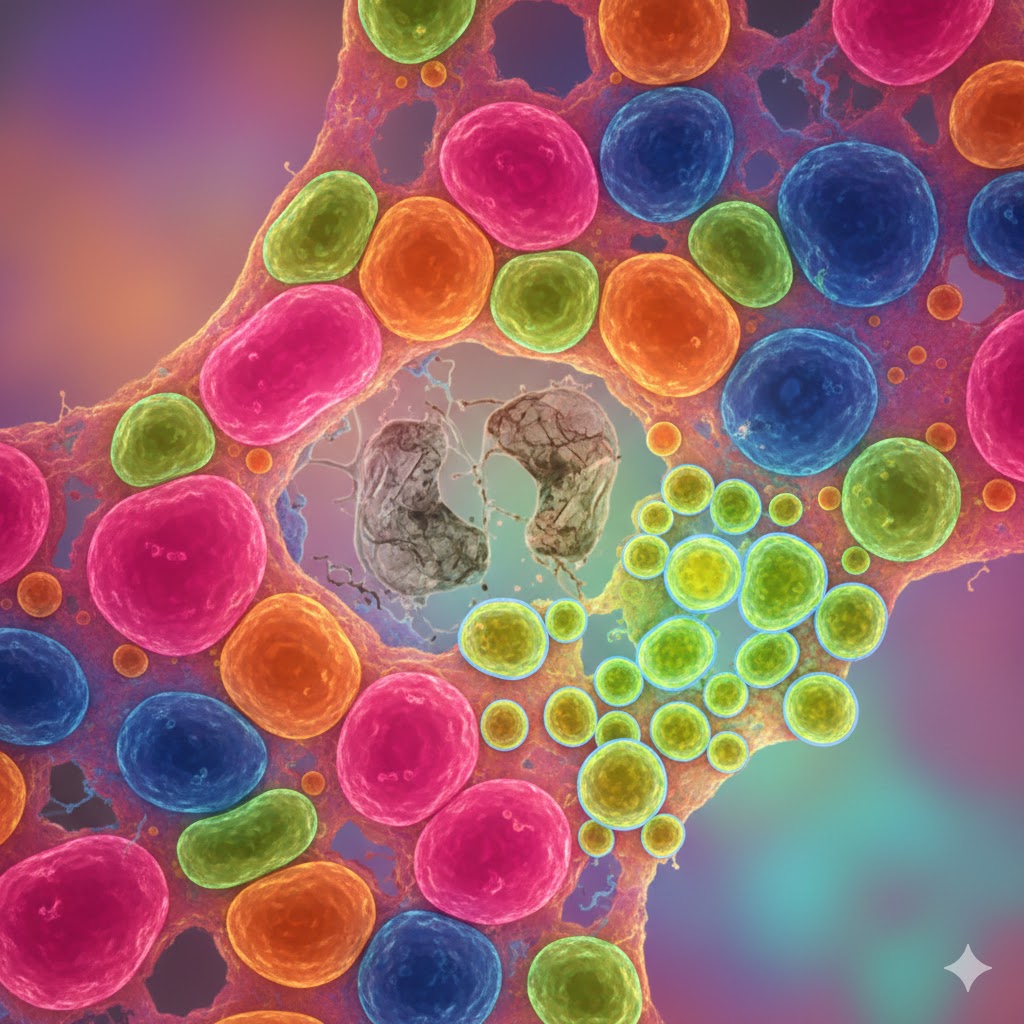
TINAP – Understanding Cancer – and a Protocol
Summary of the systemic cancer model
Systemic understanding:
- Cancer is not viewed as a genetic error, but as a breakdown in the body’s control systems and the connective tissue’s ability to regulate cells.
Systemic patterns:
- Using mathematical models, cancer processes are analyzed to highlight the necessity of an overall systemic understanding (the interaction between the body’s systems).
The RCA framework:
- A new model for oncology that focuses on repairing the extracellular environment (ECM) and restoring normal cell maturation.
Practical protocol:
- A targeted approach focusing on light, cold, fasting, and specific building blocks such as EAA and vitamin D to restore order to the system.
Who is Finn Ernst Olsen
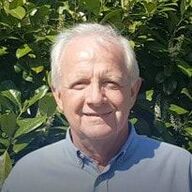
Finn Ernst Olsen is trained as an electronics engineer. It is precisely this unconventional starting point that is the foundation of TINAP’s success. By applying systems and control theory from the engineering world to the human body, he has been able to identify patterns and statistical improbabilities that traditional medical research often overlooks.
After a personal loss to cancer, Finn Ernst Olsen has devoted the past 8 years to uniting disciplines such as mathematics, physics, and biosemiotics in the search for a universal explanation of cancer. His ability to deconstruct complex biological processes into mathematical models has not only resonated with patients, but has now also led to an invitation as a speaker at the prestigious oncology conference GCOC 2026 in Japan.
TINAP and the understanding of cancer
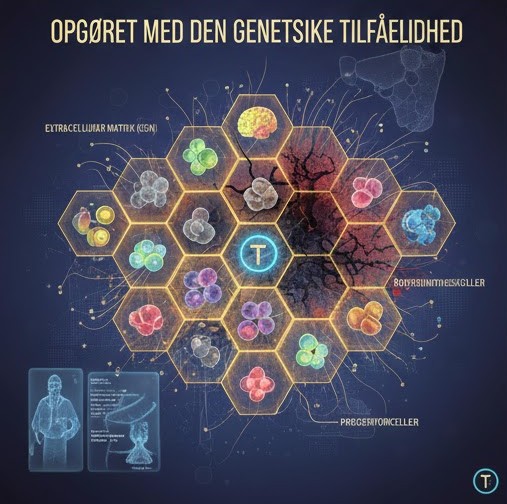
TINAP (Transdisciplinary Innovation Network Against Prostate Cancer) is a Danish research association that, since 2018, has worked to solve the mystery of prostate cancer through an unconventional, transdisciplinary approach. The association was founded by engineer Finn Ernst Olsen and bases its method on synthesis and innovation techniques across disciplines such as biochemistry, control theory, biosemiotics, and psychology. Instead of viewing cancer as an isolated genetic error in a single cell, TINAP sees the human body as a complex, intelligent communication network, where cancer arises as a system failure in the body’s/connective tissue’s ability to maintain and repair itself.
Independence as a driving force

A key reason TINAP can take such a radical approach lies in its foundation. The association operates as an independent, nonprofit research unit that receives neither funding from the pharmaceutical industry nor from major public foundations.
The research is driven by Finn Ernst Olsen’s personal investments combined with membership contributions and an extensive effort from a network of volunteer specialists. This financial independence gives the association the necessary academic freedom to challenge established truths and focus on regenerative solutions that cannot necessarily be patented as medicines, but instead are about rebuilding the body’s own control.
When the system loses control
To understand TINAP’s approach, the body must be seen as an advanced control system rather than merely a collection of cells. Traditional science focuses on mutations inside the cell itself, but TINAP argues that the cause lies outside the cell—in the extracellular environment (connective tissue).
Imagine the connective tissue as a conductor that constantly sends electrical and chemical stop signals to cells to keep them in place. According to this theory, cancer arises when the connective tissue is damaged and loses its ability to regulate cells. When the signals disappear, cells begin to behave chaotically and divide uncontrollably.
This understanding also means that TINAP emphasizes supporting connective tissue repair as an important supplement to conventional treatment. By focusing on restoring the body’s natural order, the system can be supported in regaining its normal function and maintaining cellular control.
Statistical perspectives on the cancer process
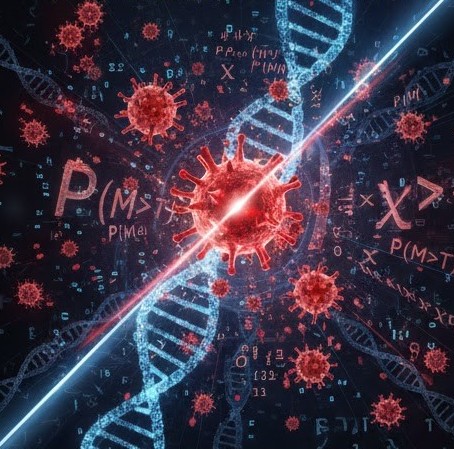
A central element of TINAP’s work is a scientific analysis of the Somatic Mutation Theory (SMT). In the study “A Critical Re-evaluation of the Somatic Mutation Theory (SMT)”, mathematical Poisson–Erlang models (statistical models for events over time) are used to assess the complexity of cancer development. The calculations suggest a “mutation paradox”, where the time required to accumulate necessary mutations in certain cases exceeds a human lifetime. This indicates that mutations can be viewed as part of a larger system failure in the body’s control mechanisms.
Part I: A Critical Re-evaluation of the Somatic Mutation Theory (SMT) (Published on bioRxiv, 2025)
The RCA framework: When connective tissue loses control
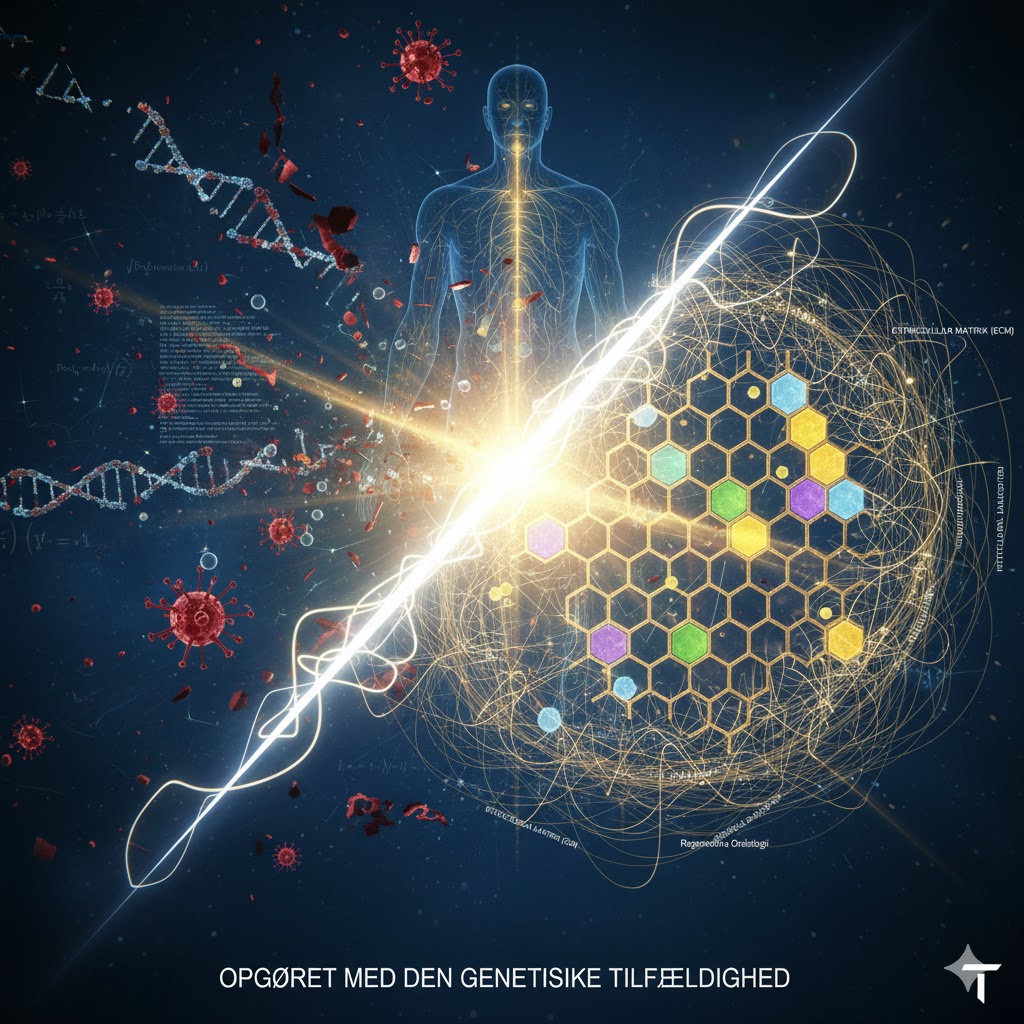
As an alternative to the cell-centric model, TINAP has developed the RCA framework (Repair and Capacity Adaptation). In the article “From Cell-Centric to System-Centric Carcinogenesis”, it is described how cancer arises when the extracellular matrix (ECM), and specifically the reticular lamina (ReL), breaks down. This connective tissue functions as the body’s control system, sending signals to progenitor cells (stem cell–like cells that have the ability to mature and repair specific tissue) to mature correctly.
How strong connective tissue tames cancer
To understand why TINAP focuses so heavily on connective tissue health, one must look at the five specific defense mechanisms that intact connective tissue uses to keep cells in check:
- A physical barrier: A healthy network of connective tissue fibers acts as a mechanical filter. It makes it physically difficult for cells to break out and spread.
- Inhibition of blood supply (angiogenesis): Healthy tissue contains natural substances that block the signals cancer cells send out to form new blood vessels. Without access to new supply lines, a tumor cannot grow.
- Signal regulation: Connective tissue sends constant chemical signals to nearby cells to remain quiescent. As long as this signaling environment is intact, the genes that would otherwise drive aggressive growth are suppressed.
- Storage of growth factors: Connective tissue acts as a reservoir that can capture and “lock in” the growth factors cancer cells need. It effectively starves cells of the necessary growth signals.
- Active reversion (dynamic reciprocity): Healthy connective tissue sends instructions all the way into the cell nucleus that can reprogram malfunctioning cells. This means connective tissue can actively force potential cancer cells back into a normal, peaceful function.
In short, strong connective tissue prevents cancer from developing by locking cells inside a controlled environment where they are deprived of their supply lines and their ability to spread. But the control goes deeper: healthy connective tissue sends active instructions to cells that can force them back to normal function, thereby actively counteracting malignant development.
Specific cancer types
Although the role of connective tissue as a physical barrier is most evident in solid organs, control in the RCA framework goes deeper. For example, in blood cancer or brain cancer, it is not necessarily a mechanical wall that fails, but the biosemiotic signaling environment itself, which normally dictates cellular order and maturation.
Part II: From Cell-Centric to System-Centric Carcinogenesis (the RCA Framework) (Published on Zenodo, 2025)
Mina Bissell
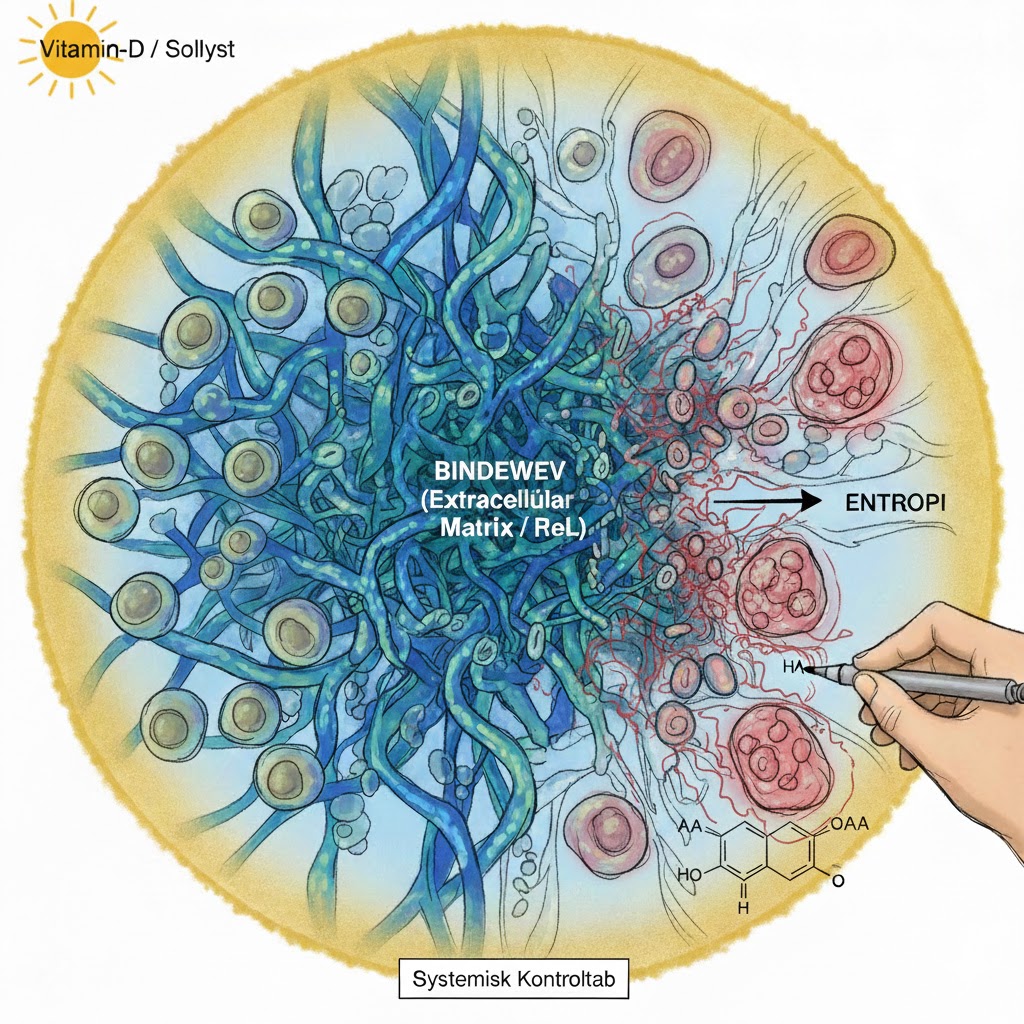
Here, researcher Mina Bissell plays a crucial role in TINAP’s theory. Her research has shown that cell identity is not only governed by DNA, but to a large extent by the surrounding tissue. By placing cancer cells in a healthy ECM environment, she has demonstrated that they can regain their normal function and differentiate correctly again.
This proves that cancer cells are not necessarily “sick” or damaged, but simply cells that have gone astray because they have lost their biological guidance from the connective tissue.
A search for the cause

To understand this system failure, TINAP has set up 16 research themes that connect threads between scientific fields that rarely speak to each other. This includes everything from the significance of bioelectric signals and pattern memory to the importance of sunlight (vitamin D and nitric oxide) for tissue integrity. Particularly noteworthy is their focus on psychosomatics, where they investigate how internal stress patterns, including neurotic shame and guilt, can create chronic stress-hormone levels that, via epigenetics (how the environment and lifestyle switch our genes on and off without changing the DNA code itself), break down the body’s repair mechanisms.
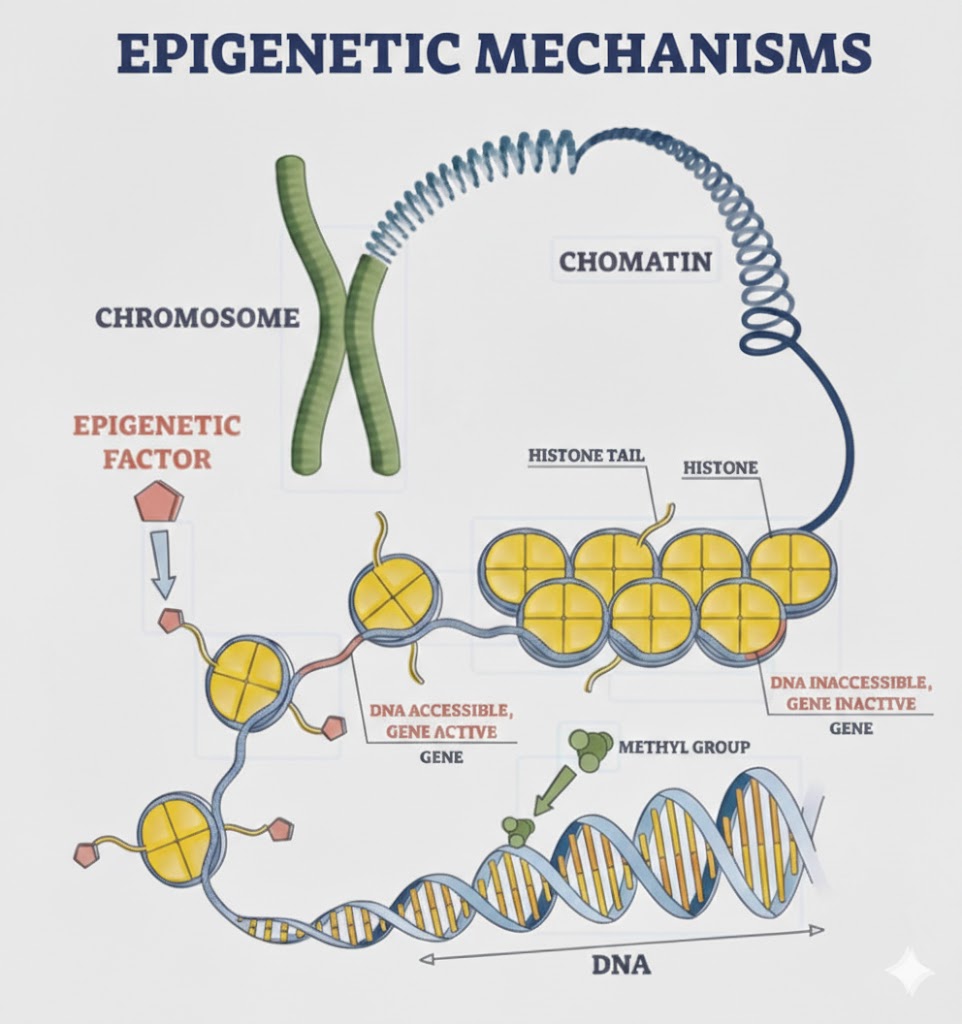
This holistic understanding also has major implications for the diagnostics of the future. By focusing on the body’s control systems and the condition of connective tissue, rather than merely looking for tumors, it becomes possible to identify cancer processes at a much earlier stage, where regenerative oncology can restore the system’s balance.
The research themes behind the RCA framework
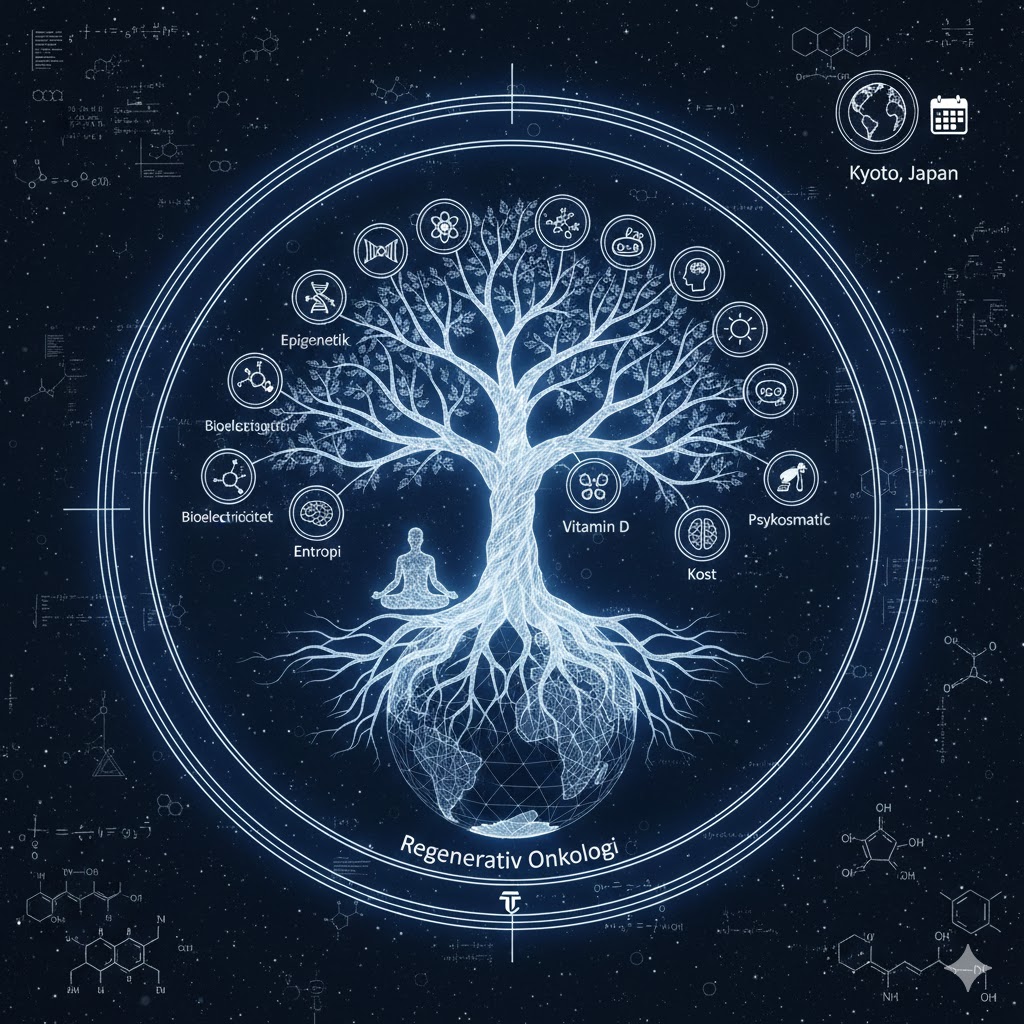
To map the system failure, TINAP examines the connections across these areas:
- Bioelectricity: How cells communicate via electrical voltage fields.
- Biosemiotics: The study of signs and signaling in biological processes.
- Pattern memory: How tissue “remembers” its correct form and structure.
- Epigenetics: (how the environment switches genes on and off without changing the DNA code itself).
- Control theory: Mathematical principles for controlling complex systems.
- Morphogenetic fields: The invisible blueprint that guides tissue formation.
- Quantum biology: The significance of subatomic processes for biological signaling.
- Connective tissue integrity: The role of ReL and the ECM as the body’s control system.
- Progenitor cells: (stem cell–like cells that have the ability to mature and repair specific tissue).
- Vitamin D and sunlight: As key regulatory drivers of the system.
- Nitric oxide (NO): Its importance for blood flow and cell communication.
- Psychosomatics: The connection between mental patterns and physical breakdown.
- Chronic inflammation: How persistent “noise” disrupts connective tissue signaling.
- Metabolic balance: Cells’ energy production as a prerequisite for order.
- Structured fluids: The role of water in the body as a carrier of information.
- Negentropy vs. entropy: The struggle between biological order and systemic disorder.
See also Wim Hof breathing
See also Light and noise pollution
See also About mitochondria – what are they
See also Faith can move mountains – the importance of the psyche
See also Dr. Nasha Winters (metabolic approach)
See also A toxin-free everyday life
See also Detox – detoxification
The method: Transdisciplinary innovation
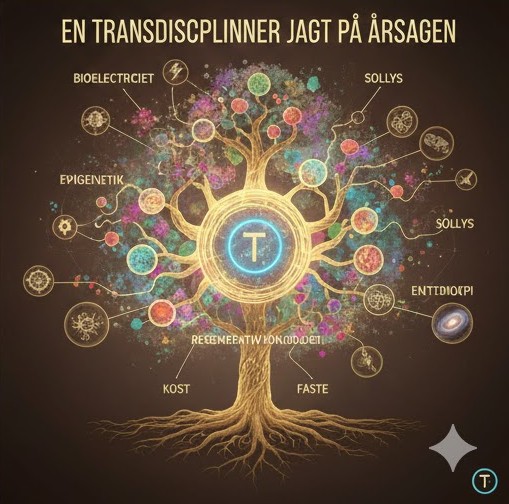
What sets TINAP apart from traditional research environments is their method. They do not merely work interdisciplinarily, but transdisciplinarily. This means they deliberately use tools such as intuition, systemic inquiry, and mathematical synthesis to build bridges between sciences that normally never speak to each other—from quantum physics to biosemiotics. The goal is not to find a single mutation, but to understand the overall pattern that governs life and order in the body.
International recognition and scientific publications

TINAP has made its mark internationally with two key studies that provide supplementary perspectives on the origin of cancer:
- Part I: A Critical Re-evaluation of the Somatic Mutation Theory (SMT) (Published on bioRxiv, 2025): Content: A mathematical analysis based on Poisson–Erlang models, assessing the statistical correlations in cancer development.
- Part II: From Cell-Centric to System-Centric Carcinogenesis (the RCA Framework) (Published on Zenodo, 2025): Content: A presentation of the RCA model, explaining cancer development through systemic failures in connective tissue signal regulation.
The work has attracted attention from leading experts, including Professor Thomas N. Seyfried of Boston College, who has acknowledged TINAP for their work in highlighting the need for system-centered models in oncology.
As a result of this attention, Finn Ernst Olsen has been invited as a speaker at The 2nd Global Clinical Oncology Conference (GCOC 2026) in Kyoto, Japan. There, he will present the association’s quantitative analysis of cancer processes and the systemic opportunities within the RCA framework to an international audience of oncologists and researchers.
See also Thomas Seyfried (press-pulse) – Protocol
See also Metabolic principles in cancer research
Conclusion
TINAP represents a perspective shift that complements genetic research with a deep understanding of the body’s overall control systems. By integrating engineering precision with biology, the focus shifts toward rebuilding the control structures and connective tissue that naturally maintain order in the organism. This vision points toward a future where understanding the body’s self-organization is central to promoting health and preventing systemic failure.
Systematic protocol for restoration
But how does one translate this complex theory into everyday action? For TINAP members, the answer is a targeted protocol designed to rebuild the body as a well-functioning control system.
Control in practice
In everyday life, the TINAP protocol is about removing everything that creates “noise” and disorder in the body’s signals. Here are the fixed routines that help connective tissue regain control:
- Morning – Light and reset: 20–30 minutes of daylight in the eyes as soon as possible after waking. This resets the body’s internal clock and hormones.
- Late morning – Metabolic calm: Water with unrefined sea salt ensures the body’s electrical conductivity. Fasting in the early hours gives the body peace to clear out damaged tissue.
- Midday – Clean nutrition: Focus on an anti-inflammatory diet. No sugar, no plant oils (seed oils), and no processed food.
- Afternoon – Grounding: 20 minutes barefoot on grass or soil (grounding) to receive free electrons that reduce inflammation. (In winter, grounding can be achieved via grounding mats indoors or shorter intervals on wet surfaces).
- Evening – Recovery: Screen-free time and sleep before 22:00 in a dark room to optimize the body’s cellular “error correction.”
See also Nature and forest bathing
See also Fasting
See also Anti-inflammatory diet
See also Sleep
Essential spare parts
For these routines to have full effect, the protocol adds specific “spare parts” needed for physical rebuilding. These include:
- Functions as the system’s main engine. It is the decisive force that drives regenerative processes and ensures that the bioelectric stop signals in connective tissue work, so the body can shift from breakdown to rebuilding.
- In addition to their role in muscle building, amino acids function here as essential building blocks to support the structure of connective tissue. By taking EAA several times daily, the body is provided with the materials to maintain the network that supports cellular order.
- I must point out that some consider EAA a risk for a cancer patient to take. Read about the metabolic dilemma in the article about EAA here.
See also Dr. Rath’s Protocol (cellular medicine)
See also Safe measures
Links
Welcome to TINAP (TINAP’s website)
Page created:
March 23, 2026
❤
What you read on I Have Cancer is not a recommendation. Seek qualified guidance.
