


Responsibility and loss of control
What is the problem (background)
I think we have created a strange society. In all contexts of life, we are personally responsible before the legal system. We are expected to know the laws and can be sentenced under a law that no one, strictly speaking, understands. Even an individual lawyer cannot grasp more than niches of the legislation.
But when it comes to our health, which we are largely masters of (and the consequences of which are solely our problem in everyday life), we must at all costs not take responsibility. This must absolutely rest with the doctors. And the doctors are in a system that so effectively stifles independent thinking that they are often reduced to obedient executors of rigid, standardized treatment protocols according to the motto “one size fits all.” (And that is probably also about the only place where it is expected to work).
Although many doctors undoubtedly act with the best intentions, the collective lack of challenge to the system’s limitations contributes to a passivating effect on patients. The fear of legal consequences seems to trump the desire for individually tailored and innovative solutions.
We could probably not be worse served than is the case in the modern world.
Hope
I believe that hope is a vital necessity – even for those categorized as terminal.
Hope is not necessarily about a guarantee of a cure, but about quality of life, empowerment, and the belief that you can make a difference for your own body and situation.
So hope can never be false – instead, it is something that is either present, or it is not.
By providing people with knowledge about complementary options, they can regain both hope and control.
Paradox in society
In modern society, we have created a strange and paradoxical relationship. While in countless aspects of our lives we are held responsible for our actions and, for example, expected to navigate a labyrinthine system of laws and regulations, the responsibility for our own bodies and health seems to have gradually slipped from our hands. And the more obvious it is that we must take responsibility, the more this responsibility is removed from our shoulders—or is it rather our opportunities to maintain control ourselves that disappear like sand through our fingers?
How have we reached this point, where the most intimate and personal—our physical well-being—is increasingly regarded as a domain where external authorities have the exclusive right to decide—while we ourselves must live with the consequence?
Heavy legal burden
If one looks at the legal sphere, a heavy burden of responsibility rests on the individual citizen. We are expected to know the law, to understand its countless ramifications and consequences. Ignorance is no excuse. Even legal professionals specialize narrowly, as they would otherwise be unable to grasp the entire legal landscape.
Nevertheless, as citizens, we risk sanctions for violations of laws whose existence is completely unknown to most.
This system is built on a premise of individual agency and accountability.
Health – silent abdication

In stark contrast to this stands our approach to health. Here, a silent abdication (voluntary relinquishing of power) of personal responsibility seems to have taken place.
We have become accustomed to viewing the body as a machine primarily maintained and repaired by experts—doctors. This development is understandable in light of medical progress and the specialized knowledge required to diagnose and treat diseases. But have we gone too far in this delegation of responsibility? Have we become strangers to our own bodies when they need us the most?
Shift of responsibility
A number of factors have contributed to this development:
- Healthcare system: With its impressive technology and complex organization, an expectation has been created that the solution to any health problem is found within the walls of the healthcare system.
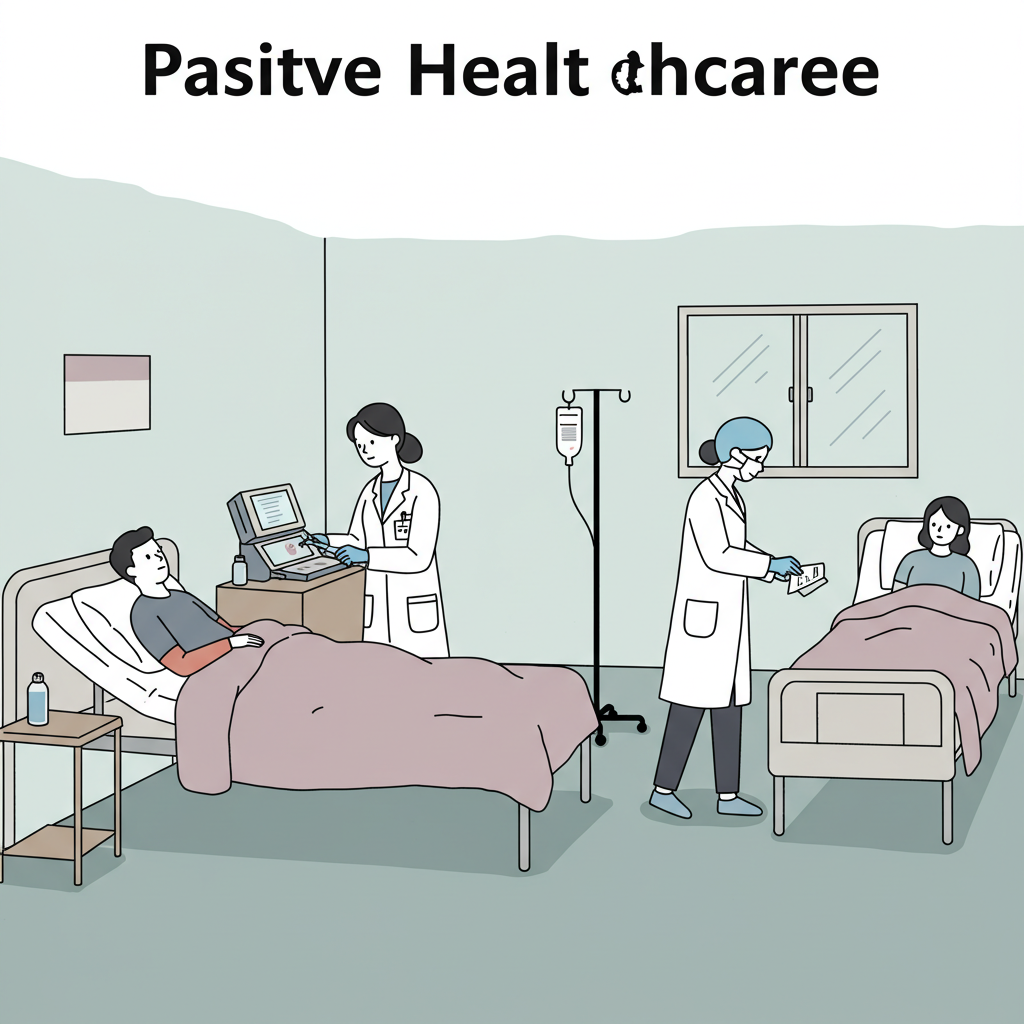
- Passive patient: The role of the patient (and the name suggests it (patient – patience)) has often been reduced to a passive recipient of treatment, rather than an active participant in their own healing. At least this is true in the Western world, where holistic thinking (viewing the human being as a whole of body, mind, and lifestyle) is relatively foreign.
- Fear: The fear of disease and the uncertainty surrounding the body’s functions have made it feel safer to hand over responsibility to those who possess medical expertise. And the complexity of our society is so developed that it has even become natural to delegate the task to specialists in the body’s mechanical functionality.
- Risk management: The existence of treatment guidelines makes it virtually impossible for a doctor who actually sees other and better solutions for the individual patient to act on them. In such cases, deviating from the guidelines would subject the doctor to completely unreasonable legal exposure. Thus, these measures to ensure that we as citizens and patients are treated uniformly also mean that we cannot be treated individually. And as a result, new initiatives can only be implemented after significant inertia in the system.
- Powerlessness: Society’s focus on risk management and prevention can thus also unintentionally create a feeling of powerlessness and undermine faith in one’s own agency.
The work of the Danish Health Authority
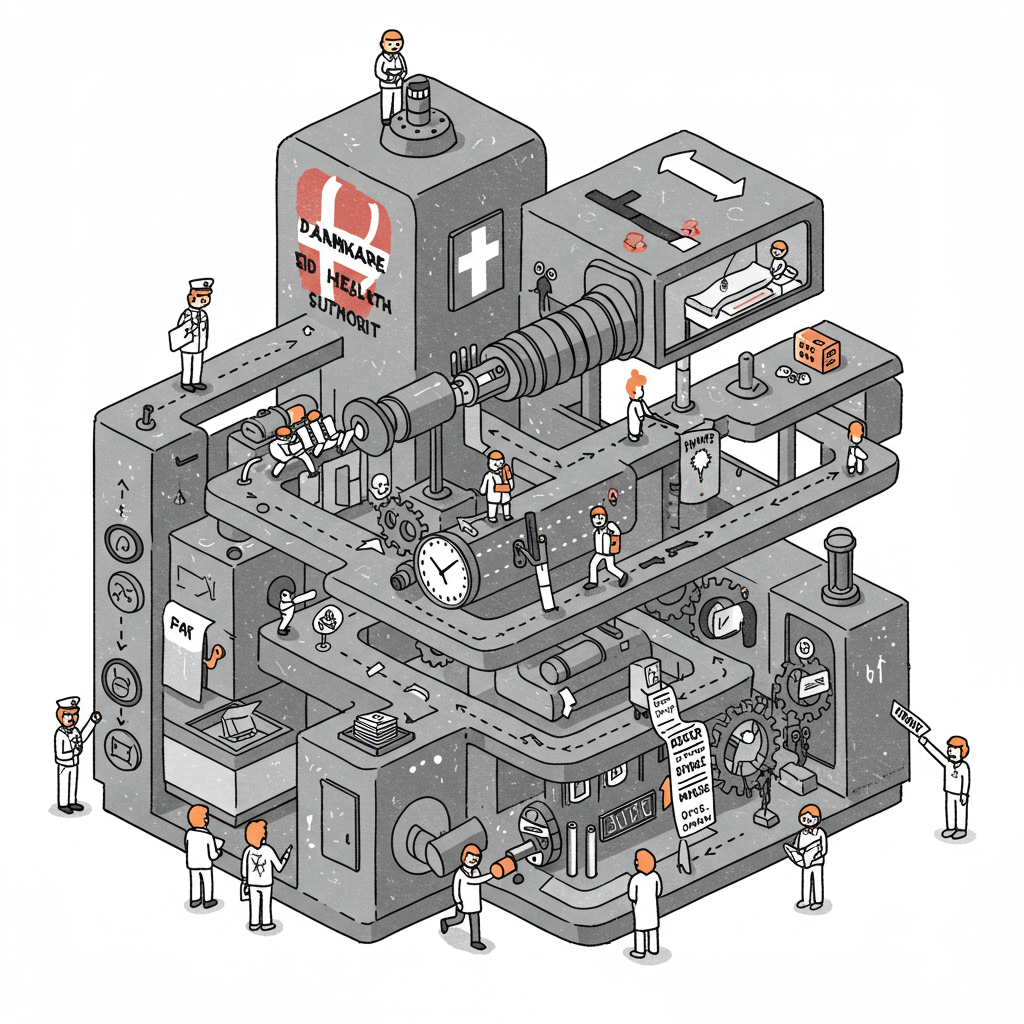
The Danish Health Authority has, with its well-meaning intentions of uniformity, ironically created a system that stifles individuality and potentially risks preventing the development of more effective treatments. Bureaucracy and rigid guidelines stand in the way of the flexibility that complex courses of illness often require. And at best, it will certainly act as a time-delaying (administrative) factor that has consequences in practice.
Consequences

The consequence is a system where patients increasingly expect quick solutions and feel frustrated if the doctor does not immediately have the answer. There is a tendency to overlook the significant role that factors such as lifestyle, diet, and mental well-being play in our health. In short, holistic thinking regarding healing is not a factor that is normally in the picture.
The responsibility for these fundamental aspects of our existence—which are largely within our own control—therefore often becomes secondary to the pursuit of medical diagnosis and treatment.
Furthermore, the relatively few who manage to take up the fight against the hospital system experience being cut off. They are denied follow-up (both blood tests and diagnostic imaging) if they do not comply and do as the doctor believes is best. In such cases, the doctor is no longer a guide; the doctor’s words have become orders. And who dares to rebel in such a situation?
It requires a virtually superhuman effort from a cancer patient who is in shock over the diagnosis and weighed down by physical fatigue and the prospect of falling income due to absence from the workplace, as well as the difficulty of keeping everyday life together.
The contrast: law vs. health

Society’s way of handling health irregularities (illness) stands in a strange contrast to legal expectations (law-breaking). Society expects us to be competent and responsible citizens who can navigate complex legislation.
But when it comes to our own bodies, we increasingly seem to view ourselves as incapable of making informed decisions or assuming the primary responsibility that, in principle, should be our birthright.
The way forward: Rediscovering balance

Perhaps the time has come for a reassessment of this silent abdication of responsibility. It is not about rejecting the importance of medical science or the healthcare system. On the contrary, it is about rediscovering a balance where the individual is recognized as the primary steward of their own body. This requires:
- Competence: A strengthening of the population’s knowledge regarding health and disease. Perhaps even as a subject starting in primary school, to ensure citizens have a certain basic knowledge of the topic.
- Holistic approach: An acknowledgement that the human being is more than a machine where spare parts must be repaired if they show signs of failure. It is about seeing the body and mind in connection with lifestyle, diet, and mental well-being.
- Rebuilding self-confidence: A strengthening of faith in our own ability to influence our health positively. This is supported by research where the placebo effect clearly demonstrates the mind’s impact on the body. Nevertheless, there is a tendency toward a stubborn rejection of the idea that even basic supplements can contribute positively to healing or recovery (with the positive exception of Vejle Hospital, which has taken a unique position to the benefit of patients).
- Partnership: A healthcare system that, to a greater extent, views the patient as an active partner in the healing process.
Navigation

Perhaps the time has come to ask ourselves whether the doctor in the modern healthcare system has been reduced from a compass needle that can intuitively navigate complex terrain, to a GPS that slavishly follows a fixed route without the possibility of deviation, even when the patient’s unique situation calls for it. And in this system, where the doctor follows a fixed course, has the patient’s own role not increasingly become as influential as that of a passenger on a train—being transported, but in reality having no control over the destination or the course of the journey?
Is it truly patient safety we are promoting when we tie the hands and feet of skilled professionals like oncologists and prevent them from using their sound judgment, which must be assumed to be the original reason for their career choice? They have a fundamental desire to help and heal, but are reduced to performing repairs according to a manual.
Conclusion

A responsible society
Reclaiming responsibility for our bodies is no easy task. It requires a change in both our own mindset and the way the healthcare system interacts with us. But perhaps it is a necessary development to create a more robust, empowered, and ultimately healthier society—a society where we are not only responsible for knowing the law but also for taking care of the most precious thing we have: our own life and health.
In the efforts to create an efficient and patient-safe healthcare system, we must not overlook the risk that fear of mistakes and legal consequences, combined with an excessive focus on uniformity and bureaucracy, leads to a system where both the professional expertise of doctors and the individual needs of patients are sidelined. This can ultimately compromise the quality of treatment and patients’ sense of control and security.
See also Evidence vs. Experience
Links
Doctors’ concern about complaints leads to unnecessary examinations (Læger.dk, June 2022) (Danish Language)
Personalized Medicine and Individualized Treatment (Capital Region of Denmark, June 2015) (Danish Language)
Section 20 question US 25 Regarding redundant bureaucracy in the healthcare system. (The Danish Parliament, Dec. 2021) (Danish Language)
Concern about patient complaints pressures doctors: Impacts decision-making competence and leads to unnecessary examinations (Læger.dk, May 2022) (Danish Language)
Video: The doctor’s and patient’s path through the patient complaint system (Læger.dk) (Danish Language)
Challenges of the healthcare system (Health Structure Commission, 2023) (Danish Language)
Debate: Trust in the Danish Medicines Council is at stake when the council’s decisions lead to poorer treatment (The Danish Cancer Society, Dec. 2024) (Danish Language)
Midwives’ professional autonomy – The Midwives’ Association (Jordemoderforeningen, 2021) (Danish Language)
New focus in Cancer Plan 5: Life must be worth living after cancer (Sundhedspolitisk Tidsskrift, May 2025) (Danish Language)
Censorship (Legal Desk) (Danish Language)
I only understood my cancer diagnosis when ChatGPT gained access to my test results (Politiken, 2025) (Danish Language)
Early palliative care for patients with metastatic non-small-cell lung cancer (PubMed, 2010)
- Content: This randomized clinical trial examined patients with advanced lung cancer. One group received standard care, while another also received supportive conversations about quality of life. The group with conversations had significantly better quality of life and less depression. They lived 25% longer.
Page created:
May 19, 2025, Last revised: September 11, 2025
❤
What you read on I Have Cancer is not a recommendation. Seek professional guidance.
