

Complementary and Alternative Treatments Overview
Colour therapy and cancer
Summary of colour therapy
Colour therapy and biology:
- Colour therapy is defined as the use of light frequencies to restore the body’s balance. Colours affect us both through vision and via the skin’s light-sensitive receptors (opsins), making it possible to receive the frequencies independently of conscious sight.
Psychology and chakra:
- Each colour carries a specific vibration which, according to Eastern tradition, is believed to correspond to the body’s seven primary chakras. While warm colours such as red and orange stimulate vitality and creativity, cool tones such as blue and violet have a calming effect on the nervous system and promote mental tranquillity. [11]
Support during a cancer journey:
- For people affected by cancer, the conscious use of colour frequencies can serve as an active tool to relieve anxiety in clinical settings, counteract fatigue (cancer-related tiredness) and strengthen cognitive focus. Scientific evidence supports these physiological effects on body and mind.
What is colour therapy
Colour therapy, also known as chromotherapy, is a form of treatment that uses the wavelengths of the visible light spectrum to influence the body’s state of health. At its core is the understanding that colours are electromagnetic radiation (light), each carrying a unique frequency. As the human body itself functions through electrical and chemical impulses, these external colour frequencies can interact with the body’s own energy field [6] and are also believed to affect the chakras. [11]
The method involves exposure to coloured light, visualisation of colours, or the use of coloured textiles against the skin. In modern medicine, the principles are used under the term photobiomodulation—for example, using blue light to lower blood pressure or red light to stimulate cellular energy production. [5]
Historical use of colours as medicine
The use of colours for healing has deep historical roots:
- Ancient Egypt: Used specially built temples where sunlight was filtered through coloured crystals to treat specific ailments.
- India and China: For millennia, colours have been linked to the body’s organs and life energy (Qi or Prana) in traditional medical systems.
- Greece: Ancient physicians such as Celsus used coloured preparations to correct imbalances in the body’s temperaments.
Classification of colours and their therapeutic profile
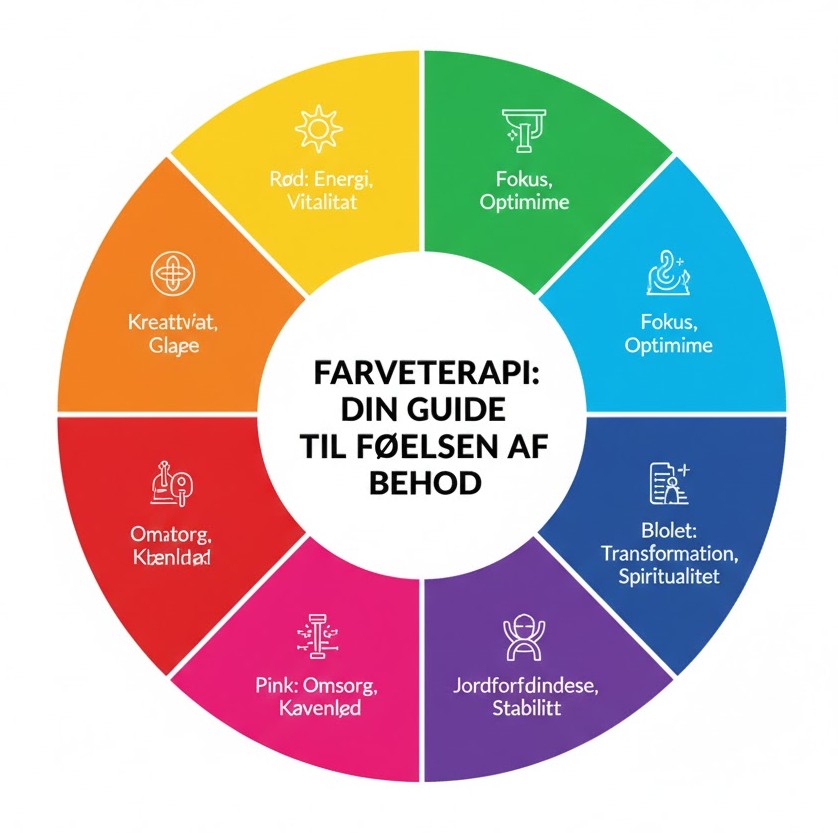
To understand how colour therapy is applied in practice, the colour spectrum is often divided into therapeutic profiles. Each colour has its own unique wavelength, which corresponds to specific energy centres in the body and triggers targeted physiological and psychological responses. [9]
By matching a colour’s vibration to the body’s current needs, one can create targeted support for both recovery and calm. [5, 6]
However, it is important to note that our experience of colours is often a combination of biology and cultural associations. While red appears to have a universal biological effect across cultures, the perception of colours such as blue or green is often shaped by the experiences and language we grew up with. [7]
- Effect: Stimulates the sympathetic nervous system. Counteracts feelings of discouragement and tiredness (fatigue).
- Chakra: The root chakra (Muladhara) – foundation and physical safety.
Orange: Creativity and emotional balance
- Effect: Helps release shock and emotional blockages. Promotes enthusiasm and has a documented positive effect on self-perceived health status. [2]
- Chakra: The hara chakra (Svadhisthana) – creativity and pleasure.
Yellow: Mental clarity and confidence
- Effect: Sharpens concentration and optimism.
- Chakra: Solar Plexus (Manipura) – personal strength.
- Warning: May cause stress and increased heart rate if overstimulated in certain environments (including workplaces). [10]
Green: Balance, calm and recovery
- Effect: The neutral point in the spectrum. Lowers stress levels, creates harmony and, in recent clinical studies (phase 1), has shown a marked ability to reduce pain intensity in chronic conditions such as migraine and fibromyalgia. [3, 8]
- Chakra: The heart chakra (Anahata).
Pink and rose: Care and heart healing
- Effect: Reduces anger and anxiety. Promotes gentleness and self-care.
Blue: Hypotensive calm and communication
- Effect: Lowers heart rate and blood pressure. Promotes peace.
- Non-visual evidence: Blue light on the skin releases nitric oxide. [4]
- Chakra: The throat chakra (Vishuddha).
Indigo and dark blue: Intuition and inner calm
- Effect: Effectively reduces mental noise and racing thoughts. The colour has a cooling effect on the nervous system and helps create contact with the inner voice and intuition.
- Chakra: The third eye (Ajna) – insight and mental control.
- Therapeutic goal: To achieve deep calm and clarity in pressured situations. [1, 4]
Violet: Transformation and spiritual understanding
- Effect: Transforms negative impulses and difficult emotions into deeper spiritual understanding. Violet has the shortest wavelength and the highest energy in the visible spectrum, which has a cleansing effect on the mind.
- Chakra: The crown chakra (Sahasrara) – connection and universal consciousness.
- Therapeutic goal: To support personal development and finding meaning under difficult life circumstances. [5, 6]
White: Mental clarity and purity
- Effect: Creates a sense of a fresh start and helps clear mental clutter. White contains all colours and is used to create balance across the entire energy field.
- Therapeutic goal: To create overview and neutralise overwhelming impressions. [5]
Black: Protection and shielding (and melancholy)
- Effect: In small doses, it can provide a sense of protection and authority. Clinical observations show, however, that dominant black surfaces can often increase feelings of anxiety, melancholy and isolation, as the colour absorbs all light and can feel constricting.
- Therapeutic goal: To provide psychological calm and a sense of privacy in unsafe environments. [6]
Grey: Neutrality and clarity
- Effect: Grey is a neutral colour that neither strongly stimulates nor strongly calms. It helps create a sense of distance from chaos and can be useful when you need to take a step back and observe a situation without becoming emotionally overwhelmed.
- Therapeutic goal: To create a “neutral gear” in the mind that makes room for objectivity and a pause from intense emotional impressions. [5]
Brown: Grounding and stability
- Effect: Provides strong physical grounding. The colour is stabilising and helps you find your footing when life feels chaotic or unpredictable.
- Therapeutic goal: To reduce stress through a sense of safety and solid ground under your feet. [4]
The specific significance of colours for people affected by cancer
For a cancer patient, body and mind are under constant pressure from both the disease and the treatment. Colour therapy offers a non-invasive method to support quality of life:
Suffering and hospital anxiety
Exposure to blue and green shades (via walls, clothing or visualisation) has a direct calming effect on the autonomic nervous system. It lowers heart rate and helps create a mental refuge in the middle of a clinical hospital environment. [1]
Managing fatigue (cancer-related tiredness)
Fatigue is one of the most burdensome side effects. Here, red and orange frequencies can be used as an “energy boost”. Because the skin contains light-sensitive opsins, red textiles against the skin can stimulate microcirculation and cellular energy production, even when the patient is physically immobile. [2]
Cognitive support (“chemo brain”)
The cognitive fatigue that often follows chemotherapy can be alleviated with yellow frequencies. Yellow stimulates the logical intellect and confidence, helping to regain a sense of control and mental capacity. [1]
Pain and inflammation
In the clinical part of colour therapy, blue light is used specifically for its cooling and anti-inflammatory properties, while green light supports the body’s overall recovery. Clinical pilot studies (phase 1) have shown that exposure to green light can significantly reduce pain intensity in both migraine and fibromyalgia. [3, 8]
Practical use for people affected by cancer
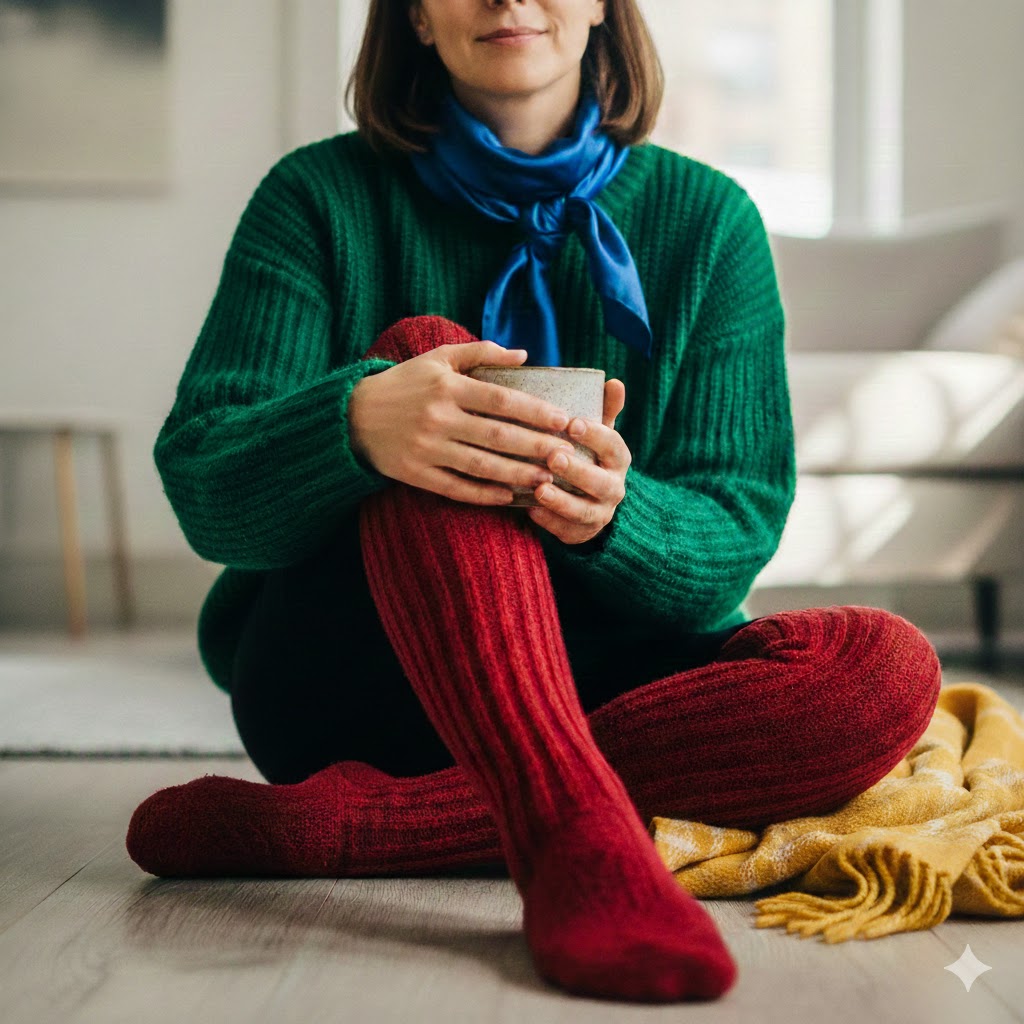
The strength of colour therapy lies in its simplicity and accessibility. If you are affected by cancer, you can easily integrate the positive effects of colours into your everyday life, both in and outside clinical settings. The aim is to support both body and mind, and it requires no prior knowledge.
Be aware that colours do not only affect your mood, but also your other senses. Experiments have, for example, shown that the colour of a room can change our perception of taste, which may be relevant if you experience taste disturbances during your course of treatment. [7]
Specific exercises and methods
- Colour visualisation: This is a powerful mental technique. Close your eyes, breathe deeply, and imagine that you are surrounded by a colour that matches your current need.
- Feeling anxious? Visualise a blue or green light that envelops you and creates calm.
- Lacking energy? Imagine a warm orange or red light flowing into your body and awakening your cells.
- How: Sit or lie comfortably for 5–10 minutes and let the colour fill your inner space. [4, 5]
- Coloured light sources: Small coloured LED bulbs or special colour therapy lamps can create a therapeutic environment in your home.
- Use blue or green shades in the bedroom to promote sleep and relaxation.
- Use orange or yellow tones in a living area to increase vitality and mood.
- How: Place the light source so it creates a calm glow, and let the colour influence the room’s atmosphere.
- Coloured textiles and clothing: Choose colours in your clothing, bedding or blankets consciously to support your condition.
- Red blankets or cushions can feel invigorating.
- Blue or green textiles can contribute to calm and relaxation.
- How: Wear the colour you need closest to your body, or surround yourself with it in your home.
- Colour focus in nature: Nature is full of colour therapy.
- Take a walk in a green forest to find balance and recovery.
- Look at the blue sky or the sea to find calm and perspective.
- How: Pay attention to the colours around you and let them enhance the effect on your mind.
- Colour therapy glasses: One of the most direct methods is using glasses with coloured lenses. By wearing the glasses for a short period, you can “bathe” your field of vision in a specific colour.
- Blue glasses: Can be used for acute stress or insomnia to calm the nervous system.
- Yellow/orange glasses: Can be used in the morning or for winter fatigue to lift mood and increase mental focus.
- How: Use the glasses for 15–20 minutes while relaxing or doing light tasks at home. [1, 6]
These simple methods can be a valuable supplement to your self-care and help you navigate your cancer journey with greater well-being and balance.
Overview of mood impact
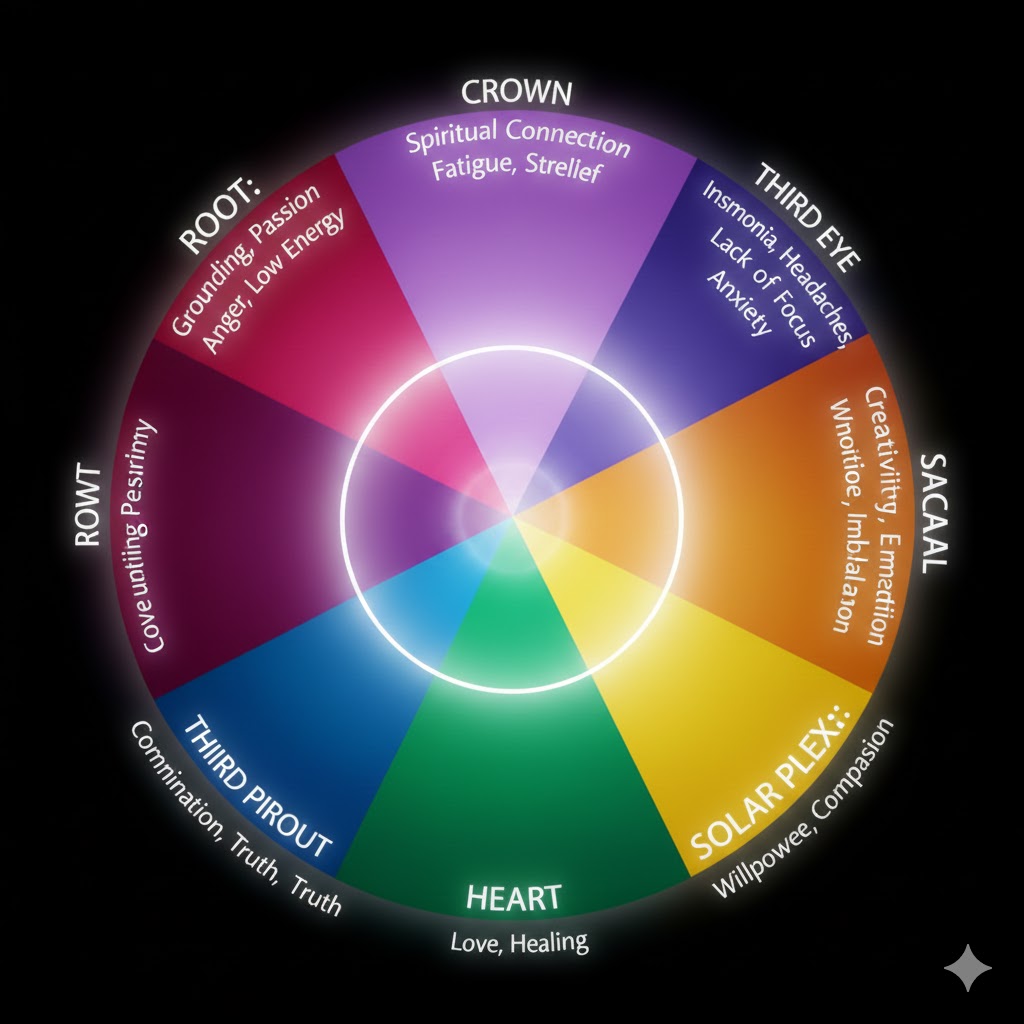
| Feeling / need | Recommended colour | Therapeutic action |
| Anxiety / restlessness | Blue or Green | Lower stress hormones, calm the nervous system. |
| Tiredness / lack of energy | Orange or Red | Stimulate circulation, increase vitality and counteract fatigue. |
| Anger / grief | Pink or Rose | Promote compassion, self-care and emotional healing. |
| Chaos / insecurity | Brown (or Black) | Create grounding, stability and a sense of protection. |
| Difficulty concentrating / “chemo brain” | Yellow | Improve mental clarity, focus and confidence. |
| Imbalance / physical discomfort | Green | Promote harmony, recovery and the body’s healing processes. |
| Pain / inflammation | Blue | Reduce inflammation and create a cooling effect. |
Chakras and research
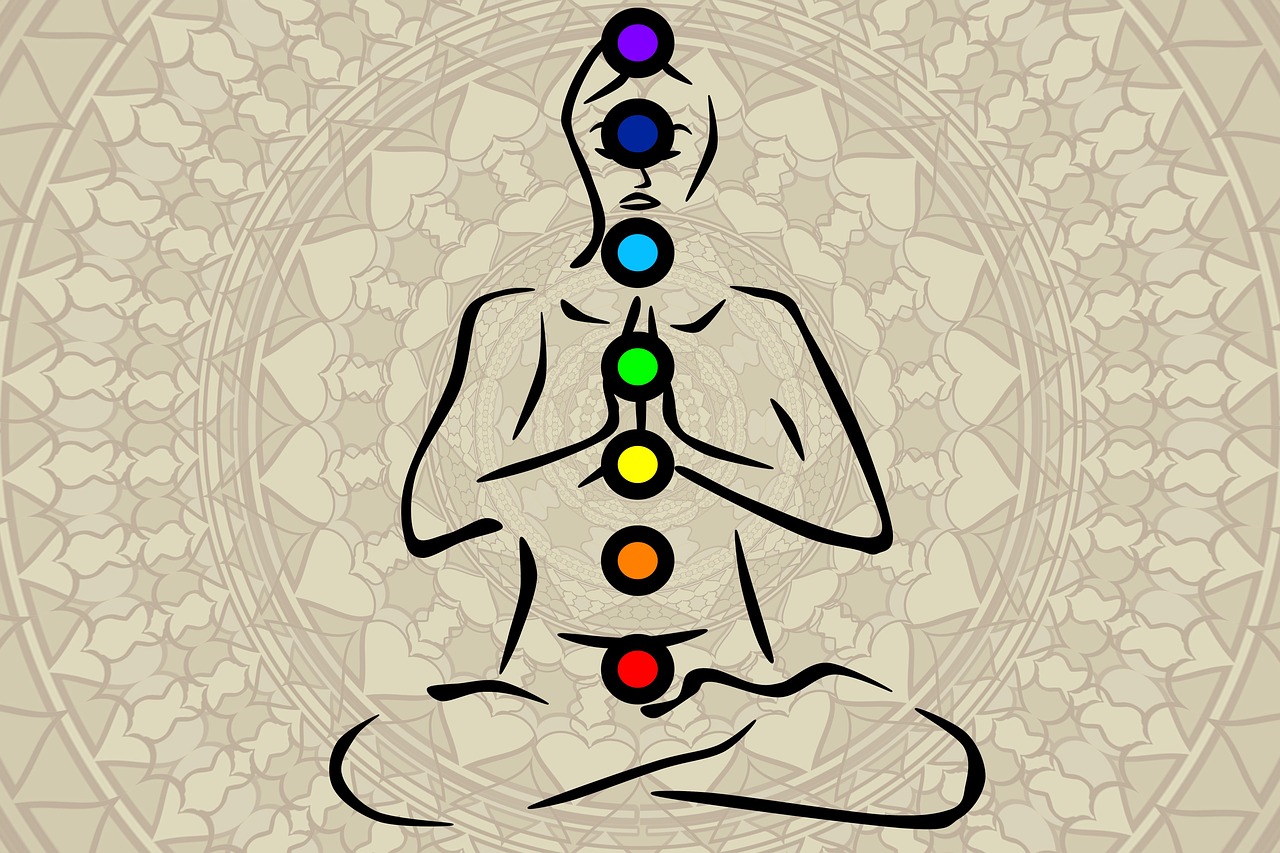
There is no scientific evidence for chakras as physical organs, but there is interesting research that attempts to measure the energy fields described by the chakra system.
Here are the most important scientific angles on the topic:
Christopher Hills
The very idea that the seven chakras precisely match the colours of the rainbow (red to root, violet to crown) is not actually thousands of years old. It was largely popularised by the author Christopher Hills in the 1970s. He was the first to systematically link light frequencies (nanometres) directly to the Indian chakras. This is the model most modern colour therapists use today. [11]
Electromagnetic measurements (biofields)
Researchers such as Dr Valerie Hunt and Dr Hiroshi Motoyama have conducted studies in which they measured electrical impulses from the skin at the very locations where the chakras are believed to be. [12]
- Findings: They found that these areas emitted specific high-frequency vibrations (in the MHz range) that differed from other places on the body.
- Colour link: Some of these experiments indicated that when participants visualised certain colours, the electrical frequencies at the corresponding chakra points changed.
Biophoton research
More recent biophysical research (e.g., by Fritz-Albert Popp) has shown that all living cells emit ultra-weak light, called biophotons. [13, 14]
- Studies have shown that the concentration of this light emission is higher along the body’s midline—precisely where the chakras are located.
- The theory is that these light emissions function as a communication system in the body, and that colour therapy interacts with this system.
The link to nerve plexuses
Scientifically, the placement of the chakras corresponds almost perfectly with the body’s major nerve plexuses and the endocrine glands (e.g., the thyroid gland at the throat chakra and the pancreas at the Solar Plexus chakra). This explains why colour influence on these areas can have a measurable physiological effect on hormones and the nervous system, whether or not one believes in the spiritual aspect.
Conclusion
Colour therapy unites ancient wisdom with modern biophysics. By recognising that we absorb colours through both the retina and the skin, our visual environment becomes an active tool for healing. For people affected by cancer, this offers an accessible method to support the body’s homeostasis and the mind’s resilience through direct light, conscious colour choices or mental visualisation.
Colour therapy is a tool you can use on your own terms to support your body and mind during your cancer journey. Listen to your body and choose what feels right for you.
Note: Science recognises the physiological reactions to colours, but regards the chakra system itself as a holistic model rather than an anatomical fact.
See also Alternative Treatments – Overview
See also Aromatherapy
See also Art therapy
See also Sound healing
See also Music therapy
Links
[1] The Effect of Color Therapy on Anxiety in Chemotherapy Patients Attending the Oncology Department: A Randomized Clinical Trial (PubMed, SAGE, 2025)
- Content: This randomised clinical trial shows that 20 minutes in a blue therapeutic room significantly reduces anxiety in cancer patients during chemotherapy. The study concludes that colour therapy is an effective, inexpensive and non-invasive method to improve quality of life in oncology departments.
[2] Acute effect of orange chromatic environment on perceived health status, pain, and vital signs during chemotherapy treatment (Support Care Cancer, 2020)
- Content: This randomised clinical study examines the effect of warm colour environments during chemotherapy. The results show that staying in an orange-coloured room has a statistically significant positive effect on patients’ self-rated health status and well-being compared with white hospital environments.
[3] Evaluation of green light exposure on headache frequency and quality of life in migraine patients: A preliminary one-way cross-over clinical trial (PubMed, 2020)
- Content: This clinical crossover study (phase 1) documented a significant reduction in monthly headache days for both episodic and chronic migraine patients using green LED light. The study highlights the method as a safe, non-pharmacological complementary treatment.
[4] Chromotherapy As A Complementary Approach In Mental Illness: Mechanisms, Evidence, And Clinical Perspectives (ResearchGate, 2025)
- Content: This scientific review evaluates colour therapy as a non-invasive supportive strategy for mental health. The article highlights the potential of using cool colours to reduce anxiety and warm tones to lift mood, and it calls for standardised protocols to maximise therapeutic effect in clinical practice.
[5] A Patient Centered Integrative and Holistic Medicine Algorithm Model of Collaborative Healthcare (Alternative & Integrative Medicine, 2016)
- Content: This article presents a holistic model for integrated health that combines mental, emotional, physical and spiritual care. The authors propose a systematic approach to collaboration between conventional and alternative treatment, focusing on the patient’s own strengths and lifestyle changes.
[6] Journal of Alternative Medicine and Mind Body Practices – Aims and Scope (JAMMBP, 2026)
- Content: The journal defines the framework for evidence-based alternative medicine, including chromotherapy (colour therapy) as part of healing environments. It sets standards for research into how mind–body interventions and natural methods can be integrated clinically as person-centred care.
[7] How do colours affect us? (Videnskab.dk, 2016 (Danish Language))
- Content: The article examines the scientific evidence behind the effects of colours and discusses whether our reactions are innate or culturally conditioned. It highlights, among other things, differences in colour associations across cultures and challenges older theories such as Goethe’s colour theory.
[8] Green Light Exposure Improves Pain and Quality of Life in Fibromyalgia Patients: A Preliminary One-Way Crossover Clinical Trial (PubMed, 2021)
- Content: A clinical pilot study (phase 1) that demonstrated significant pain reduction and improved quality of life in fibromyalgia patients after 10 weeks of exposure to green light. No side effects were reported during the trial.
[9] The Influence of Colours on Well-Being: Psychological and Physical Health (ResearchGate, 2026)
- Content: The study analyses 72 scientific articles and shows how colours affect blood pressure, heart rate and mental health across races. While bright tones such as yellow and green promote calm, black and dark red shades are linked to increased anxiety and physiological arousal in clinical environments.
[10] How the Psychology of Color Influences Work Performance (Discovery Infrastructure, 2025)
- Content: This study documents how colours affect heart rate and stress levels. It shows that while yellow shades stimulate creativity, excessive amounts can overwhelm the senses and create physiological stress, supporting the warning against overstimulation in pressured work environments.
[11] Book: Nuclear Evolution: Discovery of the Light Body within the Rainbow Body (University of the Trees Press, 1978)
- Content: In this comprehensive work, Christopher Hills presents his theory of how the light spectrum corresponds to levels of human consciousness and the chakra system. He was the first to systematically assign specific wavelengths (nanometres) to each of the seven chakras, which today forms the theoretical foundation for modern Western colour therapy.
[12] A Study of Structural Integration from Neuromuscular, Energy Field and Emotional Approaches (Anatomicfacts.com, UCLA, 1977)
- Content: This study documented constant electrical oscillations from chakra locations (100 Hz – 1 KHz) using telemetry equipment. The experiment demonstrated a direct correspondence between objective electronic waveforms and the colours observed in participants’ biofields.
[13] Multi-Site Recording and Spectral Analysis of Spontaneous Photon Emission from Human Body (Journal of Alternative and Complementary Medicine, 2005)
- Content: This study by Roeland van Wijk presents the first systematic mapping of cellular light emission (biophoton emission) from 30 sites on the human body. The researchers demonstrated clear anatomical symmetry and documented that the light emission follows a fixed pattern across the body’s surface, supporting the theory of energy centres along the body’s midline.
[14] World’s first ultraweak photon emission technology holds promise for medical forecasts (National Research Council Canada, 2025)
- Content: A recent report confirming that all living tissue emits ultra-weak light (biophotons) as a by-product of cellular metabolism. The research shows that this “glow” continues in specific organs after death and suggests that light emission functions as a non-invasive communication system that can reveal disease and imbalance in the body.
Page created:
❤
What you read on I Have Cancer is not a recommendation. Seek qualified guidance.
